The Numismatic Bibliomania Society

Visit our NBS Sponsors


E-Sylum Sponsor Banner Northesat Coin E-Sylum Sponsor Banner Heritage E-Sylum Sponsor Banner NORTH banner02 E-Sylum Sponsor Douglas Winter Numismatics E-Sylum Sponsor Banner Great Collections E-Sylum Sponsor Banner Red Book Podcast E-Sylum Sponsor Banner Shanna Schmidt E-Sylum Sponsor Banner KEUNKER E-Sylum Sponsor Banner NORTH banner02 E-Sylum Sponsor Banner Numismatica Ars Classica

PREV       NEXT        v29 2026 INDEX         E-SYLUM ARCHIVE

About Us

The Numismatic Bibliomania Society is a non-profit association devoted to the study and enjoyment of numismatic literature. For more information please see our web site at coinbooks.org

Subscriptions

Those wishing to become new E-Sylum subscribers can go to the following web page Subscribe

You may Unsubscribe Here

Membership

There is a membership application available on the web site Membership Application

To join, print the application and return it with your check to the address printed on the application. Print/Digital membership is $40 to addresses in the U.S., and $60 elsewhere. A digital-only membership is available for $25. For those without web access, write to:

Jeff Dickerson, Treasurer
Numismatic Bibliomania Society
P. O. Box 578,
Weatherford, TX 76086

Asylum

For Asylum mailing address changes and other membership questions, contact Jeff at this email address: treasurer@coinbooks.org

Submissions

To submit items for publication in The E-Sylum, write to the Editor at this address: whomren@gmail.com

BUY THE BOOK BEFORE THE COIN

Sale Calendar


Content presented in The E-Sylum is not necessarily researched or independently fact-checked, and views expressed do not necessarily represent those of the Numismatic Bibliomania Society.

WAYNE'S WORDS: THE E-SYLUM MARCH 1, 2026

Wayne Homren 2017-03-15 full New subscribers this week include: Joe Cassano, Donat  Charron, Doris  Duggins, Marty  Hanyckyj, John LePage, David  Morrison, Fred Pasternack, Brian  Pistolese, Raymond Raboin, and Andy  Vacco of the Mansfield Numismatic Society via John Ferreri; Welcome aboard! We now have 6,668 subscribers.

Thank you for reading The E-Sylum. If you enjoy it, please send me the email addresses of friends you think may enjoy it as well and I'll send them a subscription. Contact me at whomren@gmail.com anytime regarding your subscription, or questions, comments or suggestions about our content.

This week we open with a book review, updates from the Newman Numismatic Portal, notes from readers and more.

Other topics this week include 1794 cents, U.S. Postal Notes, multiple auction previews, segmented collars, U.S. Mint artists, another Trump coin design, a short snorter, and fake stories of fake money.

To learn more about one of the largest banknotes in the world, shell medals, collector of elongateds Emilie D. Searle, gold key money, world paper money, the Bury St. Edmund's Hoard, a Silver Center Cent, the Peter Bartlett and Harold Welch collections, the $100 Gold Certificate that became illegal, Una and the Lion, Eric David Custer, and the Citizens Coinage Advisory Committee, read on. Have a great week, everyone!

Wayne Homren
Editor, The E-Sylum

  Eric David Custer at his workstation
Image of the week


BOOK REVIEW: A YEAR IN COPPER: THE 1794 LARGE CENT

Bill Eckberg submitted this review of Robert Powers' new book on 1794 cents. Thank you! -Editor

A Year in Copper 1794 book cover After seeing the cover of Robert Powers' new book A Year in Copper: the 1794 Large Cent: History, Provenance, Attribution in last week's edition of the E-Sylum, I decided to purchase a copy. It is Powers' fifteenth in a series on various early US coinage types, with an emphasis on large cents (6 books). It's a strange book for a hardcover edition. It has no title page, no table of contents, no footnotes or endnotes, no ISBN number and no page numbers.

The most useful section consists of descriptions and good, fairly recent photos of each of the NC (non-collectable) varieties. NC is a term coined by William H Sheldon back in 1949 to designate coins that were so rare that many of the most advanced collectors were unlikely to own one.

From there, things go downhill. In discussing the founding of the Mint, he claims that Robert Scot "was the primary orchestrator of the activity at the first US Mint." He was not. That credit belongs to Henry Voigt, the first Chief Coiner and much more. The Mint opened shop in 1792. Scot wasn't even hired until November of 1793, after all of the 1793 coins had been delivered.

He then gives Joseph Wright credit for being the "First Draughtsman and Diesinker in August, 1793." There are no records that suggest that Wright was ever appointed to any position at the Mint or that he was responsible for the Liberty Cap half cent and cent designs. That credit also belongs to Henry Voigt, as evidenced by a 1795 report to Congress from a committee chaired by Elias Boudinot.

What follows are 41 pages (I counted, there being no page numbers) reprinting facsimiles of the cent section of Maris' 1870 book on the 1794s and then Frossard and Hays' 1910 book. Why? Because they're now in the public domain? We haven't used Maris or Hays numbers for many years, and there is far more information available from other, much more recent sources today than what Maris, Frossard and Hays told us. Besides, those books are available to all for free on the Newman Numismatic Portal, if the reader wants a copy.

His listing of prominent collectors includes George H. Clapp, who donated his wonderful collection to the American Numismatic Society and certainly deserves mention on such a list. He also lists William Strickland, who was not a serious collector of 1794 large cents; he purchased several 1794 large cents when he visited the Mint as a tourist, and his family kept them until 1964. They are wonderful coins, but they hardly consist of a real collection in the sense that we understand the term, today. Lastly, he lists Adam Mervis, who briefly collected 1794s. He had a great set, but he wasn't in it very long. How about someone like Dan Holmes, who collected for decades and had every variety except two in the entire large cent series? How about Sheldon? Or Denis Loring? There are many others that could be mentioned, but I think most students of the series would rank those three with Clapp and well above Strickland and Mervis.

The rest of the book consists of a page devoted to each collectable variety. The top half of the page gives the discover of the variety and date, followed by an enlargement of the variety from the Frossard/Hays plates that appear earlier in this book. That is followed by a very brief attribution description. Below that is a modern photo of the variety, usually with a one or two of very small insets intended to show the identification points.

Having commented on the history and attribution sections, what about provenance? Unfortunately, other than the Mervis NCs, there is nothing about provenance.

There are nice color photos of the varieties, but better and much more useful images are available in Chuck Heck's book on die states and the many auction catalogs that have been produced in the last fifteen years or so.

In summary, the book doesn't present anything that's new or advance our understanding of these important coins. His section on variety attribution is OK and worth a look if you don't have a better guide, but the sections on history are often wrong, and the provenance information is minimal at best.

To read the earlier E-Sylum articles, see:
NEW BOOK: A YEAR IN COPPER: THE 1794 LARGE CENT (https://www.coinbooks.org/v29/esylum_v29n03a02.html)
WAYNE'S NUMISMATIC DIARY: FEBRUARY 22, 2026 : Wayne's Books (https://www.coinbooks.org/v29/esylum_v29n08a21.html)
Kahn E-Sylum ad03 banner

THE U.S. POSTAL NOTES 1883-1894

The latest addition to the Newman Numismatic Portal is Kent Halland's The U.S. Postal Notes 1883-1894. Project Coordinator Len Augsburger provided the following report. Thank you. -Editor

  1883 postal note of Homer Lee Bank Note Co., Philadelphia 7 Sept 1883

Kent Halland Publishes The U.S. Postal Notes 1883-1894: How Many Were Issued at Each Post Office?

Between 1883 and 1894 the U.S. post office issued postal notes, which were used to transmit small of amounts of money through the mail. The post office charged three cents for each note, which could be used to forward sums up to five dollars. These items are similar to paper money, and not surprisingly were printed by firms such as the American Bank Note Company. Because most were redeemed upon receipt, few remain today.

Kent Halland has made of study of these notes, focusing on the question of where they were issued and how many remain. By compiling data from over 59,000 known notes and identifying highest serial numbers for 2,679 offices, he is able to account for nearly 48% of all Postal Notes issued, using extrapolation methods to estimate totals for remaining issuing offices.

EPNNES logo This work was sponsored in part by a 2025 research grant from the Eric P. Newman Numismatic Education Society. Applications for 2026 grants are currently being accepted, until April 15, 2026.

Image: An 1883 postal note of Homer Lee Bank Note Co., Philadelphia 7 Sept 1883.

Link to Kent Halland's The U.S. Post Notes 1883-1894 on Newman Portal:
https://nnp.wustl.edu/library/booksbyauthor/558042

Link to 2026 Newman Grant application:
https://archive.org/details/NewmanGrantApplication2026

To read the earlier E-Sylum article, see:
2026 NEWMAN GRANT PROGRAM ANNOUNCED (https://www.coinbooks.org/v29/esylum_v29n06a12.html)

DMRC ad 2025-09-14 Serving Medal Collectors

VIDEO: CSNS PRESIDENT BRUCE PERDUE

The David Lisot Video Library on the Newman Numismatic Portal can be found at:
https://nnp.wustl.edu/library/multimediadetail/522852

We highlight one of his videos each week in The E-Sylum. Here's one from 2016 with our own Bruce Perdue speaking about his role as President of the Central Sates Numismatic Society. -Editor

About Us

The Numismatic Bibliomania Society is a non-profit association devoted to the study and enjoyment of numismatic literature. For more information please see our web site at coinbooks.org

Subscriptions

Those wishing to become new E-Sylum subscribers can go to the following web page Subscribe

You may Unsubscribe Here

Membership

There is a membership application available on the web site Membership Application

To join, print the application and return it with your check to the address printed on the application. Print/Digital membership is $40 to addresses in the U.S., and $60 elsewhere. A digital-only membership is available for $25. For those without web access, write to:

Jeff Dickerson, Treasurer
Numismatic Bibliomania Society
P. O. Box 578,
Weatherford, TX 76086

Asylum

For Asylum mailing address changes and other membership questions, contact Jeff at this email address: treasurer@coinbooks.org

Submissions

To submit items for publication in The E-Sylum, write to the Editor at this address: whomren@gmail.com

BUY THE BOOK BEFORE THE COIN

Sale Calendar


Content presented in The E-Sylum is not necessarily researched or independently fact-checked, and views expressed do not necessarily represent those of the Numismatic Bibliomania Society.

WAYNE'S WORDS: THE E-SYLUM MARCH 1, 2026

Wayne Homren 2017-03-15 full New subscribers this week include: Joe Cassano, Donat  Charron, Doris  Duggins, Marty  Hanyckyj, John LePage, David  Morrison, Fred Pasternack, Brian  Pistolese, Raymond Raboin, and Andy  Vacco of the Mansfield Numismatic Society via John Ferreri; Welcome aboard! We now have 6,668 subscribers.

Thank you for reading The E-Sylum. If you enjoy it, please send me the email addresses of friends you think may enjoy it as well and I'll send them a subscription. Contact me at whomren@gmail.com anytime regarding your subscription, or questions, comments or suggestions about our content.

This week we open with a book review, updates from the Newman Numismatic Portal, notes from readers and more.

Other topics this week include 1794 cents, U.S. Postal Notes, multiple auction previews, segmented collars, U.S. Mint artists, another Trump coin design, a short snorter, and fake stories of fake money.

To learn more about one of the largest banknotes in the world, shell medals, collector of elongateds Emilie D. Searle, gold key money, world paper money, the Bury St. Edmund's Hoard, a Silver Center Cent, the Peter Bartlett and Harold Welch collections, the $100 Gold Certificate that became illegal, Una and the Lion, Eric David Custer, and the Citizens Coinage Advisory Committee, read on. Have a great week, everyone!

Wayne Homren
Editor, The E-Sylum

  Eric David Custer at his workstation
Image of the week


BOOK REVIEW: A YEAR IN COPPER: THE 1794 LARGE CENT

Bill Eckberg submitted this review of Robert Powers' new book on 1794 cents. Thank you! -Editor

A Year in Copper 1794 book cover After seeing the cover of Robert Powers' new book A Year in Copper: the 1794 Large Cent: History, Provenance, Attribution in last week's edition of the E-Sylum, I decided to purchase a copy. It is Powers' fifteenth in a series on various early US coinage types, with an emphasis on large cents (6 books). It's a strange book for a hardcover edition. It has no title page, no table of contents, no footnotes or endnotes, no ISBN number and no page numbers.

The most useful section consists of descriptions and good, fairly recent photos of each of the NC (non-collectable) varieties. NC is a term coined by William H Sheldon back in 1949 to designate coins that were so rare that many of the most advanced collectors were unlikely to own one.

From there, things go downhill. In discussing the founding of the Mint, he claims that Robert Scot "was the primary orchestrator of the activity at the first US Mint." He was not. That credit belongs to Henry Voigt, the first Chief Coiner and much more. The Mint opened shop in 1792. Scot wasn't even hired until November of 1793, after all of the 1793 coins had been delivered.

He then gives Joseph Wright credit for being the "First Draughtsman and Diesinker in August, 1793." There are no records that suggest that Wright was ever appointed to any position at the Mint or that he was responsible for the Liberty Cap half cent and cent designs. That credit also belongs to Henry Voigt, as evidenced by a 1795 report to Congress from a committee chaired by Elias Boudinot.

What follows are 41 pages (I counted, there being no page numbers) reprinting facsimiles of the cent section of Maris' 1870 book on the 1794s and then Frossard and Hays' 1910 book. Why? Because they're now in the public domain? We haven't used Maris or Hays numbers for many years, and there is far more information available from other, much more recent sources today than what Maris, Frossard and Hays told us. Besides, those books are available to all for free on the Newman Numismatic Portal, if the reader wants a copy.

His listing of prominent collectors includes George H. Clapp, who donated his wonderful collection to the American Numismatic Society and certainly deserves mention on such a list. He also lists William Strickland, who was not a serious collector of 1794 large cents; he purchased several 1794 large cents when he visited the Mint as a tourist, and his family kept them until 1964. They are wonderful coins, but they hardly consist of a real collection in the sense that we understand the term, today. Lastly, he lists Adam Mervis, who briefly collected 1794s. He had a great set, but he wasn't in it very long. How about someone like Dan Holmes, who collected for decades and had every variety except two in the entire large cent series? How about Sheldon? Or Denis Loring? There are many others that could be mentioned, but I think most students of the series would rank those three with Clapp and well above Strickland and Mervis.

The rest of the book consists of a page devoted to each collectable variety. The top half of the page gives the discover of the variety and date, followed by an enlargement of the variety from the Frossard/Hays plates that appear earlier in this book. That is followed by a very brief attribution description. Below that is a modern photo of the variety, usually with a one or two of very small insets intended to show the identification points.

Having commented on the history and attribution sections, what about provenance? Unfortunately, other than the Mervis NCs, there is nothing about provenance.

There are nice color photos of the varieties, but better and much more useful images are available in Chuck Heck's book on die states and the many auction catalogs that have been produced in the last fifteen years or so.

In summary, the book doesn't present anything that's new or advance our understanding of these important coins. His section on variety attribution is OK and worth a look if you don't have a better guide, but the sections on history are often wrong, and the provenance information is minimal at best.

To read the earlier E-Sylum articles, see:
NEW BOOK: A YEAR IN COPPER: THE 1794 LARGE CENT (https://www.coinbooks.org/v29/esylum_v29n03a02.html)
WAYNE'S NUMISMATIC DIARY: FEBRUARY 22, 2026 : Wayne's Books (https://www.coinbooks.org/v29/esylum_v29n08a21.html)

Kahn E-Sylum ad03 banner

THE U.S. POSTAL NOTES 1883-1894

The latest addition to the Newman Numismatic Portal is Kent Halland's The U.S. Postal Notes 1883-1894. Project Coordinator Len Augsburger provided the following report. Thank you. -Editor

  1883 postal note of Homer Lee Bank Note Co., Philadelphia 7 Sept 1883

Kent Halland Publishes The U.S. Postal Notes 1883-1894: How Many Were Issued at Each Post Office?

Between 1883 and 1894 the U.S. post office issued postal notes, which were used to transmit small of amounts of money through the mail. The post office charged three cents for each note, which could be used to forward sums up to five dollars. These items are similar to paper money, and not surprisingly were printed by firms such as the American Bank Note Company. Because most were redeemed upon receipt, few remain today.

Kent Halland has made of study of these notes, focusing on the question of where they were issued and how many remain. By compiling data from over 59,000 known notes and identifying highest serial numbers for 2,679 offices, he is able to account for nearly 48% of all Postal Notes issued, using extrapolation methods to estimate totals for remaining issuing offices.

EPNNES logo This work was sponsored in part by a 2025 research grant from the Eric P. Newman Numismatic Education Society. Applications for 2026 grants are currently being accepted, until April 15, 2026.

Image: An 1883 postal note of Homer Lee Bank Note Co., Philadelphia 7 Sept 1883.

Link to Kent Halland's The U.S. Post Notes 1883-1894 on Newman Portal:
https://nnp.wustl.edu/library/booksbyauthor/558042

Link to 2026 Newman Grant application:
https://archive.org/details/NewmanGrantApplication2026

To read the earlier E-Sylum article, see:
2026 NEWMAN GRANT PROGRAM ANNOUNCED (https://www.coinbooks.org/v29/esylum_v29n06a12.html)

DMRC ad 2025-09-14 Serving Medal Collectors

VIDEO: CSNS PRESIDENT BRUCE PERDUE

The David Lisot Video Library on the Newman Numismatic Portal can be found at:
https://nnp.wustl.edu/library/multimediadetail/522852

We highlight one of his videos each week in The E-Sylum. Here's one from 2016 with our own Bruce Perdue speaking about his role as President of the Central Sates Numismatic Society. -Editor


Bruce Perdue, President, Central States Numismatic Society. Interviewer: David Lisot, CoinTelevision.com. The 77th annual Central States Numismatic Society Coin Convention will take place in Schaumburg, Illinois outside Chicago in April 2016. President Bruce Perdue shares what it has been like to be involved with this organization of coin collectors.

To watch the complete video, see:
Bruce Perdue Talks about Being CSNS President. VIDEO: 3:15. (https://youtu.be/di2Z_4iAUfg)
Bruce Perdue Talks about Being CSNS President. VIDEO: 3:15. (https://nnp.wustl.edu/library/book/548578)

Sullivan E-Sylum ad03
 

NOTES FROM E-SYLUM READERS: MARCH 1, 2026

Camp David Accords Peace Memorial obverse More on the 1978 Camp David Accords Peace Memorial Medal
Jim Haas writes:

"Many thanks to Jeff Burke for the correction.

"When writing the piece my presumption was the since Sadat was the Prime Minster of Egypt, the script would be Egyptian, hence I searched for the correct spelling of the word in Egyptian. It never occurred to me that it would be Arabic and that there was a distinction.

"I did the same after seeing the correction and searched for the word in both Egyptian and Arabic. They appear to be the same."

  Hebrew and Egyptian words for Peace

Thank you. Language is a tricky aspect of numismatics. -Editor

To read the earlier E-Sylum articles, see:
1978 CAMP DAVID ACCORDS PEACE MEMORIAL (https://www.coinbooks.org/v29/esylum_v29n07a26.html)
NOTES FROM E-SYLUM READERS: FEBRUARY 22, 2026 : Reflections from Cairo (https://www.coinbooks.org/v29/esylum_v29n08a10.html)

1998 Philippines 100,000 Piso Note

Today's Coin of Note newsletter highlighted a new video from Thompson's Coins in Australia about the massive commemorative banknote issued by the Philippines in 1998. Check it out. To subscribe, see https://coinofnote.com/newsletter/ . -Editor

"Today, Thompson's Coins shared a video with what was, in the 1990s, the largest banknote in the world. Issued by the Philippines in 1998 it is a 100,000 Piso note issued to mark the centenary of independence."


To watch the complete video, see:
The Worlds Biggest Banknote and Looney Tunes! (https://www.youtube.com/watch?v=-EFw4gVH_nI&t=1s)

Whitman Expo E-Sylum ad 2026-02 Spring Expo

VOCABULARY TERM: SHELL

Here's another entry from Dick Johnson's Encyclopedia of Coin and Medal Terminology. -Editor

Shell. A very thin medallic item. Shells are struck of sheet metal and have design on one side only. The back side of a shell is usually a recessed negative of the obverse design. Shells are always struck with a single blow and only moderately high relief can be created in this manner. The design, however, cannot have any steep-pitched relief at any point or the metal will shear and break at this point. Shells are either intended to be mounted against a flat surface, to be filled in with some substance, or, joined together to form a hollow piece, as a shell medal.

Creating a shell is a form of embossing. It is like repoussé but instead of being hammered from the back it is diestruck, with a die force applied to the back. Shells are always made uniface. Special dies, called embossing dies, are used: a face die – like any other obverse die produces the design – and a force or back die whose only purpose is to drive the thin gauge metal into the face die. The force is a mirror image of the face die, though somewhat smaller; it is positive or male and the face die is female, all of the same image. (How embossing dies are made is explained under embossing dies.)

Shells are far easier to produce than diestruck solid pieces and can be struck on presses of far less capacity than for coins and medals. They do not require the great pressure as coin and medal presses and small shells can even be struck on drop hammer presses. They were an early alternative to diestruck solid pieces and are produced today in essentially the same manner as 200 years ago.

Shells were often created by the same artists who created coin and medal models – who better to prepare small bas-relief designs? Some popular or appropriate medallic designs were made into shells, more often, however, shells were created for reasons of low cost, to be worn, a larger size than could not be diestruck solid, or for other reasons.

As uniface pieces, shells formed small decorative designs that could be applied to most any surface. Today we observe these decorative reliefs with holes for mounting, or some form of solder or adhesive on the back of which they were affixed. So versatile were these small decorative reliefs that they were applied to furniture, bookbindings, albums, wall reliefs, altar ornaments, wooden objects, or even other medallic items. Some were used as emblems, logos or nameplates; often wooden cabinets, appliances or leather objects had such shell decorations.

Because the back of a shell is always blank and needs to be covered; one inspired solution was to attach it to a mirror. These are termed shell mirrors.

Shell medals. Two uniface shells can be placed back-to-back in such a manner to form the obverse and reverse design in imitation of a solid medal. These are called two-piece shell medals, or simply shell medals. They are, for the most part, hollow. As such they are lighter weight than a solid medal and certainly a benefit if the piece is intended to be worn.

Perhaps the most famous shell medal of all is the Thomas Jefferson Indian Peace Medallion of 1801. Struck by the Philadelphia Mint, less than a decade old, they did not have a press heavy enough to strike solid medals of greater than 57mm (the Truxtun Medal of 1801 pushed the size to that maximum).

When the order arrived for an Indian Peace Medal for Jefferson similar to the large oval (hand engraved) Indian Peace Medals made for President Washington, several changes had to be made: It had to be round rather than oval, and it could not be struck solid.

Instead, from Robert Scot's 4-inch dies, thin plates were struck. Each die was setup with a back die or force. After striking and trimming, the two plates were attached and held together with a wide metal ring with a loop attached. Because these were somewhat handmade after striking, the exact diameter varies (Julian reports the variance from 100 to 105mm).

Shell medals with other backing. Attempts to finish off the reverse of shell medals have been solved in several ways. One ingenious method was to print a thick cardboard with a design or inscription, diecut it to the exact size required and affix this to the back of the obverse shell. The skirt of the obverse shell could then be easily folded over to hold the cardboard in place. These shell medals are still very light weight and make excellent badges. Such a shell medal was created by James Murdock of Cincinnati for a Theodore Roosevelt Rough Rider Parade Badge.

Shell medal terminology. Most shell medals have a ring (its called a band if it has no decoration, or a bezel if it is decorated). Most shell medals have been soldered and held together with such a ring, like the Thomas Jefferson Indian Peace Medallion.

When bound together the separate shells are called plates. Binding the plates in place has been solved in several ways. They can be brazed if the shells are copper or bronze (or silver soldered if the plates are silver).

Or the hollow area inside shell medals can be filled with a drop-in which secures the two plates in permanent position. The drop-in is usually molten lead or solder; this fills the cavity between the plates and attempts to make a the piece more like a solid piece. It also adds weight to the total piece. (However, we have even observed some shell medals filled with sand.) In England the term applied to the drop-in for shell medals, metal or sand, is irreverently called ballast.

(Note: shell medals are not struck in lead and then bronze plated as described by some unknowledgeable numismatists. The striking in bronze gives the item its design and surface strength; the lead serves only as filler between the two plates.)

Often the plates have no border or rim in their design so the ring or band (or bezel), in effect, forms the rim of this fabricated piece. If the obverse and reverse shell plates have an extended rim with raised curved edges where one slips over the other, these edges have names. The outer edge is called the skirt; the inner edge is called the slip. The skirt fits over the slip (like women's clothing).

History of shell medallic items. An early English shell medal was made for the Society of Loyal Britons bearing a portrait of George III. Issued in 1776, it was made hollow and the two shells were united by a rim with loop. (Brown 207). Earlier shell medals may exist.

Many other examples can be given of shell medals in numismatics in addition to the Thomas Jefferson Medal, the Theodore Roosevelt Badge and this English Loyal Briton Medal. In the United States a political medal was issued by Lewis Cass for the 1848 presidential campaign (DeWitt LC 1848-9).

Condition factors. Because of their hollowness and somewhat thin metal, shell medals are quite susceptible to damage; it is rare to encounter an old shell medal that has not been damaged by a weight falling on and depressing the shell somewhere. Better shell medals – made of thicker sheet metal – could sometimes withstand such blows, thinner ones, obviously, collapse. The fields are not a uniform surface like a solid medal, but often exhibit uneven areas.

Like solid medals, thin shell medals are also susceptible to corrosion. However, sustained corrosion will eat through the metal and instead of forming pits (as on a solid medal) it will form holes through the thin metal.

Perpetual calendar medals are classed as shell medals because they are made of two or three separate diestruck shell plates. These are assembled and attached by a central rivet which allows the plates to rotate. Matching a month to a year on separate wheels discloses the day of the week to day of the month. Some have a pierced window on the outer plate for this data to show through from the inner plate.

Hollowback or stamp and stencil medals. Some medallic work by stencil manufacturers utilize embossing to produce medallic shells. Their work is mostly of thin gauge brass, and struck on drop hammer presses. They are typically low relief, in a wide variety of shapes, and have no finish for their brass surfaces..

The reverse of these medals are blank, except, perhaps, a ghosting of the obverse design. The reverse is formed by the force, or jack die. (Infrequently these would contain the maker's mark.) See HOLLOWBACK

Shell badges. All or a portion of a badge could be made of shells. Cheaper badges are made of a single shell with a pin soldered to the back. More elaborate badges were two-piece shells with ring and loop hung from a ribbon drape. Shell badges containing a tiny photo image were a development from ferrotypes, popular in presidential campaigns (1860- 1888) but were replaced by the celluloid pin. Solid base medals can be customize with the attachment of a shell to form a completed badge. These were often in the center of the item and called badge centers.

Because of their light weight, shells make excellent badges to be used for a brief time, as a parade or convention badge. A shell badge with a moving part, as some political items were made, is called a mechanical shell.

Cataloging shells. A shell medal should always be noted in cataloging, otherwise it would be assumed the piece was solid. Remember: These can most always be identified by their lighter than normal weight, and frequently by their areas of collapsed surface.

To read the complete entry on the Newman Numismatic Portal, see:
Shell (https://nnp.wustl.edu/library/dictionarydetail/516744)

Heritage E-Sylum ad 2026-03-01

EMILIE D. SEARLE (1917-2018)

E-Sylum Feature Writer and American Numismatic Biographies author Pete Smith submitted this article on collector Emilie D. Searle. Thank you. -Editor

  Emilie Louise Frances Danielson Searle Heim (1917-2018)

Emilie D. Searle.1943.2 If Emilie D. Searle had not issued a personal mirror, it is unlikely that she would be recognized as a hundred-year-old numismatist. She was born in Chicago as Emilie Louise Frances Danielson on August 27, 1917, and died on April 3, 2018, in Vancouver, Washington. That qualifies her as a hundred-year-old.

Qualifying as a numismatist is not as obvious. Her mirror stated that she collected elongated coins. In 1972 she served on the board of directors for the California Collectors of Elongateds. A 1977 story in Coin World included her as helping Ed McClung with his new firm Trademark Castings. Her numismatic experiences were side tracks off the main lines.

The rest of this article will say nothing about numismatics. Public attention came from other areas of her life. The Newspapers.com site has no articles listed for "Emilie Danielson" during 1917-1936, and no engagement or wedding announcement.

She was married to Marshall Olaf Searle (1914-1947) on December 26, 1936. They were the parents of a son, Frederick Marshall Searle (1937-2016) and a daughter, Gladys Suzanne Searle (1940- ). Searle was the president of Searle Aero Industries, Inc.

There were no newspaper articles under the name of Emilie Searle in 1936-1941 and no announcements of the births of her children. She is first named in a 1942 article related to the incorporation of Searle Aero Industries, Inc.

Searle had a small business providing aircraft parts before World War II. During the war he had a new plant with 200 workers, mostly women, providing parts for the war effort. His innovation and inventions kept the business prosperous.

Emilie popped into the news with nine articles in 1943. She and Marshall were involved in divorce proceedings that became very public. The Santa Ana Register carried an article nearly every day of the trial.

Emilie Searle charged her husband with cruelty and alleged that Marshall was having an affair with Mrs. Dorothy Louise Rahn, described as Emilie's best friend that Emilie had known since they were six. Mrs. Rahn had left her husband in Chicago and lived with the Searles at one time.

Marshall alleged that Emilie had been spending time with Julian Heim, her riding instructor. Marshall had hired a private investigator and followed her when Emilie and Julian were together.

Marshall's family was involved with the trial. His stepfather, Vincent A. Marco (1890-1960), acted as his attorney. His mother, Mrs. Gladys Marshall Marco (1893-1991), was an investor and part owner of his property. She was described as a "Prominent Beverly Hills Society Matron." Gladys was married five times and divorced four. Emilie testified that Gladys had given her most of her clothing since her marriage including thirty evening gowns and three fur coats. Gladys also testified that she had paid for the couple's homes but they were registered under the couple's name for convenience.

Marshall was declared the winner in the divorce and their two children were put in the care of Vincent and Gladys Marco. Julian Warren Heim was married to Vivian E. Bloemer on April 2, 1929. They had a son, Phillip J. Heim.

After the Searles split, they moved on with their lives. Marshall Searle married his former secretary, Dorothy Louise Rahn (1916-1947), in the Little Church of the Flowers in Los Angeles on December 2, 1944. Emilie was married to Julian Warren Heim (1908-1960) on July 21, 1945. He worked as an auto mechanic.

Marshall and Dorothy did not live happily ever after. Marshall Searle, his wife Dorothy, infant son Rahn Anthony Searle and Dorothy's mother died in a plane crash in Texas on December 2, 1947. Gladys Marco claimed a share of the estate to raise Marshall's children. She stated that her net worth was $900,000 and two surviving grandchildren were her only heirs.

In 1979 Emilie moved to Portland, Oregon. Her son and daughter lived there at various times. After that, the details of her life get a bit fuzzy.

When Julian W. Heim died in 1960, Emilie was not listed as a survivor. She was using the name Emilie Searle again in 1958, suggesting they were divorced. Unlike her first divorce, I did not find that reported in the papers.

For more than the last half of her life, 1963-2018, her name did not appear in the newspapers again. I did not find a published obituary. It is unfortunate that most of what we know is not about her but rather about her marriages.

She is buried at Park Hill Cemetery in Vancouver, Washington. The name on the headstone is Emilie L. Danielson Searle. The headstone also has the name of Gladys Suzanne Searle with no date of death. It is likely that Emilie was living with her daughter around the time of her death.

This article was somewhat sanitized to make it suitable for publication.

To read the earlier E-Sylum article, see:
NUMISMATIST MIRRORS (https://www.coinbooks.org/v29/esylum_v29n07a17.html)

Numismagram E-Sylum 2026-03-01 Museum-Quality Medallic Art
 

PRIVATE NUMISMATIC MUSEUM IN DHUBRI, INDIA

I came across this article recently about a private numismatic museum in Dhubri, India. -Editor

  Private Numismatic Museum in Dhubri, India

In Assam's Dhubri lies a unique museum that talks about the history of currency from the era of King Ashoka to the present day. This Museum has rare ancient coins, notes and stamps on display that provide a glimpse into India's monetary past.

Gopal Chandra Saha of Pound Road has been on a mission to collect these rare items since the 1980s. Interestingly, he is neither a historian nor an archaeologist. He is an ordinary street food vendor indulging in this activity purely out of passion.

On display here are coins from Emperor Ashoka's time, Damri, which was in use a long time back as a copper coin and coins that came into existence since 1835, when modern currency circulation started in India. Saha's collection ranges from coins during the Ahom Dynasty, Mughal Era, British Rule to those in post-Independence India.

Saha told ETV Bharat, "I have collected almost every kind of Indian coin along with documents, paper currency and postage stamps. I have gathered many such rare pieces like Damri from different parts of the country."

Saha's meticulous display consists of Indian currency notes from Rupee 1 to rare ones such as Rs 5000 and Rs 10000. Notes from other countries also make it to his precious collection.

Saha has a unique emotional connection with his museum. The museum welcomes visitors with the words on display reading 'Luv All Coin Collection'. It has been set up in memory of Saha's late son Luv, who lost his life in an accident in 2023. It stands as a symbol of the deep love and affection of a father for his son.

In an effort to immortalise his son, Saha has named the museum after him. Though he lacks financial and other resources to develop the museum, Saha leaves no stone unturned to take care of it with utmost care.

To read the complete article, see:
Dhubri Has A Unique Numismatic Museum Established By A Fast Food Vendor (https://www.etvbharat.com/en/offbeat/dhubri-has-a-unique-numismatic-museum-established-by-a-fast-food-vendor-enn25122504397)

Whitman E-Sylum ad 2026-03 MegaX
 

STEPHEN ALBUM: AUCTION 54 AND ACCUMULATIONS 4

Stephen Album Rare Coins published this press release about the results of their recent Auction 54 and Accumulations & Collections Auction 4. -Garrett

Stephen Album Rare Coins completed two recent auctions, its premier Auction 54 on January 22-25, 2026 and the accompanying Accumulations & Collections Auction 4 on February 23, 2026. The Premier auction brought prices realized of $2.125 million (including buyer's fees) on an estimate of $1.25 million. The sell-through rate was 94.8%. The Accumulations sale brought $473,000 on an estimate of $285,000 and a remarkable sell-through rate of 100%. The firm's Chief Operating Officer commented: "This was our first auction of any kind to sell 100% of the lots. In addition to that the prices that these large lots achieved came as a great surprise to us. This sale format has proven to be very popular among dealers and collectors."

A few highlights from the Premier auction follow (prices before buyer's fees):

LOT 561: ISLAMIC: ASSASSINS AT ALAMUT (BATINID): al-Hasan b. 'Ali b. Sabbâh, 1090-1124, AR dirham (2.46g), Jabal Karim, AH492, A-H1918, cf. Zeno-20235, citing the defeated and executed Fatimid rebel prince Nizar ibn al-Mustansir by his regnal name al-mustafâ li-din Allah at the top of obverse, the Shi'ite kalima in center, with mint/date formula in the margin // Qur'an Sura 112 in the center, qul huwa at the top, verse 9:33 in the margin, some peripheral weakness and fine scratches, one of only two examples known of this type, of great historical and religious significance! VF, RRRR. The only other example of this type was sold in Gorny & Mosch Auction 139, lot 3135 (2005), where the century word was off flan and therefore the date misinterpreted as 591 rather than 491. Both examples bear the cryptic mintname Jabal Karim ("noble mountain"), whose actual location is unclear. Estimated at $15,000-$20,000. Realized $55,000.

SARC Auction 54 and Accumulations 4 Item 2 Lot 566_1

LOT 566: ISLAMIC: ASSASSINS AT ALAMUT (BATINID): Muhammad III, 1221-1254, glass weight (16.10g), A-1921W, larger than usual format for an Islamic glass weight with a diameter of 38mm, with the elegantly engraved legend 'alâ / al-dunya wa'l-din / muhammad bin al-hasan / al-mawla al-a'zam, green, mostly translucent, with some light patina; completely unknown and a majestic example, VF-XF, RRRR. ex Ismail al-Imam Collection. Estimated at $15,000-$20,000. Realized $32,500.

SARC Auction 54 and Accumulations 4 Item 3 Lot 906_1

LOT 906: WORLD: HUNGARY: Leopold I, 1657-1705, AV 5 ducats (17.31g), Nagybánya, 1803, KM-A257, ÉH-977b, H-1295, mount expertly removed, still an attractive lustrous example of this large gold issue, PCGS graded AU details. Nagybánya today is the city of Baia Mare, in northwestern Romania, located in the historical region of Transylvania. Estimated at $6,000-$8,000. Realized $22,000.

SARC Auction 54 and Accumulations 4 Item 4 Lot 1205_1

LOT 1205: WORLD: PAKISTAN: Islamic Republic, AV 500 rupees, 1977, KM-49, Centenary of the Birth of Allama Muhammad Iqbal, with original COA and case of issue, PCGS graded PF69 Deep Cameo. Estimated at $800 to $1,000. Realized $17,000.

SARC Auction 54 and Accumulations 4 Item 5 Lot 1290_1

LOT 1290: CHINA: XIN: Wang Mang, 7-23 AD, AE gold key money (35.12g), H-9.12, yi dao ping wu qian (one knife worth five thousand) with the words yi dao written in gold inlay, minor encrustation, graded 85 by GBCA Grading Company, a lovely example of this rare and popular type! XF, ex Zhao Quanzhi Collection. At that time 5000 Wu Shu was equal to 1/2 cattie of gold. A cattie weighed about 120 grams, so these knives were valued at about 60 grams (2 ounces) of pure gold. We have not been able to find a relative value for gold in ancient China, but in the same time frame in the Roman Empire, two ounces of gold would have been at least a year's wages to an average citizen, thus the problem with this issue. It was fiat currency with a named value very high, but with little intrinsic value. Estimated at $8,000 to $10,000. Realized $13,000.

SARC Auction 54 and Accumulations 4 Item 6 Lot 1481_1

LOT 1481: CHINA (PEOPLE'S REPUBLIC): AV 150 yuan, 1984, KM-94, Y-60, Chinese Lunar Series - Year of the Rat, the Front Gate in Beijing, NGC graded PF69 Cameo. Estimated at $1,000 to $1,100. Realized $10,500.

SARC Auction 54 and Accumulations 4 Item 7 Lot 72_1

LOT 72: ANCIENTS: ROMAN EMPIRE: Titus, as caesar, 77-78 AD, AV aureus (7.11g), Rome, 77-78 AD, RIC-954 (Vespasian), laureate head right, T CAESAR IMP VESPASIANVS // Rome seated right on two oval shields, holding spear in left hand, eagle flying to each side, small she-wolf and twins to right, COS VI, small graffito on reverse, Strike 5/5, Surface 2/5, NGC graded Fine, ex Roma Auction 9, Lot 628. Estimated at $2,500 to $3,000. Realized $4,000.

SARC Auction 54 and Accumulations 4 Item 8 Lot 718_1

LOT 718: INDIA: SIKH EMPIRE: AR 1/4 rupee (2.56g), Amritsar, VS1885, KM-18.1, with frozen date VS1885, a rare denomination and an attractive toned nearly mint state example, PCGS graded AU58. Estimated at $1,000 to $1,200. Realized $3,500.

SARC Auction 54 and Accumulations 4 Item 9 Lot 27_1

LOT 27: ANCIENTS: BACTRIA: Heliokles I Dikaios, ca. 145-130 BC, AR tetradrachm (16.85g), Bop-1G, diademed and draped bust right // Zeus standing facing, holding winged thunderbolt in right hand and scepter in left hand, monogram to inner left, boldly struck with full details and satiny luster, Strike 5/5, Surface 4/5, NGC graded Choice AU. Estimated at $600 to $800. Realized $3,000.

The firm is now taking consignments for its future Premier and internet auctions.

For more information, see:
Stephen Album Rare Coins (www.stevealbum.com)
Atlas E-Sylum ad02

STACK'S BOWERS: MARCH 2026 COLLECTORS CHOICE

Stack's Bowers will be hosting their March 2026 Collectors Choice Online Auction of world paper money on March 3. Select items are discussed below. -Garrett

Stack's Bowers March 2026 Collectors Choice1 1

Stack's Bowers March 2026 Collectors Choice1 2

AFGHANISTAN. Da Afghanistan Bank. 100 Afghanis, ND (1939). P-26a. PMG Gem Uncirculated 66 EPQ. Estimate: $300 - $500.

To read the complete item description, see:
AFGHANISTAN. Da Afghanistan Bank. 100 Afghanis, ND (1939). P-26a. PMG Gem Uncirculated 66 EPQ. (https://auctions.stacksbowers.com/lots/view/3-1QS7BS/afghanistan-da-afghanistan-bank-100-afghanis-nd-1939-p-26a-pmg-gem-uncirculated-66-epq)

Stack's Bowers March 2026 Collectors Choice2 1

Stack's Bowers March 2026 Collectors Choice2 2

CANADA--CHARTERED BANKS. Canadian Bank of Commerce. 100 Dollars, 2.1.1917. CH #75-16-02-12. PMG Very Fine 30 EPQ. Estimate: $2,500 - $3,500.

Provenance: From the William J. Pardee Collection.

To read the complete item description, see:
CANADA--CHARTERED BANKS. Canadian Bank of Commerce. 100 Dollars, 2.1.1917. CH #75-16-02-12. PMG Very Fine 30 EPQ. (https://auctions.stacksbowers.com/lots/view/3-1QS7KI/canada-chartered-banks-canadian-bank-of-commerce-100-dollars-211917-ch-75-16-02-12-pmg-very-fine-30-epq)

Stack's Bowers March 2026 Collectors Choice3

CANADA--MISCELLANEOUS. Hudson's Bay Company. 5 Shillings, 15.11.1820. P-MB10-10-04biR. Remainder. PMG Choice Uncirculated 63. Estimate: $400 - $800.

Provenance: From the William J. Pardee Collection.

To read the complete item description, see:
CANADA--MISCELLANEOUS. Hudson's Bay Company. 5 Shillings, 15.11.1820. P-MB10-10-04biR. Remainder. PMG Choice Uncirculated 63. (https://auctions.stacksbowers.com/lots/view/3-1QS7XT/canada-miscellaneous-hudsons-bay-company-5-shillings-15111820-p-mb10-10-04bir-remainder-pmg-choice-uncirculated-63)

Stack's Bowers March 2026 Collectors Choice4 1

Stack's Bowers March 2026 Collectors Choice4 2

COSTA RICA. Banco Internacional de Costa Rica. 10 Colones, ND (1919-32). P-175s. Specimen. PMG Gem Uncirculated 66 EPQ. Estimate: $500 - $1,000.

To read the complete item description, see:
COSTA RICA. Banco Internacional de Costa Rica. 10 Colones, ND (1919-32). P-175s. Specimen. PMG Gem Uncirculated 66 EPQ. (https://auctions.stacksbowers.com/lots/view/3-1QS856/costa-rica-banco-internacional-de-costa-rica-10-colones-nd-1919-32-p-175s-specimen-pmg-gem-uncirculated-66-epq)

Stack's Bowers March 2026 Collectors Choice5 1

Stack's Bowers March 2026 Collectors Choice5 2

EGYPT. National Bank of Egypt. 1 Pound, 5.6.1924. P-18. PMG Very Fine 25. Estimate: $750 - $1,500.

To read the complete item description, see:
EGYPT. National Bank of Egypt. 1 Pound, 5.6.1924. P-18. PMG Very Fine 25. (https://auctions.stacksbowers.com/lots/view/3-1QS8GG/egypt-national-bank-of-egypt-1-pound-561924-p-18-pmg-very-fine-25)

Stack's Bowers March 2026 Collectors Choice6 1

Stack's Bowers March 2026 Collectors Choice6 2

FIJI. Government of Fiji. 20 Dollars, ND (1971). P-69b. PMG Gem Uncirculated 66 EPQ. Estimate: $750 - $1,250.

To read the complete item description, see:
FIJI. Government of Fiji. 20 Dollars, ND (1971). P-69b. PMG Gem Uncirculated 66 EPQ. (https://auctions.stacksbowers.com/lots/view/3-1QS8OW/fiji-government-of-fiji-20-dollars-nd-1971-p-69b-pmg-gem-uncirculated-66-epq)

Stack's Bowers March 2026 Collectors Choice7 1

Stack's Bowers March 2026 Collectors Choice7 2

FRENCH SOMALILAND. Banque de l'Indochine. 500 Francs, 20.7.1927. P-9as. Specimen. PMG Choice Uncirculated 64 EPQ. Estimate: $800 - $1,200.

Provenance: From the William J. Pardee Collection.

To read the complete item description, see:
FRENCH SOMALILAND. Banque de l'Indochine. 500 Francs, 20.7.1927. P-9as. Specimen. PMG Choice Uncirculated 64 EPQ. (https://auctions.stacksbowers.com/lots/view/3-1QS8QW/french-somaliland-banque-de-lindochine-500-francs-2071927-p-9as-specimen-pmg-choice-uncirculated-64-epq)

Stack's Bowers March 2026 Collectors Choice8 1

Stack's Bowers March 2026 Collectors Choice8 2

IRAQ. Central Bank of Iraq. 1/2 Dinar, 1947 (ND 1959). P-43. PMG Choice Uncirculated 64 EPQ. Estimate: $400 - $800.

To read the complete item description, see:
IRAQ. Central Bank of Iraq. 1/2 Dinar, 1947 (ND 1959). P-43. PMG Choice Uncirculated 64 EPQ. (https://auctions.stacksbowers.com/lots/view/3-1QS928/iraq-central-bank-of-iraq-12-dinar-1947-nd-1959-p-43-pmg-choice-uncirculated-64-epq)

Stack's Bowers March 2026 Collectors Choice9

POLAND. Treasury. 25 Zlotych, 1794. P-A3a. PMG Very Fine 30. Estimate: $1,000 - $2,000.

Provenance: From the Collection of Kazmier Wysocki, former mayor of Hackensack, New Jersey.

To read the complete item description, see:
POLAND. Treasury. 25 Zlotych, 1794. P-A3a. PMG Very Fine 30. (https://auctions.stacksbowers.com/lots/view/3-1QS9K9/poland-treasury-25-zlotych-1794-p-a3a-pmg-very-fine-30)

Stack's Bowers March 2026 Collectors Choice10 1

Stack's Bowers March 2026 Collectors Choice10 2

TUNISIA. Banque Centrale de Tunisie. 5 Dinars, 1.11.1960. P-60. PMG Choice Uncirculated 64 EPQ. Estimate: $700 - $1,000.

To read the complete item description, see:
TUNISIA. Banque Centrale de Tunisie. 5 Dinars, 1.11.1960. P-60. PMG Choice Uncirculated 64 EPQ. (https://auctions.stacksbowers.com/lots/view/3-1QSA3L/tunisia-banque-centrale-de-tunisie-5-dinars-1111960-p-60-pmg-choice-uncirculated-64-epq)
Kolbe-Fanning E-Sylum ad 2020-05-17

NOONAN'S TO SELL THE BURY ST. EDMUND'S HOARD

Noonan's will sell the Bury St. Edmund's Hoard, the largest known hoard of Iron Age gold coins to be deposited during the reign of the Iron Age King Dubnovellaunos, on March 4. It was found by Professor and metal detector Tom Licence in 2024. -Garrett

Noonan's To Sell The Bury St. Edmund's Hoard 2

The largest known hoard of Iron Age gold coins to be deposited during the reign of the Iron Age King Dubnovellaunos, who ruled the Trinovantes between 25BC – 10AD, will be offered in an auction at Noonans Mayfair (16 Bolton Street) on Wednesday, March 4, 2026. The 16 coins will be sold individually and are expected to fetch in the region of £25,000.

Known as The Bury St Edmunds hoard, it was found in two parcels by Tom Licence, Professor of Medieval History and Literature at the University of East Anglia, in a field near Bury. In Autumn 2024, Tom, who is 46 years old, discovered 16 full gold Iron Age Staters and one quarter-Stater, and these were promptly reported to the Finds Liaison Officer and were declared treasure. He returned to the site a few months later and found one more Stater.

Noonan's To Sell The Bury St. Edmund's Hoard 1 Tom started metal detecting as a young boy but took a more serious interest in the hobby in 1994 as a teenager. While walking through Rye in East Sussex, he found a Charles I Rose Farthing in a flower bed, which immediately captured his imagination. When Tom isn't busy with his Academic work – he in an expert in Anglo-Saxon History and about to publish a book on King Harold - he is out detecting alongside his trusty ‘Mandy' Manticore detector. From the hoard, Tom and the landowner have chosen to keep a single Stater each and after splitting the money with the landowner, Tom plans to use some of the money raised to support local archaeological work in Suffolk.

As Tom explains: "The reason I went to this new field was because my niece was keen to go metal detecting, so I wanted to find a suitable location to take her. It was when I was there that I noticed that the field rose from a nearby stream in a gentle gradient and had dark silty soil, which was in a perfect condition on a dry October day, so I decided to use my trusty metal detector!

He continued: "Later that afternoon, I started to get signals and found two pieces of Viking hack silver. I continued searching and was astounded to find a gold stater, and after changing the settings and going up and down rows that I had marked out – I went into hunting mode and found another six staters! When it got to sunset, I called the landowner and took the coins to show him and his wife. Later that week, I returned to the field and found more coins – making a total of 17 coins!"

He finishes: "I was born in Essex, but my family has roots in the Bury St Edmunds area, and I like to imagine that the coins were buried by one of my ancestors!"

As Alice Cullen, Coin Specialist at Noonans said: "All of the Staters in the hoard are inscribed, and they can be attributed to two figures: Addedomaros and Dubnovellaunos. In the catalogue we follow the arrangement in Chris Rudd's Ancient British Coins and assign these leaders to different tribes: the Catuvellauni and the Trinovantes respectively. As ever with British Iron Age numismatics, this simplicity masks a lot of hidden complexity. Addedomaros' kingdom appears to have expanded to include much Trinovantian territory and it is possible that he was Dubnovellaunos' father, an argument supported by stylistic links between their coinages. Addedomaros was probably the first king north of the Thames to produce an inscribed coinage, but beyond that we know frustratingly little about him."

Noonan's To Sell The Bury St. Edmund's Hoard 3
Dubnovellaunos stater with a previously unrecorded die

She continues: "Dubnovellaunos ruled the Trinovantes, and at some point, held sway in Kent as well; he is mentioned in the Emperor Augustus' Res Gestae as having sought refuge in Rome. The findspot of this hoard, which sits a day's walk from Colchester to the south and Bury St Edmunds to the north, is directly at the heart of Trinovantian territory. John Sills has suggested, on account of die sequencing, that Bury St Edmunds Hoard was concealed during the reign of Dubnovellaunos, for the hoard omits the ruler's last two issues. The chronology of the reigns of both rulers is confusing and continues to be debated by scholars; the dates given in this catalogue are again those used in Rudd's ABC."

In his discussion of microtopography Philip de Jersey (2014) notes that "among the hoards deposited on the brow of a hill there appears to be a clear preference for burial on east-facing slopes". This hoard fits that pattern perfectly, with coins discovered just below the crest of a slope on the east-facing side, and no more coins were found to the north. Tom believes the "morning sun illuminating the hillcrest and a spring rising at the same spot" is a combination that could point to this hoard, and others like it, having a religious significance.

Noonan's To Sell The Bury St. Edmund's Hoard 4
Addedomaros wheel stater

Among the highlights of the hoard are two coins that are Tom's particular favourites. These are the Addedomaros wheel stater, which as John Sills notes, there is more of the legend visible on that stater than on any other example, and it confirms the spelling of the name on that early type, which was previously uncertain. It is estimated at £3,000-3,600 [lot 2013]; while the Dubnovellaunos stater with a previously unrecorded die is expected to fetch £1,500-2,000 [lot 2009].
E-Sylum Northeast ad02 buying

SOVEREIGN RARITIES AUCTION XXI

Sovereign Rarities will be hosting Auction XXI on 10 March 2026, held in conjunction with the Royal Mint. Select items are discussed below. -Garrett

Sovereign Rarities Auction Xxi Item 1 Obverse Edward III (1327-77).jpg

Edward III (1327-77) Edward III (1327-77),gold Noble, Fourth Coinage, London Tower Mint, Treaty Period (1361-69), without flag and omitting FRANC in legend, group B with annulet before E of Edward in legend, ships rigging ropes 3/2, Quatrefoils 3/3, King standing in ship with upright sword and quartered shield of arms, beaded circle surrounding, legend surrounds ED W?RDxx DEIxx GR?xx REXxx ?nGLxx DnSxx hYBx Z x AQT, curule X in REX, rev. initial mark cross potent,E at centre of ornamental cross with lis terminals, crowns over lions in angles, all within a beaded and linear tressure, fleurs in spandrels, legend +IhCxx ?VTEmxxTR?nSIEnSxx PERxx mEDIVxx ILLORVmxx IBAT, last A barred, 7.68g (Schneider 86-87; N.1232; S.1503).Struck from a rusted obverse die with characteristic stippling to background and fields, otherwise well struck with raised die flaws at rudder, a bold very fine.

To read the complete item description, see:
Edward III (1327-77) (https://auctions.sovr.co.uk/index.php?option=com_timed_auction&view=lot_detail&auction_id=31&lot_id=760480)

Sovereign Rarities Auction Xxi Item 2 Obverse Belgium, Flanders, Philip the Bold (1384-1405),.jpg

Belgium, Flanders, Philip the Bold (1384-1405), Belgium, Flanders, Philip the Bold (1384-1405), gold Quarter-Noble, arms of Burgundy in tressure of eight arcs, quatrefoil on each cusp, beaded circles and legend surrounding, double saltire punctuation, +PhSxx DVXxx BVRGxxZxx COmxx FLAn, rev. P at centre of ornate cross with leopard in each angle, within tressure of eight arcs, beaded circles and legend surrounding, +EXALTABITVRxx Inxx GLORIA, 1.89g (Schneider III, 155; Delmonte 476; Vernier 30; Fr.171). With light scuffs and scrapes from ground recovery in the past, some hairlines, otherwise very fine and rare.

To read the complete item description, see:
Belgium, Flanders, Philip the Bold (1384-1405), (https://auctions.sovr.co.uk/index.php?option=com_timed_auction&view=lot_detail&auction_id=31&lot_id=759709)

Sovereign Rarities Auction Xxi Item 3 Obverse Edward the Black Prince (1362-72),.jpg

Edward the Black Prince (1362-72), Edward the Black Prince (1362-72), gold Noble Guyennois a la Rose or Pavillon D'Or, first issue (c.1362), Bordeaux Mint, robed Prince standing over two opposing lions, pointing finger and holding upright sword, four feathers surrounding bending right, all within Gothic portico and tressure of arcs, Latin legend and beaded borders surrounding, double voided quatrefoil stops, ED'** PO** Gn'S** REG' AnGL** PnCPS** A, rev. cinquefoil at centre of cross quernee, lion and lis in angles, large trefoils in spandrels, Latin legend and beaded borders surrounding, +DnS** AIVTO** Z** PTECIO** Me** Z** IIPO** SPAVI** COR** mEVm** B**, 5.31g (Elias 149a; SCH 41; AGC 154B R2 1/d; S.8123). A full coin, very fine and very rare, graded by NGC as AU55.

To read the complete item description, see:
Edward the Black Prince (1362-72), (https://auctions.sovr.co.uk/index.php?option=com_timed_auction&view=lot_detail&auction_id=31&lot_id=760681)

Sovereign Rarities Auction Xxi Item 4 Obverse Elizabeth I (1558-1603).jpg

Elizabeth I (1558-1603) Elizabeth I (1558-1603), fine gold Angel of ten Shillings, sixth issue (1582-1600), St Michael slaying dragon right, inner and outer beaded circle, initial mark bell (1582-83) both sides, Latin legend surrounding with beaded inner and outer circles, ELIZABETH D'.G'.ANG'. FR'. ET: HI'. REGINA.,rev. ship sailing right, large quartered shield upon hull, cross above, E to left, rose to right, crows nest of ship beyond inner beaded circle, Latin legend and outer beaded border surrounding, A: DNO: FACTVM: EST: ISTVD: ET. EST: MIRABI'., 5.20g (Schneider 786; B&C C24; N.2005; S.2531).Toned, raised die flaw on head of Angel with other light surface marks from blundered striking, perhaps once cleaned in the past, about very fine to very fine, first mint mark of this issue.

To read the complete item description, see:
Elizabeth I (1558-1603) (https://auctions.sovr.co.uk/index.php?option=com_timed_auction&view=lot_detail&auction_id=31&lot_id=760487)

Sovereign Rarities Auction Xxi Item 5 Obverse Elizabeth I (1558-1603),.jpg

Elizabeth I (1558-1603), Elizabeth I (1558-1603), gold Pound of twenty Shillings, sixth issue (1582-1600), crowned bust in ruff and elaborate dress left, Latin legend and outer beaded border on both sides, initial mark cypher O both sides but at start of legend both sides (1600-01), O ELIZABETH. D; G; ANG; FRA; ET. HIB; REGINA., rev. crowned quartered shield, E to left, R to right, Latin legend and toothed border surrounding, annulet stops, SCVTVM. FIDEI. PROTEGET. EAM., 11.11g (Schneider -/804; N.2008; S.2534). Brightly cleaned and polished with slight bend to flan, residual gold pimple at top and bottom of reverse edge from a prior mounting, small area of spot removal behind head, otherwise of full weight and well centred, weak in parts though the portrait decent, very fine, reverse stronger.

To read the complete item description, see:
Elizabeth I (1558-1603), (https://auctions.sovr.co.uk/index.php?option=com_timed_auction&view=lot_detail&auction_id=31&lot_id=760565)

Sovereign Rarities Auction Xxi Item 6 Obverse George VI (1936-52),.jpg

George VI (1936-52), g George VI (1936-52),gold Proof Set of four coins, 1937, Coronation year, gold Five Pounds, Two Pounds, Sovereign and Half-Sovereign, all with bare head of King left, HP raised below for designer Humphrey Paget, legend and outer border surrounding, GEORGIVS VI D: G: BR: OMN: REX F: D: IND: IMP:,rev.St George and dragon right, date in exergue, B.P. to upper right of exergue, all with plain edges (S.PS15).All coins with cloudy tone and handling marks, five pounds with scuffs on cheek plus some spots and hairlines, two pounds with one tiny rim bruise, sovereign with some marks and hairlines, half-sovereign with tiny reverse rim nick.

To read the complete item description, see:
George VI (1936-52) (https://auctions.sovr.co.uk/index.php?option=com_timed_auction&view=lot_detail&auction_id=31&lot_id=760604)

See www.sovr.co.uk for much more detail about all of these coins, medallions and more!

  Workman E-Sylum 2026-03-01 sale 8

SBG SPRING 2026 SHOWCASE U.S. COINS AND AMERICANA

Here are several selected U.S. coin and Americana rarities in the March 12 Stack's Bowers Spring 2026 Global Showcase Auction. -Garrett

One of the first signs of spring in the numismatic year is the Whitman Spring Expo in Baltimore, MD, and with it Stack's Bowers Galleries' official auction. The Spring 2026 Showcase Auction is replete with incredible collections and laden with rarities spanning American numismatics from the colonial era to the most recent physical cryptocurrency issues, and everything in between.

Session One is dedicated to colonial coins and begins with another sensational offering from the Richard August Collection. As with previous offerings from this cabinet, there is virtually something for every collector. His frontline collections of Connecticut and Machin's Mills coppers are among the most extensive we have had the honor of presenting. In addition, duplicates from his Massachusetts, Vermont, and Fugio collections (previous offerings of which were featured in Stack's Bowers Galleries' 2025 sales) are also set to cross the block. Following more than 550 coins from the Richard August Collection is a diverse array of other colonial types, including selections from the John Bulger and Cookie Family collections.

The Widmer Family Collection, featured in Session Two and presented in its own catalog, comprises a particularly impressive offering of half cents and large cents, 1793 to 1857. The collection was built with a multigenerational love of coins, and the care and attention to overall quality is evident with each turn of the catalog page. Scarce and rare varieties, high grade "type" coins, and historic provenances abound, sure to attract eager buyers, both seasoned specialists and novices alike.

Spring 2026 Showcase and Rarities Night Auctions 1a Lot 3002 Spring 2026 Showcase and Rarities Night Auctions 1b Lot 3002
1792 Silver Center Cent

Spring 2026 Showcase and Rarities Night Auctions 2a Lot 3030 Spring 2026 Showcase and Rarities Night Auctions 2b Lot 3030
2025 "Omega" Cent

Session Three is the highly acclaimed Rarities Night offering, anchored by the Admiral's Cove Collection, a superb type set of United States gold coins. The session contains nearly 200 lots of highly important numismatic items, from an extremely rare and historic 1792 Silver Center cent to a set of the last "pennies" struck in 2025.

Spring 2026 Showcase and Rarities Night Auctions 3a Lot 3024 Spring 2026 Showcase and Rarities Night Auctions 3b Lot 3024
1943-S Cent Struck on a Bronze Planchet

Spring 2026 Showcase and Rarities Night Auctions 4a Lot 3089 Spring 2026 Showcase and Rarities Night Auctions 4b Lot 3089
1922 "Modified High Relief" Peace Dollar

Spring 2026 Showcase and Rarities Night Auctions 5a Lot 3100 Spring 2026 Showcase and Rarities Night Auctions 5b Lot 3100
1879 Flowing Hair Stella

Spring 2026 Showcase and Rarities Night Auctions 6a Lot 3138 Spring 2026 Showcase and Rarities Night Auctions 6b Lot 3138
1861-C Half Eagle

Spring 2026 Showcase and Rarities Night Auctions 7a Lot 3139 Spring 2026 Showcase and Rarities Night Auctions 7b Lot 3139
1861-D Half Eagle

Spring 2026 Showcase and Rarities Night Auctions 8a Lot 3153 Spring 2026 Showcase and Rarities Night Auctions 8b Lot 3153
1907 Rounded Rim Eagle

Spring 2026 Showcase and Rarities Night Auctions 9a Lot 3187 Spring 2026 Showcase and Rarities Night Auctions 9b Lot 3187
Clark-Gruber $10 Copper Die Trial

"With each coin a highlight, collectors should take a few moments to review each and every lot in the session," said Brian Kendrella, President of Stack's Bowers Galleries. "Undoubtedly there will be something to add to any advanced cabinet. A few of my favorites are the iconic and rare 1943-S cent struck on a bronze planchet with gold CAC sticker, the incredibly rare 1922 "Modified High Relief" Peace Dollar graded Proof-63 by PCGS, a stunning Superb Gem 1879 Flowing Hair Stella, 1861-C and 1861-D half eagles, one of the finest 1907 Rounded Rim $10 gold pieces, and the rare Clark-Gruber $10 Copper Die Trial."

Spring 2026 Showcase and Rarities Night Auctions 10a Lot 4086 Spring 2026 Showcase and Rarities Night Auctions 10b Lot 4086
Member Badge of the Tammany Society

Spring 2026 Showcase and Rarities Night Auctions 11a Lot 4036 Spring 2026 Showcase and Rarities Night Auctions 11b Lot 4036
1797 General Grand Master Medal

Spring 2026 Showcase and Rarities Night Auctions 12a Lot 4110 Spring 2026 Showcase and Rarities Night Auctions 12b Lot 4110
Late 19th Century Confirmant Medal

Medals, tokens, and other numismatic Americana, along with federal half cents through silver dollars make up Session Four. Some of the most interesting and historic pieces of the auction will cross the block in this session, including a member badge of the Tammany Society, a recently discovered silver 1797 General Grand Master Medal, and a late 19th century Confirmant medal awarded to a female. Of note are medals from the collections of Anthony Terranova and John P. Burham, including the Terranova Collection of Agricultural and Horticultural medals. Following these rare, interesting, and important medals comes a nice selection of U.S. coins featuring pleasing collector coins, key dates, and scarce varieties.

Session Eight concludes the U.S. federal coins, as well as territorial and pattern issues in the live sessions. Consisting mainly of U.S. gold coins, there are many scarce to rare date and mintmark combinations to delight collectors of all U.S. gold series. Internet only Session 10 and Session 11 follow with more than 1,000 lots of additional U.S. collector coins, medals, and tokens, offering up something for everyone.

The Stack's Bowers Galleries Spring 2026 Showcase Auction also features three sessions of United States currency including an exceptional Rarities Night session, all scheduled for Thursday, March 12. For more information on the U.S. currency sales visit StacksBowers.com. In addition, over 100 lots of physical cryptocurrency will be offered in Session 9 on Friday, March 13.

Complete information about each session, as well as lot viewing opportunities at the March 2026 Whitman Expo can be found at www.stacksbowers.com. To consign to one of the firm's upcoming auctions call 800-458-4646 or email Consign@StacksBowers.com.

Garrett Mid-American E-Sylum ad11 Coins to Cash

KUENKER AUCTION SALES 438-441, PART THREE

Künker's Spring Auction Sales feature many highlights – from ancient coins with extensive selections of Celtic and Byzantine issues, to early modern coins from Denmark, the Habsburgs, Malta, Norway, Poland, Württemberg, Saxony, Saxe-Coburg-Gotha and the Habsburg Empire, as well as orders from the estate of Duke Wilhelm in Bavaria. Here's the third and final part of the press release for sales 438-441. -Garrett

Rarities from Poland

Are you interested in Polish coins? If so, you will be thrilled by what Künker has to offer in auction 439. There are several multiple gold coins by Sigismund III as well as the 1630 ducat from Bydgoszcz, which Polish collectors refer to as the "white raven".

Coins of Sigismund III enjoy iconic status among Polish collectors because the coinage system was expanded to an unprecedented extent during this period. A wealth of new mints were established. Today, it is said that there were nine royal and six municipal mints. Connoisseurs of Polish coinage are particularly enthusiastic about the fabulous engraving, which was primarily used for gold coins.

The highlight of the Künker offering is an extremely rare portugalöser of 10 ducats minted under Sigismund III (No. 2173), presumably from Cracow. But the other pieces are impressive, too. Two other extremely rare 10-fold ducats are on offer, one minted in Olkusz, and the other one in Vilnius. There are also two ducats, one minted under Sigismund I in Cracow in 1532, and the other is the famous "white raven", the 1630 ducat of Sigismund III from Bydgoszcz. It is considered extremely rare. In fact, only two specimens appear to be in circulation on the open collectors' market. This might be because it is difficult to clearly identify the images in old auction catalogs with modern coins. The piece that is on offer now was also auctioned by Künker 2021 and is probably from the Chelminski Collection – Otto Helbing (25 April 1904) – and the Frankiewicz Collection – Felix Schlessinger (15 September 1930). However, it was customary for old auction catalogs to create plaster casts of the coins and glue them to a plate before taking a photo of the entire plate. This is why it is impossible to determine the form of the blank in old auction catalogs, which makes it difficult to clearly identify a coin on the market today with a photo in an old catalog.

Incidentally, impressive issues from the cities of Gdansk and Torun can also be found in auction 439.

Kuenker Auction Sale 438-441 Lot Section 0 Lot 2173 Obverse.jpeg Kuenker Auction Sale 438-441 Lot Section 0 Lot 2173 Reverse.jpeg
No. 2173: Poland. Sigismund III, 1587-1632. Portugalöser of 10 ducats n. d., probably Cracow. Extremely rare. Very fine +. Estimate: 125,000 euros

Kuenker Auction Sale 438-441 Lot Section 0 Lot 2176 Obverse.jpeg Kuenker Auction Sale 438-441 Lot Section 0 Lot 2176 Reverse.jpeg
No. 2176: Poland. Sigismund III, 1587-1632. 1630 ducat, Bydgoszcz. Extremely rare. Extremely fine to FDC. Estimate: 75,000 euros

Kuenker Auction Sale 438-441 Lot Section 0 Lot 2183 Obverse.jpeg Kuenker Auction Sale 438-441 Lot Section 0 Lot 2183 Reverse.jpeg
No. 2183: Poland. Gdansk. 3 1/2 ducats, 1650. Extremely rare. About extremely fine. Estimate: 50,000 euros

Special Series: The Order of Saint John on Rhodes and Malta

The Order of Saint John and its coinage is also a very popular topic. Künker's auction 439 features 27 lots, including numerous great rarities such as a zecchino marking the transition between Rhodes and Malta (No. 2131). It was created under Philippe Villiers de l'Isle-Adam, who became Grandmaster in 1521. He anticipated the invasion of the Ottoman army, which actually began in June 1522. Despite months of fighting, the Order of Saint John was unable to resist. They surrendered on 22 December 1522 in exchange for free passage with their weapons and personal belongings. Thus, after 213 years, the Order lost its headquarters on Rhodes. Emperor Charles V immediately began searching for an alternative location. However, it was not until 1530 that such a location was found when Malta was handed over to the Order as a hereditary fief. The only tribute agreed upon was one falcon per year. This was the Maltese Falcon, which is well known in popular culture and was immortalized by Dashiell Hammett. It is not exactly known where the zecchino was minted that Künker is offering with an estimate of 7,500 euros. It may have still been produced on Rhodes during the siege of 1522.

Kuenker Auction Sale 438-441 Lot Section 0 Lot 2131 Obverse.jpeg Kuenker Auction Sale 438-441 Lot Section 0 Lot 2131 Reverse.jpeg
No. 2131: The Order of Saint John on Rhodes and Malta. Philippe Villiers de l'Isle Adam, 1530-1534. Zecchino n.d. Probably Rhodes. Extremely rare. Very fine +. Estimate: 7,500 euros

World Issues

Of course, you will find many more world rarities in auctions 439 and 441. For example a series of 26 Danish gold and silver coins each, most of which originate from the collection of coins and medals of noble private possession.

Here are some particularly noteworthy pieces:

No. 2023. Denmark. Christian V. 1692 ducat, Copenhagen. Rider Ducat. Very rare. About extremely fine. Estimate: 2,500 euros

Kuenker Auction Sale 438-441 Lot Section 0 Lot 2113 Obverse.jpeg Kuenker Auction Sale 438-441 Lot Section 0 Lot 2113 Reverse.jpeg
No. 2113: Sardinia. Charles Emanuel III, 1730-1773. 5 doppie, 1755, Turin. Very rare. Extremely fine. Estimate: 40,000 euros

Kuenker Auction Sale 438-441 Lot Section 0 Lot 2185 Obverse.jpeg Kuenker Auction Sale 438-441 Lot Section 0 Lot 2185 Reverse.jpeg
No. 2185: Portugal. Sancho I, 1185-1211. Morabitino (18 dinheiros), Coimbra. Very rare. Extremely fine to FDC. Estimate: 15,000 euros

Kuenker Auction Sale 438-441 Lot Section 0 Lot 2191 Obverse.jpeg Kuenker Auction Sale 438-441 Lot Section 0 Lot 2191 Reverse.jpeg
No. 2191: Russia. Nicholas I, 1825-1855. 3 roubles, platinum, 1828, St. Petersburg. PCGS PR65. Very rare. Showpiece. Proof. Estimate: 12,500 euros

Kuenker Auction Sale 438-441 Lot Section 0 Lot 2236 Obverse.jpeg Kuenker Auction Sale 438-441 Lot Section 0 Lot 2236 Reverse.jpeg
No. 2236: Peru. 8 escudos, 1712, Lima. Very fine to extremely fine. Estimate: 12,500 euros

Orders and Decorations from the Estate of Duke Wilhelm in Bavaria (1752-1837)

Last but not least, Künker is once again offering a selection of orders and decorations from old estates of German nobles. The phaleristic and numismatic estates of Duke Wilhelm in Bavaria is up for auction.

Born in Gelnhausen in 1752, Wilhelm was the son of Johann von Pfalz-Birkenfeld-Gelnhausen. This meant that he belonged to the House of Wittelsbach, albeit a collateral branch. In 1704, this branch received the pledged imperial city of Gelnhausen as well as a life annuity. But since Gelnhausen was sold to Hesse-Kassel in 1746, Wilhelm's father only possessed the title – not the territory or army. Therefore, it was a lucky twist that Wilhelm became the brother-in-law of the future Bavarian king, Maximilian I Joseph, through his marriage to Maria Anna of Pfalz-Birkenfeld-Bischweiler-Rappoltstein. In 1797, Wilhelm and Maximilian I Joseph concluded the House Treaty of Ansbach, which established the unity and indivisibility of all Wittelsbach territories. In return, Wilhelm was granted the title Duke in Bavaria when his brother-in-law took office – a title that should not be confused with that of the ruling House of Bavaria.

Among the items on offer from the personal estate of Wilhelm in Bavaria is the jewel of the Electoral Palatinate House Order of Saint Hubertus (Kurfürstlich Pfälzischer Hausritterorden vom hl. Hubertus), the motto of the Order is set with ca. 56 round and elongated old-European-cut diamonds, diamond roses and fragments.

Wilhelm was admitted to the order by Elector Carl Theodor as early as on 2 February 1768. The order was elevated to the highest order of the Kingdom of Bavaria by King Max I Joseph. However, as it remains a house order de jure, it can still be conferred today by the respective head of the House of Wittelsbach in his capacity as Grandmaster of the order.

Kuenker Auction Sale 438-441 Lot Section 0 Lot 4025 Obverse.jpeg Kuenker Auction Sale 438-441 Lot Section 0 Lot 4025 Reverse.jpeg
No. 4025: Electoral Palatinate House Order of Saint Hubertus. Large, heavy jewel for sash ribbon, created around 1767. Extremely rare. From the personal estate of Duke Wilhelm in Bavaria. II. Estimate: 15,000 euros

Portrait of Duke Wilhelm in Bavaria in the order regalia of the Electoral Palatinate House Order of Saint Hubertus. Order and collar are not the only distinctive features, the garment is also notable: a black velvet jacket with red cuffs (not visible here) and a lace jabot. On the black cloak to the left of this is not another order, but the breast star of the Order or Saint Hubertus. Many Bavarian rulers and members of the high nobility had themselves portrayed wearing this costume.

Oil painting by an unknown painter, probably around 1820. © Estate of Christian Mitko / NEUMEISTER Münchener Kunstauktionshaus GmbH & Co. KG

All pictures Benjamin Seifert / Lübke & Wiedemann. ©Künker

To order a catalog contact Künker, Nobbenburger Straße 4a, 49076 Osnabrück; phone: +49 541 / 962020; fax: +49 541 / 9620222; or via e-mail: service@kuenker.de. You can access the auction catalogs online at www.kuenker.de. If you want to submit your bid from your computer at home, please remember to register for this service in good time.

Charles Davis ad02

DAVISSON'S AUCTION 45

In an email to clients earlier today, Allan Davisson published this overview of his firm's upcoming auction 45. -Editor

Davisson's Sale 45 catalog cover A catalog we spend a year creating—seeking consignments, selecting exceptional pieces, spending hours of effort and research cataloging, meticulously and conservatively grading, reviewing values from auctions and sales around the world to settle on estimates, carefully photographing each piece.

This catalog is the result—the highest value sale we have ever produced, the most important collection of ancient coins we have ever handled, more exceptional classic hammered gold than we have ever presented in one catalog—this catalog sets some new standards for us. The front cover of the print catalog (shown on the opening page of our website) is an introduction to the magnificent collection formed by Peter Bartlett, a distinguished collector who began as a youth. Though his academic background is in the biological sciences, including a PhD from the University of California in Riverside, he is also a world-renowned expert in the coins of the Visigoths, having written and contributed to numerous important articles and studies in the field while collaborating with academics worldwide from Costa Rica where he resides.

We introduced the Peter Bartlett Collection in our November 2025 sale, with selections from his coins of Magna Graecia, mainland Greece, and the Peloponnese. His lots there showed his keen eye for style and quality. In this sale we turn to the heart of the collection – gold, electrum, and silver from the beginning of coinage itself, in the 7th century B.C. in Asia Minor (Anatolia; modern-day Turkey).

The cover of our print catalog displays the beauty and breadth of the collection. The center of the images and of the collection is a rare electrum trite (1/3 stater) of Phanes (lot 58), the earliest known occurrence of a legend on a coin. The four lots that follow (59-62) are four smaller denominations of this exceptionally rare issuer. More extremely rare pieces from this era follow with coins from Kroisos, (or Croesus; lots 125-139) the first ruler to issue gold coins with standardized purity for circulation. These include an exceptionally high grade stater and two choice 1/3 staters, showcasing both light and heavy issues. More denominations and different eras are on display in exceptional quality issues from Aegina, Ephesos, Miletos, Phokaia, and the many Ionian issues with no identified mint.

Both rarity and quality is evident in Peter's collection. The less famous and expensive issues were clearly all carefully selected from the finest available on the market in the 1980s, ‘90s, and early 2000s. Pedigrees to many well-known classic firms are included throughout. Exceptional pieces are present at every estimate level. Working with this collection has been a pleasure, thanks both to its numismatic significance and its beauty.

Our Roman section includes several select lots from the Bartlett Collection, alongside beautiful selections of Republican silver and aes graves, and Imperatorial and Imperial denarii. Some choice and rare sestertii along with several rarities such as Laelianus (lot 197) round out the section.

The hammered and milled gold section comes from two serious and thoughtful collectors who sought quality along with historic interest. The British hammered gold—England, Scotland, Anglo-Gallic—offers a representative sampling of exceptional quality gold issues from across the British hammered gold numismatic spectrum. The Danish and European pieces are the final part of a collection introduced in our auction last November tied to Denmark with a couple of European issues including a charming piece from 16th century Italy (lot 31).

For the most part, hammered gold was created with great care and the designs reflected high artistic merit. Typically, more used as a store of value rather than a means of trade, we can still enjoy high quality examples of these from centuries back.

Accurate grading of hammered coins requires substantial experience. Whether ancient, medieval or Renaissance, the hand-made aspect of these pieces means that strict wear-pattern standards do not apply in the way they do to modern coins. Following classic British and European standards we depend on several decades of handling and viewing hammered coins at auctions, at dealers' shops, collections and purchases to provide a good sense of what to value in these coins. A "good Extremely Fine" hammered gold coin in our sale is a piece I consider exceptional and in the top rank. It is not about a number. It is about how this piece measures up against other similar pieces produced in a similar fashion in similar circumstances.

The British section of the catalog is shorter than usual for one of our sales. A collection of well-matched and choice Maundy sets representing each reign from Charles II to Elizabeth II anchors the section. A few choice pieces from a larger British collection—English and Scottish— also help fill the section.

The 18th Century trade token (Dalton & Hamer) section has been carefully put together out of a much larger group of tokens consigned to us by different collectors. Though featuring tokens of more remarkable interest generally, the key to this section is choice material from the very young John Gregory Hancock—seven years old when he designed Sir Original (lot 310) and nine when he designed the Welch piece (lot 303). These pieces help introduce the collection of Harold Welch, creator of a massive bibliography of the many works on British tokens. Our next several auctions will include his high quality collection.

The sale could have been much larger, but we have always sought to keep our sales compact enough that good pieces don't get lost in phonebook-sized sale catalogs. You will see more from us in E-Auctions through the year. And even though we have some strong material for those sales, we still need consignments. Whether a few pieces that you want to de-access in anticipation of something different, or an entire collection you have worked on, we will treat your material with great care, bring all our experience to bear in cataloging and presenting it to our worldwide client base formed over more than 40 years, and produce a printed catalog that you will have as a record of what you have achieved.

Thank you for your interest and support—you are the final chapter in the success of this project.

To bid, see:
Auction 45 (https://auctions.davcoin.com/auction/auction-45-1001)

ROBINSON AUCTION 131: ANCIENT COIN HIGHLIGHTS

Dealer Frank S. Robinson's 131st mail and internet auction of Ancient and Early Coins will include 593 lots, low starting bids, and no buyer fee. Live bidding will take place beginning at 11 AM Eastern Time April 18 on the biddr.com website. -Garrett

Included in this sale is a further segment of a major collection of Judaean and Judaic related material, highlighted by Jewish War Year 2 Shekel in EF.

Greek coins include two nice Armenian Tigranes II Tetradrachm; a classic Athenian "Owl" tetradrachm in choice quality; a Nice EF Baktrian Tetradrachm of Menander; a Nice VF spread flan Kroton Stater; and an excellent run of Parthian coins.

Notable among Roman coins are an AEF Brutus Denarius; an AEF Sestertius of Nero Claudius Drusus; one of Claudius, also AEF; and a Choice EF Trajan Decius Semis.

The sale also includes Byzantine and other early coinages, with a good group of German State coins with many Thalers; group lots, literature, and a section of items offered at fixed prices.

Robinson holds about three auctions annually, and tries to offer a broad range of material for advanced collectors as well as bargain hunters. Catalogs are free; contact Robinson at Box 8600A, Albany, NY 12208; phone 518-482-2639; e-mail frank@fsrcoin.com.

Robinson Auction 131 Lot 100 Obverse Robinson Auction 131 Lot 100 Reverse
Lot 100: Jewish War

Robinson Auction 131 Lot 109 Obverse Robinson Auction 131 Lot 109 Reverse
Lot 109: Nero Claudius Drusus

Robinson Auction 131 Lot 270 Obverse Robinson Auction 131 Lot 270 Reverse
Lot 270: JUSTINIAN I, 5N, S-244, Bust r/E & star; VF, well centered, top of E wkly struck, lt brown, lgnd crude, portrait has good detail & quite big nose. Serious connoisseurs particularly value schnozz size on these.

To view the catalog, see:
Robinson Auction 131 (http://www.fsrcoin.com/ii.html)
Robinson Auction 131 (https://www.biddr.com/auctions/fsrcoin/browse?a=6842)

E-Sylum-ad-2026-03-01

NUMISMATIC NUGGETS: MARCH 1, 2026

It's been a long while since we've done one of these. Here's a couple interesting or unusual items I came across in the marketplace this week. Tell us what you think of these. -Editor

Brenner Plaque of Abraham Lincoln

Brenner Lincoln plaque front Brenner Lincoln plaque signature

Victor David Brenner
(Lithuanian/American, 1871-1924)

Plaque of Abraham Lincoln, 1907
bronze
14 1/2 x 11 1/4 in.

Inscribed at bottom, "1809 Abraham Lincoln 1865", additionally inscribed at lower right, "V.D. Brenner, Sc."

Victor David Brenner emigrated to the United States from Lithuania in 1890 and immediately enrolled at the Cooper Union to hone his craft as a sculptor and medalist. While working in New York, he became acquainted with Theodore Roosevelt, who posed for Brenner numerous times over the years. Upon winning a second term as president in 1904, Roosevelt sought to modernize the design of American currency, beginning with the penny.

During this time, Brenner began work on a bas-relief of Abraham Lincoln based on a 1864 photograph by Mathew Brady, believing that the centennial of Lincoln's birth in 1909 would be a highly profitable time for high-quality likenesses of the sixteenth president. The first twenty-five plaques produced were made by Brenner himself and bear no additional manufacturing marks. Later versions of Brenner's plaques tend to be smaller and exhibit his mark rather than his signature. The image proved so popular that Teddy Roosevelt requested that Brenner create a scaled-down version for the United States penny; this coin would ultimately be the first to feature the likeness of a former president.

To read the complete lot description, see:
Victor David Brenner (Lithuanian/American, 1871-1924) Plaque of Abraham Lincoln, 1907, bronze (https://www.invaluable.com/auction-lot/Victor-David-Brenner-Lithuanian-American,-1871-1-148-c-71EAE87737)

$100 Gold Certificate That Became Illegal

1928 Series $100 Gold Certificate star note front

The $100 Gold Certificate in lot 7057 of our Spring 2026 U.S. Currency Rarities Night was issued under the Series of 1928 and represents a type that became illegal with a stroke of a pen thanks to the dictates of Executive Order 6102. At the time, A $100 note of any kind represented a large sum of money for the period, these notes had a printed guarantee that one could be exchanged for five gold double eagles (or some other combination of gold coins that were legal tender at the time).

The value alone, however, fails to explain the great rarity of this item, which is one of a population of fewer than 20 examples as a Replacement. Yet that population is largely composed of circulated examples that offer light to even circulation.

So what's the legislative history here? When did they again become legal to hold? -Editor

To read the complete article and lot description, see:
A Great Rarity of the Twentieth Century (https://stacksbowers.com/a-great-rarity-of-the-twentieth-century/)
Fr. 2405*. 1928 $100 Gold Certificate Star Note. PMG Choice Uncirculated 63 EPQ. (https://auctions.stacksbowers.com/lots/view/3-1QMYU7/fr-2405-1928-100-gold-certificate-star-note-pmg-choice-uncirculated-63-epq)

THE BOOK BAZARRE

OVER 500 NUMISMATIC TITLES: Wizard Coin Supply has over 500 numismatic titles in stock, competitively discounted, and available for immediate shipment. See our selection at www.WizardCoinSupply.com.

THE UNA AND THE LION SEGMENTED COLLAR

Some great images I saw this week on a Royal Mint Museum Facebook post. -Editor

The Una and the Lion five-pound coin of 1839 is a celebrated work by William Wyon, admired for its artistry and precision. Its raised lettered edge was struck using a segmented collar, a complex technique requiring the collar to separate after striking.

The original three segments used in its production were rediscovered during the Royal Mint's move to South Wales and joined the Museum's collection in the late 1960s.

  Una and the Lion segmented collar 1
The Segmented Collar
  Una and the Lion segmented collar 2 with die
Segmented Collar with Die
  Una and the Lion segmented collar 3 with coin
Segmented Collar with Struck Coin

To read the complete article, see:
The Royal Mint Museum's Post (https://www.facebook.com/share/p/1XEDEM5QGE/)

NumisPlace E-Sylum ad01

JAPANESE COIN FOUND AT AUSTRALIAN GOLDRUSH CAMPSITE

Paul Horner passed along this article about a metal detectorist finding an old Japanese coin at old Australian goldrush campsite. Thanks. -Editor

  Japanese coin found at Australian goldrush campsite

A metal detectorist exploring an Australian Gold Rush-era campsite made a remarkable discovery in recent weeks — even without striking gold.

Angus James, a treasure hunter in the Australian state of Victoria, was sweeping an abandoned sports field — known locally as a sports oval — on Jan. 24 when he uncovered an unusual coin.

The field, north of the mining town of Ballarat, had been used as a campsite during the Australian Gold Rush, which began in 1851 and continued for decades.

Digging in the dirt, James realized the coin was Japanese in origin — and made of bronze.

The find was no ordinary piece of currency.

It was a 100 Mon Tempo Tsuho, a coin that held modest purchasing power and was commonly used for small, everyday transactions in 19th-century Japan.

Interestingly, the characters on the coin are Chinese, even though it was produced in Japan during the mid-19th century — a common practice at the time.

To read the complete article, see:
Metal detectorist searching Gold Rush campsite uncovers 'extremely rare' relic: 'Such a buzz' (https://www.foxnews.com/travel/metal-detectorist-searching-gold-rush-campsite-uncovers-extremely-rare-relic-such-buzz)

Rhue E-Sylum ad06 coin left

U.S. MINT ARTISTS PROFILED

This recent article profiles four U.S. Mint artists. Here's an excerpt - see the complete article online. -Editor

  Eric David Custer at his workstation
Eric David Custer at his workstation

The U.S. Mint produces coins in four cities: Denver, Philadelphia, San Francisco, and West Point, New York. But the Philly location — located just a few blocks north of Independence Hall — is the Mint's hub for engraving, and employs a team of medallic artists who sculpt all the new designs for circulating coins, Congressional medals, and collectible pieces.

Yes, sculpts. The images in coins are three-dimensional and extremely detailed despite being only slightly raised.

"There's a great challenge in making something in relief like this," said Phebe Hemphill, a medallic artist who's worked at the Mint since 2006. "It's kind of a weird, fascinating challenge to fit everything into that very, very low space we're allowed to sculpt."

Hemphill, a Pennsylvania Academy of the Fine Arts alumnus originally from West Chester, got some early experience working at the Franklin Mint, a private Delaware County-based company that produces coins and other collectibles. Her design and sculpting credits over her two decades at the U.S. Mint number in the dozens, from a Congressional Gold Medal presented to Tuskegee Airmen to a quarter depicting the Cuban American singer Celia Cruz.

The coin sculpting process requires many "small technical nuances" to create "the illusion of depth," said Eric David Custer, another medallic artist at the Mint. While medals allow for a bit more "freedom" because they're larger, he said, coins like quarters are trickier. The sculpted image ends up being about as thick as "two or three human hairs" stacked on top of one another.

Custer, who grew up in Independence Township in western Pennsylvania, did some of his early engraving work at Wendell August Forge, a Pennsylvania-based artisan metalware company. An alumnus of the Art Institute of Pittsburgh with a degree in industrial design, he joined the Mint in 2008 as a product designer and became a medallic artist in 2021.

Custer and Hemphill are part of a small team of medallic artists that span a range of backgrounds and skillsets. One previously designed dinnerware and pottery, while another founded a community sculpture studio.

"Everyone that's arrived here has come from different avenues in art, sculpture, and manufacturing," said Custer.

Since the first U.S. Mint was established in Philadelphia in 1792, the city has been the country's center for coin engraving, according to spokesperson Tim Grant. The Mint's headquarters moved to Washington, D.C., in the 1870s, but its engraving operation remained in Philly.

To read the complete article, see:
Creating art for US coins is tricky. These Pa. artists have made a career of it. (https://www.dailycourier.com/news/creating-art-for-us-coins-is-tricky-these-pa-artists-have-made-a-career-of/article_9a5feae8-8f06-48dd-90e9-fcb001612cc7.html)

Marketing E-Sylum ad02

ANOTHER TRUMP COIN DESIGN PROPOSED

This New York Times article discusses another proposed Trump coin and the role of the Citizens Coinage Advisory Committee (CCAC). Members Don Scarinci and Kellen Hoard, and Mint lawyer Greg Weinman are featured. Here's an excerpt - see the complete article online. -Editor

second Trump coin design The Trump administration has worked hard to ensure that this year's celebration of the nation's 250th anniversary celebrates President Trump as well. Perhaps nothing reflects its concerted efforts better than a plan for a one-dollar coin depicting the president in profile, despite a national tradition of avoiding symbolism that even faintly evokes a monarchy.

But one Trump coin, it seems, is not celebration enough. The administration has now proposed an additional coin that portrays the president with fists planted on a desk, his face evoking a determination bordering on fury. This coin would match the dominant color scheme of just about every nook, cranny and plaster cherub in the Trump Oval Office.

Gold.

But the numismatic glorification of Mr. Trump has repeatedly met resistance from one of the more obscure corners of the federal government: an entity known as the Citizens Coinage Advisory Committee.

Statutorily required to review the themes and designs of proposed coins, the committee has wielded its limited powers to slow, if not block, these Trump coins from being struck by the U.S. Mint in time for the anniversary celebrations this summer.

The committee's latest move came at the start of its monthly meeting on Tuesday, a few days after a curious notice appeared in the Federal Register. It was a last-minute addition to the meeting's agenda by the U.S. Mint that said, simply: "review and discussion of a Semiquincentennial Gold Coin."

The committee's acting chairman, a lawyer and Democrat from New Jersey named Donald Scarinci, began the meeting by announcing that, on behalf of a majority of its members, he had removed this last-minute addition. There would be no discussion of a gold coin.

But Mr. Scarinci, who has served on the coinage committee for more than two decades, went on to note the disconnect in proposing coins that feature a sitting president as a way to commemorate the signing of the Declaration of Independence, which rejected governance by a king.

"For 250 years, since that great document was signed — with a few controversial exceptions — no nation on earth has issued coins with the image of a democratically elected leader during the time of their service," Mr. Scarinci said. "Only those nations ruled by kings or dictators display the image of their sitting ruler on the coins of the realm. God bless America, and may God preserve our nation."

For all the boldness of Mr. Scarinci's words, there still lingered the sense that, one way or another, Mr. Trump would have his coins, just as he has his image looking down from banners adorning federal buildings and his name branded on everything as pedestrian as national park passes to as grand as the John F. Kennedy Center for the Performing Arts.

To read the complete article, see:
For America's 250th, Should the Coin of Trump's Realm Be Gold? (https://www.nytimes.com/2026/02/25/us/trump-coins.html)

To read the earlier E-Sylum article, see:
TRUMP COMMEMORATIVE COIN PROPOSED (https://www.coinbooks.org/v28/esylum_v28n40a25.html)

Sunshine E-Sylum ad01

SILVER SALES SURGE

Len Augsburger passed along this article about the surge in selling brought about by high silver prices. Greg Cohen of Stack's Bowers Galleries is quoted. Here's an excerpt - see the complete article online. -Editor

American Silver Eagle dollar coin Despite its status as a precious metal, silver has lacked the allure of gold — a more popular investment for those seeking a store of wealth. But the extreme rally in silver prices over the past few months has spurred a reappraisal of the silver items sitting in drawers and cupboards at home.

Some customers are coming in with "stuff that they'd completely forgotten that they had, and it was just sitting in a safety deposit box or in a closet somewhere," said Greg Cohen, a senior numismatist at Stack's Bowers Galleries, a rare coin shop on Park Avenue in Midtown Manhattan. "They never thought about it until now. And then they realize, wow, this actually added up to quite a bit."

It's been a busy year at Stack's Bowers, which has locations worldwide and is owned by Gold.com Inc. At its Manhattan store, the average number of daily visitors has grown to 50 from 30 over the last year, Cohen said. Most are there to sell, he said.

Silver prices have swung sharply in recent weeks, but remain more than double their level a year ago. That's lifting the melt value of silverware, jewelry and coins above what many collectors once prized them for.

Dealers are reporting that January was their strongest-ever month, driven by a surge in trading volumes for silver and bullion products. Silver transactions have climbed as the pre-1965 US silver dollar coins almost tripled in value since the beginning of last year.

"It's coming in droves and droves," Gary Tancer, owner of Coin & Jewelry Gallery of Boca Raton, said in an interview. Tancer said he bought 10 times more than he usually does in a year in January. "The average check I'm writing is probably in the eight to $10,000 range."

Canada Gold, one of North America's top precious-metals dealers, refined a record 2 metric tons of scrap silver in December alone, according to Chris Pollock, founder and managing partner.

"A lot of these are coins that previously people would've proudly kept in their coin collections," he said. "Now we're seeing these get melted down."The huge influx of silver flowing into the market is straining refiners, which take scrap and other metal-bearing materials and process them into high-purity products such as bullion bars. Heraeus Precious Metals, one of the world's largest precious-metals refiners, is facing a backlog, said Dominik Sperzel, head of trading for the German firm.

"When you place the silver order today, it cannot just take a few weeks," he said. "We're already talking about months."

To read the complete article, see:
Silver's Historic Surge Fuels Rush to Sell Heirlooms and Coins (https://finance.yahoo.com/news/silver-historic-surge-fuels-rush-110010500.html)

1942 AUSTRALIAN SHORT SNORTER

An interesting Short Snorter story was published in Australia. Here's an excerpt - see the complete article online. Found via News & Notes from the Society of Paper Money Collectors (Volume XI, Number 28, December 23, 2025). -Editor

  1942 Australian Short Snorter

An extraordinary piece of wartime history is now on display at the RAAF Townsville Aviation Heritage Centre: a 10-shilling ‘short snorter' banknote signed by Allied aviators in July 1942.

This rare artefact, discovered by chance in a Townsville second-hand store in the 1980s, has been safeguarded by the centre ever since.

The note, believed to have been signed at a café from July 1 to 19, 1942, carries up to 30 signatures from RAAF and United States Air Force personnel who served in the defence of Darwin and Townsville.

Squadron Leader Andrew Chadwick of History and Heritage – Air Force described the note as an artefact more valuable than aircraft or radio sets.

"It is a living, documented piece of history; a physical, tangible example of a time when the outcome of the war was completely uncertain," Squadron Leader Chadwick said.

"That particular squadron, the American one, actually took over from 75 Squadron, which was the first squadron to go to Port Moresby, and it stopped the Japanese from advancing.

"They did their 44 days. They came home for rest and recuperation. 36 [Squadron] went up and did their tour and came back. 76 [Squadron] was in Townsville waiting to deploy and somehow those members who were on that note met up, probably to find out what the experience was up north.

"The importance of this allegiance occurring at that frontline level is incredible. That relationship projects forward 80-plus years to today."

The tradition of the ‘short snorter' began in the 1920s and gained popularity among American service members during World War 2.

Signed banknotes served as souvenirs of shared experiences, and failure to produce one often meant buying the next round of drinks.

To read the complete article, see:
A ‘short snorter' with a powerful story (https://www.contactairlandandsea.com/2025/12/18/a-short-snorter-with-a-powerful-story/)

Stacks-Bowers E-Sylum ad 2026-03-01 Spring 2026 Showcase

FAKE STORIES OF FAKE MONEY IN UKRAINE

Here's an older story about fake stories of fake money in the still-very-real war in Ukraine. Found via News & Notes from the Society of Paper Money Collectors (Volume XI, Number 28, December 23, 2025). -Editor

fake fake money in Ukraine Russian propaganda continues to create absurd lies about life in Kherson and the Kherson region. For example, recently information appeared that the occupiers are dropping American money over the right bank of Kherson region.

To understand why they would do this, you need to try to switch off your own logic. The bills are supposedly not counterfeit and are used to force Ukrainian soldiers to surrender, because the dollars have a special QR code.

According to the propagandists, the surrender of Ukrainian military personnel in the indicated directions is «massive», although this is not confirmed by any photo or video evidence. Narratives about greed and moral degradation within the ranks of the AFU are common for Russian propaganda, so there is practically nothing new here.

And here is what is really interesting: the fake about dollars scattered over Kherson is a mirror reflection of another lie – allegedly the Ukrainian side floods the left bank of Kherson region with rubles that contain similar QR codes.

According to the propagandists, the surrender of Ukrainian military personnel in the indicated directions is «massive», although this is not confirmed by any photo or video evidence. Narratives about greed and moral degradation within the ranks of the AFU are common for Russian propaganda, so there is practically nothing new here.

And here is what is really interesting: the fake about dollars scattered over Kherson is a mirror reflection of another lie – allegedly the Ukrainian side floods the left bank of Kherson region with rubles that contain similar QR codes.

To read the complete article, see:
The Russians lied that their troops were allegedly tossing U.S. dollars over Kherson (https://most.ks.ua/en/news/url/rosijani-zbrehali-pro-te-scho-jihni-vijskovi-nibito-rozkidajut-nad-hersonom-amerikanski-dolarirosijani-zbrehali-pro-te-scho-jihni-vijskovi-nibito-rozkidajut-nad-hersonom-amerikanski-dolari/)

BRYAN GARNER'S 39,000-VOLUME LIBRARY

For bibliophiles, here's a great story from Heritage's Intelligent Collector publication. -Editor

  Bryan A. Garner

Most collectors have at least one woeful tale about the one that got away, the prized item they missed out on because of bad timing, misplaced frugality, or some other regrettable reason. Book collector Bryan A. Garner — a Dallas lawyer and writer who has spent the past 50 years amassing a 39,000-volume-and-counting library — has one of those stories, too, except he let an entire collection get away. Even worse, it wasn't so much that he let the books slip through his fingers. It was more like he balled up his fists and refused them even a chance to graze his palms. Garner was just 14 at the time, so his youthful short-sightedness can be forgiven, but even back then, the rebuff reverberated and proved to be the impetus for a lifelong pursuit.

Today Garner runs a company called LawProse, which specializes in language seminars for lawyers, and is recognized as a leading expert on English usage and grammar. He is also a law professor and the author of 31 books, including 1998's A Dictionary of Modern American Usage, which prompted none other than Pulitzer Prize finalist David Foster Wallace to dub him a genius in a lengthy review first published in Harper's Magazine. His most recent work, 2025's The Etcher: The Life and Art of Oskar Stoessel, follows the career of an obscure Austrian artist who, in the 1940s, etched portraits for the entire U.S. Supreme Court. It should come as little surprise, then, that Garner's book collection reflects his fascination with law and the English language and functions as a working library. Among the stacks are some 2,000 English grammars and about 4,800 dictionaries, some of them dating all the way back to the 15th century. By Garner's estimation, his assemblage of dictionaries is likely the largest privately held collection of its kind. "I'm a lexicographer, and I'm a grammarian, so it's really practical to have these," he says, "but maybe that's just my rationalization for my compulsion to collect."

Those shelves of dictionaries came in especially handy a few years ago when Garner served as an expert witness in a case involving the 9/11 attacks and the various definitions of a single word. "Hundreds of millions, if not billions, of dollars rode on the meaning of the word ‘vicinity,'" he says. "And I was able to attach an appendix to my report showing every definition of ‘vicinity' in relevant English-language dictionaries from the 17th century to the current day. The lawyers who hired me were astonished by this, and they said, ‘My goodness, how did you do this?' And I said, ‘Well, I did it without ever leaving my house.'"

The remaining volumes in Garner's vast collection cover topics ranging from Shakespeare scholarship and 18th-century English law to Texas history and the game of golf. There are also plentiful works by Oscar Wilde, John Updike, Robert Louis Stevenson, John Steinbeck, Ezra Pound, and Geoffrey Chaucer — among numerous other poets, essayists, and authors — as well as a collection of books on the history and sociology of etiquette, a trove courtesy of Garner's wife, Karolyne, a fellow lawyer and collector. Other highlights include a full case of works by Samuel Johnson and a treasured copy of 1938's Snakes of the World, which Garner's grandfather gave him when Garner was just 7 years old. "I was so proud of this gift from my grandfather that I wrote my name in the book three times," he says with a laugh. "I wanted to be very clear this is my book."

Nearly as impressive as the collection itself are the rooms that house Garner's beloved books, which stretch across three libraries on his Dallas property. One of the libraries contains only sets of books, each set comprising multiple volumes that are shelved two, and sometimes three, deep. Then there is the scriptorium, a separate custom-built structure at the back of the property that acts as an overflow library and pays homage to one of his heroes, James A.H. Murray. A former schoolteacher, the famed lexicographer was the first editor of the Oxford English Dictionary, which Garner calls "the greatest monument to Victorian scholarship ever produced." In the 1880s, Murray began compiling the OED in a corrugated-metal shed in the back garden of his Oxford home. His grandiose name for the less-than-lofty building: the scriptorium, a detail that charmed Garner from the moment he learned of it. "There was a biography of Murray that came out when I was about 20 years old called Caught in the Web of Words," Garner says. "It was by his granddaughter, and she talks about his scriptorium at some length. So from the time I was a young man, I thought that any self-respecting lexicographer must have a scriptorium in the backyard."

I'm rehearsing my gigantic-lottery-winning speech: "I shall now construct a scriptorium on the grounds of Stately Wayne Manor." -Editor

To read the complete article, see:
A Life in Language: Bryan A. Garner's 39,000-Volume Mission to Get the Words Right (https://intelligentcollector.com/a-life-in-language-bryan-a-garners-39000-volume-mission-to-get-the-words-right/)

LOOSE CHANGE: MARCH 1, 2026

Here are some additional items in the media this week that may be of interest. -Editor

Penny Cessation FAQs

This came out in December, but still worth reviewing - it's a Treasury Department summary of facts and recommendations surrounding the cessation of the one cent coin or "penny". -Editor

How should my business respond as the supply of pennies drops?

Buh Bye U.S. Cent As pennies fall out of circulation, merchants will need to round transactions either up or down to the nearest five cents. However, most states require sales tax to be calculated on the final sale price rounded to the nearest penny. How states and localities will ultimately amend their sales tax laws is the right and responsibility of those jurisdictions. Recent guidance from the National Council of State Legislators gives some indication how states may adapt. The NCSL's November 21, 2025 report entitled Elimination of the Penny: Cents-able Considerations states: "The most recommended form of rounding is symmetrical rounding whereby if the final digit of the total transaction amount (including taxes) is 1, 2, 6, or 7 cents, the amount is rounded down to the nearest multiple of five. If the final digit is 3, 4, 8, or 9 cents, the amount is rounded up. Transactions totaling exactly $0.01 or $0.02 might be rounded up to $0.05. Rounding rules would not apply to payments made via electronic methods, checks, gift cards, or other non-cash instruments."

Are businesses required to accept pennies after they are no longer distributed?

Retailers should continue accepting pennies and providing penny change for cash transactions while the coin remains in circulation. When penny change is not available, businesses may round the final amount of a cash transaction to the nearest five-cent increment, recognizing that states will approach this issue differently based on unique considerations. The penny will remain legal tender, meaning it retains its status as an acceptable form of payment.

We recommend that non-cash transactions, such as payments made by check, credit card, or debit card, continue being priced and processed to the exact cent.

Businesses should apply rounding practices in a fair, consistent, and transparent manner.

To read the complete article, see:
Penny Production Cessation FAQs (https://home.treasury.gov/news/featured-stories/penny-production-cessation-faqs)

Numismatic News Visits China

I've also been wanting to mention coverage of the recent Numismatic News visit to China. Here's an excerpt - see the complete article online. -Editor

  China Gold Coin Group's museum Jeff Starck
Jeff Starck at China Gold Coin Group's Museum

At the end of October, Numismatic News Senior Editor and Coin of the Year Coordinator Sophia Mattimiro, along with NumisMaster Market Analyst Jeff Starck, left the United States for a trip to China.

The journey was the result of months of planning and coordinating with the Coin of the Year (COTY) sponsor, Journal of East Asian Numismatics (JEAN), and China Gold Coin Group Co., LTD. The goal of the trip was to learn more about China Gold Coin's 2025 Chinese Dragon silver bullion coin, which was released earlier in the year, as well as visit the Beijing International Coin Expo.

Starting the trip in Hong Kong, Mattimiro and Starck made a stop at a permanent coin market. The small three-story building housed numerous small shops specializing in coins, bank notes, stamps, and antiques. The selection included offerings from every corner of the world.

After the market, it was a hunt for a mobile coin exchange truck. Read more about the coin cart in Starck's column "Starck Reality" in the December 2025 issue of World Coin News.

The next day, accompanied by JEAN's founder and editor, Michael Chou, as well as two representatives from China Great Wall Coins Investments Ltd., the group drove to Shenzhen in mainland China. There, they were treated to an exclusive tour of the Shenzhen Guobao Mint, which produces the silver Dragon coins. The Mint also produces the gold and silver Panda coins that many world coin collectors are familiar with.

To read the complete article, see:
Numismatic News and NumisMaster Visit China! (https://www.numismaticnews.net/numismatic-news-and-numismaster-visit-china)

Cargo Plane Carrying Banknotes Crashes

Kavan Ratnatunga passed along this article about the crash of a plane carrying a shipment of banknotes. Thank you. -Editor

Cargo Plane Carrying Banknotes Crash A cargo plane carrying new banknotes crashed near Bolivian capital, leaving at least 15 people dead, an official said. The plane ploughed into a highway, damaging around a dozen vehicles and sending banknotes flying across the area.

There is no clarity on whether the dead were in the plane or in the cars on the highway near the airport in La Paz, Fire Chief Pavel Tovar told Associated Press. He said that several people sustained injuries too.

Kavan writes:

"They declared that all those banknotes on the streets are non-legal tender. But I wonder about their value in the numismatic market outside Bolivia. The book Banknotes Salvaged, Looted, or Lost From Shipwrecks may now need to include Aircraft."

To read the complete article, see:
At least 15 killed after cargo plane carrying banknotes crashes near Bolivia's capital (https://www.moneycontrol.com/world/cargo-plane-carrying-money-crashes-near-bolivia-s-capital-killing-at-least-15-official-says-article-13846459.html)

To read the earlier E-Sylum article, see:
NEW BOOK: BANKNOTES FROM SHIPWRECKS, 2024 (https://www.coinbooks.org/v27/esylum_v27n29a08.html)

ABOUT THIS ISSUE: MARCH 1, 2026

Monday was a fun day and a travel day. My last day in Key West, I started the draft for this week's issue after breakfast and went on another walk about town. I bought a tasty-looking calorie bomb of a peanut butter and chocolate cookie at a Duval Street bakery, bagging it to save for a lunchtime treat. I stopped in an art gallery and had a nice conversation with an employee about the artists whose work was displayed, and my old friend J.S.G. Boggs. For lunch I found a place offering New Orleans dishes and ordered a wonderful bowl of gumbo, which I followed up with that scrumptious cookie. Back at the Augsburgers' rental house I packed up my things and hung out with Maria and David Fanning before we shared an Uber to the airport. We stopped for drinks at a concourse restaurant before proceeding to our separate gates.

My flight was full and included people planning to drive rental cars from Dulles Airport hundreds of miles to their homes because their planned flights had been canceled due to the Nor'easter that brought feet of snow up and down the east coast, thankfully sparing the D.C. area. Our neighborhood dodged a bullet this time. By Saturday the high hit the 60s and nearly every trace of the earlier snowfalls was gone.

I'll insert a plug here for a new book I read on my trip and finished on the flight home. "Time's Second Arrow" by Robert Hazen and Michael Wong postulates a new law of nature of commensurate importance to Newton's laws of motion - a unified theory of increasing functional information from the Big Bang forward, a single view of evolution across eons, encompassing the scale of atoms, molecules, minerals, life, knowledge and intelligence.

Finally, here are some interesting articles I came across this week. Although non-numismatic, one discusses the "penny dreadful."

Books and screens (https://aeon.co/essays/what-we-think-is-a-decline-in-literacy-is-a-design-problem)

If I'm Driving Over a Bridge, I Kind of Want to Know the Guy Who Built It Would Be Ruined If It Collapsed (https://www.candyforbreakfast.email/p/if-im-driving-over-a-bridge-i-kind)

How the Library of Congress Unearthed a Famous, Presumed-Lost Silent Film! (https://www.facebook.com/reel/1201105085126666)

The Lost Ending of "Gaslight" That You Didn't Know You Needed (https://www.publicbooks.org/the-lost-ending-of-gaslight-that-you-didnt-know-you-needed/)

The archivist preserving decaying floppy disks (https://www.popsci.com/technology/floppy-disk-archivist-project/)

Say Goodbye to the Undersea Cable That Made the Global Internet Possible (https://www.wired.com/story/say-goodbye-to-the-undersea-cable-that-made-the-global-internet-possible/)

A Brief History of the History of Science (https://asteriskmag.com/issues/13/a-brief-history-of-the-history-of-science)

AI and the Economics of the Human Touch (https://agglomerations.substack.com/p/economics-of-the-human)

Welcome to the Museum of Hoaxes (https://hoaxes.org/about)

-Editor

  Wayne Homren 2017-03-15 full Garrett Ziss 2024
Editor Wayne Homren, Assistant Editor Garrett Ziss

Wayne Homren
Wayne Homren is the founding editor of The E-Sylum and a consultant for the Newman Numismatic Portal. His collecting interests at various times included U.S. Encased Postage Stamps, merchant counterstamps, Pittsburgh Obsolete paper money, Civil War tokens and scrip, Carnegie Hero Medals, charge coins and numismatic literature. He also collects and has given presentations on the work of Money Artist J.S.G. Boggs. In the non-numismatic world he's worked in artificial intelligence, data science, and as a Program Manager for the U.S. Department of Defense.

Garrett Ziss
Garrett Ziss is a numismatic collector and researcher, with a focus on American paper money and early U.S. silver and copper coins. He is also a part-time U.S. coin cataloger for Heritage Auctions. Garrett assists Editor Wayne Homren by editing and formatting a selection of articles and images each week. When he's not engaged in numismatics, Garrett is pursuing a Master's Degree in Quantitative Economics at the University of Pittsburgh.

  Smith.Pete.2022 GREG BENNICK - 2023 headshot
Contributors Pete Smith and Greg Bennick

Pete Smith
Numismatic researcher and author Pete Smith of Minnesota has written about early American coppers, Vermont coinage, numismatic literature, tokens and medals, the history of the U.S. Mint and much more. Author of American Numismatic Biographies, he contributes original articles to The E-Sylum often highlighting interesting figures in American numismatic history.

Greg Bennick
Greg Bennick (www.gregbennick.com) is a keynote speaker and long time coin collector with a focus on major mint error coins and US counterstamps. He is on the board of both CONECA and TAMS and enjoys having in-depth conversations with prominent numismatists from all areas of the hobby. Have ideas for other interviewees? Contact him anytime on the web or via instagram @minterrors.

  John Nebel 2024 Bruce.Purdue.01
Website host John Nebel and webmaster Bruce Perdue

John Nebel
Numismatist, photographer, and ANS Board member and Fellow John Nebel of Boulder, CO helped the ANA and other clubs like NBS get online in the early days of the internet, hosting websites gratis through his Computer Systems Design Co. To this day he hosts some 50 ANA member club sites along with our coinbooks.org.

Bruce Perdue
Encased coinage collector (encasedcoins.info) Bruce Perdue of Aurora, Illinois has been the volunteer NBS webmaster from its early days and works each week to add the latest E-Sylum issue to our archive and send out the email announcement.

Bruce Perdue, President, Central States Numismatic Society. Interviewer: David Lisot, CoinTelevision.com. The 77th annual Central States Numismatic Society Coin Convention will take place in Schaumburg, Illinois outside Chicago in April 2016. President Bruce Perdue shares what it has been like to be involved with this organization of coin collectors.

To watch the complete video, see:
Bruce Perdue Talks about Being CSNS President. VIDEO: 3:15. (https://youtu.be/di2Z_4iAUfg)
Bruce Perdue Talks about Being CSNS President. VIDEO: 3:15. (https://nnp.wustl.edu/library/book/548578)

Sullivan E-Sylum ad03
 

NOTES FROM E-SYLUM READERS: MARCH 1, 2026

Camp David Accords Peace Memorial obverse More on the 1978 Camp David Accords Peace Memorial Medal
Jim Haas writes:

"Many thanks to Jeff Burke for the correction.

"When writing the piece my presumption was the since Sadat was the Prime Minster of Egypt, the script would be Egyptian, hence I searched for the correct spelling of the word in Egyptian. It never occurred to me that it would be Arabic and that there was a distinction.

"I did the same after seeing the correction and searched for the word in both Egyptian and Arabic. They appear to be the same."

  Hebrew and Egyptian words for Peace

Thank you. Language is a tricky aspect of numismatics. -Editor

To read the earlier E-Sylum articles, see:
1978 CAMP DAVID ACCORDS PEACE MEMORIAL (https://www.coinbooks.org/v29/esylum_v29n07a26.html)
NOTES FROM E-SYLUM READERS: FEBRUARY 22, 2026 : Reflections from Cairo (https://www.coinbooks.org/v29/esylum_v29n08a10.html)

1998 Philippines 100,000 Piso Note

Today's Coin of Note newsletter highlighted a new video from Thompson's Coins in Australia about the massive commemorative banknote issued by the Philippines in 1998. Check it out. To subscribe, see https://coinofnote.com/newsletter/ . -Editor

"Today, Thompson's Coins shared a video with what was, in the 1990s, the largest banknote in the world. Issued by the Philippines in 1998 it is a 100,000 Piso note issued to mark the centenary of independence."


To watch the complete video, see:
The Worlds Biggest Banknote and Looney Tunes! (https://www.youtube.com/watch?v=-EFw4gVH_nI&t=1s)

Whitman Expo E-Sylum ad 2026-02 Spring Expo

VOCABULARY TERM: SHELL

Here's another entry from Dick Johnson's Encyclopedia of Coin and Medal Terminology. -Editor

Shell. A very thin medallic item. Shells are struck of sheet metal and have design on one side only. The back side of a shell is usually a recessed negative of the obverse design. Shells are always struck with a single blow and only moderately high relief can be created in this manner. The design, however, cannot have any steep-pitched relief at any point or the metal will shear and break at this point. Shells are either intended to be mounted against a flat surface, to be filled in with some substance, or, joined together to form a hollow piece, as a shell medal.

Creating a shell is a form of embossing. It is like repoussé but instead of being hammered from the back it is diestruck, with a die force applied to the back. Shells are always made uniface. Special dies, called embossing dies, are used: a face die – like any other obverse die produces the design – and a force or back die whose only purpose is to drive the thin gauge metal into the face die. The force is a mirror image of the face die, though somewhat smaller; it is positive or male and the face die is female, all of the same image. (How embossing dies are made is explained under embossing dies.)

Shells are far easier to produce than diestruck solid pieces and can be struck on presses of far less capacity than for coins and medals. They do not require the great pressure as coin and medal presses and small shells can even be struck on drop hammer presses. They were an early alternative to diestruck solid pieces and are produced today in essentially the same manner as 200 years ago.

Shells were often created by the same artists who created coin and medal models – who better to prepare small bas-relief designs? Some popular or appropriate medallic designs were made into shells, more often, however, shells were created for reasons of low cost, to be worn, a larger size than could not be diestruck solid, or for other reasons.

As uniface pieces, shells formed small decorative designs that could be applied to most any surface. Today we observe these decorative reliefs with holes for mounting, or some form of solder or adhesive on the back of which they were affixed. So versatile were these small decorative reliefs that they were applied to furniture, bookbindings, albums, wall reliefs, altar ornaments, wooden objects, or even other medallic items. Some were used as emblems, logos or nameplates; often wooden cabinets, appliances or leather objects had such shell decorations.

Because the back of a shell is always blank and needs to be covered; one inspired solution was to attach it to a mirror. These are termed shell mirrors.

Shell medals. Two uniface shells can be placed back-to-back in such a manner to form the obverse and reverse design in imitation of a solid medal. These are called two-piece shell medals, or simply shell medals. They are, for the most part, hollow. As such they are lighter weight than a solid medal and certainly a benefit if the piece is intended to be worn.

Perhaps the most famous shell medal of all is the Thomas Jefferson Indian Peace Medallion of 1801. Struck by the Philadelphia Mint, less than a decade old, they did not have a press heavy enough to strike solid medals of greater than 57mm (the Truxtun Medal of 1801 pushed the size to that maximum).

When the order arrived for an Indian Peace Medal for Jefferson similar to the large oval (hand engraved) Indian Peace Medals made for President Washington, several changes had to be made: It had to be round rather than oval, and it could not be struck solid.

Instead, from Robert Scot's 4-inch dies, thin plates were struck. Each die was setup with a back die or force. After striking and trimming, the two plates were attached and held together with a wide metal ring with a loop attached. Because these were somewhat handmade after striking, the exact diameter varies (Julian reports the variance from 100 to 105mm).

Shell medals with other backing. Attempts to finish off the reverse of shell medals have been solved in several ways. One ingenious method was to print a thick cardboard with a design or inscription, diecut it to the exact size required and affix this to the back of the obverse shell. The skirt of the obverse shell could then be easily folded over to hold the cardboard in place. These shell medals are still very light weight and make excellent badges. Such a shell medal was created by James Murdock of Cincinnati for a Theodore Roosevelt Rough Rider Parade Badge.

Shell medal terminology. Most shell medals have a ring (its called a band if it has no decoration, or a bezel if it is decorated). Most shell medals have been soldered and held together with such a ring, like the Thomas Jefferson Indian Peace Medallion.

When bound together the separate shells are called plates. Binding the plates in place has been solved in several ways. They can be brazed if the shells are copper or bronze (or silver soldered if the plates are silver).

Or the hollow area inside shell medals can be filled with a drop-in which secures the two plates in permanent position. The drop-in is usually molten lead or solder; this fills the cavity between the plates and attempts to make a the piece more like a solid piece. It also adds weight to the total piece. (However, we have even observed some shell medals filled with sand.) In England the term applied to the drop-in for shell medals, metal or sand, is irreverently called ballast.

(Note: shell medals are not struck in lead and then bronze plated as described by some unknowledgeable numismatists. The striking in bronze gives the item its design and surface strength; the lead serves only as filler between the two plates.)

Often the plates have no border or rim in their design so the ring or band (or bezel), in effect, forms the rim of this fabricated piece. If the obverse and reverse shell plates have an extended rim with raised curved edges where one slips over the other, these edges have names. The outer edge is called the skirt; the inner edge is called the slip. The skirt fits over the slip (like women's clothing).

History of shell medallic items. An early English shell medal was made for the Society of Loyal Britons bearing a portrait of George III. Issued in 1776, it was made hollow and the two shells were united by a rim with loop. (Brown 207). Earlier shell medals may exist.

Many other examples can be given of shell medals in numismatics in addition to the Thomas Jefferson Medal, the Theodore Roosevelt Badge and this English Loyal Briton Medal. In the United States a political medal was issued by Lewis Cass for the 1848 presidential campaign (DeWitt LC 1848-9).

Condition factors. Because of their hollowness and somewhat thin metal, shell medals are quite susceptible to damage; it is rare to encounter an old shell medal that has not been damaged by a weight falling on and depressing the shell somewhere. Better shell medals – made of thicker sheet metal – could sometimes withstand such blows, thinner ones, obviously, collapse. The fields are not a uniform surface like a solid medal, but often exhibit uneven areas.

Like solid medals, thin shell medals are also susceptible to corrosion. However, sustained corrosion will eat through the metal and instead of forming pits (as on a solid medal) it will form holes through the thin metal.

Perpetual calendar medals are classed as shell medals because they are made of two or three separate diestruck shell plates. These are assembled and attached by a central rivet which allows the plates to rotate. Matching a month to a year on separate wheels discloses the day of the week to day of the month. Some have a pierced window on the outer plate for this data to show through from the inner plate.

Hollowback or stamp and stencil medals. Some medallic work by stencil manufacturers utilize embossing to produce medallic shells. Their work is mostly of thin gauge brass, and struck on drop hammer presses. They are typically low relief, in a wide variety of shapes, and have no finish for their brass surfaces..

The reverse of these medals are blank, except, perhaps, a ghosting of the obverse design. The reverse is formed by the force, or jack die. (Infrequently these would contain the maker's mark.) See HOLLOWBACK

Shell badges. All or a portion of a badge could be made of shells. Cheaper badges are made of a single shell with a pin soldered to the back. More elaborate badges were two-piece shells with ring and loop hung from a ribbon drape. Shell badges containing a tiny photo image were a development from ferrotypes, popular in presidential campaigns (1860- 1888) but were replaced by the celluloid pin. Solid base medals can be customize with the attachment of a shell to form a completed badge. These were often in the center of the item and called badge centers.

Because of their light weight, shells make excellent badges to be used for a brief time, as a parade or convention badge. A shell badge with a moving part, as some political items were made, is called a mechanical shell.

Cataloging shells. A shell medal should always be noted in cataloging, otherwise it would be assumed the piece was solid. Remember: These can most always be identified by their lighter than normal weight, and frequently by their areas of collapsed surface.

To read the complete entry on the Newman Numismatic Portal, see:
Shell (https://nnp.wustl.edu/library/dictionarydetail/516744)

Heritage E-Sylum ad 2026-03-01

EMILIE D. SEARLE (1917-2018)

E-Sylum Feature Writer and American Numismatic Biographies author Pete Smith submitted this article on collector Emilie D. Searle. Thank you. -Editor

  Emilie Louise Frances Danielson Searle Heim (1917-2018)

Emilie D. Searle.1943.2 If Emilie D. Searle had not issued a personal mirror, it is unlikely that she would be recognized as a hundred-year-old numismatist. She was born in Chicago as Emilie Louise Frances Danielson on August 27, 1917, and died on April 3, 2018, in Vancouver, Washington. That qualifies her as a hundred-year-old.

Qualifying as a numismatist is not as obvious. Her mirror stated that she collected elongated coins. In 1972 she served on the board of directors for the California Collectors of Elongateds. A 1977 story in Coin World included her as helping Ed McClung with his new firm Trademark Castings. Her numismatic experiences were side tracks off the main lines.

The rest of this article will say nothing about numismatics. Public attention came from other areas of her life. The Newspapers.com site has no articles listed for "Emilie Danielson" during 1917-1936, and no engagement or wedding announcement.

She was married to Marshall Olaf Searle (1914-1947) on December 26, 1936. They were the parents of a son, Frederick Marshall Searle (1937-2016) and a daughter, Gladys Suzanne Searle (1940- ). Searle was the president of Searle Aero Industries, Inc.

There were no newspaper articles under the name of Emilie Searle in 1936-1941 and no announcements of the births of her children. She is first named in a 1942 article related to the incorporation of Searle Aero Industries, Inc.

Searle had a small business providing aircraft parts before World War II. During the war he had a new plant with 200 workers, mostly women, providing parts for the war effort. His innovation and inventions kept the business prosperous.

Emilie popped into the news with nine articles in 1943. She and Marshall were involved in divorce proceedings that became very public. The Santa Ana Register carried an article nearly every day of the trial.

Emilie Searle charged her husband with cruelty and alleged that Marshall was having an affair with Mrs. Dorothy Louise Rahn, described as Emilie's best friend that Emilie had known since they were six. Mrs. Rahn had left her husband in Chicago and lived with the Searles at one time.

Marshall alleged that Emilie had been spending time with Julian Heim, her riding instructor. Marshall had hired a private investigator and followed her when Emilie and Julian were together.

Marshall's family was involved with the trial. His stepfather, Vincent A. Marco (1890-1960), acted as his attorney. His mother, Mrs. Gladys Marshall Marco (1893-1991), was an investor and part owner of his property. She was described as a "Prominent Beverly Hills Society Matron." Gladys was married five times and divorced four. Emilie testified that Gladys had given her most of her clothing since her marriage including thirty evening gowns and three fur coats. Gladys also testified that she had paid for the couple's homes but they were registered under the couple's name for convenience.

Marshall was declared the winner in the divorce and their two children were put in the care of Vincent and Gladys Marco. Julian Warren Heim was married to Vivian E. Bloemer on April 2, 1929. They had a son, Phillip J. Heim.

After the Searles split, they moved on with their lives. Marshall Searle married his former secretary, Dorothy Louise Rahn (1916-1947), in the Little Church of the Flowers in Los Angeles on December 2, 1944. Emilie was married to Julian Warren Heim (1908-1960) on July 21, 1945. He worked as an auto mechanic.

Marshall and Dorothy did not live happily ever after. Marshall Searle, his wife Dorothy, infant son Rahn Anthony Searle and Dorothy's mother died in a plane crash in Texas on December 2, 1947. Gladys Marco claimed a share of the estate to raise Marshall's children. She stated that her net worth was $900,000 and two surviving grandchildren were her only heirs.

In 1979 Emilie moved to Portland, Oregon. Her son and daughter lived there at various times. After that, the details of her life get a bit fuzzy.

When Julian W. Heim died in 1960, Emilie was not listed as a survivor. She was using the name Emilie Searle again in 1958, suggesting they were divorced. Unlike her first divorce, I did not find that reported in the papers.

For more than the last half of her life, 1963-2018, her name did not appear in the newspapers again. I did not find a published obituary. It is unfortunate that most of what we know is not about her but rather about her marriages.

She is buried at Park Hill Cemetery in Vancouver, Washington. The name on the headstone is Emilie L. Danielson Searle. The headstone also has the name of Gladys Suzanne Searle with no date of death. It is likely that Emilie was living with her daughter around the time of her death.

This article was somewhat sanitized to make it suitable for publication.

To read the earlier E-Sylum article, see:
NUMISMATIST MIRRORS (https://www.coinbooks.org/v29/esylum_v29n07a17.html)

Numismagram E-Sylum 2026-03-01 Museum-Quality Medallic Art
 

PRIVATE NUMISMATIC MUSEUM IN DHUBRI, INDIA

I came across this article recently about a private numismatic museum in Dhubri, India. -Editor

  Private Numismatic Museum in Dhubri, India

In Assam's Dhubri lies a unique museum that talks about the history of currency from the era of King Ashoka to the present day. This Museum has rare ancient coins, notes and stamps on display that provide a glimpse into India's monetary past.

Gopal Chandra Saha of Pound Road has been on a mission to collect these rare items since the 1980s. Interestingly, he is neither a historian nor an archaeologist. He is an ordinary street food vendor indulging in this activity purely out of passion.

On display here are coins from Emperor Ashoka's time, Damri, which was in use a long time back as a copper coin and coins that came into existence since 1835, when modern currency circulation started in India. Saha's collection ranges from coins during the Ahom Dynasty, Mughal Era, British Rule to those in post-Independence India.

Saha told ETV Bharat, "I have collected almost every kind of Indian coin along with documents, paper currency and postage stamps. I have gathered many such rare pieces like Damri from different parts of the country."

Saha's meticulous display consists of Indian currency notes from Rupee 1 to rare ones such as Rs 5000 and Rs 10000. Notes from other countries also make it to his precious collection.

Saha has a unique emotional connection with his museum. The museum welcomes visitors with the words on display reading 'Luv All Coin Collection'. It has been set up in memory of Saha's late son Luv, who lost his life in an accident in 2023. It stands as a symbol of the deep love and affection of a father for his son.

In an effort to immortalise his son, Saha has named the museum after him. Though he lacks financial and other resources to develop the museum, Saha leaves no stone unturned to take care of it with utmost care.

To read the complete article, see:
Dhubri Has A Unique Numismatic Museum Established By A Fast Food Vendor (https://www.etvbharat.com/en/offbeat/dhubri-has-a-unique-numismatic-museum-established-by-a-fast-food-vendor-enn25122504397)

Whitman E-Sylum ad 2026-03 MegaX
 

STEPHEN ALBUM: AUCTION 54 AND ACCUMULATIONS 4

Stephen Album Rare Coins published this press release about the results of their recent Auction 54 and Accumulations & Collections Auction 4. -Garrett

Stephen Album Rare Coins completed two recent auctions, its premier Auction 54 on January 22-25, 2026 and the accompanying Accumulations & Collections Auction 4 on February 23, 2026. The Premier auction brought prices realized of $2.125 million (including buyer's fees) on an estimate of $1.25 million. The sell-through rate was 94.8%. The Accumulations sale brought $473,000 on an estimate of $285,000 and a remarkable sell-through rate of 100%. The firm's Chief Operating Officer commented: "This was our first auction of any kind to sell 100% of the lots. In addition to that the prices that these large lots achieved came as a great surprise to us. This sale format has proven to be very popular among dealers and collectors."

A few highlights from the Premier auction follow (prices before buyer's fees):

LOT 561: ISLAMIC: ASSASSINS AT ALAMUT (BATINID): al-Hasan b. 'Ali b. Sabbâh, 1090-1124, AR dirham (2.46g), Jabal Karim, AH492, A-H1918, cf. Zeno-20235, citing the defeated and executed Fatimid rebel prince Nizar ibn al-Mustansir by his regnal name al-mustafâ li-din Allah at the top of obverse, the Shi'ite kalima in center, with mint/date formula in the margin // Qur'an Sura 112 in the center, qul huwa at the top, verse 9:33 in the margin, some peripheral weakness and fine scratches, one of only two examples known of this type, of great historical and religious significance! VF, RRRR. The only other example of this type was sold in Gorny & Mosch Auction 139, lot 3135 (2005), where the century word was off flan and therefore the date misinterpreted as 591 rather than 491. Both examples bear the cryptic mintname Jabal Karim ("noble mountain"), whose actual location is unclear. Estimated at $15,000-$20,000. Realized $55,000.

SARC Auction 54 and Accumulations 4 Item 2 Lot 566_1

LOT 566: ISLAMIC: ASSASSINS AT ALAMUT (BATINID): Muhammad III, 1221-1254, glass weight (16.10g), A-1921W, larger than usual format for an Islamic glass weight with a diameter of 38mm, with the elegantly engraved legend 'alâ / al-dunya wa'l-din / muhammad bin al-hasan / al-mawla al-a'zam, green, mostly translucent, with some light patina; completely unknown and a majestic example, VF-XF, RRRR. ex Ismail al-Imam Collection. Estimated at $15,000-$20,000. Realized $32,500.

SARC Auction 54 and Accumulations 4 Item 3 Lot 906_1

LOT 906: WORLD: HUNGARY: Leopold I, 1657-1705, AV 5 ducats (17.31g), Nagybánya, 1803, KM-A257, ÉH-977b, H-1295, mount expertly removed, still an attractive lustrous example of this large gold issue, PCGS graded AU details. Nagybánya today is the city of Baia Mare, in northwestern Romania, located in the historical region of Transylvania. Estimated at $6,000-$8,000. Realized $22,000.

SARC Auction 54 and Accumulations 4 Item 4 Lot 1205_1

LOT 1205: WORLD: PAKISTAN: Islamic Republic, AV 500 rupees, 1977, KM-49, Centenary of the Birth of Allama Muhammad Iqbal, with original COA and case of issue, PCGS graded PF69 Deep Cameo. Estimated at $800 to $1,000. Realized $17,000.

SARC Auction 54 and Accumulations 4 Item 5 Lot 1290_1

LOT 1290: CHINA: XIN: Wang Mang, 7-23 AD, AE gold key money (35.12g), H-9.12, yi dao ping wu qian (one knife worth five thousand) with the words yi dao written in gold inlay, minor encrustation, graded 85 by GBCA Grading Company, a lovely example of this rare and popular type! XF, ex Zhao Quanzhi Collection. At that time 5000 Wu Shu was equal to 1/2 cattie of gold. A cattie weighed about 120 grams, so these knives were valued at about 60 grams (2 ounces) of pure gold. We have not been able to find a relative value for gold in ancient China, but in the same time frame in the Roman Empire, two ounces of gold would have been at least a year's wages to an average citizen, thus the problem with this issue. It was fiat currency with a named value very high, but with little intrinsic value. Estimated at $8,000 to $10,000. Realized $13,000.

SARC Auction 54 and Accumulations 4 Item 6 Lot 1481_1

LOT 1481: CHINA (PEOPLE'S REPUBLIC): AV 150 yuan, 1984, KM-94, Y-60, Chinese Lunar Series - Year of the Rat, the Front Gate in Beijing, NGC graded PF69 Cameo. Estimated at $1,000 to $1,100. Realized $10,500.

SARC Auction 54 and Accumulations 4 Item 7 Lot 72_1

LOT 72: ANCIENTS: ROMAN EMPIRE: Titus, as caesar, 77-78 AD, AV aureus (7.11g), Rome, 77-78 AD, RIC-954 (Vespasian), laureate head right, T CAESAR IMP VESPASIANVS // Rome seated right on two oval shields, holding spear in left hand, eagle flying to each side, small she-wolf and twins to right, COS VI, small graffito on reverse, Strike 5/5, Surface 2/5, NGC graded Fine, ex Roma Auction 9, Lot 628. Estimated at $2,500 to $3,000. Realized $4,000.

SARC Auction 54 and Accumulations 4 Item 8 Lot 718_1

LOT 718: INDIA: SIKH EMPIRE: AR 1/4 rupee (2.56g), Amritsar, VS1885, KM-18.1, with frozen date VS1885, a rare denomination and an attractive toned nearly mint state example, PCGS graded AU58. Estimated at $1,000 to $1,200. Realized $3,500.

SARC Auction 54 and Accumulations 4 Item 9 Lot 27_1

LOT 27: ANCIENTS: BACTRIA: Heliokles I Dikaios, ca. 145-130 BC, AR tetradrachm (16.85g), Bop-1G, diademed and draped bust right // Zeus standing facing, holding winged thunderbolt in right hand and scepter in left hand, monogram to inner left, boldly struck with full details and satiny luster, Strike 5/5, Surface 4/5, NGC graded Choice AU. Estimated at $600 to $800. Realized $3,000.

The firm is now taking consignments for its future Premier and internet auctions.

For more information, see:
Stephen Album Rare Coins (www.stevealbum.com)

Atlas E-Sylum ad02

STACK'S BOWERS: MARCH 2026 COLLECTORS CHOICE

Stack's Bowers will be hosting their March 2026 Collectors Choice Online Auction of world paper money on March 3. Select items are discussed below. -Garrett

Stack's Bowers March 2026 Collectors Choice1 1

Stack's Bowers March 2026 Collectors Choice1 2

AFGHANISTAN. Da Afghanistan Bank. 100 Afghanis, ND (1939). P-26a. PMG Gem Uncirculated 66 EPQ. Estimate: $300 - $500.

To read the complete item description, see:
AFGHANISTAN. Da Afghanistan Bank. 100 Afghanis, ND (1939). P-26a. PMG Gem Uncirculated 66 EPQ. (https://auctions.stacksbowers.com/lots/view/3-1QS7BS/afghanistan-da-afghanistan-bank-100-afghanis-nd-1939-p-26a-pmg-gem-uncirculated-66-epq)

Stack's Bowers March 2026 Collectors Choice2 1

Stack's Bowers March 2026 Collectors Choice2 2

CANADA--CHARTERED BANKS. Canadian Bank of Commerce. 100 Dollars, 2.1.1917. CH #75-16-02-12. PMG Very Fine 30 EPQ. Estimate: $2,500 - $3,500.

Provenance: From the William J. Pardee Collection.

To read the complete item description, see:
CANADA--CHARTERED BANKS. Canadian Bank of Commerce. 100 Dollars, 2.1.1917. CH #75-16-02-12. PMG Very Fine 30 EPQ. (https://auctions.stacksbowers.com/lots/view/3-1QS7KI/canada-chartered-banks-canadian-bank-of-commerce-100-dollars-211917-ch-75-16-02-12-pmg-very-fine-30-epq)

Stack's Bowers March 2026 Collectors Choice3

CANADA--MISCELLANEOUS. Hudson's Bay Company. 5 Shillings, 15.11.1820. P-MB10-10-04biR. Remainder. PMG Choice Uncirculated 63. Estimate: $400 - $800.

Provenance: From the William J. Pardee Collection.

To read the complete item description, see:
CANADA--MISCELLANEOUS. Hudson's Bay Company. 5 Shillings, 15.11.1820. P-MB10-10-04biR. Remainder. PMG Choice Uncirculated 63. (https://auctions.stacksbowers.com/lots/view/3-1QS7XT/canada-miscellaneous-hudsons-bay-company-5-shillings-15111820-p-mb10-10-04bir-remainder-pmg-choice-uncirculated-63)

Stack's Bowers March 2026 Collectors Choice4 1

Stack's Bowers March 2026 Collectors Choice4 2

COSTA RICA. Banco Internacional de Costa Rica. 10 Colones, ND (1919-32). P-175s. Specimen. PMG Gem Uncirculated 66 EPQ. Estimate: $500 - $1,000.

To read the complete item description, see:
COSTA RICA. Banco Internacional de Costa Rica. 10 Colones, ND (1919-32). P-175s. Specimen. PMG Gem Uncirculated 66 EPQ. (https://auctions.stacksbowers.com/lots/view/3-1QS856/costa-rica-banco-internacional-de-costa-rica-10-colones-nd-1919-32-p-175s-specimen-pmg-gem-uncirculated-66-epq)

Stack's Bowers March 2026 Collectors Choice5 1

Stack's Bowers March 2026 Collectors Choice5 2

EGYPT. National Bank of Egypt. 1 Pound, 5.6.1924. P-18. PMG Very Fine 25. Estimate: $750 - $1,500.

To read the complete item description, see:
EGYPT. National Bank of Egypt. 1 Pound, 5.6.1924. P-18. PMG Very Fine 25. (https://auctions.stacksbowers.com/lots/view/3-1QS8GG/egypt-national-bank-of-egypt-1-pound-561924-p-18-pmg-very-fine-25)

Stack's Bowers March 2026 Collectors Choice6 1

Stack's Bowers March 2026 Collectors Choice6 2

FIJI. Government of Fiji. 20 Dollars, ND (1971). P-69b. PMG Gem Uncirculated 66 EPQ. Estimate: $750 - $1,250.

To read the complete item description, see:
FIJI. Government of Fiji. 20 Dollars, ND (1971). P-69b. PMG Gem Uncirculated 66 EPQ. (https://auctions.stacksbowers.com/lots/view/3-1QS8OW/fiji-government-of-fiji-20-dollars-nd-1971-p-69b-pmg-gem-uncirculated-66-epq)

Stack's Bowers March 2026 Collectors Choice7 1

Stack's Bowers March 2026 Collectors Choice7 2

FRENCH SOMALILAND. Banque de l'Indochine. 500 Francs, 20.7.1927. P-9as. Specimen. PMG Choice Uncirculated 64 EPQ. Estimate: $800 - $1,200.

Provenance: From the William J. Pardee Collection.

To read the complete item description, see:
FRENCH SOMALILAND. Banque de l'Indochine. 500 Francs, 20.7.1927. P-9as. Specimen. PMG Choice Uncirculated 64 EPQ. (https://auctions.stacksbowers.com/lots/view/3-1QS8QW/french-somaliland-banque-de-lindochine-500-francs-2071927-p-9as-specimen-pmg-choice-uncirculated-64-epq)

Stack's Bowers March 2026 Collectors Choice8 1

Stack's Bowers March 2026 Collectors Choice8 2

IRAQ. Central Bank of Iraq. 1/2 Dinar, 1947 (ND 1959). P-43. PMG Choice Uncirculated 64 EPQ. Estimate: $400 - $800.

To read the complete item description, see:
IRAQ. Central Bank of Iraq. 1/2 Dinar, 1947 (ND 1959). P-43. PMG Choice Uncirculated 64 EPQ. (https://auctions.stacksbowers.com/lots/view/3-1QS928/iraq-central-bank-of-iraq-12-dinar-1947-nd-1959-p-43-pmg-choice-uncirculated-64-epq)

Stack's Bowers March 2026 Collectors Choice9

POLAND. Treasury. 25 Zlotych, 1794. P-A3a. PMG Very Fine 30. Estimate: $1,000 - $2,000.

Provenance: From the Collection of Kazmier Wysocki, former mayor of Hackensack, New Jersey.

To read the complete item description, see:
POLAND. Treasury. 25 Zlotych, 1794. P-A3a. PMG Very Fine 30. (https://auctions.stacksbowers.com/lots/view/3-1QS9K9/poland-treasury-25-zlotych-1794-p-a3a-pmg-very-fine-30)

Stack's Bowers March 2026 Collectors Choice10 1

Stack's Bowers March 2026 Collectors Choice10 2

TUNISIA. Banque Centrale de Tunisie. 5 Dinars, 1.11.1960. P-60. PMG Choice Uncirculated 64 EPQ. Estimate: $700 - $1,000.

To read the complete item description, see:
TUNISIA. Banque Centrale de Tunisie. 5 Dinars, 1.11.1960. P-60. PMG Choice Uncirculated 64 EPQ. (https://auctions.stacksbowers.com/lots/view/3-1QSA3L/tunisia-banque-centrale-de-tunisie-5-dinars-1111960-p-60-pmg-choice-uncirculated-64-epq)

Kolbe-Fanning E-Sylum ad 2020-05-17

NOONAN'S TO SELL THE BURY ST. EDMUND'S HOARD

Noonan's will sell the Bury St. Edmund's Hoard, the largest known hoard of Iron Age gold coins to be deposited during the reign of the Iron Age King Dubnovellaunos, on March 4. It was found by Professor and metal detector Tom Licence in 2024. -Garrett

Noonan's To Sell The Bury St. Edmund's Hoard 2

The largest known hoard of Iron Age gold coins to be deposited during the reign of the Iron Age King Dubnovellaunos, who ruled the Trinovantes between 25BC – 10AD, will be offered in an auction at Noonans Mayfair (16 Bolton Street) on Wednesday, March 4, 2026. The 16 coins will be sold individually and are expected to fetch in the region of £25,000.

Known as The Bury St Edmunds hoard, it was found in two parcels by Tom Licence, Professor of Medieval History and Literature at the University of East Anglia, in a field near Bury. In Autumn 2024, Tom, who is 46 years old, discovered 16 full gold Iron Age Staters and one quarter-Stater, and these were promptly reported to the Finds Liaison Officer and were declared treasure. He returned to the site a few months later and found one more Stater.

Noonan's To Sell The Bury St. Edmund's Hoard 1 Tom started metal detecting as a young boy but took a more serious interest in the hobby in 1994 as a teenager. While walking through Rye in East Sussex, he found a Charles I Rose Farthing in a flower bed, which immediately captured his imagination. When Tom isn't busy with his Academic work – he in an expert in Anglo-Saxon History and about to publish a book on King Harold - he is out detecting alongside his trusty ‘Mandy' Manticore detector. From the hoard, Tom and the landowner have chosen to keep a single Stater each and after splitting the money with the landowner, Tom plans to use some of the money raised to support local archaeological work in Suffolk.

As Tom explains: "The reason I went to this new field was because my niece was keen to go metal detecting, so I wanted to find a suitable location to take her. It was when I was there that I noticed that the field rose from a nearby stream in a gentle gradient and had dark silty soil, which was in a perfect condition on a dry October day, so I decided to use my trusty metal detector!

He continued: "Later that afternoon, I started to get signals and found two pieces of Viking hack silver. I continued searching and was astounded to find a gold stater, and after changing the settings and going up and down rows that I had marked out – I went into hunting mode and found another six staters! When it got to sunset, I called the landowner and took the coins to show him and his wife. Later that week, I returned to the field and found more coins – making a total of 17 coins!"

He finishes: "I was born in Essex, but my family has roots in the Bury St Edmunds area, and I like to imagine that the coins were buried by one of my ancestors!"

As Alice Cullen, Coin Specialist at Noonans said: "All of the Staters in the hoard are inscribed, and they can be attributed to two figures: Addedomaros and Dubnovellaunos. In the catalogue we follow the arrangement in Chris Rudd's Ancient British Coins and assign these leaders to different tribes: the Catuvellauni and the Trinovantes respectively. As ever with British Iron Age numismatics, this simplicity masks a lot of hidden complexity. Addedomaros' kingdom appears to have expanded to include much Trinovantian territory and it is possible that he was Dubnovellaunos' father, an argument supported by stylistic links between their coinages. Addedomaros was probably the first king north of the Thames to produce an inscribed coinage, but beyond that we know frustratingly little about him."

Noonan's To Sell The Bury St. Edmund's Hoard 3
Dubnovellaunos stater with a previously unrecorded die

She continues: "Dubnovellaunos ruled the Trinovantes, and at some point, held sway in Kent as well; he is mentioned in the Emperor Augustus' Res Gestae as having sought refuge in Rome. The findspot of this hoard, which sits a day's walk from Colchester to the south and Bury St Edmunds to the north, is directly at the heart of Trinovantian territory. John Sills has suggested, on account of die sequencing, that Bury St Edmunds Hoard was concealed during the reign of Dubnovellaunos, for the hoard omits the ruler's last two issues. The chronology of the reigns of both rulers is confusing and continues to be debated by scholars; the dates given in this catalogue are again those used in Rudd's ABC."

In his discussion of microtopography Philip de Jersey (2014) notes that "among the hoards deposited on the brow of a hill there appears to be a clear preference for burial on east-facing slopes". This hoard fits that pattern perfectly, with coins discovered just below the crest of a slope on the east-facing side, and no more coins were found to the north. Tom believes the "morning sun illuminating the hillcrest and a spring rising at the same spot" is a combination that could point to this hoard, and others like it, having a religious significance.

Noonan's To Sell The Bury St. Edmund's Hoard 4
Addedomaros wheel stater

Among the highlights of the hoard are two coins that are Tom's particular favourites. These are the Addedomaros wheel stater, which as John Sills notes, there is more of the legend visible on that stater than on any other example, and it confirms the spelling of the name on that early type, which was previously uncertain. It is estimated at £3,000-3,600 [lot 2013]; while the Dubnovellaunos stater with a previously unrecorded die is expected to fetch £1,500-2,000 [lot 2009].

E-Sylum Northeast ad02 buying

SOVEREIGN RARITIES AUCTION XXI

Sovereign Rarities will be hosting Auction XXI on 10 March 2026, held in conjunction with the Royal Mint. Select items are discussed below. -Garrett

Sovereign Rarities Auction Xxi Item 1 Obverse Edward III (1327-77).jpg

Edward III (1327-77) Edward III (1327-77),gold Noble, Fourth Coinage, London Tower Mint, Treaty Period (1361-69), without flag and omitting FRANC in legend, group B with annulet before E of Edward in legend, ships rigging ropes 3/2, Quatrefoils 3/3, King standing in ship with upright sword and quartered shield of arms, beaded circle surrounding, legend surrounds ED W?RDxx DEIxx GR?xx REXxx ?nGLxx DnSxx hYBx Z x AQT, curule X in REX, rev. initial mark cross potent,E at centre of ornamental cross with lis terminals, crowns over lions in angles, all within a beaded and linear tressure, fleurs in spandrels, legend +IhCxx ?VTEmxxTR?nSIEnSxx PERxx mEDIVxx ILLORVmxx IBAT, last A barred, 7.68g (Schneider 86-87; N.1232; S.1503).Struck from a rusted obverse die with characteristic stippling to background and fields, otherwise well struck with raised die flaws at rudder, a bold very fine.

To read the complete item description, see:
Edward III (1327-77) (https://auctions.sovr.co.uk/index.php?option=com_timed_auction&view=lot_detail&auction_id=31&lot_id=760480)

Sovereign Rarities Auction Xxi Item 2 Obverse Belgium, Flanders, Philip the Bold (1384-1405),.jpg

Belgium, Flanders, Philip the Bold (1384-1405), Belgium, Flanders, Philip the Bold (1384-1405), gold Quarter-Noble, arms of Burgundy in tressure of eight arcs, quatrefoil on each cusp, beaded circles and legend surrounding, double saltire punctuation, +PhSxx DVXxx BVRGxxZxx COmxx FLAn, rev. P at centre of ornate cross with leopard in each angle, within tressure of eight arcs, beaded circles and legend surrounding, +EXALTABITVRxx Inxx GLORIA, 1.89g (Schneider III, 155; Delmonte 476; Vernier 30; Fr.171). With light scuffs and scrapes from ground recovery in the past, some hairlines, otherwise very fine and rare.

To read the complete item description, see:
Belgium, Flanders, Philip the Bold (1384-1405), (https://auctions.sovr.co.uk/index.php?option=com_timed_auction&view=lot_detail&auction_id=31&lot_id=759709)

Sovereign Rarities Auction Xxi Item 3 Obverse Edward the Black Prince (1362-72),.jpg

Edward the Black Prince (1362-72), Edward the Black Prince (1362-72), gold Noble Guyennois a la Rose or Pavillon D'Or, first issue (c.1362), Bordeaux Mint, robed Prince standing over two opposing lions, pointing finger and holding upright sword, four feathers surrounding bending right, all within Gothic portico and tressure of arcs, Latin legend and beaded borders surrounding, double voided quatrefoil stops, ED'** PO** Gn'S** REG' AnGL** PnCPS** A, rev. cinquefoil at centre of cross quernee, lion and lis in angles, large trefoils in spandrels, Latin legend and beaded borders surrounding, +DnS** AIVTO** Z** PTECIO** Me** Z** IIPO** SPAVI** COR** mEVm** B**, 5.31g (Elias 149a; SCH 41; AGC 154B R2 1/d; S.8123). A full coin, very fine and very rare, graded by NGC as AU55.

To read the complete item description, see:
Edward the Black Prince (1362-72), (https://auctions.sovr.co.uk/index.php?option=com_timed_auction&view=lot_detail&auction_id=31&lot_id=760681)

Sovereign Rarities Auction Xxi Item 4 Obverse Elizabeth I (1558-1603).jpg

Elizabeth I (1558-1603) Elizabeth I (1558-1603), fine gold Angel of ten Shillings, sixth issue (1582-1600), St Michael slaying dragon right, inner and outer beaded circle, initial mark bell (1582-83) both sides, Latin legend surrounding with beaded inner and outer circles, ELIZABETH D'.G'.ANG'. FR'. ET: HI'. REGINA.,rev. ship sailing right, large quartered shield upon hull, cross above, E to left, rose to right, crows nest of ship beyond inner beaded circle, Latin legend and outer beaded border surrounding, A: DNO: FACTVM: EST: ISTVD: ET. EST: MIRABI'., 5.20g (Schneider 786; B&C C24; N.2005; S.2531).Toned, raised die flaw on head of Angel with other light surface marks from blundered striking, perhaps once cleaned in the past, about very fine to very fine, first mint mark of this issue.

To read the complete item description, see:
Elizabeth I (1558-1603) (https://auctions.sovr.co.uk/index.php?option=com_timed_auction&view=lot_detail&auction_id=31&lot_id=760487)

Sovereign Rarities Auction Xxi Item 5 Obverse Elizabeth I (1558-1603),.jpg

Elizabeth I (1558-1603), Elizabeth I (1558-1603), gold Pound of twenty Shillings, sixth issue (1582-1600), crowned bust in ruff and elaborate dress left, Latin legend and outer beaded border on both sides, initial mark cypher O both sides but at start of legend both sides (1600-01), O ELIZABETH. D; G; ANG; FRA; ET. HIB; REGINA., rev. crowned quartered shield, E to left, R to right, Latin legend and toothed border surrounding, annulet stops, SCVTVM. FIDEI. PROTEGET. EAM., 11.11g (Schneider -/804; N.2008; S.2534). Brightly cleaned and polished with slight bend to flan, residual gold pimple at top and bottom of reverse edge from a prior mounting, small area of spot removal behind head, otherwise of full weight and well centred, weak in parts though the portrait decent, very fine, reverse stronger.

To read the complete item description, see:
Elizabeth I (1558-1603), (https://auctions.sovr.co.uk/index.php?option=com_timed_auction&view=lot_detail&auction_id=31&lot_id=760565)

Sovereign Rarities Auction Xxi Item 6 Obverse George VI (1936-52),.jpg

George VI (1936-52), g George VI (1936-52),gold Proof Set of four coins, 1937, Coronation year, gold Five Pounds, Two Pounds, Sovereign and Half-Sovereign, all with bare head of King left, HP raised below for designer Humphrey Paget, legend and outer border surrounding, GEORGIVS VI D: G: BR: OMN: REX F: D: IND: IMP:,rev.St George and dragon right, date in exergue, B.P. to upper right of exergue, all with plain edges (S.PS15).All coins with cloudy tone and handling marks, five pounds with scuffs on cheek plus some spots and hairlines, two pounds with one tiny rim bruise, sovereign with some marks and hairlines, half-sovereign with tiny reverse rim nick.

To read the complete item description, see:
George VI (1936-52) (https://auctions.sovr.co.uk/index.php?option=com_timed_auction&view=lot_detail&auction_id=31&lot_id=760604)

See www.sovr.co.uk for much more detail about all of these coins, medallions and more!

  Workman E-Sylum 2026-03-01 sale 8

SBG SPRING 2026 SHOWCASE U.S. COINS AND AMERICANA

Here are several selected U.S. coin and Americana rarities in the March 12 Stack's Bowers Spring 2026 Global Showcase Auction. -Garrett

One of the first signs of spring in the numismatic year is the Whitman Spring Expo in Baltimore, MD, and with it Stack's Bowers Galleries' official auction. The Spring 2026 Showcase Auction is replete with incredible collections and laden with rarities spanning American numismatics from the colonial era to the most recent physical cryptocurrency issues, and everything in between.

Session One is dedicated to colonial coins and begins with another sensational offering from the Richard August Collection. As with previous offerings from this cabinet, there is virtually something for every collector. His frontline collections of Connecticut and Machin's Mills coppers are among the most extensive we have had the honor of presenting. In addition, duplicates from his Massachusetts, Vermont, and Fugio collections (previous offerings of which were featured in Stack's Bowers Galleries' 2025 sales) are also set to cross the block. Following more than 550 coins from the Richard August Collection is a diverse array of other colonial types, including selections from the John Bulger and Cookie Family collections.

The Widmer Family Collection, featured in Session Two and presented in its own catalog, comprises a particularly impressive offering of half cents and large cents, 1793 to 1857. The collection was built with a multigenerational love of coins, and the care and attention to overall quality is evident with each turn of the catalog page. Scarce and rare varieties, high grade "type" coins, and historic provenances abound, sure to attract eager buyers, both seasoned specialists and novices alike.

Spring 2026 Showcase and Rarities Night Auctions 1a Lot 3002 Spring 2026 Showcase and Rarities Night Auctions 1b Lot 3002
1792 Silver Center Cent

Spring 2026 Showcase and Rarities Night Auctions 2a Lot 3030 Spring 2026 Showcase and Rarities Night Auctions 2b Lot 3030
2025 "Omega" Cent

Session Three is the highly acclaimed Rarities Night offering, anchored by the Admiral's Cove Collection, a superb type set of United States gold coins. The session contains nearly 200 lots of highly important numismatic items, from an extremely rare and historic 1792 Silver Center cent to a set of the last "pennies" struck in 2025.

Spring 2026 Showcase and Rarities Night Auctions 3a Lot 3024 Spring 2026 Showcase and Rarities Night Auctions 3b Lot 3024
1943-S Cent Struck on a Bronze Planchet

Spring 2026 Showcase and Rarities Night Auctions 4a Lot 3089 Spring 2026 Showcase and Rarities Night Auctions 4b Lot 3089
1922 "Modified High Relief" Peace Dollar

Spring 2026 Showcase and Rarities Night Auctions 5a Lot 3100 Spring 2026 Showcase and Rarities Night Auctions 5b Lot 3100
1879 Flowing Hair Stella

Spring 2026 Showcase and Rarities Night Auctions 6a Lot 3138 Spring 2026 Showcase and Rarities Night Auctions 6b Lot 3138
1861-C Half Eagle

Spring 2026 Showcase and Rarities Night Auctions 7a Lot 3139 Spring 2026 Showcase and Rarities Night Auctions 7b Lot 3139
1861-D Half Eagle

Spring 2026 Showcase and Rarities Night Auctions 8a Lot 3153 Spring 2026 Showcase and Rarities Night Auctions 8b Lot 3153
1907 Rounded Rim Eagle

Spring 2026 Showcase and Rarities Night Auctions 9a Lot 3187 Spring 2026 Showcase and Rarities Night Auctions 9b Lot 3187
Clark-Gruber $10 Copper Die Trial

"With each coin a highlight, collectors should take a few moments to review each and every lot in the session," said Brian Kendrella, President of Stack's Bowers Galleries. "Undoubtedly there will be something to add to any advanced cabinet. A few of my favorites are the iconic and rare 1943-S cent struck on a bronze planchet with gold CAC sticker, the incredibly rare 1922 "Modified High Relief" Peace Dollar graded Proof-63 by PCGS, a stunning Superb Gem 1879 Flowing Hair Stella, 1861-C and 1861-D half eagles, one of the finest 1907 Rounded Rim $10 gold pieces, and the rare Clark-Gruber $10 Copper Die Trial."

Spring 2026 Showcase and Rarities Night Auctions 10a Lot 4086 Spring 2026 Showcase and Rarities Night Auctions 10b Lot 4086
Member Badge of the Tammany Society

Spring 2026 Showcase and Rarities Night Auctions 11a Lot 4036 Spring 2026 Showcase and Rarities Night Auctions 11b Lot 4036
1797 General Grand Master Medal

Spring 2026 Showcase and Rarities Night Auctions 12a Lot 4110 Spring 2026 Showcase and Rarities Night Auctions 12b Lot 4110
Late 19th Century Confirmant Medal

Medals, tokens, and other numismatic Americana, along with federal half cents through silver dollars make up Session Four. Some of the most interesting and historic pieces of the auction will cross the block in this session, including a member badge of the Tammany Society, a recently discovered silver 1797 General Grand Master Medal, and a late 19th century Confirmant medal awarded to a female. Of note are medals from the collections of Anthony Terranova and John P. Burham, including the Terranova Collection of Agricultural and Horticultural medals. Following these rare, interesting, and important medals comes a nice selection of U.S. coins featuring pleasing collector coins, key dates, and scarce varieties.

Session Eight concludes the U.S. federal coins, as well as territorial and pattern issues in the live sessions. Consisting mainly of U.S. gold coins, there are many scarce to rare date and mintmark combinations to delight collectors of all U.S. gold series. Internet only Session 10 and Session 11 follow with more than 1,000 lots of additional U.S. collector coins, medals, and tokens, offering up something for everyone.

The Stack's Bowers Galleries Spring 2026 Showcase Auction also features three sessions of United States currency including an exceptional Rarities Night session, all scheduled for Thursday, March 12. For more information on the U.S. currency sales visit StacksBowers.com. In addition, over 100 lots of physical cryptocurrency will be offered in Session 9 on Friday, March 13.

Complete information about each session, as well as lot viewing opportunities at the March 2026 Whitman Expo can be found at www.stacksbowers.com. To consign to one of the firm's upcoming auctions call 800-458-4646 or email Consign@StacksBowers.com.

Garrett Mid-American E-Sylum ad11 Coins to Cash

KUENKER AUCTION SALES 438-441, PART THREE

Künker's Spring Auction Sales feature many highlights – from ancient coins with extensive selections of Celtic and Byzantine issues, to early modern coins from Denmark, the Habsburgs, Malta, Norway, Poland, Württemberg, Saxony, Saxe-Coburg-Gotha and the Habsburg Empire, as well as orders from the estate of Duke Wilhelm in Bavaria. Here's the third and final part of the press release for sales 438-441. -Garrett

Rarities from Poland

Are you interested in Polish coins? If so, you will be thrilled by what Künker has to offer in auction 439. There are several multiple gold coins by Sigismund III as well as the 1630 ducat from Bydgoszcz, which Polish collectors refer to as the "white raven".

Coins of Sigismund III enjoy iconic status among Polish collectors because the coinage system was expanded to an unprecedented extent during this period. A wealth of new mints were established. Today, it is said that there were nine royal and six municipal mints. Connoisseurs of Polish coinage are particularly enthusiastic about the fabulous engraving, which was primarily used for gold coins.

The highlight of the Künker offering is an extremely rare portugalöser of 10 ducats minted under Sigismund III (No. 2173), presumably from Cracow. But the other pieces are impressive, too. Two other extremely rare 10-fold ducats are on offer, one minted in Olkusz, and the other one in Vilnius. There are also two ducats, one minted under Sigismund I in Cracow in 1532, and the other is the famous "white raven", the 1630 ducat of Sigismund III from Bydgoszcz. It is considered extremely rare. In fact, only two specimens appear to be in circulation on the open collectors' market. This might be because it is difficult to clearly identify the images in old auction catalogs with modern coins. The piece that is on offer now was also auctioned by Künker 2021 and is probably from the Chelminski Collection – Otto Helbing (25 April 1904) – and the Frankiewicz Collection – Felix Schlessinger (15 September 1930). However, it was customary for old auction catalogs to create plaster casts of the coins and glue them to a plate before taking a photo of the entire plate. This is why it is impossible to determine the form of the blank in old auction catalogs, which makes it difficult to clearly identify a coin on the market today with a photo in an old catalog.

Incidentally, impressive issues from the cities of Gdansk and Torun can also be found in auction 439.

Kuenker Auction Sale 438-441 Lot Section 0 Lot 2173 Obverse.jpeg Kuenker Auction Sale 438-441 Lot Section 0 Lot 2173 Reverse.jpeg
No. 2173: Poland. Sigismund III, 1587-1632. Portugalöser of 10 ducats n. d., probably Cracow. Extremely rare. Very fine +. Estimate: 125,000 euros

Kuenker Auction Sale 438-441 Lot Section 0 Lot 2176 Obverse.jpeg Kuenker Auction Sale 438-441 Lot Section 0 Lot 2176 Reverse.jpeg
No. 2176: Poland. Sigismund III, 1587-1632. 1630 ducat, Bydgoszcz. Extremely rare. Extremely fine to FDC. Estimate: 75,000 euros

Kuenker Auction Sale 438-441 Lot Section 0 Lot 2183 Obverse.jpeg Kuenker Auction Sale 438-441 Lot Section 0 Lot 2183 Reverse.jpeg
No. 2183: Poland. Gdansk. 3 1/2 ducats, 1650. Extremely rare. About extremely fine. Estimate: 50,000 euros

Special Series: The Order of Saint John on Rhodes and Malta

The Order of Saint John and its coinage is also a very popular topic. Künker's auction 439 features 27 lots, including numerous great rarities such as a zecchino marking the transition between Rhodes and Malta (No. 2131). It was created under Philippe Villiers de l'Isle-Adam, who became Grandmaster in 1521. He anticipated the invasion of the Ottoman army, which actually began in June 1522. Despite months of fighting, the Order of Saint John was unable to resist. They surrendered on 22 December 1522 in exchange for free passage with their weapons and personal belongings. Thus, after 213 years, the Order lost its headquarters on Rhodes. Emperor Charles V immediately began searching for an alternative location. However, it was not until 1530 that such a location was found when Malta was handed over to the Order as a hereditary fief. The only tribute agreed upon was one falcon per year. This was the Maltese Falcon, which is well known in popular culture and was immortalized by Dashiell Hammett. It is not exactly known where the zecchino was minted that Künker is offering with an estimate of 7,500 euros. It may have still been produced on Rhodes during the siege of 1522.

Kuenker Auction Sale 438-441 Lot Section 0 Lot 2131 Obverse.jpeg Kuenker Auction Sale 438-441 Lot Section 0 Lot 2131 Reverse.jpeg
No. 2131: The Order of Saint John on Rhodes and Malta. Philippe Villiers de l'Isle Adam, 1530-1534. Zecchino n.d. Probably Rhodes. Extremely rare. Very fine +. Estimate: 7,500 euros

World Issues

Of course, you will find many more world rarities in auctions 439 and 441. For example a series of 26 Danish gold and silver coins each, most of which originate from the collection of coins and medals of noble private possession.

Here are some particularly noteworthy pieces:

No. 2023. Denmark. Christian V. 1692 ducat, Copenhagen. Rider Ducat. Very rare. About extremely fine. Estimate: 2,500 euros

Kuenker Auction Sale 438-441 Lot Section 0 Lot 2113 Obverse.jpeg Kuenker Auction Sale 438-441 Lot Section 0 Lot 2113 Reverse.jpeg
No. 2113: Sardinia. Charles Emanuel III, 1730-1773. 5 doppie, 1755, Turin. Very rare. Extremely fine. Estimate: 40,000 euros

Kuenker Auction Sale 438-441 Lot Section 0 Lot 2185 Obverse.jpeg Kuenker Auction Sale 438-441 Lot Section 0 Lot 2185 Reverse.jpeg
No. 2185: Portugal. Sancho I, 1185-1211. Morabitino (18 dinheiros), Coimbra. Very rare. Extremely fine to FDC. Estimate: 15,000 euros

Kuenker Auction Sale 438-441 Lot Section 0 Lot 2191 Obverse.jpeg Kuenker Auction Sale 438-441 Lot Section 0 Lot 2191 Reverse.jpeg
No. 2191: Russia. Nicholas I, 1825-1855. 3 roubles, platinum, 1828, St. Petersburg. PCGS PR65. Very rare. Showpiece. Proof. Estimate: 12,500 euros

Kuenker Auction Sale 438-441 Lot Section 0 Lot 2236 Obverse.jpeg Kuenker Auction Sale 438-441 Lot Section 0 Lot 2236 Reverse.jpeg
No. 2236: Peru. 8 escudos, 1712, Lima. Very fine to extremely fine. Estimate: 12,500 euros

Orders and Decorations from the Estate of Duke Wilhelm in Bavaria (1752-1837)

Last but not least, Künker is once again offering a selection of orders and decorations from old estates of German nobles. The phaleristic and numismatic estates of Duke Wilhelm in Bavaria is up for auction.

Born in Gelnhausen in 1752, Wilhelm was the son of Johann von Pfalz-Birkenfeld-Gelnhausen. This meant that he belonged to the House of Wittelsbach, albeit a collateral branch. In 1704, this branch received the pledged imperial city of Gelnhausen as well as a life annuity. But since Gelnhausen was sold to Hesse-Kassel in 1746, Wilhelm's father only possessed the title – not the territory or army. Therefore, it was a lucky twist that Wilhelm became the brother-in-law of the future Bavarian king, Maximilian I Joseph, through his marriage to Maria Anna of Pfalz-Birkenfeld-Bischweiler-Rappoltstein. In 1797, Wilhelm and Maximilian I Joseph concluded the House Treaty of Ansbach, which established the unity and indivisibility of all Wittelsbach territories. In return, Wilhelm was granted the title Duke in Bavaria when his brother-in-law took office – a title that should not be confused with that of the ruling House of Bavaria.

Among the items on offer from the personal estate of Wilhelm in Bavaria is the jewel of the Electoral Palatinate House Order of Saint Hubertus (Kurfürstlich Pfälzischer Hausritterorden vom hl. Hubertus), the motto of the Order is set with ca. 56 round and elongated old-European-cut diamonds, diamond roses and fragments.

Wilhelm was admitted to the order by Elector Carl Theodor as early as on 2 February 1768. The order was elevated to the highest order of the Kingdom of Bavaria by King Max I Joseph. However, as it remains a house order de jure, it can still be conferred today by the respective head of the House of Wittelsbach in his capacity as Grandmaster of the order.

Kuenker Auction Sale 438-441 Lot Section 0 Lot 4025 Obverse.jpeg Kuenker Auction Sale 438-441 Lot Section 0 Lot 4025 Reverse.jpeg
No. 4025: Electoral Palatinate House Order of Saint Hubertus. Large, heavy jewel for sash ribbon, created around 1767. Extremely rare. From the personal estate of Duke Wilhelm in Bavaria. II. Estimate: 15,000 euros

Portrait of Duke Wilhelm in Bavaria in the order regalia of the Electoral Palatinate House Order of Saint Hubertus. Order and collar are not the only distinctive features, the garment is also notable: a black velvet jacket with red cuffs (not visible here) and a lace jabot. On the black cloak to the left of this is not another order, but the breast star of the Order or Saint Hubertus. Many Bavarian rulers and members of the high nobility had themselves portrayed wearing this costume.

Oil painting by an unknown painter, probably around 1820. © Estate of Christian Mitko / NEUMEISTER Münchener Kunstauktionshaus GmbH & Co. KG

All pictures Benjamin Seifert / Lübke & Wiedemann. ©Künker

To order a catalog contact Künker, Nobbenburger Straße 4a, 49076 Osnabrück; phone: +49 541 / 962020; fax: +49 541 / 9620222; or via e-mail: service@kuenker.de. You can access the auction catalogs online at www.kuenker.de. If you want to submit your bid from your computer at home, please remember to register for this service in good time.
Charles Davis ad02

DAVISSON'S AUCTION 45

In an email to clients earlier today, Allan Davisson published this overview of his firm's upcoming auction 45. -Editor

Davisson's Sale 45 catalog cover A catalog we spend a year creating—seeking consignments, selecting exceptional pieces, spending hours of effort and research cataloging, meticulously and conservatively grading, reviewing values from auctions and sales around the world to settle on estimates, carefully photographing each piece.

This catalog is the result—the highest value sale we have ever produced, the most important collection of ancient coins we have ever handled, more exceptional classic hammered gold than we have ever presented in one catalog—this catalog sets some new standards for us. The front cover of the print catalog (shown on the opening page of our website) is an introduction to the magnificent collection formed by Peter Bartlett, a distinguished collector who began as a youth. Though his academic background is in the biological sciences, including a PhD from the University of California in Riverside, he is also a world-renowned expert in the coins of the Visigoths, having written and contributed to numerous important articles and studies in the field while collaborating with academics worldwide from Costa Rica where he resides.

We introduced the Peter Bartlett Collection in our November 2025 sale, with selections from his coins of Magna Graecia, mainland Greece, and the Peloponnese. His lots there showed his keen eye for style and quality. In this sale we turn to the heart of the collection – gold, electrum, and silver from the beginning of coinage itself, in the 7th century B.C. in Asia Minor (Anatolia; modern-day Turkey).

The cover of our print catalog displays the beauty and breadth of the collection. The center of the images and of the collection is a rare electrum trite (1/3 stater) of Phanes (lot 58), the earliest known occurrence of a legend on a coin. The four lots that follow (59-62) are four smaller denominations of this exceptionally rare issuer. More extremely rare pieces from this era follow with coins from Kroisos, (or Croesus; lots 125-139) the first ruler to issue gold coins with standardized purity for circulation. These include an exceptionally high grade stater and two choice 1/3 staters, showcasing both light and heavy issues. More denominations and different eras are on display in exceptional quality issues from Aegina, Ephesos, Miletos, Phokaia, and the many Ionian issues with no identified mint.

Both rarity and quality is evident in Peter's collection. The less famous and expensive issues were clearly all carefully selected from the finest available on the market in the 1980s, ‘90s, and early 2000s. Pedigrees to many well-known classic firms are included throughout. Exceptional pieces are present at every estimate level. Working with this collection has been a pleasure, thanks both to its numismatic significance and its beauty.

Our Roman section includes several select lots from the Bartlett Collection, alongside beautiful selections of Republican silver and aes graves, and Imperatorial and Imperial denarii. Some choice and rare sestertii along with several rarities such as Laelianus (lot 197) round out the section.

The hammered and milled gold section comes from two serious and thoughtful collectors who sought quality along with historic interest. The British hammered gold—England, Scotland, Anglo-Gallic—offers a representative sampling of exceptional quality gold issues from across the British hammered gold numismatic spectrum. The Danish and European pieces are the final part of a collection introduced in our auction last November tied to Denmark with a couple of European issues including a charming piece from 16th century Italy (lot 31).

For the most part, hammered gold was created with great care and the designs reflected high artistic merit. Typically, more used as a store of value rather than a means of trade, we can still enjoy high quality examples of these from centuries back.

Accurate grading of hammered coins requires substantial experience. Whether ancient, medieval or Renaissance, the hand-made aspect of these pieces means that strict wear-pattern standards do not apply in the way they do to modern coins. Following classic British and European standards we depend on several decades of handling and viewing hammered coins at auctions, at dealers' shops, collections and purchases to provide a good sense of what to value in these coins. A "good Extremely Fine" hammered gold coin in our sale is a piece I consider exceptional and in the top rank. It is not about a number. It is about how this piece measures up against other similar pieces produced in a similar fashion in similar circumstances.

The British section of the catalog is shorter than usual for one of our sales. A collection of well-matched and choice Maundy sets representing each reign from Charles II to Elizabeth II anchors the section. A few choice pieces from a larger British collection—English and Scottish— also help fill the section.

The 18th Century trade token (Dalton & Hamer) section has been carefully put together out of a much larger group of tokens consigned to us by different collectors. Though featuring tokens of more remarkable interest generally, the key to this section is choice material from the very young John Gregory Hancock—seven years old when he designed Sir Original (lot 310) and nine when he designed the Welch piece (lot 303). These pieces help introduce the collection of Harold Welch, creator of a massive bibliography of the many works on British tokens. Our next several auctions will include his high quality collection.

The sale could have been much larger, but we have always sought to keep our sales compact enough that good pieces don't get lost in phonebook-sized sale catalogs. You will see more from us in E-Auctions through the year. And even though we have some strong material for those sales, we still need consignments. Whether a few pieces that you want to de-access in anticipation of something different, or an entire collection you have worked on, we will treat your material with great care, bring all our experience to bear in cataloging and presenting it to our worldwide client base formed over more than 40 years, and produce a printed catalog that you will have as a record of what you have achieved.

Thank you for your interest and support—you are the final chapter in the success of this project.

To bid, see:
Auction 45 (https://auctions.davcoin.com/auction/auction-45-1001)
ROBINSON AUCTION 131: ANCIENT COIN HIGHLIGHTS

Dealer Frank S. Robinson's 131st mail and internet auction of Ancient and Early Coins will include 593 lots, low starting bids, and no buyer fee. Live bidding will take place beginning at 11 AM Eastern Time April 18 on the biddr.com website. -Garrett

Included in this sale is a further segment of a major collection of Judaean and Judaic related material, highlighted by Jewish War Year 2 Shekel in EF.

Greek coins include two nice Armenian Tigranes II Tetradrachm; a classic Athenian "Owl" tetradrachm in choice quality; a Nice EF Baktrian Tetradrachm of Menander; a Nice VF spread flan Kroton Stater; and an excellent run of Parthian coins.

Notable among Roman coins are an AEF Brutus Denarius; an AEF Sestertius of Nero Claudius Drusus; one of Claudius, also AEF; and a Choice EF Trajan Decius Semis.

The sale also includes Byzantine and other early coinages, with a good group of German State coins with many Thalers; group lots, literature, and a section of items offered at fixed prices.

Robinson holds about three auctions annually, and tries to offer a broad range of material for advanced collectors as well as bargain hunters. Catalogs are free; contact Robinson at Box 8600A, Albany, NY 12208; phone 518-482-2639; e-mail frank@fsrcoin.com.

Robinson Auction 131 Lot 100 Obverse Robinson Auction 131 Lot 100 Reverse
Lot 100: Jewish War

Robinson Auction 131 Lot 109 Obverse Robinson Auction 131 Lot 109 Reverse
Lot 109: Nero Claudius Drusus

Robinson Auction 131 Lot 270 Obverse Robinson Auction 131 Lot 270 Reverse
Lot 270: JUSTINIAN I, 5N, S-244, Bust r/E & star; VF, well centered, top of E wkly struck, lt brown, lgnd crude, portrait has good detail & quite big nose. Serious connoisseurs particularly value schnozz size on these.

To view the catalog, see:
Robinson Auction 131 (http://www.fsrcoin.com/ii.html)
Robinson Auction 131 (https://www.biddr.com/auctions/fsrcoin/browse?a=6842)

E-Sylum-ad-2026-03-01

NUMISMATIC NUGGETS: MARCH 1, 2026

It's been a long while since we've done one of these. Here's a couple interesting or unusual items I came across in the marketplace this week. Tell us what you think of these. -Editor

Brenner Plaque of Abraham Lincoln

Brenner Lincoln plaque front Brenner Lincoln plaque signature

Victor David Brenner
(Lithuanian/American, 1871-1924)

Plaque of Abraham Lincoln, 1907
bronze
14 1/2 x 11 1/4 in.

Inscribed at bottom, "1809 Abraham Lincoln 1865", additionally inscribed at lower right, "V.D. Brenner, Sc."

Victor David Brenner emigrated to the United States from Lithuania in 1890 and immediately enrolled at the Cooper Union to hone his craft as a sculptor and medalist. While working in New York, he became acquainted with Theodore Roosevelt, who posed for Brenner numerous times over the years. Upon winning a second term as president in 1904, Roosevelt sought to modernize the design of American currency, beginning with the penny.

During this time, Brenner began work on a bas-relief of Abraham Lincoln based on a 1864 photograph by Mathew Brady, believing that the centennial of Lincoln's birth in 1909 would be a highly profitable time for high-quality likenesses of the sixteenth president. The first twenty-five plaques produced were made by Brenner himself and bear no additional manufacturing marks. Later versions of Brenner's plaques tend to be smaller and exhibit his mark rather than his signature. The image proved so popular that Teddy Roosevelt requested that Brenner create a scaled-down version for the United States penny; this coin would ultimately be the first to feature the likeness of a former president.

To read the complete lot description, see:
Victor David Brenner (Lithuanian/American, 1871-1924) Plaque of Abraham Lincoln, 1907, bronze (https://www.invaluable.com/auction-lot/Victor-David-Brenner-Lithuanian-American,-1871-1-148-c-71EAE87737)

$100 Gold Certificate That Became Illegal

1928 Series $100 Gold Certificate star note front

The $100 Gold Certificate in lot 7057 of our Spring 2026 U.S. Currency Rarities Night was issued under the Series of 1928 and represents a type that became illegal with a stroke of a pen thanks to the dictates of Executive Order 6102. At the time, A $100 note of any kind represented a large sum of money for the period, these notes had a printed guarantee that one could be exchanged for five gold double eagles (or some other combination of gold coins that were legal tender at the time).

The value alone, however, fails to explain the great rarity of this item, which is one of a population of fewer than 20 examples as a Replacement. Yet that population is largely composed of circulated examples that offer light to even circulation.

So what's the legislative history here? When did they again become legal to hold? -Editor

To read the complete article and lot description, see:
A Great Rarity of the Twentieth Century (https://stacksbowers.com/a-great-rarity-of-the-twentieth-century/)
Fr. 2405*. 1928 $100 Gold Certificate Star Note. PMG Choice Uncirculated 63 EPQ. (https://auctions.stacksbowers.com/lots/view/3-1QMYU7/fr-2405-1928-100-gold-certificate-star-note-pmg-choice-uncirculated-63-epq)

THE BOOK BAZARRE

OVER 500 NUMISMATIC TITLES: Wizard Coin Supply has over 500 numismatic titles in stock, competitively discounted, and available for immediate shipment. See our selection at www.WizardCoinSupply.com.

THE UNA AND THE LION SEGMENTED COLLAR

Some great images I saw this week on a Royal Mint Museum Facebook post. -Editor

The Una and the Lion five-pound coin of 1839 is a celebrated work by William Wyon, admired for its artistry and precision. Its raised lettered edge was struck using a segmented collar, a complex technique requiring the collar to separate after striking.

The original three segments used in its production were rediscovered during the Royal Mint's move to South Wales and joined the Museum's collection in the late 1960s.

  Una and the Lion segmented collar 1
The Segmented Collar
  Una and the Lion segmented collar 2 with die
Segmented Collar with Die
  Una and the Lion segmented collar 3 with coin
Segmented Collar with Struck Coin

To read the complete article, see:
The Royal Mint Museum's Post (https://www.facebook.com/share/p/1XEDEM5QGE/)
NumisPlace E-Sylum ad01

JAPANESE COIN FOUND AT AUSTRALIAN GOLDRUSH CAMPSITE

Paul Horner passed along this article about a metal detectorist finding an old Japanese coin at old Australian goldrush campsite. Thanks. -Editor

  Japanese coin found at Australian goldrush campsite

A metal detectorist exploring an Australian Gold Rush-era campsite made a remarkable discovery in recent weeks — even without striking gold.

Angus James, a treasure hunter in the Australian state of Victoria, was sweeping an abandoned sports field — known locally as a sports oval — on Jan. 24 when he uncovered an unusual coin.

The field, north of the mining town of Ballarat, had been used as a campsite during the Australian Gold Rush, which began in 1851 and continued for decades.

Digging in the dirt, James realized the coin was Japanese in origin — and made of bronze.

The find was no ordinary piece of currency.

It was a 100 Mon Tempo Tsuho, a coin that held modest purchasing power and was commonly used for small, everyday transactions in 19th-century Japan.

Interestingly, the characters on the coin are Chinese, even though it was produced in Japan during the mid-19th century — a common practice at the time.

To read the complete article, see:
Metal detectorist searching Gold Rush campsite uncovers 'extremely rare' relic: 'Such a buzz' (https://www.foxnews.com/travel/metal-detectorist-searching-gold-rush-campsite-uncovers-extremely-rare-relic-such-buzz)

Rhue E-Sylum ad06 coin left

U.S. MINT ARTISTS PROFILED

This recent article profiles four U.S. Mint artists. Here's an excerpt - see the complete article online. -Editor

  Eric David Custer at his workstation
Eric David Custer at his workstation

The U.S. Mint produces coins in four cities: Denver, Philadelphia, San Francisco, and West Point, New York. But the Philly location — located just a few blocks north of Independence Hall — is the Mint's hub for engraving, and employs a team of medallic artists who sculpt all the new designs for circulating coins, Congressional medals, and collectible pieces.

Yes, sculpts. The images in coins are three-dimensional and extremely detailed despite being only slightly raised.

"There's a great challenge in making something in relief like this," said Phebe Hemphill, a medallic artist who's worked at the Mint since 2006. "It's kind of a weird, fascinating challenge to fit everything into that very, very low space we're allowed to sculpt."

Hemphill, a Pennsylvania Academy of the Fine Arts alumnus originally from West Chester, got some early experience working at the Franklin Mint, a private Delaware County-based company that produces coins and other collectibles. Her design and sculpting credits over her two decades at the U.S. Mint number in the dozens, from a Congressional Gold Medal presented to Tuskegee Airmen to a quarter depicting the Cuban American singer Celia Cruz.

The coin sculpting process requires many "small technical nuances" to create "the illusion of depth," said Eric David Custer, another medallic artist at the Mint. While medals allow for a bit more "freedom" because they're larger, he said, coins like quarters are trickier. The sculpted image ends up being about as thick as "two or three human hairs" stacked on top of one another.

Custer, who grew up in Independence Township in western Pennsylvania, did some of his early engraving work at Wendell August Forge, a Pennsylvania-based artisan metalware company. An alumnus of the Art Institute of Pittsburgh with a degree in industrial design, he joined the Mint in 2008 as a product designer and became a medallic artist in 2021.

Custer and Hemphill are part of a small team of medallic artists that span a range of backgrounds and skillsets. One previously designed dinnerware and pottery, while another founded a community sculpture studio.

"Everyone that's arrived here has come from different avenues in art, sculpture, and manufacturing," said Custer.

Since the first U.S. Mint was established in Philadelphia in 1792, the city has been the country's center for coin engraving, according to spokesperson Tim Grant. The Mint's headquarters moved to Washington, D.C., in the 1870s, but its engraving operation remained in Philly.

To read the complete article, see:
Creating art for US coins is tricky. These Pa. artists have made a career of it. (https://www.dailycourier.com/news/creating-art-for-us-coins-is-tricky-these-pa-artists-have-made-a-career-of/article_9a5feae8-8f06-48dd-90e9-fcb001612cc7.html)
Marketing E-Sylum ad02

ANOTHER TRUMP COIN DESIGN PROPOSED

This New York Times article discusses another proposed Trump coin and the role of the Citizens Coinage Advisory Committee (CCAC). Members Don Scarinci and Kellen Hoard, and Mint lawyer Greg Weinman are featured. Here's an excerpt - see the complete article online. -Editor

second Trump coin design The Trump administration has worked hard to ensure that this year's celebration of the nation's 250th anniversary celebrates President Trump as well. Perhaps nothing reflects its concerted efforts better than a plan for a one-dollar coin depicting the president in profile, despite a national tradition of avoiding symbolism that even faintly evokes a monarchy.

But one Trump coin, it seems, is not celebration enough. The administration has now proposed an additional coin that portrays the president with fists planted on a desk, his face evoking a determination bordering on fury. This coin would match the dominant color scheme of just about every nook, cranny and plaster cherub in the Trump Oval Office.

Gold.

But the numismatic glorification of Mr. Trump has repeatedly met resistance from one of the more obscure corners of the federal government: an entity known as the Citizens Coinage Advisory Committee.

Statutorily required to review the themes and designs of proposed coins, the committee has wielded its limited powers to slow, if not block, these Trump coins from being struck by the U.S. Mint in time for the anniversary celebrations this summer.

The committee's latest move came at the start of its monthly meeting on Tuesday, a few days after a curious notice appeared in the Federal Register. It was a last-minute addition to the meeting's agenda by the U.S. Mint that said, simply: "review and discussion of a Semiquincentennial Gold Coin."

The committee's acting chairman, a lawyer and Democrat from New Jersey named Donald Scarinci, began the meeting by announcing that, on behalf of a majority of its members, he had removed this last-minute addition. There would be no discussion of a gold coin.

But Mr. Scarinci, who has served on the coinage committee for more than two decades, went on to note the disconnect in proposing coins that feature a sitting president as a way to commemorate the signing of the Declaration of Independence, which rejected governance by a king.

"For 250 years, since that great document was signed — with a few controversial exceptions — no nation on earth has issued coins with the image of a democratically elected leader during the time of their service," Mr. Scarinci said. "Only those nations ruled by kings or dictators display the image of their sitting ruler on the coins of the realm. God bless America, and may God preserve our nation."

For all the boldness of Mr. Scarinci's words, there still lingered the sense that, one way or another, Mr. Trump would have his coins, just as he has his image looking down from banners adorning federal buildings and his name branded on everything as pedestrian as national park passes to as grand as the John F. Kennedy Center for the Performing Arts.

To read the complete article, see:
For America's 250th, Should the Coin of Trump's Realm Be Gold? (https://www.nytimes.com/2026/02/25/us/trump-coins.html)

To read the earlier E-Sylum article, see:
TRUMP COMMEMORATIVE COIN PROPOSED (https://www.coinbooks.org/v28/esylum_v28n40a25.html)
Sunshine E-Sylum ad01

SILVER SALES SURGE

Len Augsburger passed along this article about the surge in selling brought about by high silver prices. Greg Cohen of Stack's Bowers Galleries is quoted. Here's an excerpt - see the complete article online. -Editor

American Silver Eagle dollar coin Despite its status as a precious metal, silver has lacked the allure of gold — a more popular investment for those seeking a store of wealth. But the extreme rally in silver prices over the past few months has spurred a reappraisal of the silver items sitting in drawers and cupboards at home.

Some customers are coming in with "stuff that they'd completely forgotten that they had, and it was just sitting in a safety deposit box or in a closet somewhere," said Greg Cohen, a senior numismatist at Stack's Bowers Galleries, a rare coin shop on Park Avenue in Midtown Manhattan. "They never thought about it until now. And then they realize, wow, this actually added up to quite a bit."

It's been a busy year at Stack's Bowers, which has locations worldwide and is owned by Gold.com Inc. At its Manhattan store, the average number of daily visitors has grown to 50 from 30 over the last year, Cohen said. Most are there to sell, he said.

Silver prices have swung sharply in recent weeks, but remain more than double their level a year ago. That's lifting the melt value of silverware, jewelry and coins above what many collectors once prized them for.

Dealers are reporting that January was their strongest-ever month, driven by a surge in trading volumes for silver and bullion products. Silver transactions have climbed as the pre-1965 US silver dollar coins almost tripled in value since the beginning of last year.

"It's coming in droves and droves," Gary Tancer, owner of Coin & Jewelry Gallery of Boca Raton, said in an interview. Tancer said he bought 10 times more than he usually does in a year in January. "The average check I'm writing is probably in the eight to $10,000 range."

Canada Gold, one of North America's top precious-metals dealers, refined a record 2 metric tons of scrap silver in December alone, according to Chris Pollock, founder and managing partner.

"A lot of these are coins that previously people would've proudly kept in their coin collections," he said. "Now we're seeing these get melted down."The huge influx of silver flowing into the market is straining refiners, which take scrap and other metal-bearing materials and process them into high-purity products such as bullion bars. Heraeus Precious Metals, one of the world's largest precious-metals refiners, is facing a backlog, said Dominik Sperzel, head of trading for the German firm.

"When you place the silver order today, it cannot just take a few weeks," he said. "We're already talking about months."

To read the complete article, see:
Silver's Historic Surge Fuels Rush to Sell Heirlooms and Coins (https://finance.yahoo.com/news/silver-historic-surge-fuels-rush-110010500.html)
1942 AUSTRALIAN SHORT SNORTER

An interesting Short Snorter story was published in Australia. Here's an excerpt - see the complete article online. Found via News & Notes from the Society of Paper Money Collectors (Volume XI, Number 28, December 23, 2025). -Editor

  1942 Australian Short Snorter

An extraordinary piece of wartime history is now on display at the RAAF Townsville Aviation Heritage Centre: a 10-shilling ‘short snorter' banknote signed by Allied aviators in July 1942.

This rare artefact, discovered by chance in a Townsville second-hand store in the 1980s, has been safeguarded by the centre ever since.

The note, believed to have been signed at a café from July 1 to 19, 1942, carries up to 30 signatures from RAAF and United States Air Force personnel who served in the defence of Darwin and Townsville.

Squadron Leader Andrew Chadwick of History and Heritage – Air Force described the note as an artefact more valuable than aircraft or radio sets.

"It is a living, documented piece of history; a physical, tangible example of a time when the outcome of the war was completely uncertain," Squadron Leader Chadwick said.

"That particular squadron, the American one, actually took over from 75 Squadron, which was the first squadron to go to Port Moresby, and it stopped the Japanese from advancing.

"They did their 44 days. They came home for rest and recuperation. 36 [Squadron] went up and did their tour and came back. 76 [Squadron] was in Townsville waiting to deploy and somehow those members who were on that note met up, probably to find out what the experience was up north.

"The importance of this allegiance occurring at that frontline level is incredible. That relationship projects forward 80-plus years to today."

The tradition of the ‘short snorter' began in the 1920s and gained popularity among American service members during World War 2.

Signed banknotes served as souvenirs of shared experiences, and failure to produce one often meant buying the next round of drinks.

To read the complete article, see:
A ‘short snorter' with a powerful story (https://www.contactairlandandsea.com/2025/12/18/a-short-snorter-with-a-powerful-story/)

Stacks-Bowers E-Sylum ad 2026-03-01 Spring 2026 Showcase

FAKE STORIES OF FAKE MONEY IN UKRAINE

Here's an older story about fake stories of fake money in the still-very-real war in Ukraine. Found via News & Notes from the Society of Paper Money Collectors (Volume XI, Number 28, December 23, 2025). -Editor

fake fake money in Ukraine Russian propaganda continues to create absurd lies about life in Kherson and the Kherson region. For example, recently information appeared that the occupiers are dropping American money over the right bank of Kherson region.

To understand why they would do this, you need to try to switch off your own logic. The bills are supposedly not counterfeit and are used to force Ukrainian soldiers to surrender, because the dollars have a special QR code.

According to the propagandists, the surrender of Ukrainian military personnel in the indicated directions is «massive», although this is not confirmed by any photo or video evidence. Narratives about greed and moral degradation within the ranks of the AFU are common for Russian propaganda, so there is practically nothing new here.

And here is what is really interesting: the fake about dollars scattered over Kherson is a mirror reflection of another lie – allegedly the Ukrainian side floods the left bank of Kherson region with rubles that contain similar QR codes.

According to the propagandists, the surrender of Ukrainian military personnel in the indicated directions is «massive», although this is not confirmed by any photo or video evidence. Narratives about greed and moral degradation within the ranks of the AFU are common for Russian propaganda, so there is practically nothing new here.

And here is what is really interesting: the fake about dollars scattered over Kherson is a mirror reflection of another lie – allegedly the Ukrainian side floods the left bank of Kherson region with rubles that contain similar QR codes.

To read the complete article, see:
The Russians lied that their troops were allegedly tossing U.S. dollars over Kherson (https://most.ks.ua/en/news/url/rosijani-zbrehali-pro-te-scho-jihni-vijskovi-nibito-rozkidajut-nad-hersonom-amerikanski-dolarirosijani-zbrehali-pro-te-scho-jihni-vijskovi-nibito-rozkidajut-nad-hersonom-amerikanski-dolari/)
BRYAN GARNER'S 39,000-VOLUME LIBRARY

For bibliophiles, here's a great story from Heritage's Intelligent Collector publication. -Editor

  Bryan A. Garner

Most collectors have at least one woeful tale about the one that got away, the prized item they missed out on because of bad timing, misplaced frugality, or some other regrettable reason. Book collector Bryan A. Garner — a Dallas lawyer and writer who has spent the past 50 years amassing a 39,000-volume-and-counting library — has one of those stories, too, except he let an entire collection get away. Even worse, it wasn't so much that he let the books slip through his fingers. It was more like he balled up his fists and refused them even a chance to graze his palms. Garner was just 14 at the time, so his youthful short-sightedness can be forgiven, but even back then, the rebuff reverberated and proved to be the impetus for a lifelong pursuit.

Today Garner runs a company called LawProse, which specializes in language seminars for lawyers, and is recognized as a leading expert on English usage and grammar. He is also a law professor and the author of 31 books, including 1998's A Dictionary of Modern American Usage, which prompted none other than Pulitzer Prize finalist David Foster Wallace to dub him a genius in a lengthy review first published in Harper's Magazine. His most recent work, 2025's The Etcher: The Life and Art of Oskar Stoessel, follows the career of an obscure Austrian artist who, in the 1940s, etched portraits for the entire U.S. Supreme Court. It should come as little surprise, then, that Garner's book collection reflects his fascination with law and the English language and functions as a working library. Among the stacks are some 2,000 English grammars and about 4,800 dictionaries, some of them dating all the way back to the 15th century. By Garner's estimation, his assemblage of dictionaries is likely the largest privately held collection of its kind. "I'm a lexicographer, and I'm a grammarian, so it's really practical to have these," he says, "but maybe that's just my rationalization for my compulsion to collect."

Those shelves of dictionaries came in especially handy a few years ago when Garner served as an expert witness in a case involving the 9/11 attacks and the various definitions of a single word. "Hundreds of millions, if not billions, of dollars rode on the meaning of the word ‘vicinity,'" he says. "And I was able to attach an appendix to my report showing every definition of ‘vicinity' in relevant English-language dictionaries from the 17th century to the current day. The lawyers who hired me were astonished by this, and they said, ‘My goodness, how did you do this?' And I said, ‘Well, I did it without ever leaving my house.'"

The remaining volumes in Garner's vast collection cover topics ranging from Shakespeare scholarship and 18th-century English law to Texas history and the game of golf. There are also plentiful works by Oscar Wilde, John Updike, Robert Louis Stevenson, John Steinbeck, Ezra Pound, and Geoffrey Chaucer — among numerous other poets, essayists, and authors — as well as a collection of books on the history and sociology of etiquette, a trove courtesy of Garner's wife, Karolyne, a fellow lawyer and collector. Other highlights include a full case of works by Samuel Johnson and a treasured copy of 1938's Snakes of the World, which Garner's grandfather gave him when Garner was just 7 years old. "I was so proud of this gift from my grandfather that I wrote my name in the book three times," he says with a laugh. "I wanted to be very clear this is my book."

Nearly as impressive as the collection itself are the rooms that house Garner's beloved books, which stretch across three libraries on his Dallas property. One of the libraries contains only sets of books, each set comprising multiple volumes that are shelved two, and sometimes three, deep. Then there is the scriptorium, a separate custom-built structure at the back of the property that acts as an overflow library and pays homage to one of his heroes, James A.H. Murray. A former schoolteacher, the famed lexicographer was the first editor of the Oxford English Dictionary, which Garner calls "the greatest monument to Victorian scholarship ever produced." In the 1880s, Murray began compiling the OED in a corrugated-metal shed in the back garden of his Oxford home. His grandiose name for the less-than-lofty building: the scriptorium, a detail that charmed Garner from the moment he learned of it. "There was a biography of Murray that came out when I was about 20 years old called Caught in the Web of Words," Garner says. "It was by his granddaughter, and she talks about his scriptorium at some length. So from the time I was a young man, I thought that any self-respecting lexicographer must have a scriptorium in the backyard."

I'm rehearsing my gigantic-lottery-winning speech: "I shall now construct a scriptorium on the grounds of Stately Wayne Manor." -Editor

To read the complete article, see:
A Life in Language: Bryan A. Garner's 39,000-Volume Mission to Get the Words Right (https://intelligentcollector.com/a-life-in-language-bryan-a-garners-39000-volume-mission-to-get-the-words-right/)

LOOSE CHANGE: MARCH 1, 2026

Here are some additional items in the media this week that may be of interest. -Editor

Penny Cessation FAQs

This came out in December, but still worth reviewing - it's a Treasury Department summary of facts and recommendations surrounding the cessation of the one cent coin or "penny". -Editor

How should my business respond as the supply of pennies drops?

Buh Bye U.S. Cent As pennies fall out of circulation, merchants will need to round transactions either up or down to the nearest five cents. However, most states require sales tax to be calculated on the final sale price rounded to the nearest penny. How states and localities will ultimately amend their sales tax laws is the right and responsibility of those jurisdictions. Recent guidance from the National Council of State Legislators gives some indication how states may adapt. The NCSL's November 21, 2025 report entitled Elimination of the Penny: Cents-able Considerations states: "The most recommended form of rounding is symmetrical rounding whereby if the final digit of the total transaction amount (including taxes) is 1, 2, 6, or 7 cents, the amount is rounded down to the nearest multiple of five. If the final digit is 3, 4, 8, or 9 cents, the amount is rounded up. Transactions totaling exactly $0.01 or $0.02 might be rounded up to $0.05. Rounding rules would not apply to payments made via electronic methods, checks, gift cards, or other non-cash instruments."

Are businesses required to accept pennies after they are no longer distributed?

Retailers should continue accepting pennies and providing penny change for cash transactions while the coin remains in circulation. When penny change is not available, businesses may round the final amount of a cash transaction to the nearest five-cent increment, recognizing that states will approach this issue differently based on unique considerations. The penny will remain legal tender, meaning it retains its status as an acceptable form of payment.

We recommend that non-cash transactions, such as payments made by check, credit card, or debit card, continue being priced and processed to the exact cent.

Businesses should apply rounding practices in a fair, consistent, and transparent manner.

To read the complete article, see:
Penny Production Cessation FAQs (https://home.treasury.gov/news/featured-stories/penny-production-cessation-faqs)

Numismatic News Visits China

I've also been wanting to mention coverage of the recent Numismatic News visit to China. Here's an excerpt - see the complete article online. -Editor

  China Gold Coin Group's museum Jeff Starck
Jeff Starck at China Gold Coin Group's Museum

At the end of October, Numismatic News Senior Editor and Coin of the Year Coordinator Sophia Mattimiro, along with NumisMaster Market Analyst Jeff Starck, left the United States for a trip to China.

The journey was the result of months of planning and coordinating with the Coin of the Year (COTY) sponsor, Journal of East Asian Numismatics (JEAN), and China Gold Coin Group Co., LTD. The goal of the trip was to learn more about China Gold Coin's 2025 Chinese Dragon silver bullion coin, which was released earlier in the year, as well as visit the Beijing International Coin Expo.

Starting the trip in Hong Kong, Mattimiro and Starck made a stop at a permanent coin market. The small three-story building housed numerous small shops specializing in coins, bank notes, stamps, and antiques. The selection included offerings from every corner of the world.

After the market, it was a hunt for a mobile coin exchange truck. Read more about the coin cart in Starck's column "Starck Reality" in the December 2025 issue of World Coin News.

The next day, accompanied by JEAN's founder and editor, Michael Chou, as well as two representatives from China Great Wall Coins Investments Ltd., the group drove to Shenzhen in mainland China. There, they were treated to an exclusive tour of the Shenzhen Guobao Mint, which produces the silver Dragon coins. The Mint also produces the gold and silver Panda coins that many world coin collectors are familiar with.

To read the complete article, see:
Numismatic News and NumisMaster Visit China! (https://www.numismaticnews.net/numismatic-news-and-numismaster-visit-china)

Cargo Plane Carrying Banknotes Crashes

Kavan Ratnatunga passed along this article about the crash of a plane carrying a shipment of banknotes. Thank you. -Editor

Cargo Plane Carrying Banknotes Crash A cargo plane carrying new banknotes crashed near Bolivian capital, leaving at least 15 people dead, an official said. The plane ploughed into a highway, damaging around a dozen vehicles and sending banknotes flying across the area.

There is no clarity on whether the dead were in the plane or in the cars on the highway near the airport in La Paz, Fire Chief Pavel Tovar told Associated Press. He said that several people sustained injuries too.

Kavan writes:

"They declared that all those banknotes on the streets are non-legal tender. But I wonder about their value in the numismatic market outside Bolivia. The book Banknotes Salvaged, Looted, or Lost From Shipwrecks may now need to include Aircraft."

To read the complete article, see:
At least 15 killed after cargo plane carrying banknotes crashes near Bolivia's capital (https://www.moneycontrol.com/world/cargo-plane-carrying-money-crashes-near-bolivia-s-capital-killing-at-least-15-official-says-article-13846459.html)

To read the earlier E-Sylum article, see:
NEW BOOK: BANKNOTES FROM SHIPWRECKS, 2024 (https://www.coinbooks.org/v27/esylum_v27n29a08.html)

ABOUT THIS ISSUE: MARCH 1, 2026

Monday was a fun day and a travel day. My last day in Key West, I started the draft for this week's issue after breakfast and went on another walk about town. I bought a tasty-looking calorie bomb of a peanut butter and chocolate cookie at a Duval Street bakery, bagging it to save for a lunchtime treat. I stopped in an art gallery and had a nice conversation with an employee about the artists whose work was displayed, and my old friend J.S.G. Boggs. For lunch I found a place offering New Orleans dishes and ordered a wonderful bowl of gumbo, which I followed up with that scrumptious cookie. Back at the Augsburgers' rental house I packed up my things and hung out with Maria and David Fanning before we shared an Uber to the airport. We stopped for drinks at a concourse restaurant before proceeding to our separate gates.

My flight was full and included people planning to drive rental cars from Dulles Airport hundreds of miles to their homes because their planned flights had been canceled due to the Nor'easter that brought feet of snow up and down the east coast, thankfully sparing the D.C. area. Our neighborhood dodged a bullet this time. By Saturday the high hit the 60s and nearly every trace of the earlier snowfalls was gone.

I'll insert a plug here for a new book I read on my trip and finished on the flight home. "Time's Second Arrow" by Robert Hazen and Michael Wong postulates a new law of nature of commensurate importance to Newton's laws of motion - a unified theory of increasing functional information from the Big Bang forward, a single view of evolution across eons, encompassing the scale of atoms, molecules, minerals, life, knowledge and intelligence.

Finally, here are some interesting articles I came across this week. Although non-numismatic, one discusses the "penny dreadful."

Books and screens (https://aeon.co/essays/what-we-think-is-a-decline-in-literacy-is-a-design-problem)

If I'm Driving Over a Bridge, I Kind of Want to Know the Guy Who Built It Would Be Ruined If It Collapsed (https://www.candyforbreakfast.email/p/if-im-driving-over-a-bridge-i-kind)

How the Library of Congress Unearthed a Famous, Presumed-Lost Silent Film! (https://www.facebook.com/reel/1201105085126666)

The Lost Ending of "Gaslight" That You Didn't Know You Needed (https://www.publicbooks.org/the-lost-ending-of-gaslight-that-you-didnt-know-you-needed/)

The archivist preserving decaying floppy disks (https://www.popsci.com/technology/floppy-disk-archivist-project/)

Say Goodbye to the Undersea Cable That Made the Global Internet Possible (https://www.wired.com/story/say-goodbye-to-the-undersea-cable-that-made-the-global-internet-possible/)

A Brief History of the History of Science (https://asteriskmag.com/issues/13/a-brief-history-of-the-history-of-science)

AI and the Economics of the Human Touch (https://agglomerations.substack.com/p/economics-of-the-human)

Welcome to the Museum of Hoaxes (https://hoaxes.org/about)

-Editor

  Wayne Homren 2017-03-15 full Garrett Ziss 2024
Editor Wayne Homren, Assistant Editor Garrett Ziss

Wayne Homren
Wayne Homren is the founding editor of The E-Sylum and a consultant for the Newman Numismatic Portal. His collecting interests at various times included U.S. Encased Postage Stamps, merchant counterstamps, Pittsburgh Obsolete paper money, Civil War tokens and scrip, Carnegie Hero Medals, charge coins and numismatic literature. He also collects and has given presentations on the work of Money Artist J.S.G. Boggs. In the non-numismatic world he's worked in artificial intelligence, data science, and as a Program Manager for the U.S. Department of Defense.

Garrett Ziss
Garrett Ziss is a numismatic collector and researcher, with a focus on American paper money and early U.S. silver and copper coins. He is also a part-time U.S. coin cataloger for Heritage Auctions. Garrett assists Editor Wayne Homren by editing and formatting a selection of articles and images each week. When he's not engaged in numismatics, Garrett is pursuing a Master's Degree in Quantitative Economics at the University of Pittsburgh.

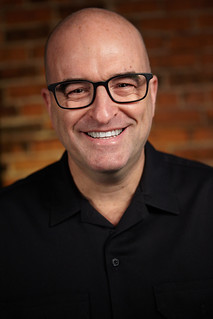
  Smith.Pete.2022 GREG BENNICK - 2023 headshot
Contributors Pete Smith and Greg Bennick

Pete Smith
Numismatic researcher and author Pete Smith of Minnesota has written about early American coppers, Vermont coinage, numismatic literature, tokens and medals, the history of the U.S. Mint and much more. Author of American Numismatic Biographies, he contributes original articles to The E-Sylum often highlighting interesting figures in American numismatic history.

Greg Bennick
Greg Bennick (www.gregbennick.com) is a keynote speaker and long time coin collector with a focus on major mint error coins and US counterstamps. He is on the board of both CONECA and TAMS and enjoys having in-depth conversations with prominent numismatists from all areas of the hobby. Have ideas for other interviewees? Contact him anytime on the web or via instagram @minterrors.

  John Nebel 2024 Bruce.Purdue.01
Website host John Nebel and webmaster Bruce Perdue

John Nebel
Numismatist, photographer, and ANS Board member and Fellow John Nebel of Boulder, CO helped the ANA and other clubs like NBS get online in the early days of the internet, hosting websites gratis through his Computer Systems Design Co. To this day he hosts some 50 ANA member club sites along with our coinbooks.org.

Bruce Perdue
Encased coinage collector (encasedcoins.info) Bruce Perdue of Aurora, Illinois has been the volunteer NBS webmaster from its early days and works each week to add the latest E-Sylum issue to our archive and send out the email announcement.

PREV       NEXT        v29 2026 INDEX         E-SYLUM ARCHIVE

Back to top

Google
Numismatic Bibliomania Societh Masthead logo

The E-Sylum is an electronic publication of the Numismatic Bibliomania Society

Copyright © 1998 - 2026