Visit our NBS Sponsors











About UsThe Numismatic Bibliomania Society is a non-profit association devoted to the study and enjoyment of numismatic literature. For more information please see our web site at coinbooks.org SubscriptionsThose wishing to become new E-Sylum subscribers can go to the following web page
Subscribe
MembershipThere is a membership application available on the web site Membership Application To join, print the application and return it with your check to the address printed on the application. Print/Digital membership is $40 to addresses in the U.S., and $60 elsewhere. A digital-only membership is available for $25. For those without web access, write to: Jeff Dickerson, Treasurer AsylumFor Asylum mailing address changes and other membership questions, contact Jeff at this email address: treasurer@coinbooks.org SubmissionsTo submit items for publication in The E-Sylum, write to the Editor at this address: whomren@gmail.com BUY THE BOOK BEFORE THE COINSale CalendarWatch here for updates! |
- WAYNE'S WORDS: THE E-SYLUM MAY 17, 2026
- NEW BOOK: WHITMAN DOUBLE EAGLES, 2ND ED.
- NEW BOOK: COINAGES IN THE ACHAEMENID EMPIRE
- NEW BOOK: ENJOYING COIN COLLECTING, 2ND EDITION
- 2026 IAPN BOOK PRIZE NOMINATIONS
- MICHAEL G. BEAN, PLATE PRINTER
- SPRING 2026 NNP SYMPOSIUM VIDEOS AVAILABLE
- VIDEO: JOHN HIGHFILL, PART 1 OF 3
- AMERICAN HISTORY IN MEDALS LECTURE
- THE DIXSON LIBRARY 1920 SYDNEY SOVEREIGN
- NOTES FROM E-SYLUM READERS: MAY 17, 2026
- ALAN STAHL RETIRES FROM PRINCETON
- UMASS LOWELL DAVID MENCHELL COIN DONATION EVENT
- VARDERA'S AI COIN CONDITION ASSESSMENT
- VOCABULARY TERM: SO-CALLED DOLLAR
- DONALD JOSEPH PFAU (1945-1985)
- HERITAGE: MESQUITE COLLECTION OF CONDER TOKENS
- ARCHIVES INTERNATIONAL SALE 113 SELECTIONS
- THE CAINE COLLECTION OF OBSOLETE BANKNOTES
- SOVEREIGN RARITIES AUCTION XXII
- THE EARLIEST KNOWN MENORAH COIN
- ANTI-VIKING COIN CHARMS
- HOLLIS NEW ORLEANS MINT MUSEUM VISIT REPORT
- BEN FRANKLIN'S LIBERTAS AMERICANA MEDAL DESIGN
- THE FIRST MODERN ZIONIST MEDALS
- LOOSE CHANGE: MAY 17, 2026
- ABOUT THIS ISSUE: MAY 17, 2026
Content presented in The E-Sylum is not necessarily researched or independently fact-checked, and views expressed do not necessarily represent those of the Numismatic Bibliomania Society.
WAYNE'S WORDS: THE E-SYLUM MAY 17, 2026
 New subscribers this week include:
Chris Huttner, courtesy Bruce Perdue,
and
Julian Wong.
Welcome aboard! We now have 6,505 subscribers.
New subscribers this week include:
Chris Huttner, courtesy Bruce Perdue,
and
Julian Wong.
Welcome aboard! We now have 6,505 subscribers.
Thank you for reading The E-Sylum. If you enjoy it, please send me the email addresses of friends you think may enjoy it as well and I'll send them a subscription. Contact me at whomren@gmail.com anytime regarding your subscription, or questions, comments or suggestions about our content.
This week we open with three new books, the 2026 IAPN Book Prize nominations, updates from the Newman Numismatic Portal, notes from readers, and more.
Other topics this week include intaglio printing, the NNP Symposium, John Highfill, Alan Stahl, David Menchell, Don Pfau, the 1920 Sydney Sovereign, auction previews, the Libertas Americana medal, and the first modern Zionist medals.
To learn more about double eagles, coinage of the Achaemenid Empire, the Semiquincentennial coins, Rebecca Salisbury, Sir William Dixson, Vardera's AI coin grader, so-called dollars, Conder tokens, James Stanley, 10th Earl of Derby, 2026 Coin of the Year Nominees, and slug laws, read on. Have a great week, everyone!
Wayne Homren
Editor, The E-Sylum

Image of the week
NEW BOOK: WHITMAN DOUBLE EAGLES, 2ND ED.
Whitman has released the long-awaited second edition of Bowers' double eagle book, including full color images, expanded coverage, updated research, and Greysheet-based pricing. -Garrett
 Whitman Brands™, a leading full-service provider of data, media, and product distribution for the numismatics and collectibles marketplace, announces the official release of Double Eagle Gold Coins by Q. David Bowers, the most recent release covering some of the most famous (and infamous) coins of the last two centuries. More than twenty years after the first edition helped establish Whitman's Red Book Series, this fully updated second edition returns with new research, modern pricing, and a stunning full-color presentation for collectors and gold enthusiasts alike.
Part of Whitman's acclaimed Red Book Series, Double Eagle Gold Coins explores the history, artistry, and collecting appeal of America's $20 gold pieces—from the Liberty Head design introduced in 1849 during the California Gold Rush to the iconic Saint-Gaudens double eagle struck until 1933. Now presented in full color and illustrated with more than 550 high-resolution photographs, the new edition offers collectors an immersive look at one of the most celebrated series in American numismatics.
Featuring updated market values derived from Greysheet–based pricing, easy-to-use GSID catalog numbers, and an insightful new foreword by renowned gold-coin expert John "JD" Dannreuther, the book delivers authoritative research alongside modern market insight. With more than 275 listings, date-by-date analysis, mintage data, grading guidance, and collecting strategies, the volume provides both beginning and advanced collectors with the definitive reference for Liberty Head and Saint-Gaudens double eagles.

America's Most Famous Gold Coins
Double eagles have long captivated collectors due to their beauty, rarity, and connection to the economic forces that shaped American history. Struck during periods of rapid expansion, financial upheaval, and artistic innovation, these large gold coins reflect the nation's evolving identity—from the Gold Rush era to the artistic renaissance of the early 20th century.
Among the notable coins explored in the book are historic rarities and key dates such as the 1850 Type 1 Liberty Head, linked to the surge of California gold; the elusive 1856-O, with a tiny mintage of just 2,250 coins; the legendary 1870-CC from the first year of the Carson City Mint; and the 1907 Liberty Head, marking the final year of that classic design. The book also delves deeply into the celebrated Saint-Gaudens double eagle series, including the breathtaking 1907 High Relief, widely regarded as one of the most beautiful coins ever struck by the United States, along with later issues such as the 1920-S, 1921, and 1927-D—coins whose rarity and mystique continue to fascinate collectors.
Interest in double eagles has grown in recent years as higher gold prices have spotlighted historic U.S. gold coinage. While their gold content is substantial, the series' artistic beauty, rich history, and rarity often place these coins far above simple bullion value—creating excitement and sustained demand among collectors.
"Few coins capture the blend of artistry, history, and enduring value like the double eagle," said Patrick Ian Perez, Chief Publishing Officer at Whitman Brands. "With the gold market drawing renewed attention to historic coinage, collectors are rediscovering these remarkable pieces of American history. This new edition brings the scholarship, imagery, and modern market insight collectors need to fully appreciate and pursue the series."
A Story Rooted in American History
The story of the Saint-Gaudens double eagle—arguably the most famous American gold coin—is deeply intertwined with the vision of President Theodore Roosevelt, who sought to elevate the artistic quality of U.S. coinage at the beginning of the 20th century. Working with acclaimed sculptor Augustus Saint-Gaudens, Roosevelt pushed the U.S. Mint to produce coins that would rival the great classical works of antiquity.
 Author Mike Moran explores this dramatic chapter in American numismatic history in greater depth in Whitman's When Coins Were King, which chronicles the cultural, political, and economic forces that shaped U.S. coinage in the late 19th and early 20th centuries. Moran's work—praised by readers far beyond traditional numismatic circles—highlights the creation of the Saint-Gaudens double eagle as one of the defining moments in American monetary and artistic history.
Rod Sullivan, a respected lawyer and active member of the Theodore Roosevelt Association, wrote in a recent review of When Coins Were King:
"Where the book truly shines is in its portraits of the personalities behind America's most famous coins. Moran's sketches of Theodore Roosevelt—the reforming president who demanded beauty as well as utility in national coinage—and sculptor Augustus Saint-Gaudens give flesh to what might otherwise be cold metal."
Sullivan further observed:
"When Coins Were King is neither nostalgic lament nor crypto-skeptical jeremiad. It is something rarer: a calm, deeply informed tour through the long arc of American money, inviting readers to ponder what has been gained—and what may have been lost—as currency shifted from substance to symbol."
Expert Insight from Leading Authorities
The second edition of Double Eagle Gold Coins includes a new foreword by John "JD" Dannreuther, one of the nation's foremost authorities on rare gold coins.
"Few coin series capture the imagination of collectors quite like the double eagle," said Dannreuther. "Their scale and story alone make them unique in American numismatics. Whitman has once again provided collectors with an indispensable reference for understanding and appreciating these remarkable coins."
A Landmark Entry in the Red Book Series
Double Eagle Gold Coins represents the second volume in the original Bowers-authored entries of Whitman's Red Book Series, which now spans nearly 30 specialized volumes exploring the coin types and programs featured in A Guide Book of United States Coins—the iconic "Red Book." The series includes enduring collector favorites such as Morgan Silver Dollars and Double Eagle Gold Coins, along with recent additions like Private and Pioneer Gold Coins of the United States. Future releases will explore additional classic series including Lincoln Cents, including updates to a collector favorite U.S. Modern Proof Sets, and a new entry, Half Eagle Gold Coins, planned for mid 2026.
About the Authors
Q. David Bowers is the most prolific and celebrated numismatic author in U.S. history. Over the course of his career he has written more than 60 reference works, including numerous volumes in Whitman's Red Book, Guidebook, and Encyclopedia Series', covering virtually every area of American coinage. A past president of both the American Numismatic Association and the Professional Numismatists Guild, Bowers has received nearly every major honor in the hobby for his scholarship, integrity, and dedication. His books, lectures, and mentorship continue to shape generations of collectors and researchers, making him one of the most influential figures in numismatics worldwide.
John West Dannreuther is one of the most respected experts in American numismatics. A professional coin dealer since 1973, he was a founding member of the Professional Coin Grading Service and served for a decade as a grader while continuing as a consultant. Dannreuther is widely known for his research on rare U.S. coins and has authored several award-winning books, including Early U.S. Gold Coin Varieties and The Official Guide to Coin Grading and Counterfeit Detection. He has received numerous honors, including the ANA Numismatist of the Year Award and the PNG Lifetime Achievement Award.
Michael F. Moran is an award-winning numismatic researcher and author whose work has earned honors from the American Numismatic Association, Professional Numismatists Guild, and Numismatic Literary Guild, including Best Specialized Book for U.S. Coins for 1849: The Philadelphia Mint Strikes Gold. He is currently serving his fourth term on the U.S. Mint's Citizens Coinage Advisory Committee and played a leading role in securing Congressional authorization for the 2021 Morgan and Peace silver dollars. Moran also serves on the executive committee of the Theodore Roosevelt Association, where he is treasurer and chairs multiple committees.
Book Details
Double Eagle Gold Coins, Second Edition
By Q. David Bowers
Softcover | Full Color
More than 550 images | 275+ listings
Greysheet-based pricing and GSID catalog numbers
When Coins Were King
By Michael F. Moran
Hardcover | Black & White
520 pages | Richly illustrated
Sweeping narrative on America's monetary and political landscape of the late 1800s and early 1900
Published by Whitman®, the most trusted name in numismatic literature, available now from Whitman.com and booksellers nationwide.
For more information about upcoming releases, as well as numismatic folders, albums, and supplies, visit whitman.com.

NEW BOOK: COINAGES IN THE ACHAEMENID EMPIRE
The University of Edinburgh has published a new book by Keith Rutter on coinage of the Achaemenid Empire. Found via the Oriental Numismatic Society, courtesy David Fanning. -Editor
Coinages in the Achaemenid Empire
Keith Rutter
 Brings together the evidence for coin production and use over the whole Achaemenid Empire
- Demonstrates how the actual production of coins was a phenomenon mostly confined to the western satrapies of the empire
- Unlike other studies of ancient coinage which focus on its spread westward into Greek lands after its invention in Asia Minor, this book looks east, to communities and kingdoms where the dominant culture was often not Greek
- Treats coins as part of the wider context of exchange and resource allocation in the empire
The Achaemenid Empire was huge and the material available for studying it is disparate. The coinages produced in the empire offer distinctive perspectives and provide insights into crucial questions about how the empire was organised and administered. The numismatic evidence is particularly important due to its first hand, contemporary nature: it speaks to us directly, not through the prism of later accounts.
Keith Rutter, an international specialist in numismatics, provides us with the first comprehensive account of the great variety of coinages produced in the Achaemenid Empire. He shows us how the iconography found on coins poses new questions on artistic influences, details of administration and religious beliefs. This highly illustrated book is the starting point for anyone who wants to understand the topic.
234 mm x 156mm
376 pages
258 colour illustrations
Edinburgh Studies in Ancient Persia
v
Published July 2026 (Hardback)
ISBN
Hardback: 9781474492713
Ebook (app): 9781474492744
Ebook (PDF): 9781474492737
For more information, or to order, see:
Coinages in the Achaemenid Empire
(https://edinburghuniversitypress.com/book-coinages-in-the-achaemenid-empire.html)
Coinages in the Achaemenid Empire (Edinburgh Studies in Ancient Persia)
(https://www.amazon.com/Coinages-Achaemenid-Edinburgh-Studies-Ancient/dp/1474492711/ref=sr_1_1)
NEW BOOK: ENJOYING COIN COLLECTING, 2ND EDITION
A new edition of Helpful Hints for Enjoying Coin Collecting has been published by the Metropolitan Coin Club of Atlanta. -Editor
 The Metropolitan Coin Club of Atlanta (MCCA) announces the release of Helpful Hints for Enjoying Coin Collecting, Second Edition, a fully updated and expanded guide to the joys and practicalities of numismatics in today's world.
Authored by renowned numismatist Bill Fivaz, with David Crenshaw as co-author, this 144-page US trade paperback builds on the beloved original—first published in 1999 with a reprint in 2004—that has guided generations of collectors. The second edition brings its timeless advice into 2026, with modern updates on topics such as digital tools, online marketplaces, high-resolution imaging, PVC-free storage, instant submissions, package tracking, and evolving grading standards.
Key features include
- Practical chapters on coin cleaning basics (with a strong emphasis on what not to do), safe storage, shopping the bourse at conventions, buying/selling through mail or auctions, mailing tips, and grading hints for popular series, including Indian cents, Lincoln cents, Buffalo nickels, Mercury dimes, Morgan dollars, and more.
- A brand-new chapter, "Understanding AU-58 and the Nuances of Coin Grading," compiles and updates several influential articles by Fivaz on why top-end About Uncirculated (AU-58) coins often represent exceptional value and eye appeal.
- Expanded sections on the modern US minting process, numismatic terms, recommended reading (categorized by topic and series), specialty clubs (with web and social media contacts), 10 rules of thumb, and a fun 25-question coin quiz.
- A warm, mentor-like tone drawn from decades of club meetings, conversations, and real-world experience—perfect for beginners and veterans alike.
In the spirit of community support, 100% of the net profits from sales are being donated to the Metropolitan Coin Club of Atlanta, helping fund educational programs, young numismatist initiatives, meetings, and club activities.
To further encourage new collectors, MCCA is providing a complimentary copy of the book to each new member who joins (one per household). MCCA encourages other coin clubs nationwide to adopt similar programs—offering this accessible, updated resource to newcomers as a welcome gift that fosters education, safe practices, and long-term enjoyment of the hobby.
"Coin collecting remains one of the most welcoming hobbies on earth," says Fivaz in the book's introduction. "This updated edition helps new people get started on the right foot, avoid expensive mistakes, and fall in love with the hobby the same way we all did."
David Crenshaw added in the preface: "My goal was to keep Bill's warm, over-the-table-at-the-club-meeting tone while making sure every piece of advice is accurate and useful in 2026 and beyond."
Priced at $19.95, the book is available for purchase through the Lulu.com Bookstore (the primary direct source), as well as major retailers such as Amazon and Barnes & Noble. Resellers can acquire copies via Ingram. The second edition of Helpful Hints for Enjoying Coin Collecting is published by the Metropolitan Coin Club of Atlanta, Inc., with editing and layout design by Peyton Smith and cover design by Lianna Spurrier.
For more information about the book, membership, or the Metropolitan Coin Club of Atlanta, visit www.mccatl.org. Join the club, grab your copy, and discover (or rediscover) why coin collecting continues to inspire curiosity, learning, and community across generations.
For more information, or to order, see:
Helpful Hints for Enjoying Coin Collecting
(https://www.lulu.com/shop/bill-fivaz-and-david-crenshaw-and-lianna-spurrier-and-peyton-smith/helpful-hints-for-enjoying-coin-collecting/paperback/product-95wnme5.html)
Fivaz & Crenshaw Release Fully Revised Second Edition of "Helpful Hints for Enjoying Coin Collecting" – All Profits Benefit Atlanta Coin Club
(https://www.mccatl.org/fivaz-crenshaw-release-fully-revised-second-edition-of-helpful-hints-for-enjoying-coin-collecting-all-profits-benefit-atlanta-coin-club/)
To read the earlier E-Sylum article, see:
ENJOYING COIN COLLECTING
(https://www.coinbooks.org/esylum_v02n14a04.html)

2026 IAPN BOOK PRIZE NOMINATIONS
At my request Peter Preston-Morley of the International Association of Professional Numismatists kindly forwarded this list of nominations for the 2026 IAPN Book Prize. Several of these have not yet been mentioned in The E-Sylum and we'll feature them in coming weeks. Thank you. -Editor
Peter adds:
"For this year's Prize there are 27 entries; 16 from Europe, 7 from North America and 4 from Asia. The Prize will be determined by vote of the members of the IAPN at its General Assembly in Rome on 24 May, and the winner will receive CHF 1,000, a medal and a diploma at a future award ceremony."


BERTUZZI, Stefano. Corpus Numismatum Omnium Romanorum Pontificum: Pio IX nelle medaglie, nelle croci capitolari e nella faleristica
3 vols. Edizioni D'Andrea, Rome, 2025
ISBN 979-1-28207-242-7
Price: €300. Order from www.liberdomus.it
CHORNEY, Dominic. Treasures of the Occult: A Guide to History's Unorthodox Money
Stanley Gibbons Baldwin's, Ringwood, UK, 2025
ISBN 978-1-83688-477-4
Price: GBP 34.95. Order from www.baldwin.co.uk


CRIBB, Joe and BRACEY, Robert. Kushan Coins and History: A Type Catalogue of Kushan, Kushano-Sasanian and Kidarite Hun Coins Based on the Collection of the British Museum
2 vols. British Museum, London, 2025
ISBN 978-0-86159-191-6
Price: GBP 60. Order from www.britishmuseumshoponline.org


DELZANNO, Roberto. Norges Myntbok – Coins from Norway 995-2025
Roschberg mynthandel AS, Oslo, 2025
ISBN 978-9-15311-993-7
Price: NOK 699. Order from www.roschberg.no
DELZANNO, Roberto. Rome the Legacy: Coins as Storytellers
Roberto Delzanno Numismatic Books, Älvsjö, Sweden, 2025
ISBN 978-9-15271-684-7
Price: NOK 500. Order from www.oslomyntgalleri.no


FARHI, Yoav. The City of Gaza in the Roman Period: The Numismatic Evidence
Israel Numismatic Society, Jerusalem, 2025
ISBN 978-9-65784-939-2
Price: US $175. Order from yizhar.shamir@gmail.com
FISCHER-BOSSERT, Wolfgang, and WARTENBERG, Ute. When Coinage was Born. Treasures from the Zhuyuetang Collection
American Numismatic Society, New York, 2025
ISBN 978-0-89722-748-3
Price: US $100. Order from membership@numismatics.org

GITLER, Haim, JOHANOFF, Mati and TAL, Oren. A Corpus of Samarian Coinage from the Persian Period
2 vols. Israel Numismatic Society, Jerusalem, 2025
ISBN 978-9-65784-941-5
Price: US $200. Order from yizhar.shamir@gmail.com
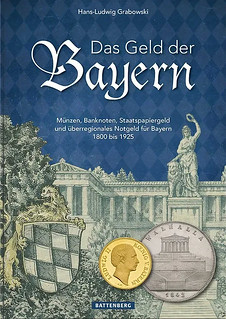

GRABOWSKI, Hans-Ludwig. Das Geld der Bayern. Münzen, Banknoten, Staatspapiergeld und überregionales Notgeld für Bayern 1800 bis 1925
Battenberg Bayerland Verlag, Regenstauf, Germany, 2025
ISBN 978-3-86646-256-4
Price: €24.90. Order from www.battenberg-bayerland.de
GREENHALGH, David. The Galata Guide to Medieval Pennies Part III: Edward IV – Henry VII 1461-1489
Galata Print, Llanfyllin, Wales, 2025
ISBN 978-1-90871-528-9
Price: GBP 45. Order from www.galata.co.uk


HOOVER, Oliver. "Let Us Have Peace". A Catalogue of Indian Peace Medals at the American Numismatic Society
American Numismatic Society, New York, 2025
ISBN 978-0-89722-392-8
Price: €225. Order from www.brepols.net
JONES, Mark. William Wyon
Spink, London, 2025
ISBN 978-1-91171-807-9
Price: GBP 180. Order from www.pen-and-sword.co.uk


KORCHNAK, Lawrence. Siege Notes of the World 1793-1913
Kolbe & Fanning, Gahanna, USA, 2025
ISBN 0-9715747-3-1
Price: US $70. Order from www.numislit.com
KRAUSS, Ursula. Victor Huster Medailleur. Werkverzeichnis 1972 bis 2025
Ursula Krauss, Baden-Baden, Germany, 2025
ISBN 978-3-00082-994-9
Price: €80. Order from www.victor-huster.de


LATELLA, Emanuele. Pecunia Non Olet: Le monete raccontano l'impero dei Flavi
Edizioni D'Andrea, Rome, 2025
ISBN 979-1-28207-211-3
Price: €85. Order from www.liberdomus.it
LOCATELLI, Stefano. The Florentine florin: The politics and culture of money in the Middle Ages
Manchester University Press, Manchester, UK, 2025
ISBN 978-1-52615-813-0
Price: 85 GBP. Order from www.manchesteruniversitypress.co.uk


McDOWELL, Christopher. Medals of the Americas: The Betts Companion, Volume II
Colonial Coin Collectors Club, USA, 2025
ISBN 979-8-21856-895-5
Price: US $140. Order from www.numislit.com
MEZZAROBA, Leonardo. Venezia Attraverso le Medaglie l'Ottocento
Libra Media & Services, San Giustino, Italy, 2025
ISBN 978-8-89459-669-4
Price €90. Order from www.cronanumismatica.com


MOORHEAD, Sam. Roman Imperial Coinage. Volume 5, Part 5: Carausius and Allectus
2 vols. Spink, London, 2025
ISBN 978-1-91171-806-2
Price: GBP 195. Order from www.pen-and-sword.co.uk
ORTIZ, Emilio. Cuba Specialized Banknote Catalogue 1857-1960
Emilio Ortiz, San Juan, Puerto Rico, 2025
ISBN 978-0-98617-546-6
Price: US $139. Order from cubanbanknotes@gmail.com


RODRIGUEZ, J. David. Moneda Española 1868-2024
José David Rodriguez Soage, Vigo, Spain, 2025
ISBN 978-8-40968-850-0
Price: €100. Order from www./enumismatic.com
SALEM, Ibrahim. The Banknotes of the Levant: Lebanon, Syria
Ibrahim Salem, Dubai, 2025
ISBN 978-9-94869-735-0
Price: GBP 40. Order from www.noonans.co.uk


SEDWICK, Daniel. Arce's Doubloons: A Die Study of the Colombian Gold Cob Coinage of Assayer Arce in the name of Charles II, 1692-1714
Sedwick & Associates, Winter Park, USA, 2025
ISBN 979-8-99373-901-4
Price: Softback $49.95, hardback $89.95. Order from www.sedwickcoins.com
SHAGALOV, Vladimir. Coins of Pre-Islamic Central Asia
Vladimir Donovich Shagalov, Tashkent, Uzbekistan, 2025
ISBN 978-9-91091-712-7
Price: US $140. Order from www.numislit.com

SMITH, Richard [KIRSCH, Arne]. The Coinage of the House of Brunswick-Calenberg-Hannover During the Period 1714-1837
Battenberg Gietl Verlag, Regenstauf, Germany, 2025
ISBN 978-3-86646-261-8
Price: €39. Order from www.battenberg-gietl.de
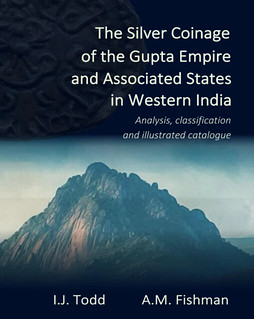
TODD, Ian, and FISHMAN, Alexander. The Silver Coinage of the Gupta Empire and Associated States in Western India
Ian Todd and Alexander Fishman, privately published, 2025
ISBN 979-8-33654-525-8
Price: US $78.95. Order from www.amazon.co.uk

WRIGHT, Tim. Travels with the Naxos Masterpiece
Spink, London, 2025
ISBN 978-1-91171-808-6
Price:
To read the earlier E-Sylum articles, see:
NEW BOOK: TREASURES OF THE OCCULT
(https://www.coinbooks.org/v28/esylum_v28n41a07.html)
NEW BOOK: ROME - THE LEGACY
(https://www.coinbooks.org/v28/esylum_v28n22a02.html)
NEW BOOK: WHEN COINAGE WAS BORN
(https://www.coinbooks.org/v28/esylum_v28n50a05.html)
NEW BOOK: THE MONEY OF BAVARIA
(https://www.coinbooks.org/v28/esylum_v28n03a07.html)
NEW BOOK: INDIAN PEACE MEDALS AT ANS
(https://www.coinbooks.org/v28/esylum_v28n41a05.html)
NEW BOOK: SIEGE NOTES OF THE WORLD 1793–1913
(https://www.coinbooks.org/v28/esylum_v28n48a02.html)
NEW BOOK: VICTOR HUSTER CATALOGUE RAISONNE
(https://www.coinbooks.org/v28/esylum_v28n42a08.html)
NEW BOOK: BETTS MEDALS COMPANION (1747-1763)
(https://www.coinbooks.org/v28/esylum_v28n25a02.html)
NEW BOOK: ROMAN IMPERIAL COINAGE VOL. V.5
(https://www.coinbooks.org/v28/esylum_v28n11a04.html)
NEW BOOK: ARCE'S DOUBLOONS
(https://www.coinbooks.org/v29/esylum_v29n02a04.html)
NEW BOOK: COINS OF PRE-ISLAMIC ASIA
(https://www.coinbooks.org/v28/esylum_v28n51a03.html)
NEW BOOK: SILVER COINAGE OF THE GUPTA EMPIRE
(https://www.coinbooks.org/v28/esylum_v28n13a02.html)
NEW BOOK: TRAVELS WITH THE NAXOS MASTERPIECE
(https://www.coinbooks.org/v28/esylum_v28n36a04.html)
To learn more about IAPN, see:
https://www.iapn-coins.org/
MICHAEL G. BEAN, PLATE PRINTER
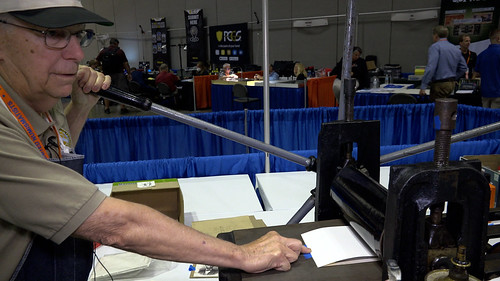
Mike Bean operating his spider press
I caught this post from Matt Hansen Saturday night on the National Bank Note Collectors Facebook group. -Editor
This was posted about two hours ago on Paper Money Forum:
"It is with great sadness that I have been told that my long time friend Mike Bean has passed. One of the last of the old school master craftsmen… a great loss to the dying intaglio trade. May he rest in peace…"
I am sure that many here knew and appreciate great person that Mike was and the tremendous talent that he possessed as an intaglio plate printer. Mike was a master printer who was trained at the Bureau of Engraving and Printing and worked there for many years. He was enthusiastic about sharing intaglio printing with anyone he came in contact with, and was a regular fixture at the annual F.U.N. show each year with his spider press intaglio printing live demonstrations.
Mike will be greatly missed.
Matt included some nice photos and linked to a David Lisot video from 2022. -Editor

Mike's BEP Business card


Mike Bean (left) and Greg S Alexander in Orlando, Florida
Here's the video, filmed at the FUN Summer Coin Convention 2022. -Editor
I met Mike at multiple coin shows over the years. He will definitely be missed. Bibliophiles can see examples of his exacting craft in Mark Tomasko's book The Feel of Steel: The Art and History of Bank Note Engraving in the United States. Mike printed the frontispiece and supplied original engraved prints for the book. -Editor
Mark Tomasko writes:
"I was very sorry to hear of Mike Bean's passing. He was an outstanding plate printer whom I was privileged to call a friend for more than 30 years. I met Mike on a visit to the Bureau's Engraving Division in the mid-1990s, when he was the prover for that department. He was a friend ever since. Mike and the late Milt Teichman are the two people who taught me intaglio printing. I am reminded of Mike every time I give someone my calling card, which is his work, and for several years I used his Christmas cards.
"But most importantly, my best book, the fine printing (Bird & Bull Press, 2009) edition of The Feel of Steel, would not have been possible without Mike. The frontispiece and suite of engravings at the back of the book were Mike's work. I had the privilege and pleasure of visiting Mike in Maryland to print many of the dies for the engravings on a hand-fed die stamping press, for which I served as Mike's assistant. One of the large dies and two plates were printed by Mike on a spider press. The whole project of producing the prints was a fascinating experience and a large job. I was extremely fortunate that Mike was willing and enthusiastic about doing it. I think it was the finest work of his career. Mike also printed the engraved frontispiece for the second, or trade edition of The Feel of Steel published by the American Numismatic Society in 2012."
To read the posts, see:
https://www.papermoneyforum.com/post/mike-bean-13837914
https://www.facebook.com/share/p/1HCTCiK4s5/
To watch the David Lisot video, see:
CoinTelevision: Spider Press Creates Lincoln Intaglio Prints at FUN Summer Coin Convention 2022
(https://www.youtube.com/watch?v=81u9K7B_bzc)
To read the earlier E-Sylum articles, see:
NEW BOOK: THE FEEL OF STEEL - BANK NOTE ENGRAVING IN THE U.S.
(https://www.coinbooks.org/esylum_v12n39a04.html)
VIDEO: MIKE BEAN AND THE SPIDER PRESS
(https://www.coinbooks.org/v25/esylum_v25n40a10.html)
SPRING 2026 NNP SYMPOSIUM VIDEOS AVAILABLE
Newman Numismatic Portal Project Coordinator Len Augsburger submitted this announcement. -Editor
NNP Symposium Videos Now Available
The tenth Newman Numismatic Portal Symposium was held April 23-25 in Schaumburg, IL, in conjunction with the Central States Numismatic Society convention. Video from this event, covering 20 presentations, is now available on YouTube. YouTube views are accreting even as I perform the video uploads, and among the more popular presentations is John Feigenbaum and Patrick Perez speaking on "Rare Coin Pricing in a Volatile Precious Metals Market." A big thanks to all the speakers who participated in this year's Symposium, to Central States Numismatic Society for ever-present onsite support, and to Lianna Spurrier of Numismatic Marketing for producing this event.
Link to 2026 NNP Symposium videos:
https://www.youtube.com/playlist?list=PLDk2lseZ-iyodoUj7VRU5iSYB348Gm3KD
Wow - what a wonderful batch of numismatic presentations. I missed the show and also missed a chance to watch a couple of the events live online. I'm looking forward to catching up with the videos. Here's a list of presentation titles with some selected videos embedded right here for easy viewing. -Editor
A Century Later: Reanalyzing a Byzantine Gold Coin Hoard in the Wulfing Collection
Chicago Coin Club Meeting
Eric P. Newman and The Fantastic 1804 Dollar
Tales from the Counter: Encounters with Rare Coins that have Crossed My Path at Harlan J. Berk
The Semiquincentennial Coins: What's Going Right… and What's Going Wrong
Coin Show Security
CSNS and MNS: They Grew Up Together
The Tokens of A. M. Abrahams, Santa Fe Trail Outfitter
Feature Video: U.S. Anniversaries in Numismatics, 1776-2026
Congressional Gold Medals: Intersection of Art and History
Models, Markets, and Mania: How AI Is Destroying The Hobby (And How It Can Save Us)
Columbus, Ohio, Civil War Tokens
What's Going On at the Coin Show?
Liberty Seated Collectors Club Meeting
American Red Cross in World War II
Coin Portraiture in Antiquity and Today
Rare Coin Pricing in a Volatile Precious Metals Market
The US Mint's Celebration of the Semiquincentennial
The Scrapbooks of Rebecca Salisbury: One of America's Earliest Women in Numismatics
NSDR: Steel On Steel at the Mint - How Die Clashes Happen and Why They're Fun to Spot
To read the earlier E-Sylum article, see:
DIRECTOR HOLLIS SPEAKS AT NNP SYMPOSIUM
(https://www.coinbooks.org/v29/esylum_v29n17a06.html)

VIDEO: JOHN HIGHFILL, PART 1 OF 3
The David Lisot Video Library on the Newman Numismatic Portal can be found at:
https://nnp.wustl.edu/library/multimediadetail/522852
We highlight one of his videos each week in The E-Sylum. Here's one from 2016 with David interviewing National Silver Dollar Roundtable founder John Highfill. -Editor

John Highfill talks about how he started in coins and became known for silver dollars. He shares how he started in coins more than 40 years working with Harrison Phillips, the influence of his mother, how met his wife Marlene, his children, his baseball career, how he got involved selling records for ABC, how he did is business in coins, sale of the 1852/51 Augustus Humbert for over a million dollars, founding the National Silver Dollar Roundtable, how he bought the Silver Dollar Convention in 1982, the NSDR and its people and website, how he sold a billion dollars of Beenie Babies, creation the first finest known Morgan collection, his time as a show promoter, creation of the "Comprehensive U.S. Silver Dollar Encyclopedia," stories of Walter Breen, and how he would want to be remembered.
Featuring John Wayne Highfill, Founder, National Silver Dollar Roundtable, David Lisot, Interviewer, CoinTelevision.com. Publication date 2016.
To watch the complete video, see:
Numismatic Personality: John Highfill, King of Silver Dollars (part 1 of 3)
(https://youtu.be/YzUiBSKrTH8)
Numismatic Personality: John Highfill, King of Silver Dollars (part 1 of 3)
(https://nnp.wustl.edu/library/book/595529)
AMERICAN HISTORY IN MEDALS LECTURE
A lecture on "250 Years of American History in Medals" will take place May 27 at the Fall River Historical Society (Massachusetts). -Editor
 The Fall River Historical Society plans to host an illustrated lecture by Alexander Krapf, first vice president of the American Numismatic Society, at 6:30 p.m. May 27.
The event, titled "250 Years of American History in Medals," will take place at Bristol Community College, 777 Elsbree St., Room C111. The lecture is free and open to the public, according to a community announcement.
The program will offer a visual journey through 250 years of American history, highlighting both well-known and lesser-known events commemorated in medallic form. Attendees will learn how these small objects can provide insight into the minds and attitudes of past generations.
Krapf, who discovered medallic art later in life, began collecting medals 14 years ago. He views each medal as not only an extraordinary object of art but also a lasting reminder of a moment in history. In addition to his role with the American Numismatic Society, Krapf serves as a trustee of the American Medallic Sculpture Association.
To read the complete articles, see:
Fall River Historical Society lecture explores 'American history in medals'
(https://www.heraldnews.com/story/news/local/2026/05/16/fall-river-lecture-explores-american-history-in-medals/90102104007/)
2026 Lecture Series: American History in Medals
(https://fallriverhistorical.org/events/)

THE DIXSON LIBRARY 1920 SYDNEY SOVEREIGN
Zach Filis writes:
"To supplement Don Cleveland's submission about David Gee, I thought the below article would interest some of your readers. Three additional TPG submissions have been certified since the article was written. Howard has granted permission to publish his article in the E-Sylum."
Thank you. The article by Howard Hodgson was a paper given at the June 2020 online conference of the Australian Numismatic Society. -Editor
 Sir William Dixson (1870-1952) was a wealthy businessman with a wide range of interests and during his lifetime he amassed a collection of over 20,000 items.
This included paintings, books, manuscripts, maps, trophies, curios, china and some 8,000 coins, medals, and tokens. Dixson was a benefactor to a number of
institutions but the major recipient of his generosity was the State Library of New South Wales. He bequeathed the State Library his entire collection which is now housed in the Dixson Galleries (1929) and the Dixson Library (1959).
Sir William Dixson (1870-1952) was a wealthy businessman with a wide range of interests and during his lifetime he amassed a collection of over 20,000 items.
This included paintings, books, manuscripts, maps, trophies, curios, china and some 8,000 coins, medals, and tokens. Dixson was a benefactor to a number of
institutions but the major recipient of his generosity was the State Library of New South Wales. He bequeathed the State Library his entire collection which is now housed in the Dixson Galleries (1929) and the Dixson Library (1959).
The Dixson numismatic collection is one of the largest ever assembled in Australia and is world-renowned. A selection of proclamation coins, including holey dollars and dumps, sovereigns and other coins, medals and tokens are on display in the State Library's public galleries and entrance is free.


Dixson Library 1920 Sydney Sovereign
Image: State Library of New South Wales
Amongst the Dixson collection is a 1920 Sydney sovereign, one of Australia's rarest coins. Despite the Dixson collection being so well-known, you will not see any mention of this coin in any auction catalogue or on any dealer's website. There will be chapter and verse about other famed examples of this rare date, such as those from the Quartermaster, Bentley and George collections but the Dixson coin never rates a mention. Why is this? Because the Dixson coin is a fake. But it was not always like this. Unfortunately the Dixson collection was plundered by David Gee, Australia's most prolific coin forger, in the late 1960s and early 1970s and a police investigation found that he had stolen at least 33 coins, substituting his own fakes for the real items. The State Library did not have a comprehensive inventory of the Dixson collection at the time so it is probable that more were stolen. Gee received a seven year prison sentence in 1979 for his various crimes and died in 2013. (Gee had appeared in court many times in the 1950s and 1960s and was convicted of offences relating to counterfeiting stamps in 1963.) That the 1920 Sydney sovereign in the Dixson collection is a fake has been confirmed to the State Library in a professional valuation undertaken by a prominent Australian firm of numismatists. The coin, which is believed to be a genuine sovereign of the correct date but from another Branch of the Royal Mint, has had its mintmark altered to make it appear to have been struck at Sydney.
This author has personally examined the coin at the State Library. It appears to have been heat-treated to soften the metal and remove the original mintmark before replacing it with an ‘S'. The metal has flowed and caused a ridge of gold to appear on the ground line beneath the broken lance. The letters ‘WWP' hidden in the ground line, also beneath the broken lance, have been obliterated by the metal melting. There is also a depression and a lack of detail in the ground line to the right of the ‘S' where the original mintmark looks to have been wiped away. A die-crack runs through the numeral ‘1' in the date and if a 1920 Perth or 1920 Melbourne sovereign with a similar die-crack could be found, it could be helpful in identifying the ‘host' coin.

Interestingly, both obverse and reverse of this coin are ‘pickled' which is likely to have been caused by the heat applied to the coin. It is said that the obverses of other surviving 1920 Sydney sovereigns which exhibit ‘pickled' reverses are unimpaired. Whether there are any implications to be drawn from the coin in the Dixson collection regarding the other surviving 1920 Sydney sovereigns this author is unable to say. This author has not examined any of the other surviving coins and therefore has no personal knowledge of any of them.
One theory put forward by others is that the so-called Quartermaster coin is the one stolen by Gee from the Dixson collection. It has unimpaired surfaces and is the only surviving 1920 Sydney sovereign to have been independently verified as genuine (it has been certified as SP66 by PCGS). Surprisingly, none of the surviving coins with ‘pickled' surfaces have been independently authenticated which is remarkable considering the substantial sums that have been paid for such coins in recent years.
Items in the Dixson numismatic collection are listed on the website of the State Library of New South Wales together with many high-quality digital images. The collection contains other Gee fakes. He stole the rarest and most valuable coins from the collection so readers wanting to see more can probably hazard a guess at where to start looking.
To read the complete article, see:
THE DIXSON LIBRARY 1920 SYDNEY SOVEREIGN BY HOWARD HODGSON
(https://the-ans.com/library/Conf2020HHodgson.html)
To read the earlier E-Sylum article, see:
DAVID GEE, AUSTRALIA'S AUDACIOUS COIN FORGER
(https://www.coinbooks.org/v29/esylum_v29n19a18.html)
THE BOOK BAZARRE
NOTES FROM E-SYLUM READERS: MAY 17, 2026
 Subscriber Profile: Julian Wong
New subscriber Julian Wong is a numismatist from China.
He writes:
"My main research focus is modern Chinese banknotes. I have been engaged in collecting and research for over 20 years and have published more than ten academic papers in China's most authoritative numismatic journal, China Numismatics. I hope to have the opportunity to learn from collectors and scholars in the United States."
Welcome aboard! -Editor
For more information on China Numismatics, see:
China Numismatics (????)
(https://caod.oriprobe.com/journals/zgqb/China_Numismatics.htm)
A Jewelry "Red Book"
Carol Bastable writes:
 "I was searching on eBay and came across this 1917 jewelry catalog called The Red Book. Of course I immediately thought of the coin Red Book and found it interesting seeing this much earlier namesake book. Of course today's Red Book was actually titled A Guide Book of United States Coins. At some point it began being referenced in short as "The Red Book" due to its characteristic red cover. It was a nice concise nickname for casual conversation among collectors and dealers. As people continually referenced the book by that name, "The Official Red Book" was added to the cover in 1999. In 2014, an expanded version of the book gave us A Guide Book of United States Coins Mega Red, with Mega Red being the largest and most prominent text on the page."


Thanks. Looks interesting, even for people who don't collect watches and jewelry. But there's only one A Guide Book of United States Coins. -Editor
To read the complete lot description, see:
1917 Old The Red Book Jewelry Store Catalog Many Illustrations Watches, Gold
(https://www.ebay.com/itm/276357898395)
Carlotta Champagne's Bathroom Coin Floor
Julia Casey writes:
"I was reading an Architectural Digest article about Las Vegas showgirls buying and preserving (and glorifying!) the style of vintage homes. Carlotta Champagne's bathroom floor is made of coins. I found the photo on her Instagram."
 To design her fantasy hideaway, Champagne set to work making structural repairs such as replacing the pool room roof and adding decorative touches, including a leopard print carpet in the primary bedroom and a bathroom floor embedded with vintage coins. A glass coffee table in the sunken lounge features a topless mermaid base, salvaged from the high-camp Madonna Inn in California, where Champagne is often photographed.
Thanks. These show up in the media every now and then. Nice. -Editor
See also:
https://www.instagram.com/p/C6KD1BSypUh/
To read the complete article, see:
Inside the Homes of the Vintage-Obsessed Modern Showgirls Keeping Las Vegas Kitsch Alive
(https://www.architecturaldigest.com/story/inside-homes-vintage-obsessed-showgirls-las-vegas-kitsch)
ALAN STAHL RETIRES FROM PRINCETON
Alan Stahl, Curator of Numismatics in Princeton University Library's Special Collections and lecturer in the Departments of Art & Archaeology, Classics, and History, has retired from Princeton after 22 years. -Garrett
 Faculty from various disciplines, students and staff (present and former), and, of course, a treasury of numismatists gathered at Prospect House on May 13 to pay tribute to Alan Stahl upon his retirement from his position as Curator of Numismatics in Princeton University Library's Special Collections, which also brings to a close his long career of lecturing in the Departments of Art & Archaeology, Classics, and History.
Crowning the tribute, Stahl was presented with an advance copy of Coins & Money in the Middle Ages; Studies in Honor of Alan Stahl. The festschrift volume was edited by Princeton Department of History alumni Merle Eisenberg '18 and Lee Mordechai '17, alongside David Yoon, Curator of Medieval, Renaissance, and Early European Numismatics at the American Numismatic Society, which plans to release the book next month.
"Alan's magisterial impact on the field of numismatics is immense and the number of faculty, students, and colleagues at his reception and book presentation reflected this."
— Professor Merle Eisenberg '18

"Alan's magisterial impact on the field of numismatics is immense and the number of faculty, students, and colleagues at his reception and book presentation reflected this," said Eisenberg, who earned his Ph.D. from the Department of History in 2018. "He taught me the importance of using coins as a key type of evidence for medieval history, which I have used since taking a seminar with him as a graduate student. Our edited volume reveals the breadth and depth of his scholarship, with essays from students, friends, and colleagues across the U.S. and the world."
Guests at the reception rose to speak in Stahl's honor, each reaffirming his inimitable place atop his field. Addressing the large gathering, Professor of History Helmut Reimitz recalled his astonishment upon arriving on campus to find himself working alongside "THE Alan Stahl!" Over a career spanning five decades, Stahl has shaped the discipline by writing 166 scholarly articles and reviews, curating 27 exhibitions, and authoring or editing 13 books, so far.
But his legacy goes far beyond statistics. "It is a triumph to make your niche stand out among a cabinet of niches, so to speak," said Eric White, Scheide Librarian and Assistant University Librarian for Special Collections, Rare Books and Manuscripts. "Numismatics became a buzzing operation with Alan at the helm, causing pangs of admiring jealousy among colleagues and immense gratitude on behalf of the many, many students he brought into the numismatic fold."
Growing the Collection, Mentoring the Future
Stahl has been a driving force behind several international initiatives for the study of numismatics, including the Framing the Late Antique and early Medieval Economy (FLAME) project database and Nomisma.org, a linked open data platform. Three of his major acquisitions for Princeton were the Donald and Theodotou collections of Byzantine coins, and a growing collection of rare Axumite coinage. "Under his watch, Princeton's coin collection, which was already a very important one, has become even richer and stronger," said Professor of History Jack Tannous.

"Alan not only built upon and stewarded one of the nation's premier collections of world numismatics," White elaborated, "he simultaneously lectured in Princeton's departments of Art & Archaeology, History, and Classics, as well as for the Byzantine Numismatics at Dumbarton Oaks," with previous academic appointments at Rutgers University, the American Numismatic Society, the Università di Venezia, the University of Michigan, Rice, Notre Dame, and MIT.
Stahl lectured in the Department of Art & Archaeology throughout his 22 years at Princeton, regularly teaching courses on numismatics as well as on the 1930s Princeton-led expedition to Antioch. And colleagues regularly brought their courses in fields ranging from art history and archaeology to classics, history, and religion to understand the myriad information coins hold.
"Emailing Dr. Stahl about cataloguing coins my first week at Princeton was one of the best decisions I've ever made. Over four years, he guided my research interests and showed me what professional numismatics is really like. I am incredibly grateful for his generosity."
—Grant Bruner '23
"He has the ability to make money talk, so to speak," said Tannous. "I have had my undergraduate students coming to do special coin sessions with Alan since 2013, and for the students who did these sessions, I think they were always a highlight of the course. He has a marvelous way of bringing the importance of coins to life and the students are able to look at and handle coins from many centuries ago—they can actually touch objects from our period, which is amazing."
On a given afternoon in Stahl's thriving numismatic laboratory one might see students working in tandem on Islamic, Aksumite, and Chinese knife coins while he astounded a visiting scholar with veins of numismatic evidence that connected directly to their work. His generosity and enthusiasm bred a gracious, stimulating, inclusive space to explore numismatics.
"Alan has been a teacher and mentor for an uncountable number of students," said Elena Baldi, Byzantine Numismatics Cataloger and Linked-Open-Data Coordinator who has worked alongside Stahl on the numismatics collection since 2023. "In the three years we worked together, I have seen many students working, learning and thriving under Professor Stahl's supervision," she said. "The numismatics office has been buzzing with young minds learning to record coins, but also how to use them to understand history, economy, art history. So many of his students are now accomplished scholars."
A case in point, among those paying tribute to Stahl at the reception were A&A archaeology minor Susan McLernon '27. "Dr. Alan Stahl's class on Antioch set me on the path toward my minor in Archaeology and working in Numismatics," she said. "His kindness and willingness to share his immense knowledge have been a boon to my education. More than that, he has been a fantastic mentor as I navigate the next steps in my life. I can't imagine my time here at Princeton without him, and he will be sorely missed!"
Students have also entered Stahl's numismatic realm as student workers, with a group of graduate and undergraduate students cataloging coins throughout the year.
"Emailing Dr. Stahl about cataloguing coins my first week at Princeton was one of the best decisions I've ever made," said Grant Bruner '23, who earned a certificate in A&A's Program in Archaeology. "Over four years, he guided my research interests and showed me what professional numismatics is really like." Today, Bruner is drawing on those foundational lessons as he embarks on his doctoral dissertation research at the University of Pennsylvania—Dr. Stahl's own alma mater. "I am incredibly grateful for his generosity," Bruner said. So much so, that he traveled to Princeton in the middle of his General Exams to pay homage.
Good at Coins, Medals—and People
"His team in special collections was a really special place in the university—generous, kind, welcoming, open…A real collegial learning space—everything that can be good about a university when it is functioning at its best."
— Professor Jack Tannous
Yoon efficiently captured the essence of Stahl's career when he concluded "Alan is not only good at coins and medals, but also good at people." This gift for relationship building transformed the department into a hub of collaborative study and cultivated a global scholarly network.
"His team in special collections was a really special place in the university—generous, kind, welcoming, open…A real collegial learning space—everything that can be good about a university when it is functioning at its best," said Tannous. "Stahl has been able to create, for decades, a real community of interest and learning around Princeton's coin collection."
"While Alan plans to maintain his productive and central role in scholarship on numismatics, his departure from the library creates an enormous void in this specialized academic discipline," said White, "A valued colleague, collaborator, scholar, and teacher, Alan will be missed by all who worked with him and remembered with gratitude for many years to come."
Stahl's formal retirement from Princeton is no conclusion. He will continue to shape global numismatic scholarship— alongside the generations of scholars carrying his legacy forward.
To read the complete article, see:
Alan Stahl Retires after 22 Years as Curator of Numismatics and Lecturer in A&A
(https://artandarchaeology.princeton.edu/whats/news/alan-stahl-retires-after-22-years-curator-numismatics-and-lecturer-aa)
UMASS LOWELL DAVID MENCHELL COIN DONATION EVENT
The University of Massachusetts Lowell campus held an event on April 24, 2026 to thank David Menchell for his contributions to the university, including many coins and artifacts. -Editor
In spring 2025, the UMass Lowell History Department received a donation of thirty-eight ancient Hellenistic and Roman coins from David Menchell, a notable coin collector and philanthropist. On Friday, April 24, he visited UMass Lowell, and Professor Jane Sancinito organized an event to honor him. After Professor Sancinito spoke about the history and pedagogical importance of the collection, five of her students gave brief presentations about the iconography (both front and back) of coins they had studied.
Gabriela Manduca Oliviera discussed a coin depicting Mercury and a ship's prow; Lauren Torpey, Janus and a ship's prow; Owen Schultz, Emperor Vespasian and Victory; Gabriela Mejia, Emperor Commodus and Providentia; and Anthony Avoglia, Emperor Gordian III and Pietas. The coin collection was on display for the event, during which refreshments were served.
Here are several photos of the event. -Editor


Jane Sancinito

Gabriela Manduca Oliviera

Lauren Torpey

Owen Schultz

Gabriela Mejia

Anthony Avoglia


David Menchell adds:
"It's great to see students involved and enthusiastic about history based on their working with coins. In addition to this event, I was given a tour of the campus and saw some interesting artwork on display, including a sculpture by Mico Kaufman honoring the French composer Claude Debussy. Kaufman was a resident of Lowell; his papers are archived at the school."
What a nice event for a great donation (and donor)! -Editor

VARDERA'S AI COIN CONDITION ASSESSMENT
Recently we discussed Quantitative Coin Grading's digital microscope for coin grading. An ad in the June 2026 Numismatist alerted me to another company using computer vision to identify, grade and price coins and other collectibles - Vardera. An article about coins from their blog is republished here with permission. Vardera positions their system as a high-end tool for third-party grading companies, auction companies and marketplaces. -Editor
How AI Measures strike, luster, and surfaces.
 Professional graders agree on a coin's grade only 85-90% of the time within one point. That is not a flaw in your team. It is the inherent ceiling of human visual assessment applied to a 70-point scale where a single grade difference can mean thousands of dollars. Now multiply that challenge by submission volumes that grow faster than you can hire, and the math becomes unavoidable: AI coin condition assessment is not a threat to your standards. It is the only way to maintain them.
This guide breaks down exactly how AI evaluates the same four factors your graders evaluate: strike quality, luster, surface preservation, and eye appeal. You will see the specific techniques, the accuracy data, and how production-grade systems differ from the consumer apps making headlines.
Why Grading Bodies Need Scalable Coin Condition Analysis at Scale
Your graders are good. The problem is arithmetic.
Between them, PCGS and NGC have certified over 112 million coins. PCGS alone has graded 42.5 million coins valued at over $36 billion, while NGC has certified more than 70 million. The coin grading services market reached $935.9 million in 2024 and is growing at 9.3% annually. Yet turnaround times for economy-tier submissions still stretch to 45 business days, and an estimated 90% of viable coins in the United States remain ungraded.
The bottleneck is not demand. It is supply of qualified graders:
- Training a competent grader takes years of mentorship under senior specialists
- Each coin requires focused attention across multiple condition factors
- Processing time per coin compounds across thousands of daily submissions
- Turnaround times range from 2 to 65 business days depending on service level
These are not problems you can solve by hiring faster. They are structural constraints that require a new approach, one that augments your existing grading expertise with consistent, scalable AI coin condition assessment.
The Four Pillars of Sheldon Scale AI Grading
The Sheldon Scale, the 70-point system developed in 1948, evaluates every coin across four core factors: strike, luster, surfaces, and eye appeal. Any credible AI grading system must analyze these same factors. Anything less, and you are not grading; you are guessing.
Here is how production-grade AI actually evaluates each one.
Strike Quality Assessment: How AI Measures Detail Definition
Strike quality indicates how well the dies transferred design details to the planchet. A strong strike means every hair strand, feather barb, and letter edge is crisp. A weak strike leaves devices flat or indistinct, particularly on high-relief areas.
AI measures strike quality through a technique called edge detection. Specifically, Sobel edge detection operators quantify the sharpness of transitions between raised devices and flat fields. The system computes continuous gradient values that measure how abruptly brightness changes at device edges, providing a numerical proxy for what your graders assess visually.
More advanced systems use wedge-based spatial analysis, dividing the coin into angular sections (typically eight per side) and evaluating strike sharpness independently across each zone. This matters because strike quality often varies across a single coin: the center may show a full strike while peripheral details remain soft. By analyzing each wedge separately, AI captures the same positional nuances your graders notice when they rotate a coin under magnification.
The AI then compares these measurements against reference images of known full-strike examples for the same type and date. The delta between the submission and the reference produces a strike quality score calibrated to the Sheldon scale.
Coin Luster Analysis: Quantifying How Light Interacts with Surfaces
Luster is the first feature to deteriorate as a coin circulates. Original mint luster creates that distinctive cartwheel effect, a pattern of light reflection caused by flow lines in the metal from the striking process. Your graders tilt coins under focused light to evaluate this. AI does something analogous, but with mathematical precision.
HSV color space clustering separates hue, saturation, and value (brightness) components of each pixel in the coin image. For gold coins, researchers have identified five distinct color categories through this clustering, each corresponding to different levels of luster preservation. Perceptually-weighted brightness computation then models how the human eye perceives reflectivity across the coin's surface.
This approach lets AI distinguish between:
- Original mint luster: Consistent, directional reflectivity following flow lines
- Cleaned surfaces: Unnaturally uniform brightness with disrupted flow lines
- Artificial retoning: Color patterns inconsistent with natural oxidation chemistry
- Cabinet friction: Localized luster loss on high points only
The ability to differentiate original luster from artificial treatments is critical for certification integrity. A coin that has been cleaned or artificially retoned may appear bright to a quick visual inspection but fails under algorithmic analysis of its reflectivity patterns.
Coin Surface Preservation AI: Detecting Contact Marks, Hairlines, and Damage
Surface preservation is where grading precision has the highest dollar impact. The price difference between an MS-63 and MS-65 on a key-date coin can reach five figures, and the primary differentiator is often surface quality. An MS-64 coin might sell for $100 while the same coin at MS-65 commands $200 or more, according to coin grading guides. On rare dates, those multiples grow dramatically.
AI evaluates surfaces by analyzing high-resolution images for:
- Contact marks (bag marks): Indentations from coin-to-coin contact during storage and transport
- Hairlines: Fine, parallel scratches typically from improper cleaning or wiping
- Rim dings: Damage to the coin's edge from handling or drops
- Environmental damage: Corrosion, spotting, or discoloration from chemical exposure
The system classifies each detected mark by severity (depth, length, width), location (on a primary focal area vs. the field), and quantity. This mirrors the methodology your graders use, but eliminates the variability that comes from fatigue, lighting conditions, or the subjective weight different graders give to different mark types.
For grading bodies processing thousands of submissions daily, this consistency is the point. Two human graders might disagree on whether a particular contact mark in Liberty's cheek field drops a Morgan Dollar from MS-65 to MS-64. The AI applies the same threshold every time, creating a reproducible baseline your team can calibrate against.
Eye Appeal: The Subjective Factor AI Is Learning to Quantify
Eye appeal is the factor most graders call subjective, and the one that makes skeptics most doubtful about AI. It encompasses the overall visual impression: color, toning, balance, and the indefinable quality that makes certain coins stand out at the same technical grade.
AI approaches eye appeal as a composite score derived from the three technical factors above, plus toning analysis. Color algorithms evaluate whether toning patterns are aesthetically desirable (rainbow crescent toning, for example, typically adds appeal) versus detracting (dark, splotchy oxidation).
The key to AI's ability to quantify eye appeal is training data volume. When a model trains on 200M+ unique items, it does not learn a single grader's preferences. It encodes the collective judgment of thousands of expert evaluations, effectively averaging out individual biases while preserving the consensus on what constitutes positive eye appeal for each coin type.
This is where population data and market intelligence strengthen the model further. Coins with high eye appeal consistently trade at premiums above their technical grade. By incorporating pricing data, AI learns the market's implicit definition of eye appeal, measured in dollars, not opinions.
How Automated Coin Grading Accuracy Compares to Human Experts
The central question for any grading body evaluating AI: is it accurate enough?
The data is encouraging. A peer-reviewed study on automated grading of Saint-Gaudens Double Eagles found:
- 86% exact-grade match using feature-engineered artificial neural networks
- 98% accuracy within three grades on the Sheldon scale
- 91.3% classification accuracy across five coin types in a separate academic study
For context, professional human graders agree on exact grade only 85-90% of the time. That means the best automated systems already match or exceed inter-grader consistency on specific coin types.
Production-grade systems push further. Vardera Labs' deep category models achieve 97-99% authentication accuracy by analyzing mint marks, casting variances, and edge cases that generic image recognition misses. Their coin model is live and in production, processing submissions in seconds rather than the weeks or months of traditional turnaround.

The 97-99% figure represents authentication accuracy (genuine vs. counterfeit, correct attribution). Condition grading on the full 70-point Sheldon scale is a harder problem with more granularity. But the trajectory is clear: AI is approaching and, in some metrics, exceeding human consistency.
AI Coin Grading at Production Scale: From Consumer App to API Infrastructure
Most AI coin grading tools today are consumer apps: upload a photo, get a grade estimate, pay a monthly subscription. These tools serve individual collectors well, but they are not built for grading body operations.
The difference between a consumer app and production-grade API infrastructure is the difference between a calculator and an accounting system:
- Throughput: Consumer apps process one coin at a time. API infrastructure handles thousands per hour with consistent latency.
- Integration: Apps require manual photo uploads. APIs plug directly into existing submission intake workflows, imaging systems, and grading management software.
- Data feedback: Apps are static. Production systems implement a compounding data flywheel where every graded coin improves model accuracy for the next one.
- Accuracy depth: Apps use generic image models. Production-grade deep category models are purpose-built for numismatics, trained on 200M+ items with domain-specific feature engineering.
Vardera Labs built the world's first coin category model as API infrastructure, the same integration pattern as Stripe for payments or Twilio for communications. Their system is live and in production, with 6+ category models on the roadmap covering coins, comics, cards, and more.
Augmenting Human Graders, Not Replacing Them
Here is the concern no grading body executive will say publicly but every one of them is thinking: if AI can grade coins, why do we need human graders at all?
The answer is that you need both, and AI makes your human graders more valuable, not less.
Consider the workflow AI enables:
- Triage: AI processes every submission and flags confidence levels. Coins where the model assigns high confidence (clear-cut grades with no anomalies) move through an expedited path. Coins with lower confidence, those with potential cleaning, questionable toning, or grade-borderline characteristics, route to your senior graders.
- Pre-screening: Before a human grader touches a coin, they see the AI's assessment with specific rationale: strike quality score, luster analysis, surface mark inventory. This front-loads the information gathering that currently eats into grading time.
- Consistency baseline: AI provides a reproducible starting point. Your graders can calibrate against it, and you can identify when individual graders drift from consensus over time.
- Edge case focus: Your most experienced graders spend their time where expertise matters most. Problems like cleaned coins, environmental damage, and altered surfaces require human judgment informed by decades of experience. AI handles the volume so your experts handle the complexity.
The result is not fewer graders. It is each grader producing higher-quality output on the coins that actually need their expertise, while the overall operation processes more submissions with shorter turnaround times and tighter consistency.
Your grade is your product. AI does not change what you grade. It changes how fast and how consistently you can deliver it.
See the full article online for an additional section of Frequently Asked Questions. The company also works with other collectibles including sports cards and comic books.
Questions or press inquiries may be sent to Vardera's Tommy Barth VP, Operations at tommy@vardera.com. -Editor
To read the complete article, see:
Strike Quality, Luster, and Surfaces: How AI Assesses Coin Condition at Scale
(https://www.vardera.com/blog/ai-coin-condition-assessment)
To visit the Vardera website, see:
https://www.vardera.com/
To read earlier E-Sylum articles, see:
ON COMPUTER COIN GRADING
(https://www.coinbooks.org/v21/esylum_v21n08a08.html)
DIGITAL COIN GRADING MICROSCOPE LAUNCHES
(https://www.coinbooks.org/v29/esylum_v29n05a08.html)
MORE ON QUANTITATIVE COLLECTORS GROUP
(https://www.coinbooks.org/v29/esylum_v29n06a17.html)
NOTES FROM E-SYLUM READERS: FEBRUARY 15, 2026 :
Quantitative Coin Grading Indiegogo Campaign
(https://www.coinbooks.org/v29/esylum_v29n07a12.html)
VOCABULARY TERM: SO-CALLED DOLLAR
Here's another entry from Dick Johnson's Encyclopedia of Coin and Medal Terminology. -Editor
So-called Dollar. Originally political medals struck in silver similar to a United States silver dollar including such items as Bryant dollars (1896, 1900) and Lesher or Referendum dollars (1900–1901). Later the term was corrupted to include any medal similar in size and relief – but not necessarily similar in composition – to the U.S. silver dollar (1 1/2-inch or 38mm) or gold dollar (14mm). The term is similar in concept to a German word, gedenkthaler, a coin-like medal in similitude to the large silver coins of three or five-mark denomination, and to the French word, jetton, for a small, coin-size medal. True so-called dollars are indeed coin-medals, struck on a coining press, utilizing equipment normally used for striking large coins: upsetting (rimming) machines, blanking dies, collars and such.
There was no problem utilizing exact diameters of existing coins when these medals were issued for the U.S. centennial of 1876 and for the Columbian Exposition of 1892-93, nor for the political medals of 1896-1901. Silver dollar-size vending machines and turnstiles did not exist at that time but with the rise of this industry in the 20th century, slug laws were enacted to prohibit the manufacture of coin-like pieces that would work in these machines.
These problems were noted as early as 1904 when the round Louisiana Purchase Exposition coin of admission (HK 305) was replaced by the octagonal varieties (HK 306 and 307). The round variety was too similar to a silver dollar. Later, in 1939, the Manufacturers Trust Company, a bank which obtained the contract to issue the official medal of the 1939-40 New York World's Fair, changed from its original intention for a round medal to an oval one (HK 491) just because of their concern with these slug laws.
The term "so-called dollar" is not precise and current usage has further corrupted it to include a wide variety of medals from 33 to 45mm diameter (including commercial, fair and exposition pieces, and others). To clarify the term, it should be employed to include only those medals of the above-mentioned diameters struck in a coining press, and exclude art medals of any size. See coin-medal, souvenir medal, commemorative medal, gedenkthaler, jetton.
To read the complete entry on the Newman Numismatic Portal, see:
So-called Dollar
(https://nnp.wustl.edu/library/dictionarydetail/516774)
DONALD JOSEPH PFAU (1945-1985)
E-Sylum Feature Writer and American Numismatic Biographies author Pete Smith submitted this article on NBS charter member Don Pfau. Thanks! -Editor
For the 40th anniversary of the Numismatic Bibliomania Society, I wrote an article about the NBS charter members. Don Pfau was given membership number 61. At the time, I couldn't distinguish him from others with the same name.
Last week I found an item in the November-December 1985 issue of The Repository. Cal Wilson wrote, "I have just received word that Don Pfau, an immediate past board member of the Numismatic Bibliomania Society, passed away in late November, following a long bout with cancer. Don was more interested in philatelic literature that he was in numismatic pursuits, although he did own a number of fine and scarce coin works. When the organization of the NBS was first being discussed, I contacted Don to see if he would accept nomination for a board position, and he readily accepted, and offered his services as required. My most sincere sympathy to his family."
That was enough for me to research his biography.
Donald J. Pfau was born in Monterey, California, on November 20, 1945. He was the son of Joseph Jacob Pfau (1916-1992) and Virvil Evelyn Sinkey (1919-2006).
I did not find the family listed in the 1950 Census. It is likely they were listed under a different spelling.
In July of 1982, he was listed as member 2252 in the France and Colonies Philatelic Society, Inc. He listed his interests as philatelic literature. He was also a member of the U. S. Classics Philatelic Society.
Don Pfau was elected to serve on the executive board for the Numismatic Bibliomania Society and assumed the office on February 19, 1983. He served until the end of his term at the ANA Convention in 1985.
In 1985, he was living at 3639 Sancroft, Orchard Lake, Michigan.
A hundred lots from Pfau were included in the Money Tree 15th Mail Bid Sale of December 5, 1992. The catalog has this small tidbit, "Pfau… worked for a major firm which auctioned philatelic literature." It also mentioned that Don was married to Colleen with sons Wade and Cody.
Lot 6 in the sale included the first 106 issues of Numismatic Literature published by the ANS. The lot realized $150, the only three figure price in his consignment.
Donald Pfau died on November 11, 1985, just short of his 40th birthday. He is buried in Commerce Village Burying Ground in Michigan. I did not find a published obituary.
I won't say that he never got his name in a newspaper. I will say that I was unable to find anything for him on the newspapers.com site.
I asked NBS Historian Joel J. Orosz if Pfau was mentioned in the minutes for society meetings during his term in office. Unfortunately, those records have not survived in the archives. Joel was also unable to locate a photograph of Pfau.
The Constitution for the NBS states, "Numismatic literature includes books, periodicals, catalogs and other written or printed material…" That ‘other' material can include dealer house organs, newspapers, correspondence and club histories.
Donald J. Pfau left little published records of his life and involvement in the hobby. The examples of Don Pfau this week and Cal Wilson last week illustrate the importance of recording what is happening in numismatics and preserving those records where they can be studied later.
To read the earlier E-Sylum article, see:
CALVIN OTTO WILSON, JR. (1944-2018)
(https://www.coinbooks.org/v29/esylum_v29n19a17.html)

HERITAGE: MESQUITE COLLECTION OF CONDER TOKENS
Heritage Auctions will be selling The Mesquite Collection of Conder Tokens on May 18. Select items are discussed below. -Garrett
One of our most curious auctions closing this month is the Mesquite Collection of Conder Tokens, a testament to the everyday history of Georgian and Regency Britain, Scotland, Wales, and Ireland. Never before has Heritage offered such a complete assemblage of Conder Tokens; rarity and preservation collide in an extensive spectrum of series, manufacturers, and regions. But what are Conder Tokens? And how do they interact with the social framework of the period?
Conder Tokens came from humble beginnings, originally circulating among the lower classes as a substitute monetary system due to severe shortages of the United Kingdom's official currency and coinage. These provincial Tokens were usually copper, used at local businesses, and decorated with depictions associated with trade and manufacture. What started as utilitarian soon turned into a "collecting mania", leading to individuals and organizations manufacturing tokens with the express purpose of appealing to contemporaneous collectors. The majority of Conder Tokens were issued between 1787 and 1804, with many still acting as trade coinage in addition to being an early collectible.
It was this "mania" that spurred the creation of a number of Token series, many represented in the Mesquite Collection; Token manufacturers would create thoughtful and precise dies for their pieces, ranging from satirical and political designs to historical and architectural. Conder Tokens offer an intriguing opportunity to see into common ideas and discussions of the period, as well as what knowledge was considered inherent. These themes are explored throughout the Mesquite Collection, but the following are particularly interesting due to the Tokens' portrayals of public sentiment, and perhaps most curious, what references are lost to modern viewers.
Featuring a caricature of then, Prime Minister, Pitt the Younger, as 'the Uncharitable Monopolizer'. Accused of starving the poor, the inscriptions on this piece reveal concern felt by a public 'in distress' over rising wheat prices. Seemingly referring to the preluding years before the Corn Laws of 1815, with public debate and amendments occurring in both 1791 and 1804; the high price of food staples fostered a sense of injustice felt by the lower classes.
This motif continues to remain up to interpretation. In the book "Political and commemorative pieces simulating tradesmens' tokens 1770-1802" by R. C. Bell, it is suggested that the "Guinea Pig" referenced in the legend is King George III, whose likeness appeared on Guinea coins, while the "Million Hogg" is playing on the term used in sheep husbandry, Northumbrian for newly shorn yearling sheep. Another interpretation saw that the "Million Hogg" was making light of the king, and his permittance of taxation, with the "Guinea Pig" an allusion to the hair powder tax of 1795 that supplemented the financing of wars with France, making those that agreed to this unpopular tax "Guinea Pigs".
Political rivals Charles James Fox and William Pitt the Younger were both sons of high profile politicians, both rising in office during the reign of George III. Fox, originally a prominent British Whig parliamentarian, became increasingly anti-monarchist, openly opposing King George III and supporting the American war for independence and French Revolution. Pitt, referred to as a "new Tory" and a favorite of the King, became the youngest British Prime Minister after his appointment to replace Fox's Coalition. Though the exact situation being referenced is unclear, it is said that Fox, Opposition leader, is gleeful at the unpopularity of Pitt, who faced 'sedition and revolt'.
This piece makes reference to the long history of the snail in nursery rhymes. According to Arthur Waters in his 1906 book, Notes Gleaned From Contemporary Literature, Etc.: Respecting The Issuers Of The Eighteenth Century Tokens: "This curious design implied the snail can do as it likes; but the Englishman, under the powers that were, at the end of the eighteenth century, could do nothing without coming within the clutches of the Law and tyranny of the private owners of the land. This is another of Spence's hits at landlordism."
Commemorating the postal carrier, Thomas Hobson, who delivered along the route between London and Cambridge. Hobson also notably kept a livery stable in Cambridge; upon noticing his fastest horses being overworked, he instituted a rotation where customers were only offered the next horse in the rotation. It was this policy that became known as "Hobson's choice," essentially saying take it or leave it, it's this or nothing. Hobson's horse rotation thus inspired this expression. Hobson also funded the construction of a watercourse known as Hobson's Conduit, which provided the population of Cambridge fresh drinking water.


Middlesex. "Political & Social - The Uncharitable Monopolizer" Penny Token 1800 MS61 Brown NGC, D&H-239 (S). Political and Social Series. Edge: Plain. By John Hancock. Man trying to swallow the world, the map displaying the British Isles, wearing cap reading POSSESSION decorated with devil holding bushel of wheat, THE UNCHARITABLE MONOPOLIZER WILL STARVE THE POOR / MORE WAREHOUSE ROOM / WHEAT IS BUT 22 / SHILLINGS A BUSHEL, encircling the globe: TAKE NOT WHAT WAS MADE FOR ALL, below: 1800 / IN DISTRESS // An open hand dropping coins into other outstretched hands, radiant eye above reading WELL DONE, around: THE CHARITABLE HAND / COME. ALL. YE. DISTRESSED *. An increasingly scarce issue, one of just seven present on the NGC Census, with only four previous auction results, most recently from 2014.
Featuring a caricature of then Prime Minister, Pitt the Younger,
as 'the Uncharitable Monopolizer'. Accused of starving the poor,
the inscriptions on this piece reveal concern felt by a public 'in
distress' over rising wheat prices. Seemingly referring to the
preluding years before the Corn Laws of 1815, with public debate
and amendments occurring in both 1791 and 1804; the high price of
food staples fostered a sense of injustice felt by the lower
classes.
From the Mesquite Collection of Conder Tokens
To read the complete item description, see:
Middlesex. "Political & Social - The Uncharitable Monopolizer"
Penny Token 1800 MS61 Brown NGC,
(https://coins.ha.com/itm/great-britain/great-britain-middlesex-political-and-social-the-uncharitable-monopolizer-penny-token-1800-ms61-brown-ngc-/a/61588-25130.s?ctrack=200071&type=featured-1-coinus-news-tem051326)

Middlesex. Spence's "Odd Fellows" 1/2 Penny Token ND (1790s) MS64 Brown PCGS, D&H-795b. Edge: Plain. Janiform Head of George III and ass, A MILLION HOGG 1795 A GUINEA • PIG * ODD * FELLOWS // Janiform heads of Pitt and Fox, ODD ** FELLOWS. * QUIS RIDES.
This motif continues to remain up to interpretation. In the book "Political and commemorative pieces simulating tradesmens' tokens 1770-1802" by R. C. Bell, it is suggested that the "Guinea Pig" referenced in the legend is King George III, whose likeness appeared on Guinea coins, while the "Million Hogg" is playing on the term used in sheep husbandry, Northumbrian for newly shorn yearling sheep. Another interpretation saw that the "Million Hogg" was making light of the king, and his permittance of taxation, with the "Guinea Pig" an allusion to the hair powder tax of 1795 that supplemented the financing of wars with France, making those that agreed to this unpopular tax "Guinea Pigs".
Political rivals Charles James Fox and William Pitt the Younger
were both sons of high profile politicians, both rising in office
during the reign of George III. Fox, originally a prominent British
Whig parliamentarian, became increasingly anti-monarchist, openly
opposing King George III and supporting the American war for
independence and French Revolution. Pitt, referred to as a "new
Tory" and a favorite of the King, became the youngest British Prime
Minister after his appointment to replace Fox's Coalition. Though
the exact situation being referenced is unclear, it is said that
Fox, Opposition leader, is gleeful at the unpopularity of Pitt, who
faced 'sedition and revolt'.
From the Mesquite Collection of Conder Tokens
To read the complete item description, see:
Middlesex. Spence's "Odd Fellows" 1/2 Penny Token ND (1790s)
MS64 Brown PCGS,
(https://coins.ha.com/itm/great-britain/great-britain-middlesex-spence-s-odd-fellows-1-2-penny-token-nd-1790s-ms64-brown-pcgs-/a/61588-25108.s?ctrack=200071&type=featured-2-coinus-news-tem051326)


Middlesex. Bayly's "Museum" 1/2 Penny Token ND (1790s) MS65
Brown NGC, D&H-253 (S). By James. Crocodile and nature
scene, A CROCODILE TO BE SEEN ALIVE AT G. BAYLYS MUSEUM FOR . //
Rattlesnake before tree, JAMES below, ALL SORTS OF NATURAL HISTORY
X 242 PICCADILLY . Expanses flash with oil slick-like iridescence,
as a bright tangerine and mauve surrounds devices.
From the Mesquite Collection of Conder Tokens
To read the complete item description, see:
Middlesex. Bayly's "Museum" 1/2 Penny Token ND (1790s) MS65
Brown NGC,
(https://coins.ha.com/itm/great-britain/great-britain-middlesex-bayly-s-museum-1-2-penny-token-nd-1790s-ms65-brown-ngc-/a/61588-25058.s?ctrack=200071&type=featured-3-coinus-news-tem051326)


Middlesex. Spence's 1/2 Penny Token ND (1790s) MS66 Brown
NGC, D&H-760 (S). E: Plain. ENGLISH SLAVERY, A plump man
sitting at a table, eating a large amount // A lean man on the
ground, gnawing a bone, FRENCH LIBERTY. Ample glossiness accentuate
these mahogany surfaces with bitingly satirical design
elements.
From the Mesquite Collection of Conder Tokens
To read the complete item description, see:
Middlesex. Spence's 1/2 Penny Token ND (1790s) MS66 Brown
NGC,
(https://coins.ha.com/itm/great-britain/great-britain-middlesex-spence-s-1-2-penny-token-nd-1790s-ms66-brown-ngc-/a/61588-25104.s?ctrack=200071&type=featured-4-coinus-news-tem051326)


Durham - Sunderland. "Iron Bridge" Penny Token 1796 MS66 Brown
NGC, D&H-3 (RR). E: ON DEMAND IN LONDON LIVERPOOL OR
ANGLESEY . X . View of a bridge with two boats passing underneath,
curving legend above // Legend in 8 lines.
From the Mesquite Collection of Conder Tokens
To read the complete item description, see:
Durham - Sunderland. "Iron Bridge" Penny Token 1796 MS66 Brown
NGC,
(https://coins.ha.com/itm/great-britain/great-britain-durham-sunderland-iron-bridge-penny-token-1796-ms66-brown-ngc-/a/61588-25016.s?ctrack=200071&type=featured-5-coinus-news-tem051326)


Cambridgeshire - Cambridge. Kempson's "Hobson Cambridge Carrier" Penny Token 1799 MS65 Brown NGC, D&H-9 (R). By Hancock. Edge: VALUE ONE PENNY PAYABLE AT CAMBRIDGE. Horse and rider, HOBSON . CAMBRIDGE . CARRIER + 1596 +, in exergue: DIED 1630 / AGED 86 // Stone conduit, HOBSONS CONDUIT BUILT 1614 / JAMES BURLEIGH'S TOKEN CAMBRIDGE + 1799 +.
Commemorating the postal carrier, Thomas Hobson, who delivered
along the route between London and Cambridge. Hobson also notably
kept a livery stable in Cambridge; upon noticing his fastest horses
being overworked he instituted a rotation where customers were only
offered the next horse in the rotation. It was this policy that
became known as "Hobson's choice," essentially saying take it or
leave it, it's this or nothing. Hobson's horse rotation thus
inspired this expression. Hobson also funded the construction of a
watercourse known as Hobson's Conduit, which provided the
population of Cambridge fresh drinking water.
From the Mesquite Collection of Conder Tokens
To read the complete item description, see:
Cambridgeshire - Cambridge. Kempson's "Hobson Cambridge Carrier"
Penny Token 1799 MS65 Brown NGC,
(https://coins.ha.com/itm/great-britain/great-britain-cambridgeshire-cambridge-kempson-s-hobson-cambridge-carrier-penny-token-1799-ms65-brown-ngc-/a/61588-25005.s?ctrack=200071&type=featured-6-coinus-news-tem051326)
ARCHIVES INTERNATIONAL SALE 113 SELECTIONS
Here are some selected lots from the May 27 sale by Archives International Auctions. -Garrett


Ottawa, Canada, 1991, $20, P-97tp, BC-58bPE, Bonin | Thiessen signatures, "Printers Essay" DuraNote Polymer paper test banknote, Printed on DuraNote polymer plastic paper substitute, the obverse has the portrait of Queen Elizabeth II at right and the m/c undertint with security feature and Pin-punch SPECIMEN. The reverse has the normal design and color with the "Common Loon" swimming duck on a lake with trees in the background and with the security device also appearing on the back. This essay note was part of a project by Mobil Oil for testing petroleum based hydrocarbon polymer paper for printing banknotes. Note Appears Choice to Gem Uncirculated. BABN.
To read the complete item description, see:
Bank of Canada 1991 20 Printers Essay DuraNote Polymer Paper Banknote Canada Bank of Canada
(https://auction.archivesinternational.com/Bank-of-Canada-1991-20-Printers-Essay-DuraNote-Polymer-Paper-Banknote-Canada-Bank-of-Canada_i60026235)


Cyprusƒ.., 1976. Central Bank of Cyprus, 500 Mil, P-42b, Issued Banknote, Green on m/c underprint, Arms at right with map below, Back is green with mountain road lined with trees at center, S/N K/38 151240, Uncirculated condition. BWC.
To read the complete item description, see:
Cyprus Central Bank of Cyprus 1976 Issued Banknote
(https://auction.archivesinternational.com/Cyprus-Central-Bank-of-Cyprus-1976-Issued-Banknote_i60026265)


Russia - North Caucasus, 1918. 100 Rubles, P-S594, Issued Banknote, Black on light blue and light brown underprint, Steam passenger train at upper left, Back is m/c with Caucasus map showing railroad's main line from Rostov-on-the-Don to the Petrovski and Baku, S/N A14836, PMG graded Gem Uncirculated 65 EPQ.
To read the complete item description, see:
Russia Vladikavkaz Railroad Co 1918 Issued Banknote
(https://auction.archivesinternational.com/Russia-Vladikavkaz-Railroad-Co-1918-Issued-Banknote_i60026358)

Omaha City, Nebraska Territory, 1856. $5 I/C Territorial Warrant, Blue print with red underprint and simple blue border, Allegorical woman riding deer at top left with sailor and woman seated by his feet at bottom right, S/N 648, Bond is in Fine to VF+ condition with damage to margins.
To read the complete item description, see:
NE Treasurer of Nebraska Territory Territorial Warrant 1856 I C Certificate
(https://auction.archivesinternational.com/NE-Treasurer-of-Nebraska-Territory-Territorial-Warrant-1856-I-C-Certificate_i60026389)

New York, 1917. $10 FRB New York Specimen Participation Certificate, Brown print with Brown border and underprint, Bald Eagle at left above numeral, Specimen overprint and POCs, S/N 00000 61215, PMG graded Choice About Uncirculated 55 EPQ. ABNC.
To read the complete item description, see:
NY U S Liberty Loan 1917 Specimen Participation Certificate
(https://auction.archivesinternational.com/NY-U-S-Liberty-Loan-1917-Specimen-Participation-Certificate_i60026405)


Massachusetts, 1867. Heath's Greatly Improved and Enlarged Infallible Government Counterfeit Detector, At Sight, applicable to all banks in the United States and Canadas, with genuine designs from the original government plates, by authority from the United States Treasury, Banking House and Counting Room Edition. 7.25 x 9.75 inches, bound in black with gold title imprint on cover. First 2 pages features an engraved design of the United States Treasury building, with 7 presidents depicted above, and at right is an engraved plate title cover. 38+ pages, with 11 engraved plates. All plates are in exceptional condition. This is as close as most of us will ever be to a proof or issued example of the higher denominations. Great reference as well as exceptional counterfeit detector. Outer cover is worn with some damage to binding, still in Fine-VF condition for its age. Scarce counterfeit detector edition.
To read the complete item description, see:
MA Heath s Infallible Counterfeit Detector At Sight 1867 Book
(https://auction.archivesinternational.com/MA-Heath-s-Infallible-Counterfeit-Detector-At-Sight-1867-Book_i60026450)

Wells Fargo & Co., ND (ca.1900), $20 Proof Traveler's Check, Olive gray-green on thin semi-glossy card, intaglio printed, Native American at left, Margins with various countries exchange rate equivalencies, PMG graded Gem Uncirculated 65 EPQ, with light toning at bottom margin. Republic BNC. Rare in this format
To read the complete item description, see:
Wells Fargo Co ND ca 1900 Proof Traveler s Check
(https://auction.archivesinternational.com/Wells-Fargo-Co-ND-ca-1900-Proof-Traveler-s-Check_i60026466)


Illinois...., 1897. 1 Share I/U Capital Stock Certificate, Black print with green border and underprint, Allegorical woman soaring with eagle above moving train at top left corner with view of expo at center, S/N A7493, Certificate is signed by Harlow N. Higinbotham, the president of the Exposition, VF to VF+ condition. WBNC.
To read the complete item description, see:
IL World s Columbian Exposition 1897 I U Stock Certificate
(https://auction.archivesinternational.com/IL-World-s-Columbian-Exposition-1897-I-U-Stock-Certificate_i60026588)

San Francisco, California...., 1874. 10 Shares Capital Stock I/U Certificate with pink underprint " Unassessable" in middle, vignette of a ship at left with counterfoil with eagle, XF condition. Bacon & Co., Printers, Clay St. (SF). Possibly a mining stock certificate.
To read the complete item description, see:
CA Consolidated Hidden Treasure Co 1874 I U Stock Certificate
(https://auction.archivesinternational.com/CA-Consolidated-Hidden-Treasure-Co-1874-I-U-Stock-Certificate_i60026652)

THE CAINE COLLECTION OF OBSOLETE BANKNOTES
Stack's Bowers will be selling The Caine Collection of Obsolete Banknotes on May 28. Select items are discussed below. -Garrett

Richmond, Virginia. Bank of the Commonwealth. 1861 $100. PMG Very Fine 30. No. 627. Plate A. Chartered in 1858, the Bank of the Commonwealth was ultimately short-lived and the bank's charter was repealed in 1861. The Bank of the Commonwealth nonetheless continued operations until 1865 when the bank's offices were burned when Union forces during the so-called "Evacuation Fire" which consumed much of downtown Richmond. Today notes on this institution are recognized as rarities and the Whitman Encyclopedia of Obsolete Paper Money Vol. 8 notes that "the $20, $50, and $100 denominations will pose any serious challenge to obtain." Bidders should also note that the Treasurer's signature line is cancelled on this particular specimen.
Estimate: $300 - $500.
To read the complete item description, see:
Richmond, Virginia. Bank of the Commonwealth. 1861 $100. PMG Very Fine 30.
(https://auctions.stacksbowers.com/lots/view/3-1SWQ2Y/richmond-virginia-bank-of-the-commonwealth-1861-100-pmg-very-fine-30)


Malden, Virginia. Kanawha Bank. 18xx $10. PMG Very Good 10. Remainder. No. None. Plate A. Settled in 1814, the area that eventually became Malden was originally known as Kanawha Saline owing to area salt wells. The Bank of Malden was organized roughly 25 years later in 1839 and ultimately moved locations in 1858 and rechartered becoming the Bank of Charleston. At most two-dozen pieces are believed to be outstanding on this institution per the Whitman Encyclopedia of Obsolete Paper Money Vol. 8.
Estimate: $500 - $1,000.
To read the complete item description, see:
Malden, Virginia. Kanawha Bank. 18xx $10. PMG Very Good 10. Remainder.
(https://auctions.stacksbowers.com/lots/view/3-1SWQ1L/malden-virginia-kanawha-bank-18xx-10-pmg-very-good-10-remainder)


Front Royal, Virginia. Bank of Manassa. 1859 $10. PMG Very Fine 20. No. 490. Plate A. Chartered in 1853, the Bank of Manassa was founded by a local merchant by the name of Edward B. Jacobs who would also serve as the bank's President through 1859 when the bank closed its doors following repeated withdrawals that emptied the bank's coffers. This relatively sudden failure is attributed to the threat of impending conflict per the Whitman Encyclopedia of Obsolete Paper Money Vol. 8. The Whitman text further mentions that the bank's empty safe was discarded in 1935 as fill for a parking lot when the building was gutted and converted to a drug store, but this little tidbit fails to strike at the rarity issued notes pose collectors. In fact, most known notes on this bank are represented by fragments on city-issued notes that were pressed into circulation during the early 1860s as the American Civil War drained specie from circulation making this a rare opportunity to be had for the collector looking to compose a denomination set for this institution.
Estimate: $400 - $600.
To read the complete item description, see:
Front Royal, Virginia. Bank of Manassa. 1859 $10. PMG Very Fine 20.
(https://auctions.stacksbowers.com/lots/view/3-1SWQ0B/front-royal-virginia-bank-of-manassa-1859-10-pmg-very-fine-20)


Sandwich, New Hampshire. Carroll County Bank. 1855 $1. PCGS Currency About New 53 Apparent. Stains; Minor Edge Damage; Mounted on Cardstock. Proof. Plate B. Imprint of W.L. Ormsby. New York. A functional demonstration of Ormsby's unit system discussed by Peter Huntoon in the article "Ormsby's Unit System & Series of 1896 Educational Silver Certificates" in Paper Money. This Obsolete Proof features an interlocking allegorical assemblage with overlaid "ONE" counters evident at various points while the bank title and guarantee text may be found in non-traditional positions. An unidentified male portrait may be seen at right below "NEW HAMPSHIRE" while no cancellations may be observed in the signature panels. This institution ultimately became the short-lived Carroll County National Bank (Charter# 1071) in 1865. PCGS Currency comments "Stains; Minor Edge Damage; Mounted on Cardstock."
Estimate: $2,000 - $3,000.
To read the complete item description, see:
Sandwich, New Hampshire. Carroll County Bank. 1855 $1. PCGS Currency About New 53 Apparent. Stains; Minor Edge Damage; Mounted on Cardstock. Proof.
(https://auctions.stacksbowers.com/lots/view/3-1SWP6I/sandwich-new-hampshire-carroll-county-bank-1855-1-pcgs-currency-about-new-53-apparent-stains-minor-edge-damage-mounted-on-cardst)

Madisonville, Mississippi. Bank of Madison County. 1844 $100. PMG Choice Fine 15. Remainder. No. 1237. Plate A. Even the Whitman Encyclopedia of Obsolete Paper Money Vol.7 says little about this enigmatic institution which perhaps failed during the early 1840s. Between the amount of Remainders plated in the Whitman text and the comment from PMG, it is very possible that this piece was falsely circulated. PMG comments "Ink Falsely Added."
Estimate: $300 - $500.
Whitman Plate Note.
To read the complete item description, see:
Madisonville, Mississippi. Bank of Madison County. 1844 $100. PMG Choice Fine 15. Remainder.
(https://auctions.stacksbowers.com/lots/view/3-1SWORF/madisonville-mississippi-bank-of-madison-county-1844-100-pmg-choice-fine-15-remainder)

Newark, Delaware. Bank of Newark. 1856 $2. PMG Very Fine 20. No. 786. Plate A. Incorporated in 1853, the Bank of Newark ultimately folded in 1865 and became the National Bank of Newark (Charter# 1536) which lingered until 1913. Today notes on this institution are considered "exceptionally rare" in the proverbial eyes of reference material such as the Whitman Encyclopedia of Obsolete Paper Money Vol. 8 where this very note stands as the only issued note from this bank plated in that text.
Estimate: $400 - $700.
To read the complete item description, see:
Newark, Delaware. Bank of Newark. 1856 $2. PMG Very Fine 20.
(https://auctions.stacksbowers.com/lots/view/3-1SWN4A/newark-delaware-bank-of-newark-1856-2-pmg-very-fine-20)

SOVEREIGN RARITIES AUCTION XXII
Sovereign Rarities will be hosting Auction XXII on June 3. Select items are discussed below. -Garrett
We are proud to present Sovereign Rarities Auction XXII which is now open for pre bidding with the live sale commencing on Wednesday, June 3rd at 10am BST. The sale spans centuries of numismatic history, bringing together rare, hammered issues and proof strikes and pattern pieces.
Opening with medieval Scottish coinage, including a rare silver Penny of William I "the Lion," struck during the late 12th or early 13th century (lot 1).
Irish coinage is particularly well represented throughout the sale. A silver Groat of Henry VII from the Dublin Mint (lot 2), estimated at £200–300, provides a glimpse into late medieval Ireland and the Tudor consolidation of power. Collectors of Irish milled coinage will also be drawn the Bank of Ireland silver Six Shillings of 1804, struck over a Spanish Eight Reales with iridescent blue toning to the reverse (lot 4) estimated at £600–800, the piece highlights the fascinating emergency token coinage produced during a period of silver shortage.
Among the highlights is an exceptionally rare copper Pattern Farthing of George IV dated 1822 from Ireland, graded PF64 Brown by NGC and believed to be one of only six known examples with an estimate of £4,000–6,000 (lot 6).
The auction also showcases several high-grade proof issues from the Isle of Man, a highlight being a 1733 silver proof Penny issued under James Stanley, Earl of Derby. Graded PF64 by NGC, the highest known grade, is estimated at £2,000–2,500 (lot 7) and features the famous Manx triskeles emblem and motto, "Quocunque Jeceris Stabit. Another major rarity is the 1758 silver proof Penny of James Murray, Duke of Athol, graded PF45 and estimated at £1,000–1,500 (lot 8).
Standing out among the medieval selection are the Edward III Half-Noble (lot 12) and Quarter-Noble (lot 13) belonging to the Treaty and Transitional Treaty periods of the 1360s, when England briefly secured vast territorial claims in France. Their inscriptions invoke Biblical Psalms, demonstrating how medieval rulers fused monarchy with divine authority, with iconic design depicting the king standing in a ship, symbolizing England's naval power and overseas ambitions.
The Richard II Noble (lot 14), struck at Calais, reflects England's continuing continental presence. Calais remained England's last major possession in France until its loss under Mary I in 1558.
Perhaps the most intriguing medieval coin in the catalogue is the Anglo-Gallic Denier au Leopard of Edward III (lot 11). This heavy-weight issue is around ten times heavier than a normal denier, the purpose of such heavy-weight presentation pieces remains unknown although it is speculated that they may have served as ceremonial gifts, display pieces, or elite diplomatic objects.
This coin was discovered on a metal- detecting search in 2025 and will be a new addition to the 2027 Standard Catalogue.
The Tudor section of the catalogue is especially remarkable, with some of the most celebrated hammered gold coins in British numismatics being offered. The standout piece (lot 17) is a fine gold Sovereign of Henry VIII, with only eight examples known, three of which reside in museums - this is among the rarest coins in the catalogue.
Issued during the early stages of Henry VIII's Great Debasement, the coin represents a pivotal moment in English monetary history. As Henry's wars and extravagance strained royal finances, the Crown gradually reduced the precious metal content of coinage.
The fine gold Sovereign of Mary I (lot 18) is especially significant because it carries an actual date — 1553 — something extremely rare for hammered sovereigns.
Mary's reign saw England briefly restored to Catholicism, and her coinage maintained exceptionally pure gold standards.
The fine gold Sovereign of Elizabeth I (lot 19) a highly respected and famed coin in the acting world during the time of William Shakespeare, as the coin of choice to be honoured with should the Queen attend a performance personally. These coins were deeply symbolic objects of royal prestige and were associated with courtly reward, theatrical patronage, and imperial ambition.
The early Stuart period produced some of the final masterpieces of English hammered coinage.
The catalogue's Rose Ryal and Unite of James I of England (lot 20) reflect the union of the English and Scottish crowns after 1603. Their legends proclaim James as "King of Great Britain," emphasizing the political transformation underway.
The Rose Ryal, valued at thirty shillings, was struck in fine gold and produced in very small numbers. The catalogue estimates that perhaps only around 1,350 examples were originally minted for the featured issue.
These magnificent gold pieces represent the pinnacle of the hammered tradition before machinery transformed minting forever.

Scotland, William the Lion (1165-1218), Scotland, William the Lion (1165-1218), silver Penny, late issue or posthumous under Alexander II, no mint name, Moneyers Hue and Walter, short cross and stars coinage (1195-1214), phase B (c.1205-30), crude crowned head with sceptre left, legend and beaded border surrounding, initial cross at end of legend before sceptre head instead of after, appears to read [LE?] WLA: TER:, rev. short voided cross pattée, six-pointed star in each angle, legend and beaded borders surrounding, +hVE WAL: TRO., 1.32g (SCBI 35 [Scottish], cf.71-75; cf.Burns 25, fig. 60; S.5029). Unevenly toned with uneven texture to surfaces both sides for this cruder issue, blundered obverse legend not recorded in Burns or sylloge, about very fine and rare.
To read the complete item description, see:
Scotland, William the Lion (1165-1218),
(https://auctions.sovr.co.uk/index.php?option=com_timed_auction&view=lot_detail&auction_id=32&lot_id=760804)

Scotland, Charles I (1625-49), Scotland, Charles I (1625-49), copper Turner or Twopence, Earl of Stirling coinage (1632-39), type 1a, English style crown with central cross over CIIR, three lozenges below, linear circle and legend surrounding, initial mark lozenge, CAR D G SCOT ANG FR ET HI R, rev. Thistle head and leaves within linear circle, legend surrounding, initial mark lozenge, NEMO ME IMPUNE LACESSET, 0.55g (Burns 8, fig. 1042-3; S.5598). Toned with black patch at one part of rim both sides, bold very fine.
To read the complete item description, see:
Scotland, Charles I (1625-49),
(https://auctions.sovr.co.uk/index.php?option=com_timed_auction&view=lot_detail&auction_id=32&lot_id=760716)

Ireland, George III (1760-1820), Ireland, George III (1760-1820), silver Bank of Ireland Six Shillings, 1804, struck on a 41mm flan, laureate and draped bust right, top leaf of laurel wreath points to upright of E, C.H.K on truncation, legend and toothed border surrounding, GEORGIUS III DEI GRATIA REX., rev. struck en medaille, Hibernia seated left, holding spray of leaves, harp to right with 10 strings, raised K on ground-line which extends into legend, date and value in exergue, 1804 / SIX SHILLINGS, legend around upper half, BANK OF IRELAND TOKEN, the whole coin struck over a Spanish Empire Eight Reales, 26.93g (Vice 1 dies 1a/A2; D&F 614; S.6615). Toned with some residual blue colour and underlying brilliance, some raised die flaws on rim and at ties of hair, some ghosting of host coin underneath, has been slabbed and graded by NGC as UNC Details, Cleaned.
To read the complete item description, see:
Ireland, George III (1760-1820),
(https://auctions.sovr.co.uk/index.php?option=com_timed_auction&view=lot_detail&auction_id=32&lot_id=760718)

Ireland, George IV (1820-30), Ireland, George IV (1820-30), copper Pattern Farthing, 1822, struck presumably on a thin flan, laureate and draped bust left, Latin legend and beaded border surrounding both sides, GEORGIUS IV D: G: REX., rev. slightly off centre from en medaille die axis, crowned Irish harp with eight strings, date below, HIBERNIA. above (KM.Pn42; S.6624B). Toned practically as struck, has been slabbed and graded by NGC as PF64 Brown and extremely rare, thought to be one of only six examples.
To read the complete item description, see:
Ireland, George IV (1820-30),
(https://auctions.sovr.co.uk/index.php?option=com_timed_auction&view=lot_detail&auction_id=32&lot_id=760744)

Isle of Man, James Stanley, 10th Earl of Derby (1702-36), Isle of Man, James Stanley, 10th Earl of Derby (1702-36), silver proof Penny, 1733, Stanley family crest of eagle over child in wicker basket, above the cap of maintenance with frosted interior, date below, legend with pellet stops, SANS . CHANGER, rev. triskeles, I with D and value 1 in gaps between legs, legend surrounding, QUOCUNQUE . IECERIS . STABIT., 7.95g (KM 5d.2; S.7408a). Toned, a little uneven in colour, has been slabbed and graded by NGC as PF64, rare.
To read the complete item description, see:
Isle of Man, James Stanley, 10th Earl of Derby (1702-36),
(https://auctions.sovr.co.uk/index.php?option=com_timed_auction&view=lot_detail&auction_id=32&lot_id=760720)

Isle of Man, James Murray, 2 nd Duke of Athol (1736-65), Isle of Man, James Murray, 2nd Duke of Athol (1736-65), silver proof Penny, 1758, crowned DA cypher over date, toothed outer border both sides, rev. triskeles, legend surrounding, .QUOCUNQUE . JECERIS . STABIT, edge with chevron bar type pattern, 11.70g (Pridmore 15A; KM 7A; S.7411b). Toned with "pocket piece" type wear, has been slabbed and graded by NGC as PF45, very rare.
To read the complete item description, see:
Isle of Man, James Murray, 2 nd Duke of Athol (1736-65),
(https://auctions.sovr.co.uk/index.php?option=com_timed_auction&view=lot_detail&auction_id=32&lot_id=760722)

Anglo-Gallic, Edward III (1327-77), Anglo-Gallic, Edward III (1327-77), silver Denier au Leopard, second type, piedfort struck or likely cast on a heavy-weight flan, lion prancing left, ANGI below within ruled lines, sexfoil in exergue below, legend and beaded borders surrounding, +EDVARDVS: REX, continues to word in centre, rev. struck with a 3 o'clock die axis, cross pattée at centre, legend and beaded borders surrounding, +DVX: AQITAnIE, gothic letters with annulet topped T, diameter 18.5mm, thickness 2.5mm, 7.80g (cf.Elias 95b; AGC 115/115D rev b; S.8090). Of good style, unevenly toned from recent ground recovery, with wear and porosity to high points, base brown look to edge, some rim nicks, good fine and better than most of the enigmatic heavy-weight Anglo-Gallic coins that exist, this is currently the only known example of the Denier au leopard in a heavy-weight format, of the highest rarity, unique.
To read the complete item description, see:
Anglo-Gallic, Edward III (1327-77),
(https://auctions.sovr.co.uk/index.php?option=com_timed_auction&view=lot_detail&auction_id=32&lot_id=760815)

Edward III (1327-77), Edward III (1327-77), gold Half-Noble of three Shillings and four Pence, Tower Mint London, Transitional Treaty Period (1361-63), with abbreviated name of King and error reverse omitting "me" after "Domine", King standing in ship with upright sword and quartered shield, no bowsprit to ship, right forecastle does not break inner circle, beaded circle surrounding, E DWARD'x DEI'x G'x REX'x An GL'x D'x hIB'x, rev. large E at centre of ornamental cross with lis terminals, crowns over lions in angles, lis over lion in upper right quadrant, all within a beaded and linear tressure, fleurs in spandrels, legend +DomInExx Inxx FVRORExx TVOxx ARGVTSxx mE, 3.86g (Schneider 65; Lawrence dies m/7*; Doubleday 187/173; N.1223; S.1500). Flan lightly creased and a little ragged around rim, scuffed in places from being once in the ground, otherwise about very fine and a desirable example of the "cursing half-noble reverse".
To read the complete item description, see:
Edward III (1327-77),
(https://auctions.sovr.co.uk/index.php?option=com_timed_auction&view=lot_detail&auction_id=32&lot_id=760864)

Edward III (1327-1377), Edward III (1327-1377), gold Quarter-Noble of one Shilling and eight Pence, Tower Mint, fourth coinage (1351-61), Treaty period (1361-69), initial mark cross potent, quartered shield of arms in tressure of eight arcs, trefoils on cusps, Latin legend and beaded borders surrounding, EDW?RDxx DEIxx GR?xx REXxx ?nGL, treaty style X obverse, rev. lis in central compartment of ornate cross with lis terminals, lion over trefoil in each angle, all within beaded and linear tressure of eight arcs, legend and beaded border surrounding, EX?LTABITVRxx Inxx GLORI?, curule style X reverse, 1.89g (Schneider 84; N.1243; S.1510).Toned with some soil residue, a field find with bends and folds in edges of flan, otherwise very fine.
To read the complete item description, see:
Edward III (1327-1377),
(https://auctions.sovr.co.uk/index.php?option=com_timed_auction&view=lot_detail&auction_id=32&lot_id=760866)

Richard II (1377-99) Richard II (1377-99), gold Noble of six Shillings and eight Pence, Calais Mint, type 3a, with French title resumed, armoured King standing in ship with upright sword and quartered shield, flag at stern of ship for Calais Mint, Latin legend and beaded borders surrounding, double saltire stops in legend, RIC ARD'x DI'x GRA'x REXxx AnGL'x Zx FRAnC'x DnS'x hIB Z AQ T, rev. R at centre of ornate cross with lis terminals, crown over lion in each angle, all within a tressure of eight arcs, fleurs in spandrels, Latin legend and beaded border surrounding, initial mark cross pattée, +IhCxx AVTEmxx TRAnSIEnSxx PERxx mEDIVmxx ILLORVmxx IBAT, unusual style cross pattée and letter As which are all unbarred, 7.62g (Schneider 168/169; N.1307; S.1661). Toned, well centred and struck, small patch of scratches above right side of shield, a bold very fine and rare.
To read the complete item description, see:
Richard II (1377-99)
(https://auctions.sovr.co.uk/index.php?option=com_timed_auction&view=lot_detail&auction_id=32&lot_id=760860)

Henry VIII (1509-47), Henry VIII (1509-47), gold Sovereign, third coinage (1544-47), Tower Mint, type I (issued 1544), large module, struck at a 23 carat gold standard of 200 grains full weight, initial mark lis both sides, facing crowned robed figure of King on ornate throne with large head, candlestick on each throne pillar, rose below, crown breaks inner beaded circle with fleur topped tressure, 8 type legend with tall Gothic lettering, beaded border surrounding, saltire stops both sides, x+ hEnRIC'x 8x DI'x GRA'x AnGLIEx xFRAnCIExx ETx hIBxExx REXx, second G struck over an n or A, rev. crowned quartered shield of arms, with crowned lion and dragon supporters, crown with interior and inner crown band showing, HR ligatured on fleur topped banner below, Latin legend with Gothic lettering with Roman Ms, beaded border surrounding, + IhESVSxx AVTEMxx TRAnSCIEnSxx PERxx MEDIVMxx ILLORVxx IBATxx, unbarred As, 12.60g (Whitton A/a plate III; Schneider 607; Stewartby plate 34, 599; Hill H15 R5; N.1823; S.2289). Toned, creased and cracked from edge to centre vertically along left side of King's head, continues at lower rim to right of rose, another flan split between R and I of King's name to inner tressure, otherwise with some black deposit in parts of legends, otherwise design detail and lettering all apparent and clear, very fine and extremely rare, one of eight known examples of this type in existence, three of which are in museums.
To read the complete item description, see:
Henry VIII (1509-47),
(https://auctions.sovr.co.uk/index.php?option=com_timed_auction&view=lot_detail&auction_id=32&lot_id=760777)

Mary (1553-54), Mary (1553-54), fine gold Sovereign of Thirty Shillings, Tower mint, dated 1553 in Roman numerals at end of obverse legend (issue period 20 August 1553 to 24 December 1554), mintmark pomegranate in legend both sides, crowned full figure of Queen seated facing on ornate throne, holding orb and sceptre, portcullis below extending to rim, ornate throne back with pellet sides to back and large side pillars, multi arc tressure and beaded circle surrounding, pellets in arcs, trefoils on cusps, mintmark pomegranate after Queen's name, annulet stops in legend, legend reads :MARIA:+: D': G': AnG; FRA Z: hIB': REGInA: m:D:LIII, outer beaded circle surrounding, rev. quartered shield of arms upon Tudor rose, surrounded by beaded and linear tressures of ten arcs, each cusp overlaid with alternating leaf and lis fleury device, linear circle surrounding, legend reads A: DnO+ FACTV: EST: ISTV; Z: EST: MIRA: In: OCVL': nRIS': with pomegranate between O and F, outer linear circle surrounding, 15.34g (Schneider 704; Hill H36; North 1956; S.2488). Toned with some red colour in places both sides, some residual dirt in legends, scratch on tie of Queen's robes and on shoulder, a small cross shape scratch by left lis topped pillar, other light marks and hairlines, otherwise with good detail and face visible, about very fine.
To read the complete item description, see:
Mary (1553-54),
(https://auctions.sovr.co.uk/index.php?option=com_timed_auction&view=lot_detail&auction_id=32&lot_id=760778)

Elizabeth I (1558-1603), Elizabeth I (1558-1603), fine gold Sovereign or Double Noble of Thirty Shillings, sixth issue (1583-1600), full facing robed figure of Queen seated on large throne, lis headed pillar either side, throne back of pellets in hatching, five small pellets up each side of throne back, portcullis below Queen, tressure and beaded border surrounding, Latin legend and outer beaded border on both sides, initial mark tun (1592-95), Roman lettering, ELIZABETH. D; G; ANG FRA; ET. HIB; REGINA., rev. quartered shield at centre of ornate rose, beaded circle surrounding, +A; DNO'. FACTV; EST. ISTVD. ET. EST. MIRAB' IN. OCVL; NRS;, low stop after IN, 15.27g (Brown and Comber A26; Holloway 18-24-034 (lot 32); Schneider 783; Hill H60; N.2003; S.2529). Lightly toned and boldly struck, just a touch weak on face, tooled around knee area of robes and at corresponding part of reverse to right of lowest leaf, saltire shape scratch to left of shield in petals, short hairline striking crack at centre both sides running along vertical line of shield, otherwise an imposing coin with its larger lettering style for the final issue of the fine Sovereign in this reign, a bold very fine.
To read the complete item description, see:
Elizabeth I (1558-1603),
(https://auctions.sovr.co.uk/index.php?option=com_timed_auction&view=lot_detail&auction_id=32&lot_id=760779)

James I (1603-1625) James I (1603-1625), fine gold Rose Ryal of Thirty Shillings, second coinage (1604-1619), King in robes seated facing on throne within tressure, holding orb and sceptre, portcullis below, initial mark tower (1612-13) both sides, struck over mullet over coronet on obverse, IACOBVS. D; G; MAG; BRIT FRAN; ET. HIBER; REX., pellet and contraction mark stops,rev.quartered shield upon large rose, within beaded circle, .A. DNO. FACTVM. EST. ISTVD. ET. EST. MIRAB. IN. OCV'. NRIS., pellet stops, inverted N in IN, 13.51g (Schneider 10; Stewartby dies C/j; N 2079; S.2613).Toned, struck from lightly rusted dies, a little off-centre on reverse, with one light crease across centre, a little weak on higher points and around periphery, obverse detail a little soft as this die survived in use through three mint marks, with an excellent portrait of the King especially at his face, a bold very fine and a rarer mint mark.
To read the complete item description, see:
James I (1603-1625)
(https://auctions.sovr.co.uk/index.php?option=com_timed_auction&view=lot_detail&auction_id=32&lot_id=760780)
See www.sovr.co.uk for much more detail about all of these coins, medallions and more!

THE EARLIEST KNOWN MENORAH COIN
Julian Leidman forwarded this Times of Israel article about two ancient coins turned over to Israel following a joint law-enforcement operation with the United States -Editor
Two rare coins dating to over 2,000 years ago have been returned to Israel, following a joint law-enforcement operation between Israel and the United States, the Israel Antiquities Authority said in a statement on Tuesday.
One of the coins bears the earliest known depiction of the seven-branched Jewish menorah, along with a showbread table used in the First and Second Temples in Jerusalem. It was minted in bronze in the first half of the first century CE, when the Second Temple was still standing.
The other coin, a 2,500-year-old silver coin most likely minted in the ancient city of Ashkelon, is only the second of its kind known worldwide.
According to the IAA, the coins were unearthed by looters and smuggled abroad. They were set to be sold at auctions in the US but were seized in a joint operation between the IAA Theft Prevention Unit, the Antiquities Trafficking Unit at the Manhattan District Attorney's Office, and US Homeland Security.
The artifacts were handed over during a ceremony in New York on Monday.

Coin bearing the earliest known depiction of the Temple's menorah
on one side and the showbread table on the other
"Herod was seen as an usurper, and Mattathias was not only the king, but also the high priest," Kool noted. "These coins were sending a message: ‘I am the king and the high priest, and I'm safeguarding the most precious symbols and the Temple for the Jewish people."
At the time, the Temple was still standing, but, according to Yuval Baruch, a researcher of menorahs and head of the IAA Archaeology Administration, only the priests could approach the candelabra.
"During the time of Mattathias Antigonus, access to the menorah inside the Temple in Jerusalem was limited," he explained in an IAA statement in 2024. "We assume that no one (except the priests themselves) could stand next to the menorah with drafting tools and draw it, but could only look at it from afar. All people could do was imprint the appearance of the menorah in their memory and later — sketch or design it — from memory."
The coin also bears inscriptions in both paleo-Hebrew script and Greek, the former reading "Mattathias the High Priest," and the latter "King Antigonus."
"He was the first to use this double title in two languages," Kool said. "On the one hand, he calls himself the high priest; on the other, he wanted to portray himself as a Hellenistic king, which is not surprising because they lived in a Hellenistic environment, and in Hellenistic culture, it was quite natural to have the high priest and the kingship combined."

Silver tetradrachm of Ashkelon
The other coin, returned to Israel in New York, depicts the Greek goddess Athena with her helmet on the obverse and an owl spreading its wings on the reverse, images similar to those on the Athenian silver tetradrachm. It also featured the letters alef and nun in Phoenician script, the first and last letters of Ashkelon, suggesting its origin.
"During the fifth and fourth centuries BCE, Ashkelon was a Phoenician city," Kool said.
Silver tetradrachms weighed about 17 grams. Similar coins were minted in several locations at the time for commercial use.
However, the only other coin of the exact same type known in the world is currently part of the Israel Museum collection.
Also in this case, the coin was not found in an archaeological excavation, but rather acquired by Haim Gitler, chief archaeology curator and curator of numismatics at the Israel Museum, in an auction in 1998.
To read the complete article, see:
2,000-year-old coin with earliest menorah image returned to Israel after seized in US
(https://www.timesofisrael.com/2000-year-old-coin-with-earliest-menorah-image-returned-to-israel-after-us-seizure/)
Aaron Oppenheim passed along another article on the topic. Thanks, everyone. -Editor
 One coin is a small bronze prutah, minted during the reign of the last Hasmonean king, Mattathias Antigonus, who ruled in Jerusalem from 40 to 37 BCE. On one side of the coin appears an image of a seven-branched menorah - one of the earliest artistic representations of the menorah. This is the only Jewish coin with a depiction of the seven-branched candelabrum which stood in the Temple in Jerusalem. The other side of the coin bears a depiction of the showbread table, another sacred object used in the Temple. Antigonus' choice as king and high priest to display distinctly Jewish symbols on his coin probably stemmed from his desire to gain the support of his kingdom's inhabitants as he struggled against his rival Herod, who enjoyed Roman political and military support. Due to its rarity, and as the last coin of Hasmonean independence, this coin type was defined as an item of national importance, and specimens of this coin are prohibited from being exported outside of Israel.
The second coin which returned to Israel Monday is a silver tetradrachm from the Persian period, minted in Ascalon over 2,500 years ago. This is one of the rarest of ancient coins minted in the Land of Israel, and so far, only one other exemplar is known to exist, now in the Israel Museum coin collection. Its design is inspired by the Athenian tetradrachm - the standard currency throughout the Eastern Mediterranean during this period. One side depicts the helmeted goddess Athena, and on the other side an owl facing, spreading its wings. Above the owl in the upper right corner appear the letters "Aleph" and "Nun" in Phoenician script - an abbreviation for the name of its mint 'Ascalon', the first and last letters of the city's name. This extremely rare coin is also prohibited from being exported from the State of Israel due to its rarity.
To read the complete article, see:
Rare coins returned to Israel in international operation
(https://www.israelnationalnews.com/news/426996)
ANTI-VIKING COIN CHARMS
This Popular Science article highlights recently discovered medieval coin charms. Great topic - are there studies of these in numismatic literature? -Editor
A pair of rare silver coins discovered by metal detectorists in Denmark were meant to offer 11th century Christians a bit of protection against Viking raiders. According to the National Museum of Denmark, only 30 of these silver coins laden with Christian imagery have ever been found.
The coins were uncovered in northern and southern parts of Denmark's Jutland peninsula. England minted the coin in 1099 during the reign of King Æthelred II, also known as "Æthelred the Unready" after the Anglo-Saxon king did not adequately prepare his country for Viking attacks. The nickname "unready" is also a bit of wordplay from the 12th century. According to History Extra, people pronounced the word Aethelred as Av-el-raid, meaning "noble council" or "good council." By tweaking it with the Old and Middle English term "unræd," which means "ill-counselled," the nickname became a way for people to mock him.
Since Viking attacks and raids continued in England, King Æthelred II called for public fasting and acts of penance while commissioning a coin with strong Christian imagery.
On the front, the "Lamb of God" or "Agnus Dei" coins depict a lamb pierced by a cross, representing Christ's crucifixion. A tablet with the Greek letters alpha and omega are beneath the lamb. These letters represent symbols of God as the beginning (alpha) and the end (omega). The reverse side features a rising dove to symbolize the Holy Spirit. By comparison, the other English coins at this time featured the king's portrait on one side, with a cross on the reverse.
To read the complete article, see:
Rare medieval coins used as anti-Viking charms found in a field
(https://www.popsci.com/science/medieval-coins-protect-against-vikings/)
Thanks also to Dick Hanscom who passed along this Daily Mail article. -Editor
To read the complete article, see:
Ancient 'Lamb of God' coins marked with biblical end-times prophecy discovered
(https://www.dailymail.com/sciencetech/article-15783159/lamb-god-coins-denmark-discovery.html)
HOLLIS NEW ORLEANS MINT MUSEUM VISIT REPORT
Last week we mentioned U.S. Mint Director Paul Hollis' visit to the old New Orleans Mint. Here's the Mint's post-event report. -Editor

U.S. Mint Director Paul Hollis
The Semiquincentennial celebration is all about connections. Connecting what happened in our Nation's past with what is happening today and moving forward.
New Orleans is home to the oldest surviving structure to have served as a U.S. Mint. During the Civil War, it briefly produced coins under both Union and Confederate authority, reflecting a complex and divided chapter in the Nation's history. While coins are no longer minted here, the building itself has been redesigned and repurposed to uphold the history, legacy, and growth of a distinctive musical style that was born right here in New Orleans—Jazz!
On May 8, the United States Mint (Mint), hosted an event at the New Orleans Jazz Museum (Museum) entitled, "Minting the American Spirit: Celebrating our Nation's Semiquincentennial," in New Orleans, Louisiana. The event was supported by the Museum (also known as the Old U.S. Mint) and the Louisiana America 250 Commission. Special guests included Paul Hollis, 41st Director of Mint, Brandon Beach, Treasurer of the United States, and Billy Nungesser, Lieutenant Governor of Louisiana. Members of the Crescent City Coin Club attended as well.
Speakers were introduced by Greg Lambousy, the Museum's director. First, Lt. Gov. Nungesser spoke about the historic Mint building that has survived over 200 years through disasters such as Hurricane Katrina. He talked about the "huge amounts of gold and silver that passed through these halls…"

Director Hollis, a native of Louisiana, spoke next. He began with a story about one of his earliest memories as a child—receiving a coin from his grandmother that she had saved during the Great Depression. He shared with attendees how he has carried that coin in his pocket during the most important moments of his life.
At the conclusion of his remarks, Director Hollis challenged attendees with the following:
"I would challenge you all, if you would, to share coins, to share the history of our nation with anyone, but typically I would suggest young people because it's a passion; it's an enthusiasm; it's a link to history. It enhances patriotism. There's nothing better I think that you can do this year than to share that."
 Finally, Treasurer Beach took the podium as the first Louisianan to serve in his position. He spoke about how U.S. coins and medals are the gold standard around the world. The Treasurer also shared stories about the American dream becoming a reality for many and how much he loves this nation.
Following the formal portion of the event, attendees had the opportunity to purchase products from the Mint pop-up booth and get the latest 2026 circulating coins from the Mint's coin machines on site.
The evening would not be complete without a visit to the Old Mint exhibit housed on the first floor of the museum. Museum staff commented on how nice it was to have the people of the Mint back home at the Mint in New Orleans. Mint staff reminded them that we love Connecting America through Coins!
The article links to a YouTube recording of the event, but as of this afternoon it was not opened to the public. -Editor
To read the complete article, see:
Minting the American Spirit
(https://www.usmint.gov/news/inside-the-mint/minting-the-american-spirit)
To read the earlier E-Sylum article, see:
DIRECTOR PAUL HOLLIS AT NEW ORLEANS MINT MUSEUM
(https://www.coinbooks.org/v29/esylum_v29n19a14.html)
BEN FRANKLIN'S LIBERTAS AMERICANA MEDAL DESIGN
This Smithsonian article highlights Ben Franklin's role in creating the iconic Libertas Americana medal and notes that the Paris Mint has rolled out an updated version for the semiquincentennial. -Editor

In the early 1780s, as the Revolutionary War was drawing near its end in favor of the upstart American nation, Benjamin Franklin, ever the innovator, sought to honor the victors and their allies with a brand new work of art.
Then living in Paris as the United States' ambassador to France, the founding father—and first-ever American diplomat to a foreign country—wanted to properly thank France for its help during the war. Franklin envisioned pressing a medal that would express gratitude for the past and commemorate an independent future.
The design by Franklin and French artists Augustin Dupré and Esprit-Antoine Gibelin was evocative.


On the reverse side of the medal, France is represented by Minerva, the Roman goddess of war and wisdom, shielding an infant Hercules (America) from a lion (Britain). The scene honors crucial Continental Army victories in both Saratoga (1777) and Yorktown (1781). In Latin, the phrase Non Sine Diis Animosus Infans ("The courageous child is not without the aid of the gods") emphasizes France's role in these milestone victories, writes Ellen Feingold, the National Numismatic Collection curator, for Smithsonian magazine.
The front of the coin, which frames the head of Lady Liberty, features one of history's boldest hairstyles. Classical depictions of Libertas, the Roman goddess of liberty, often kept her hair close to the scalp or styled. But to Franklin, personifying a nation's hard-fought freedom and uncertain future meant abandoning tradition in favor of a depiction of flowing, wind-blown tresses.
"Her hair indicates a figure in action, not merely one freed from restraints," wrote Patrick McMahon, the director of renovations and gallery displays at the Museum of Fine Arts in Boston. "Franklin chose a ‘disheveled' Liberty for this reason. He knew there was difficult work ahead in building a new nation, and he wanted to present America as willing to labor on its own behalf, even while it relied on others for help."
And engraved under the portrait of Liberty is a date that is figuratively engraved in the American consciousness: July 4, 1776.
The medals, known as Libertas Americana, were pressed by the Monnaie de Paris (Paris Mint) in 1783. Franklin distributed them to American and European military leaders and dignitaries. Many have since been lost to history. The only two gold medals that were made—for Louis XVI and Marie-Antoinette—disappeared during the French Revolution. The whereabouts of roughly 20 silver medals, and more than 100 bronze medals, are known today.
Ahead of the 250th birthday of the U.S., the Paris Mint is pressing a new medal that refreshes Franklin's original design. Set to release on May 26, according to the New York Times, the silver or gold coins will feature Minerva and Lady Liberty, the latter depicted as the well-known New York monument—itself a gift from France—side by side.
To read the complete article, see:
Benjamin Franklin Styled Lady Liberty's Look in This Medal He Commissioned to Honor American and French Allies in the Revolutionary War
(https://www.smithsonianmag.com/smart-news/benjamin-franklin-styled-lady-libertys-look-in-this-medal-he-commissioned-to-honor-american-and-french-allies-in-the-revolutionary-war-180988723/)
Here's the new Paris Mint version (which looks atrocious to me). -Editor


To mark the 250th anniversary of the United States, the Monnaie on May 26 will release a new interpretation of the coin, featuring Minerva and Lady Liberty side by side. It is available in gold and silver versions.
To read the complete article, see:
From France to the U.S., an Exhibition on the Luxury Ties That Bind
(https://www.nytimes.com/2026/05/07/arts/design/france-luxury-exhibition-new-york.html)
To read earlier E-Sylum articles, see:
AN AUGUSTIN DUPRÉ GALLERY
(https://www.coinbooks.org/esylum_v17n02a08.html)
FRANKLIN'S LIBERTAS AMERICANA MEDAL EXHIBIT
(https://www.coinbooks.org/v22/esylum_v22n30a22.html)
THE FIRST MODERN ZIONIST MEDALS
Tsadik Kaplan published an article in The Jewish Press about the irst modern Zionist medals issued. Here's an excerpt - see the complete article online. -Editor
Seventy-eight years ago this week, on May 14, 1948, the State of Israel was established. To celebrate this monumental event in Jewish history, here are some related medals from my personal collection.
Theodor Herzl was the founder of political Zionism, whose purpose was to create a modern homeland for the Jewish people. Witnessing the public degradation of Alfred Dreyfus – the French Jewish army officer falsely accused of treason – and hearing antisemitic shouts in the streets of Paris, Herzl became convinced that Jews needed a sovereign state. In 1897, Herzl created the Zionist Congress; the first meeting was held that year in Basel, Switzerland. Following the success of that inaugural meeting, for the second Zionist Congress in 1898, Herzl asked his friend Samuel Friedrich Beer, a sculptor who had gained recognition as a portraitist, to design a medal to commemorate the gathering, held again in Basel.


That medal is seen here in the first two photos. It is struck in heavy bronze and measuring 63 mm in diameter. The obverse depicts a standing female figure pointing to a new dawn, with a weary man holding a shepherd's crook, his wife holding a newborn, and their two children looking up at her. This scene is an allegory for a new direction for the Jewish people. The reverse features the Hebrew verse "Behold and I take the sons of Israel from among the nations and I have brought them to their land" (Ezekiel 37:21). The medal is signed "Beer 1898 Paris," as it was produced in France.
In the November 26, 1898 issue of the American political magazine Harper's Weekly, there was a lengthy and detailed report on the goings-on at the second Zionist Congress, held in the last days of August 1898. The article displays photographs of the attendees at the conference, a photograph of Herzl, the flag of the Zionist Congress, and pictures of both sides of this medal. Addressing the medal, it states, "How proud we were of this commemorative medal, partly because designed by a French-Jewish Zionist, and struck off in the mint of France (an act of rare and saving grace anno Dreyfus), furthermore because it so graphically illustrates the purpose of Zionism!" The article concludes with a highly complementary description of the figural scene on the medal.
While this medal was officially issued for all the attendees of the second Zionist Congress, the following medal was an unofficial issue by an unknown private party for sale to the public as a souvenir. Made of brass with an integral loop so it could be worn around the neck or used to carry on one's person (for example, as a pocket watch fob), this medal is 30 mm in diameter. The obverse features portraits of the leading Zionist figures during this time period, with each portrait identified with the leader's last name in Hebrew. As expected, in the center appears Theodor Herzl.


To read the complete article, see:
Souvenirs from the Dawn of Zionism
(https://jewishpress.com/souvenirs-from-the-dawn-of-zionism/)
LOOSE CHANGE: MAY 17, 2026
Here are some additional items in the media this week that may be of interest. -Editor

The 2026 Coin of the Year (COTY) awards officially began in early January with a worldwide call for nominations. From the many issues released in 2025, mints, banks, and enthusiasts submitted nearly 600 coins for consideration.
A nominating committee then narrowed this number into the COTY 100, which contains 100 2025-dated candidates from 41 countries. Over 40 mints and central banks are represented in this group.
This selection features 10 outstanding coins in 10 specific categories. Voting has already commenced, and our panel of over 100 judges is casting ballots designed to select one coin in each category as a winner.
The COTY champion will be honored with the other category winners at the American Numismatic Association's World's Fair of Money on August 27, 2026, in Pittsburgh, Pennsylvania, at the David L. Lawrence Convention Center. We welcome you to attend that ceremony and hope you enjoy the 2026 COTY Awards.
To read the complete article, see:
The 2026 COTY 100
(https://www.numismaticnews.net/the-coty-100-2026)
An article in Canadian Coin News looks at the changing demographics of ancient coin collecting. -Editor
Ancient coins are attracting a new wave of global collectors, with demand for rare and high grade pieces remaining strong even as the market stabilizes following pandemic-era highs.
Once the domain of traditional collectors, the sector is now drawing increased interest from investors and younger buyers, particularly in technology-driven markets. Dealers report growing demand from both North America and Europe, pushing prices for premium material to new levels.
At the same time, dealers are seeing a shift in demographics, with new collectors entering the market at a younger age and bringing fresh capital into the sector. This evolving buyer base is helping to sustain strong demand for authenticated, high quality ancient material.
To read the complete article, see:
Younger collectors fuel ancient coin surge
(https://canadiancoinnews.com/younger-collectors-fuel-ancient-coin-surge/)
Larry Dziubek passed along this article about a large hoard of Viking coins. Thanks. -Editor
 As of April 29, archaeologists have found 2,970 silver coins, making the Mørstad Hoard the largest in Norwegian history. According to Norway's Museum of Cultural History at the University of Oslo, the second biggest hoard, which was uncovered in the mid-19th century, contained 1,849 coins. What's more, no trove of such significance has been discovered since 1950, when 964 coins were found in the city of Trondheim.
"This is a historic discovery," said Norway's Minister of Climate and Environment Andreas Bjelland Eriksen in a statement from the Innlandet County Authority. "The fact that it is also from the Viking Age makes it even more spectacular."
Archaeologists are still excavating the site and hope to find even more coins, all while experts at the Museum of Natural History examine the treasures that have already been uncovered.
The majority of the artifacts are English and German coins, which were "the euro or dollar of the Viking Age," explained University of Oslo professor Svein Gullbekk. A few others are Danish or Norwegian. In addition to Hardrada, they were minted under rulers like Knut the Great and Æthelred II. According to Gullbekk, "The coin hoard includes coins from the 980s to the 1040s."
To read the complete article, see:
‘The Detectors Never Stopped Beeping!': Archaeologists In Norway Unearth The Largest Hoard Of Viking Coins Ever Found
(https://allthatsinteresting.com/norway-largest-viking-coin-hoard)
And here's an interview with Royal Mint Chief Engraver Gordon Summers. -Editor
For most coin collectors, the fascination begins with the finished product — the gleam of a proof strike, the sharpness of relief, the timeless symbolism pressed into precious metal. But every truly memorable coin has a story behind it, and at The Royal Mint, few people have shaped those stories more profoundly than Chief Engraver Gordon Summers.
After hearing Summers speak candidly about his career and philosophy at The Royal Mint, I came away with even greater respect for the craftsmanship hiding behind every great coin design. What collectors often see as "just another release" is, in reality, the product of decades of artistic discipline, technical problem-solving, and relentless refinement.
Summers essentially created his own opportunity. After asking what qualifications he needed to work at the Mint, he was told it "might be good if you could engrave." So he spent an entire year teaching himself engraving before applying again.
For collectors, that detail matters. Great coin engraving is not something casually learned. Summers himself explained it perfectly:
"Five years and you become an engraver. Ten years and you become a competent engraver. Thirty years and you're pretty good and then you retire."
That statement may be one of the best descriptions of numismatic craftsmanship I've ever heard.
To read the complete article, see:
Inside The Royal Mint: Chief Engraver Gordon Summers Reveals the Art of Coin Engraving
(https://sdbullion.com/blog/royal-mint-chief-engraver-gordon-summers-art-coin-engraving)
ABOUT THIS ISSUE: MAY 17, 2026
After work Wednesday I drove through traffic and rain to Alexandria, where I returned to our frequent Nummis Nova venue Southside 815 for a relaxing dinner with my old friend Dave Schenkman. We chatted about a wealth of topics, including my upcoming retirement. Numismatically, we spoke mainly about the many numismatists he's known, including George and Melvin Fuld, Ellis Edlow, Joe Levine, "Nutsy Stutzy", Ben Swanson, Max Schwartz, John Coffee and (more recently), our mutual Nummis Nova friend Eric Schena.
At 86, Dave's got a lifetime of great experiences (and doesn't look a day over 70)! We share an interest in blues music and I was enthralled and aghast to hear his recollections of living in the segregated South, where he listened to "race music" on the radio and wanted to go to a local Norfolk concert with Little Richard, Fats Domino and other performers, but couldn't attend because he was white.
Seen on the Interwebs (doubleheader edition):
- Best nickname I ever heard was ‘Toeless Pete'
- Could we genetically modify chickens to lay hamburgers?
Finally, here are some interesting non-numismatic articles I came across this week. First up - Albert Einstein's neighbor, Bob Dylan's roommate, and the official clown of the Grateful Dead. Our mutual friend Dr. Larry Brilliant attended a special film screening event on his birthday yesterday.

Joan Baez, Wavy Gravy and Steve Earle
Wavy Gravy, most famous counterculture icon alive in Berkeley, turns 90. (https://www.berkeleyside.org/2026/05/12/wavy-gravy-90th-birthday)
Searching Paris for Ben Franklin, America's ‘Least-Dead' Founder (https://www.nytimes.com/2026/05/13/travel/ben-franklin-paris.html)
Do you ever think about the paths you didn't take? (https://www.fastcompany.com/91537880/do-you-ever-think-about-the-paths-you-didnt-take-regrets)
The Anatomy of an Exhibition (https://theobjectlabels.substack.com/p/the-anatomy-of-an-exhibition)
Too close for comfort? (https://triblive.com/local/valley-news-dispatch/for-residents-of-virginias-data-center-alley-the-industry-underpins-economy-but-with-costs/)
Dithering Part 1 - Introduction (https://visualrambling.space/dithering-part-1/)
AI robot can change your tires in half the time (https://www.axios.com/2026/05/14/ai-robot-tire-change)
Tiny data centers may be coming into the homes of Americans in the future (https://www.cnbc.com/2026/05/09/ai-data-center-construction-public-opposition.html)
-Editor


Editor Wayne Homren, Assistant Editor Garrett Ziss
Wayne Homren
Wayne Homren is the founding editor of The E-Sylum and a consultant for the Newman Numismatic Portal. His collecting interests at various times included U.S. Encased Postage Stamps, merchant counterstamps, Pittsburgh Obsolete paper money, Civil War tokens and scrip, Carnegie Hero Medals, charge coins and numismatic literature. He also collects and has given presentations on the work of Money Artist J.S.G. Boggs. In the non-numismatic world he's worked in artificial intelligence, data science, and as a Program Manager for the U.S. Department of Defense.
Garrett Ziss
Garrett Ziss is a numismatic collector and researcher, with a focus on American paper money and early U.S. silver and copper coins. He is also a part-time U.S. coin cataloger for Heritage Auctions. Garrett assists Editor Wayne Homren by editing and formatting a selection of articles and images each week. When he's not engaged in numismatics, Garrett is pursuing a Master's Degree in Quantitative Economics at the University of Pittsburgh.

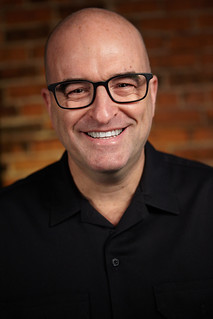
Contributors Pete Smith and Greg Bennick
Pete Smith
Numismatic researcher and author Pete Smith of Minnesota has written about early American coppers, Vermont coinage, numismatic literature, tokens and medals, the history of the U.S. Mint and much more. Author of American Numismatic Biographies, he contributes original articles to The E-Sylum often highlighting interesting figures in American numismatic history.
Greg Bennick
Greg Bennick (www.gregbennick.com) is a keynote speaker and long time coin collector with a focus on major mint error coins and US counterstamps. He is on the board of both CONECA and TAMS and enjoys having in-depth conversations with prominent numismatists from all areas of the hobby. Have ideas for other interviewees? Contact him anytime on the web or via instagram
@minterrors.


Website host John Nebel and webmaster Bruce Perdue
John Nebel
Numismatist, photographer, and ANS Board member and Fellow John Nebel of Boulder, CO helped the ANA and other clubs like NBS get online in the early days of the internet, hosting websites gratis through his Computer Systems Design Co. To this day he hosts some 50 ANA member club sites along with our
coinbooks.org site, making the club and our E-Sylum archive available to collectors and researchers worldwide.
Bruce Perdue
Encased coinage collector (encasedcoins.info) Bruce Perdue of Aurora, Illinois has been the volunteer NBS webmaster from its early days and works each week to add the latest E-Sylum issue to our archive and send out the email announcement.

|
|
The E-Sylum is an electronic publication of the Numismatic Bibliomania Society Copyright © 1998 - 2026 | |