Visit our NBS Sponsors











About UsThe Numismatic Bibliomania Society is a non-profit association devoted to the study and enjoyment of numismatic literature. For more information please see our web site at coinbooks.org SubscriptionsThose wishing to become new E-Sylum subscribers can go to the following web page
Subscribe
MembershipThere is a membership application available on the web site Membership Application To join, print the application and return it with your check to the address printed on the application. Print/Digital membership is $40 to addresses in the U.S., and $60 elsewhere. A digital-only membership is available for $25. For those without web access, write to: Jeff Dickerson, Treasurer AsylumFor Asylum mailing address changes and other membership questions, contact Jeff at this email address: treasurer@coinbooks.org SubmissionsTo submit items for publication in The E-Sylum, write to the Editor at this address: whomren@gmail.com BUY THE BOOK BEFORE THE COINSale CalendarWatch here for updates! |
- WAYNE'S WORDS: THE E-SYLUM JUNE 21, 2026
- LANG NUMISMATIC LITERATURE AUCTION 12
- NEW BOOK: ENCYCLOPEDIA OF ENCASED POSTAGE
- NEW BOOK: NEW ZEALAND CATALOGUE 2026
- NEW BOOK: BOHEMIA, MORAVIA AND SLOVAKIA PAPER MONEY
- BOOK REVIEW: THE ENIGMATIC CENTS OF 1922
- PAUL WITHERS (1942-2026)
- NEWMAN PORTAL: JOHN MAX WULFING EXHIBIT
- VIDEO: BUILDING A NATIONAL BANK NOTE COLLECTION
- VOCABULARY TERM: SPLASHER
- DOROTHY HANNAH COX (1892-1977)
- KEN BRESSETT INTERVIEW, PART FOUR
- ATLAS NUMISMATICS SELECTIONS: JUNE 21, 2026
- NUMISMAGRAM MEDAL SELECTIONS: JUNE 21, 2026
- KUENKER'S SUMMER AUCTION SALES 442-444
- ARCHIVES INTERNATIONAL SALE 114 SELECTIONS
- EARLY AMERICAN HISTORY JUNE 2026 SALE
- DAVISSON'S E-AUCTION 53
- WAYNE'S NUMISMATIC DIARY: JUNE 21, 2026
- 1921 PROOF DOUBLE EAGLE APPEARANCE AT ANA
- SILVER LIBERTAS AMERICANA MEDAL OFFERED
- JEFF SHEVLIN 2026 COMMEMORATIVE MEDALS
- LOOSE CHANGE: JUNE 21, 2026
- ABOUT THIS ISSUE: JUNE 21, 2026
Content presented in The E-Sylum is not necessarily researched or independently fact-checked, and views expressed do not necessarily represent those of the Numismatic Bibliomania Society.
WAYNE'S WORDS: THE E-SYLUM JUNE 21, 2026
 New subscribers this week include:
Kevin Markman, courtesy Kathy Freeland.
Welcome aboard! We now have 6,449 subscribers.
New subscribers this week include:
Kevin Markman, courtesy Kathy Freeland.
Welcome aboard! We now have 6,449 subscribers.
Thank you for reading The E-Sylum. If you enjoy it, please send me the email addresses of friends you think may enjoy it as well and I'll send them a subscription. Contact me at whomren@gmail.com anytime regarding your subscription, or questions, comments or suggestions about our content.
This week we open with a numismatic literature auction, three new books, a review, one obituary, updates from the Newman Numismatic Portal, and more.
Other topics this week include world encased postage stamps, New Zealand coins and banknotes, splashers, Dorothy Cox, Ken Bressett, fixed price and auction offerings, and the Libertas Americana medal.
To learn more about paper money in Bohemia, Moravia and Slovakia, the 1922 No D Lincoln cent, the John Max Wulfing collection, the lady numismatist spy, John Ford, Nobel award medals, 1785 United States Congress Federal Indent Bearer Notes, Ron Dutton medals, the Society of the Cincinnati enameled gold Eagle medal, and the U.S. Secret Service, read on. Have a great week, everyone!
Wayne Homren
Editor, The E-Sylum

Image of the week
LANG NUMISMATIC LITERATURE AUCTION 12
The 12th numismatic literature auction from Numismatic Antiquarian Bookshop Lang closes July 1, 2026. -Editor

Dear friends of numismatic literature,
The wait is over! On July 1, 2026, our 12th auction of numismatic literature will take place as usual on the Auex platform. You can expect a wide selection of literature covering various areas of numismatics.
Highlights include:
- The library of a former coin dealer
- Numerous sought-after standard works
- Rare originals
- Bibliophile rarities in magnificent bindings
- A wide variety of journals
- As well as a large number of auction catalogs.
Details:
- Date: July 01, 2026
- Location: Online on the auction platform Auex.de
- Time: From 4:00 p.m. CEST
As usual, you can find the complete range of items and the option to place advance bids at Auex.de. Advance bids can also be placed via the following platforms: Biddr, Sixbid, or NumisBids.
Please remember to register in good time in order to participate in the auction. If you have any questions or are interested in specific literature, we are of course happy to advise you at this stage.
We look forward to your participation and wish you every success!
For more information, or to bid, see:
https://auktionen.numismatisches-antiquariat.de/de-de/auctions/lots
NEW BOOK: ENCYCLOPEDIA OF ENCASED POSTAGE
Kolbe & Fanning have published a new book by Paul Montz on world Encased postage stamps. -Editor
 Kolbe & Fanning Numismatic Booksellers are pleased to announce the publication of The Encyclopedia of Encased Postage, by Paul Montz. This 350-page book, illustrated throughout in color, is the first comprehensive work in English on encased postage stamps of the world. While the use of encased postage stamps as a currency substitute during the American Civil War is well known, their use in Europe, particularly in the difficult days following the First World War, is much less familiar to most collectors. This volume is designed to change all that, with 4,587 listings from around the world.
Montz's book introduces these intriguing tokens, discusses their historical background, and provides a catalogue of all known types. The extensive issues of France and Germany are discussed in considerable detail, as are the classic U.S. issues of the 1860s. Lesser-known encased postage stamps are also included, ranging from Norway to New Caledonia and from Algeria to Argentina. Never before has so much information on this topic been brought together in one place.


The Encyclopedia of Encased Postage is available from Kolbe & Fanning at numislit.com. The hardcover 8.5 by 11 inch book is $125.00 including domestic shipping (please contact us for international rates).
For more information, or to order, see:
THE ENCYCLOPEDIA OF ENCASED POSTAGE
(https://www.numislit.com/pages/books/7855/paul-montz/encyclopedia-of-encased-postage)


NEW BOOK: NEW ZEALAND CATALOGUE 2026
Renniks is offering the new edition of The John Bertrand New Zealand Coin and Banknote Catalogue. Here's the information from their site. The book may be available elsewhere as well. -Editor
The John Bertrand New Zealand Coin and Banknote Catalogue 2026
by Anthony W. Grant FRNSNZ
Weight: .2 kg
Dimensions: 21 × 15 × .5 cm
Price: $26.95
 There are a large number of price changes due to the recent price fluctuations in the value of Gold and Silver. This catalogue features important information regarding all New Zealand coins issued from 1933 and includes values with retail prices given in five grades for the pre-decimal issues. A full listing of decimal issues is also included.
The 2026 edition is edited by Anthony W Grant FRNSNZ and contains many revisions and price updates for new and previous coin issues.
The catalogue contains a "Checks, Discount & Special Purpose Tokens" section, courtesy of Martin Purdy FRNSNZ, and again includes five pages of information on all the major coin "varieties", also compiled by Martin Purdy, all being shown with values in the category pages. New Zealand banknotes are covered from 1934 to present with prices given in up to six grades, including first and last prefixes. The catalogue as always includes simplified listings of Tradesmen's Tokens, Communion Tokens, Internment Camp Tokens, Checks, Discount & Special Purpose Tokens and Mint Rolls.
We are pleased to be able to offer the 2026 catalogue for $24.95 (post-paid for standard letter) or upgrade to Courier for an extra $3.50 for faster delivery. Use the "BUY NOW" option for an instant purchase. Please indicate whether you would like your copy personally signed by the author. Free shipping within New Zealand and to Australia, with option to courier upgrade in New Zealand
For more information, or to order, see:
The John Bertrand New Zealand Coin and Banknote Catalogue 2026
(https://renniks.com/shop/the-john-bertrand-new-zealand-coin-and-banknote-catalogue-2026/)
THE BOOK BAZARRE
NEW BOOK: BOHEMIA, MORAVIA AND SLOVAKIA PAPER MONEY
Here is a Google-translated excerpt from a Geldscheine-Online article about a new book on paper money of Bohemia, Moravia and Slovakia. -Editor
 Papírová platidla in území Cech, Moravy and Slovenska
1900 – 2026
Papírová platidla in území Cech, Moravy and Slovenska
1900 – 2026
(Paper money in Bohemia, Moravia and Slovakia 1900 - 2026).
by Pavel Hejzlar
436 pages, 3rd edition Prague 2026. Format 14.8 x 21 cm, softcover and bound, full color throughout with numerous illustrations.
In Czech.
The book costs approximately €31 (softcover) and €33 (hardcover). To order, contact the author – info@bankovky.com . International shipping is available; please inquire for costs.
ISBN 978-80-11-07995-6 (Softcover) ISBN 978-80-11-07994-6 (Hardcover).
The first edition of Pavel Hejzlar's catalogue on paper money in Bohemia, Moravia, and Slovakia from 1900 onwards was published in 2019 and reviewed here on the blog. The third edition was published in March 2026.
Much has changed since the first edition. Not only has the catalog grown from 280 to 436 pages, and its cover price more than doubled, but valuations have also adapted to the developments in the extremely robust Czech and Slovak paper money collectors' market. These valuations, especially for mint-condition notes, have risen significantly, in some cases by up to 30% for Czechoslovakian issues. Paper money from Bohemia, Moravia, and Slovakia remains in high demand, and rare pieces sometimes fetch breathtaking prices at auctions in the country (see, for example, https://www.geldscheine-online.com/post/bankovky-6-eine-banknotenauktion-mit-vielen-highlights). A look at the crowds at the Sberatel collectors' fair in Prague also reveals that the hobby is attracting younger collectors in our neighboring country.
Pavel Hejzlar is a renowned expert in the field of Czechoslovakian paper money. After many years at the Aurea auction house in Prague, he has been working for the Bankovky.com auction house , also in Prague, since September 2025, together with Aleš Kohout. Collectors know him from, among other things, the Sberatel fair in Prague and the MIF fair in Maastricht.
Hejzlar's catalogue covers all paper money issues that circulated in the territory of the former Czechoslovakia since 1900, beginning with the crown notes of the Austro-Hungarian Bank from 1900 onwards, through the notes of the Bank Office and the National Bank, the issues of the Protectorate of Bohemia and Moravia and Slovakia, the post-war issues, and the issues of the successor states Czech Republic and Slovakia from 1993 onwards. German and Hungarian banknotes that circulated in the Sudetenland and the Hungarian parts of Slovakia, respectively, between 1938 and 1945 are also catalogued.
To read the complete article, see:
Neuauflage des Katalogs zum Papiergeld in Böhmen, Mähren und der Slowakei 1900 - 2026
(https://www.geldscheine-online.com/post/neuauflage-des-katalogs-zum-papiergeld-in-b%C3%B6hmen-m%C3%A4hren-und-der-slowakei-1900-2026)

BOOK REVIEW: THE ENIGMATIC CENTS OF 1922
Jeff Burke submitted this review of Tom DeLorey's book on the 1922 Lincoln cent. Thank you! -Editor
Jeff Burke
 A cover-to-cover read of The Enigmatic Lincoln Cents of 1922 reveals the many years of research and
organization that Tom DeLorey conducted to produce this monumental work. DeLorey addresses
why the Denver Mint produced 1922 cents of inferior quality. He also introduces new early die
state discoveries and updated terminology to describe the die categories for 1922 Lincoln cents.
A cover-to-cover read of The Enigmatic Lincoln Cents of 1922 reveals the many years of research and
organization that Tom DeLorey conducted to produce this monumental work. DeLorey addresses
why the Denver Mint produced 1922 cents of inferior quality. He also introduces new early die
state discoveries and updated terminology to describe the die categories for 1922 Lincoln cents.
DeLorey began his career as a professional numismatist in 1973 and has been working with 1922 die cent varieties since 1974. He mentions the dearth of information about 1922 cents after being freshly minted. The first account he found was in the published notes of the New York Numismatic Club (NYNC) from September 1925. NYNC member Howland Wood had spent several months tracking the Lincoln cents he had observed on the East coast. No 1922 cents had met his eyes! (DeLorey, The Enigmatic Lincoln Cents of 1922, p. 29).
Delorey credits many people for helping to produce his fine work, including Roger Burdette, the late David W. Lange, and Len Augsburger. Burdette supplied primary source mint documents pertinent to DeLorey's research. Lange helped DeLorey understand the role of penny boards in numismatics. Coincidentally, I remember that Lange gave us updates on his coin collecting board research during our New Jersey Numismatic Society Zoom meetings in 2021 and 2022. Augsburger helped DeLorey examine the Denver Mint's Record of Coinage Dies volume for the years 1911-1925, available on the Newman Numismatic Portal. (Enigmatic Lincoln Cents, p. 57)
Tom's passion for 1922 die varieties and die pairings is evident. He does a masterful job of giving credit to and gently critiquing early experts on 1922 cents such as Maurice D. Scharlack and Alan D. Craig. My favorite parts of DeLorey's book were Chapter Two: The Traditional Knowledge About 1922-D Cents, Chapter Three: The Hobby Reacts to the 1922-Dated Cent, and Chapter Four: The 1922 Cent Varieties Get Recognized. I love reading about the history of these intriguing coins! DeLorey, who notes that his book adds to and updates the canon of research on 1922 cents, has produced an invaluable resource for future experts on 1922 cents.
This text has beautiful obverse and reverse images of 1922 cents in various conditions and grades. Despite lacking an index and a bibliography, the book is written in an engaging style, like you are having a cup of coffee with the author in the kitchen. A chapter on buying tips for 1922 cents would have been welcome as well. Appendices A and B are wonderful references for identifying 1922 cent die characteristics, traditional die varieties and new die varieties.
Even if you don't collect Lincoln cents, DeLorey's book is worth reading for the spellbinding story about the minting of 1922 cents in Denver. You also get an inside look at how U.S. mints operated in the early 1920s. As DeLorey states, "The cents of 1922 are strange and magical things." (Enigmatic Lincoln Cents, p. 102).
Postscript: Purchasing My Own 1922 No D Strong Reverse Lincoln Cent
Reading DeLorey's book brought back fond childhood memories of the excitement I had looking through wheat cents for early dates and mint marks. His volume also piqued my interest in buying a 1922 No D Strong Reverse Lincoln cent for my modest coin collection. When I was a kid, I remember being puzzled by the mysterious 1922 Plain Lincoln Cent.
I looked at a large number of 1922 No D Strong Reverse cents online in grades VG8 to MS64. Eventually, I purchased a PCGS F15 1922 No D Strong Reverse cent with a CAC sticker. I like the nice, even brown color of my coin and the contrast between a mushy obverse and a strong reverse. I was thrilled to get my coin in the mail from Northeast Numismatics!


Note: Thanks to Chris Clements of Northeast Numismatics for giving me permission to use the company's obverse and reverse images of my 1922 Lincoln cent to accompany this article.
To read the earlier E-Sylum article, see:
NEW BOOK: THE ENIGMATIC LINCOLN CENTS OF 1922
(https://www.coinbooks.org/v28/esylum_v28n50a03.html)

PAUL WITHERS (1942-2026)
I was very sorry to learn that numismatist, author and dealer Paul Withers of Galata Coins died earlier this year. Here's the About Us page from the business website, as updated by his widow Bente Withers. -Editor
Galata Coins was established in 1971 in Wolverhampton. It sold ancient Greek, Roman and Byzantine coins. It eventually incorporated the coin dealing activities of Paul Withers which included hammered coins, world coins, tokens, medals, numismatic books, etc. Nowadays it is a partnership of Paul and Bente Withers. It all began when Paul gave up teaching in 1973, since when we have been full-time dealers in coins and numismatic books. We like to think of ourselves as being specialists in being non-specialists. Although we do not claim to be specialists in any particular fields, and apart from thinking that we know a little about coin-weights, 19th-century copper tokens, and medieval halfpennies and farthings, we sometimes offer a better selection of some coins than many who do claim to be specialists.
Our house, a former pub, my drawing of which can be seen [below], was built before Colombus set sail. It is stuffed with our ever-growing personal library of 5000+ numismatic books. We moved here, to Llanfyllin, in the wilds of Mid-Wales, in 1991, to semi-retire and get away from urban nastiness. Llanfyllin is a tiny town, population around 1400, in Montgomeryshire, one of the most beautiful parts of Wales.


For many years we used to produce ‘Sacra Moneta' our printed catalogue of new and secondhand numismatic books and ancient and modern coins and tokens for sale. Alas, this has become uneconomic to print and distribute, so these days we operate via this website.
We are interested in almost the entire spectrum of numismatics from ancient to modern. We collect : coins of India, coin-weights of the world, weights and scales, 19th-century copper tokens, so-called brothel tokens, numismatic books, books on cookery, and chemist's glass measures.
You will find our names in many books, some that we have printed, some that we have designed, or for which we have done the photography, or have helped in other ways. To give one example, take a look at the index to the reprint edition of Forrer's Biographical Dictionary of Medallists.
Some people feel happier when they know what the people with whom they are dealing look like. Well, here we are, revealed for all to see.

Bente and Paul Withers
We too are collectors. We are members of the Royal Numismatic Society, British Numismatic Society, Oriental Numismatic Society and the British Art Medal Society. We understand the needs of the collector.
Galata Print Ltd also publishes Numismatic Books. We are the authors of many publications on coins and tokens.
 In 2000 we were awarded a bronze medal by the AIPN for our book on 19th-century copper tokens. The Galata Guide to the Pennies of Edward I & II was awarded the Royal Numismatic Society's Lhotka Memorial Prize in 2006, The Token Book won the same Prize in 2011, and in 2010 the British Numismatic Society awarded us the J J North Medal for our services to numismatic publishing.
Sadly, Paul died on 7 March 2026 after a 3 year battle with cancer. I shall continue to service the website on my own, please bear with me if things sometimes take a little longer.
Thank you so much to the many friends, customers and colleagues who have sent condolences and messages of sympathy and encouragement. They have been heartwarming and are greatly appreciated.
Here's a (mostly) numismatic-focused excerpt from a lengthy autobiography/obituary Paul penned before his passing, which includes his widow Bente, their life and business together, and tips for reading between the lines of obituaries. Paul was born April 21, 1942 and died March 7, 2026, just short of his 84th birthday. -Editor
A LIFE IN NUMISMATICS
The basics: modified from Anglo-Gallic Coins published 2015.
Paul Withers. Born 1942. Educated Ebbw Vale County Grammar School. Trained as a teacher before becoming a professional numismatist, author, and dealer in numismatic books. Began collecting coins around 1947. Hobbies include reading, listening to recorded music, preparing and eating interesting food and drinking fine wine and sipping aged single malt whiskys. Married to :
Bente Romlund Withers, née Jensen. Born 1950. Educated Ballerup Gymnasium, and the Pharmaceutical High School, Copenhagen, Denmark, before abandoning pharmacy in favour of life in Britain with Paul and numismatics, in 1971. We have one son, Halfdan, born 1973. We currently collect British and European coin-weights, weights, scales, and glass measures and numismatic books, we have the largest and best numismatic library in Wales.
We used to spend nine months of the year in Llanfyllin, Powys, in mid Wales, and for the other three lived in our isolated farmhouse in Normandy, where most of the books were escapist literature, there were no coins, and no tedious routine office work to be done! There, as in Wales, we foraged for mushrooms and other goodies such as nettles, fruit and nuts in season. In France we especially loved eating seafood, such as oysters, spider crabs and sea urchins; and regional specialities such as tripes and the other lovely things that most of the British stupidly reject. We strongly deplore the fact that cookery and music are no longer taught in most British schools, and that music is now only for the rich. Occasionally, we spent some time working on one or other of our books.
Some of the last paragraph is, alas, no longer true, as we sold, with regrets, our beloved French retreat, as we could no longer make the journey to it, initially due to Covid regulations, and then of infirmity.
The name Galata puzzles people, it was chosen by Richard Swan, our late friend and former business partner. ‘Galata' derives from an archaic Greek word describing a shelving shore where you could beach your boat safe from wind and tide. There are several places in the region with this name, but ours specifically refers to the Karaköy neighbourhood of Istanbul, connected to the city by the Galata Bridge. The medieval citadel of Galata, the trading port of Byzantium, was a colony of the Republic of Genoa between 1273 and 1453. The famous Galata Tower was built by the Genoese in 1348 at the northernmost and highest point of the citadel. Please, do not confuse it with the ancient region of Galatia, or an Italian ice cream.
One, and probably the only advantage of a diagnosis of terminal disease is that you get to write your own obituary. Obituaries eulogise the life of a person and usually tell you where and when the person was born. Sometimes they tell what the person died of. If it doesn't, the experienced reader of obituaries immediately knows that it was either suicide or an unmentionable dirty disease. In my case, the cause was cancer of the jaw. Alas, chemotherapy does not work for this type of cancer, and radiotherapy would only have given me a little extra time - and in the process, I'd lose my sense of taste and smell. For someone who loves good, tasty food, drinking fine wines and aged single malt whisky, that was a no-no-no!
Obituaries in newspapers such as The Times often end with the statement "he never married". From this, the canny reader understands that the person was a member of the LGBTQ community. I have been married twice, the second time for 54 (and counting) years and we're still living and working together 24/7. I am a straight male and have never fancied a bloke. That did not, however, stop me from having good friendships with men, and platonic friendships with some very attractive women.
It has been said that you can tell what a person is like from their bookshelves. In 79 years of reading I have read widely. Favourite authors: I read few authors twice: these include Terry Pratchett, Tom Sharpe, Lynda la Plante, Sigrid Undset, J R R Tolkien, George Orwell, P G Wodehouse, Laurie Lee, Evelyn Waugh, D H Lawrence, John Galsworthy, Arthur Conan Doyle and many others. When I was young and didn't need a magnifying glass to read minuscule print I even read sauce bottle labels.
Here is the ‘in-between' bit that tells about some of my life and times, including a bit of British social history of the last eight decades thrown in for good measure. It also tells of the influences, literary, cultural and financial that have made me a numismatist, and author and how things have changed in numismatic publishing and printing over the last 50+ years. It includes mentions of numismatists that I/we have known. It also has thoughts and advice on collecting, writing and publishing, buying and selling.
I was born prematurely in the Spring of 1942 at the height of WW2. I weighed under 4lbs, and those who saw me said that I looked like a freshly-skinned wild rabbit. I could not be bathed with soap and water, olive oil was used instead. My parents lived in a terraced brick and stone-built, slate-roofed house on the western slope of the narrow Ebbw Valley in South Wales. I was their third child, my siblings were a sister, Jean, aged 14, and a brother, Kevin, aged ten. Albert, my father was an electrician in the local steel works.
My stepmother, who arrived shortly after the birth, to see her best friend, said that she thought I was lovely. Gwen, my mother replied, prophetically, "If you want him, you can have him". Exhausted by the effort of giving birth, my mother died of shock just five hours later. I was given to my parents' best friends who were childless. Such a transfer was not unusual at the time. My fathers, step and biological, lived next door to each other as children. There may have been another Clements / Withers connection in that my stepfather's father, Wm Withers Senior, a recently retired RSM from the army in India, took on the job of managing the very small, newly formed electrical department of the Ebbw Vale Steelworks. Together, the sons bought a motorcycle, to go to dances to meet girls. When the two couples married they sometimes took their annual holiday together, in Southsea.
Alas, my (step)mother didn't tell me that I was adopted, a fiction that was maintained until I was 14 when my natural father died and I was mentioned in his will, and I had to sign that I had received the bequest. I therefore grew up believing that my father was my uncle and my brother and sister were my cousins. There is a somewhat amusing complication when my natural father remarried, and the woman he married was a relative of my (step)mother, so, theoretically, I became related to myself. For those in my (step)mother's position, a plea: tell the truth as early as you can, otherwise, else when a child becomes adolescent, the shock can be disturbing at a time when life is difficult enough anyway.
Was I ever bullied at school? Most children were, but I had a good friend, Tony. We had been put in the pram together as tiny babies and Tony was my protector. He was a big lad with a large head and his reaction to any sort of playground altercation was to lower his head like a Toro Bravo in Madrid's Las Ventas. Only the ultra-stupid tried more than once. However, Tony was not at school one day and Clive Jones, who fancied himself as a pugilist attacked me, I was no match for him physically and unwell with the same cold that afflicted Tony. To provoke me Jones grabbed me by the nose so my instant reaction was to blow it, whether this was due to me having read about a shieldbugs the previous week, I know not. He could have coped with a kick to the shins, or a punch to the solar plexus, but this really caught him off guard and his scream caused his cronies, already forming a circle for a fight to to ensue, burst into laughter. There was no doubt who had won without striking a blow, and there were plenty gathering round me who wanted to be friends with me.
From the age of three, I accumulated postage stamps, and coins begged from those who visited overseas countries and relatives, all of whom seemed to have a box of coins in a drawer, or envelopes with stamps from relatives living in the colonies. When I was about five the amount of coins and tokens increased due to soldiers returning from the war. I regularly polished my coins with Brasso, and stuck my stamps into a school exercise book with wallpaper paste! The highlights of my early treasures included a nearly flat George IV 1821 crown, and a bronze medallion depicting Queen Victoria and her male descendants to George V.
Aged 8, I was taken to London and the Festival of Britain Exhibition, where I was given a 1951 commemorative crown by my aunt Dilys. I was no longer polishing my coins. At this time there were still bomb-damaged areas in most cities, and I remember, in Oxford, where Dilys lived, there was an enormous spectacular scrapyard with hundreds of Spitfires and other wartime aircraft piled three, four and five high on top of each other. I was fascinated, I had never been so close to an aircraft. Aunt Dilys gave me two bright and shiny 1951 pennies, and for my birthday in 1953, a copy of ‘Casino Royale'; if only I hadn't spent the pennies and not given the book away after I'd read it!
I am an avid reader and could read a little before I went to infant school. Later, one of my favourite books was Rudyard Kipling's Jungle Book. I was much impressed by his anthropomorphic view of the law of the jungle and its creatures. In adolescence, I was just as impressed by Dictum meum pactum, (my word is my bond) the motto of the Stock Exchange. It seemed a good ethos for a business and life. I am agnostic, and do not approve of any organised religion, especially Islam, though l am impressed by the lifestyle of Quakers (the Society of Friends).
How did I become a dealer? I was always a collector. There was a boom in collecting coins, allegedly started by the scout movement which got their members to collect a century of pennies starting from 1860. Of course, it was soon discovered that some were harder to find than others, some dates didn't exist. This then spread to other denominations. I heard about a recently formed coin collectors club. I went to a meeting where there were people showing their coins in plastic albums. By the next meeting, held in the town library, I had bought some albums, put my duplicate coins in them, and showed them after the next meeting. A crowd formed. People were saying how good my collection was. I said that it wasn't my collection, but my duplicates. There was a rush and people were queuing to buy them. At 9pm we were asked to leave when the library closed, so we went to the nearest pub and trading continued. In less than half an hour I was holding a month's wages in my hands. I was hooked. I had become a dealer.
There was now a problem, I had to replace the things I had sold. In those days my principal source was my local bank, from which I obtained bags of silver and copper change to sort through for high-quality specimens and scarce dates. I then discovered that there was a chap called Osmund who worked for the Council and banked all the change taken on Wolverhampton buses - thousands of pounds per day. He became a major source.
Shortly after my first marriage, I discovered local auctions, and bought several items that were important for my business, the first was an ex-army electric duplicator and a 1920s large black Barlock typewriter. The duplicator used standard foolscap size stencils and paper. I could now produce lists of coins that I had for sale, and began to sell at local coin fairs. To satisfy my aquisitive instincts, I collected Indian coins. At my first ever coin fair, in Stafford, I went around all the dealers present and bought every Indian coin they had for 30 shillings. I didn't want collecting to conflict with sales, and Indian coins were cheap, not popular, but to me, interesting and challenging. I was later to start collecting Chinese cash coins, and curious currency.
Somehow, I'm not exactly sure how, or when, we met Brian Warwick, an accountant, who collected Anglo-Saxon coins of Warwick mint. He seemed a generous benefactor. He bought coins from us and sold coins to us; often leaving coins with us that we could not afford to buy, but could offer and sell on our next list.


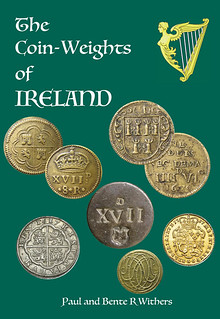
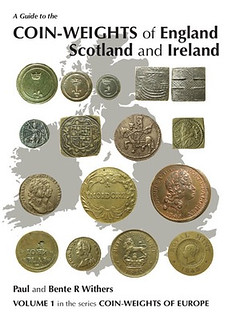
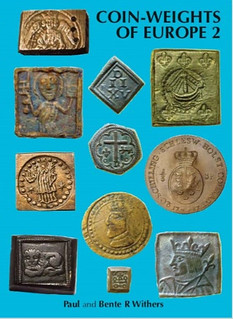
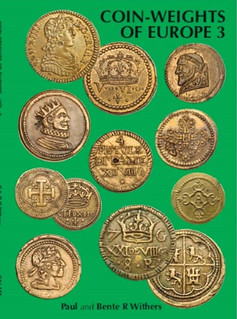
In the early 1970s, we had a visit from Richard Swan, who was studying for a history degree at the local Polytechnic. He wanted to buy some of the coins from our list. He bought quite a lot and exchanged some interesting Greek coins for others. He became a regular visitor, and a friend and in October 1974 became our business partner, forming Galata Coins Ltd., dealing in ancient coins. From February 1975 onwards Galata Coins Ltd., and Paul Withers became linked and offered ancient, medieval and modern coins on a list issued nine times per annum. From October 1976 the name Paul Withers was dropped from the cover. We also bought and sold small Egyptian and other antiquities.
The business was profitable, and growing, but my Lloyds bank was still holding me back as we were always needing finance. Richard said that he had an accomodating manager at National Westminster Bank, so we made an appointment to see him to arrange an overdraft facility. Richard thought we'd be lucky to get £2,000. However, the middle-aged, active, smartly dressed tiny man behind the big desk looked at me, and brusquely said "Most people wear a suit, not jeans, when they come to see me." I replied that we wanted to borrow money, not get married. He burst into laughter and said "Oh! Yes, how much do you want?" I presented our accounts and projections and asked for £5,000, to which he agreed immediately. He was to become a lifelong friend as well as a trusted advisor.
Many collectors do not realise that some dealers have close business relationships with other dealers, this happens especially in the book world. I had many good book deals with Edward Baldwin.
Howard Linecar at Spinks Book Department helped me build my budding library, and that continued under Douglas Saville. I sometimes went to auctions outside of London with his bids and those of several other dealers. I am still in touch with Douglas. I was also friendly with Peter Jones who ran the book department at B A Seaby. Our dealings with him continued after he retired. He would sometimes invite us to stay with him and his wife for the weekend and at the same time invite a visiting foreign dealer at the same time. Their company was convivial, their table was excellent, and their wine good too; a lot of business was done that way. It was also the way that I met Allan Davisson. When I needed two people to nominate me for membership of the British Numismatic Society, two people volunteered, Peter Mitchell of A H Baldwin, and Peter Seaby of B A Seaby.
There's much more numismatic and numismatic literature content in the write-up, but I'll stop here for now. Rest in Peace, Paul. -Editor
For more information, see:
https://www.galata.co.uk/about-us
To read earlier E-Sylum articles, see:
NEW BOOK: THE GALATA GUIDE TO MEDIEVAL HALF GROATS
(https://www.coinbooks.org/esylum_v13n17a06.html)
NEW BOOK: THE TOKEN BOOK: BRITISH TOKENS OF THE 17TH, 18TH AND 19TH CENTURIES
(https://www.coinbooks.org/esylum_v13n22a05.html)
NEW BOOK: A CATALOGUE OF ANGLO-GALLIC COINS
(https://www.coinbooks.org/esylum_v17n39a03.html)
PAUL WITHERS ON NUMISMATIC WRITING
(https://www.coinbooks.org/esylum_v18n34a21.html)
PAUL WITHERS ON NUMISMATIC WRITING, PART 2
(https://www.coinbooks.org/esylum_v18n35a28.html)
PAUL WITHERS REFLECTS ON NUMISMATIC BOOKS
(https://www.coinbooks.org/v20/esylum_v20n12a05.html)
DIRTY OLD BOOKS: CRAIG'S GERMANIC COINAGES
(https://www.coinbooks.org/v20/esylum_v20n50a05.html)
NEW BOOK: ENGLISH SILVER CROWNS
(https://coinbooks.org/v21/esylum_v21n17a04.html)
NEW BOOK: THE COIN-WEIGHTS OF IRELAND
(https://www.coinbooks.org/v23/esylum_v23n01a05.html)
NEW BOOK: COIN-WEIGHTS OF EUROPE, VOLS 2-3
(https://www.coinbooks.org/v25/esylum_v25n10a04.html)

NEWMAN PORTAL: JOHN MAX WULFING EXHIBIT
Newman Numismatic Portal Project Coordinator Len Augsburger provided this report about a new exhibit of coins from the Wulfing collection. -Editor
John Max Wulfing's Passport to the Past Exhibit Opens August 5, 2026
 John Max Wulfing was born in 1859 to Charles and Hermine (Diekriede) Wulfing in St. Louis, MO. He was educated in both the United States and Germany before entering the family business and becoming a third-generation wholesale grocer in St. Louis. The wealth accumulated through his business success enabled Wulfing to engage in local philanthropy through Park Unity Church and to support German relief efforts and academic causes following World War I. His personal interests focused on archaeology and the classics.
Wulfing is best known for his ancient coin collection, which was donated in 1928 and forms the nucleus of the Wulfing Collection at Washington University in St. Louis. Less known is the substantial collection of Native American artifacts, Japanese tsuba (sword guards), and books that Wulfing collected until his death in 1929. Wulfing added many objects to his collections during his travels across the United States, Central America, Europe, Africa, and Asia. This exhibition highlights some of those travels and the items he acquired along the way. To Wulfing, these were not just objects, but lenses into past times and cultures that served as invaluable teaching aids.
The John Max Wulfing's Passport to the Past exhibition opens August 5 in the Newman Tower exhibit space in Olin Library at Washington University in St. Louis. This exhibit is guest curated by Jeremy Haag.
Image: Athenian tetradrachm from the Wulfing Collection, WC 225.
Link to WashU Wulfing exhibit announcement:
https://library.washu.edu/exhibitions/wulfings-passport/
Link to "The John Max Wulfing Collection" on YouTube:
https://www.youtube.com/watch?v=Ai2K6Hgemmw&t=8s

VIDEO: BUILDING A NATIONAL BANK NOTE COLLECTION
The David Lisot Video Library on the Newman Numismatic Portal can be found at:
https://nnp.wustl.edu/library/multimediadetail/522852
We highlight one of his videos each week in The E-Sylum. Here's one from 2016 with Peter Huntoon speaking about building a National Bank Note collection. -Editor

Well known paper money researcher and writer talks about how to assemble a collection, what to look for and what to ignore. Speaker: Peter Huntoon.
To watch the complete video, see:
Building a World-Class National Bank Note Collection
(https://youtu.be/arYS1jSmUrw)
Building a World-Class National Bank Note Collection
(https://nnp.wustl.edu/library/book/540327)

VOCABULARY TERM: SPLASHER
Here's another entry from Dick Johnson's Encyclopedia of Coin and Medal Terminology. -Editor
Splasher. A method of easily testing a die by impressing it in soft lead. Splashers are usually made by pouring molten lead on a piece of paper and impressing the die into the lead before it cools. Splasher impressions were used by hand engravers to examine the progress of cutting a die, or to prove the die before it is completed. This was always done while the die was in a soft state and further alterations could be easily made at the bench. (The need for a press to prove the die was only done after the die was hardened.)
The splasher was not usually saved because of the incomplete status of the die; but existing splashers usually exhibit the paper backing and very irregular edges. Similar pieces were made by engravers in Great Britain, but moreso in tin than it lead, where they are called hot tin impressions. (Tin was more readily available in Britain at the time.) While lead and tin were the most used metal for splashers they could be made in any fusible alloy.
To read the complete entry on the Newman Numismatic Portal, see:
Splasher
(https://nnp.wustl.edu/library/dictionarydetail/516790)

DOROTHY HANNAH COX (1892-1977)
E-Sylum Feature Writer and American Numismatic Biographies author Pete Smith submitted this article on archaeologist and numismatist Dorothy H. Cox. Thank you. Interesting story. -Editor

Robert Leonard recently wrote to suggest that Dorothy H. Cox might be worth two or three paragraphs in The E-Sylum. She was known as an architect, archaeologist and numismatist. She was also a spy during the Second World War. Let's see if I can find anything more to say about her.
Dorothy H. Cox was born in Terre Haute, Indiana, on February 18, 1892, the daughter of Lewis Joseph Cox (1857-1920) and Lenore Hanna (1864-1941). Lewis was affiliated with the Terre Haute Car and Manufacturing Company.
An article could be written about Mrs. Lewis J. Cox. She was very active with the Indiana Federation of Women's Clubs. In 1912 she spoke out against woman suffrage saying that most women were not educated enough to deserve equal rights. She lost the election for their president in 1915 because it was alleged that she was a mild user of liquor and smoked cigarettes. She was listed in Woman's Who's Who of America 1914-15.
Dorothy graduated from Bryn Mawr College in 1914 and received a masters degree in architecture from Columbia University in 1917.
She applied for a passport in 1917 to go to France to do Red Cross work. She worked as a nurse during the First World War while her mother was working with the Red Cross at home.
She worked as an architect and trench supervisor under Hetty Goldman at the ancient Greek cities of Eutresis and Colophon during the seasons of 1924 to 1927, sponsored by The American School of Classical Studies of Athens. Cox documented the architectural plan of the Metroon at Colophon.
Dorothy was hired to work on the coin room staff at the American Numismatic Society in 1931. She left after a year to do an excavation in Cyprus.
She was with Goldman again at excavations at Tarsus, Turkey, during 1934 to 1939. The results were published by the ANS as Numismatic Notes and Monographs 92.
Her listing in the 1940 Census is interesting. She was living with her mother, Lenore, in Cheshire, Connecticut. The profession for her mother was listed as numismatist / private college. The profession for Dorothy was blank. I suspect that was an error.
Dorothy Cox was recruited for work with the Office of Strategic Services (OSS) as World War II began. She was one of several trained to work as a spy under American archaeologist Rodney Young. It helped that she was fluent in French, Greek and Turkish. Young created a group called "The Greek Desk." Part of their mission was to conceal antiquities from the looting Nazis.
Cox was trained in spy-craft with such skills as cryptography. covert communications, and firearms training. She learned to identify German and American equipment. She was skilled at doing her duty without calling attention to herself. Her code name was "Hiram."
She set up an operation at Izmir, Turkey, to monitor the activities of Greek refugees, enemy deserters and other agents. Her cover was her work with the Greek War Relief Association. She supplied Greek leftist guerillas with funds and supplies in exchange for information.
Returning to Cairo, she entertained guests at her apartment and got them to talk openly about their war experiences and at times drawing maps and diagrams.
She returned to America in 1945 and took a job as curator of coins at Yale University. She retired to a Cheshire, Connecticut, farm in 1953. However, she continued to do archaeology for several seasons in the late 1950's and early 1960's.
 She was an architect and excavator at sites in Kourion, Gordion and Afghanistan. Dorothy Cox wrote A
Third Century Hoard of Tetradrachms from Gordion published by the University of Philadelphia in 1953.
She was an architect and excavator at sites in Kourion, Gordion and Afghanistan. Dorothy Cox wrote A
Third Century Hoard of Tetradrachms from Gordion published by the University of Philadelphia in 1953.
She died in New Haven, Connecticut, in December 1977. I have not found a published obituary for her. The Social Security Death Index lists the month of her death but not the date.
Dorothy Cox wrote several of the Numismatic Notes and Monographs published by The American Numismatic Society.
The Caparelli Hoard, A Fourteenth Century Hoard from Bosnia (1931) ANS NNM 43 14 pages, 4 plates.
This described 125 medieval coins found by peasants cultivating a field near Thebes in Greece, buried about 1360 and discovered in 1930.
The Tripolis Hoard of French Seignorial and Crusader Coins (1933) ANS NNM 59 41 pages, 8 plates, 3 maps.
This describes a huge hoard of 3500 silver and billon coins believed to have been left behind by a crusader and buried about 1221 A. D. and excavated about 1929.
A Tarsus Coin Collection in the Adana Museum (1941) ANS NNM 92 67 pages, 12 plates.
About a thousand coins in the collection, mostly Roman Imperial Colonial coins, were found during excavations at Tarsus (Turkey) during 1934 to 1939.
The Coinage of Rhesaena in Mesopotamia (1946) ANS NNM 108 translated by Cox. These coins from Syria were used by Roman troops during the 3rd century A.D.
Coins from Excavations at Curium, 1932-1953 (1959) ANS NNM 145 125 pages, 10 plates.
This described Greek, Roman and Byzantine coins from the 3rd to 6th centuries found at sites at Curium (Kourion) Cyprus.
For further reading, see:
A Third Century Hoard of Tetradrachms from Gordion
(https://www.penn.museum/research/publications//publication/770)
KEN BRESSETT INTERVIEW, PART FOUR
Greg Bennick's latest interview for the Newman Numismatic Portal is with "Mr. Redbook". Ken Bressett. Here's the fourth of six parts, with Ken's recollections of John J. Ford, Paul Franklin, the territorial gold controversies, and the attempt to examine the Lilly Collection at the Smithsonian. -Editor
 GREG BENNICK: Well, along the lines of those adventures, you've mentioned
B. Max Mehl and William Sheldon and some other folks. Are there other
characters, other people from the history of the hobby that today are of
course legendary, but who were contemporaries of yours that you remember
stories about?
GREG BENNICK: Well, along the lines of those adventures, you've mentioned
B. Max Mehl and William Sheldon and some other folks. Are there other
characters, other people from the history of the hobby that today are of
course legendary, but who were contemporaries of yours that you remember
stories about?
KEN BRESSETT: Oh yeah! Well, like John Ford.
GREG BENNICK: Sure. What could you tell us about John Ford?
KEN BRESSETT: He was absolutely a character. I say that—yeah, just absolutely. I got along fairly well with John. He was brief and not very close to anybody. I mean, most people didn't like John because he was so arrogant and so short with everybody. And not that he liked me very much, but I was able to stand up to him.
We'd go out to dinner at a convention, and John would bring his own food along with him and have a chef keep it in the kitchen because he wouldn't eat the hotel food.
GREG BENNICK: Really?
KEN BRESSETT: Wherever he was, it didn't matter. I remember one time he said, "For dessert, I want strawberries—fresh strawberry shortcake." And the chef said, "Well, they're out of season. We don't have them." He said, "Don't tell me that you don't have them. Send somebody out and find them. They're here somewhere in New York." (Laughs)
GREG BENNICK: Wow.
KEN BRESSETT: Yeah, he was that kind of a guy. He had a real beef with the United States government because he wanted to collect gold coins of all kinds, especially territorial coins. And you weren't supposed to own gold at that time.
GREG BENNICK: Right.
KEN BRESSETT: So he said, "Government be damned. I'm going to make my own. I'll show them what's what." He had this friend, Paul Franklin, who was a master engraver and another associate with John. The two of them made plans to have coins made in Italy that were really replicas or nonsense or fantasy coins, all made of gold. And some out-and-out counterfeits. They practically disrupted the whole collecting community during that time.
GREG BENNICK: Wow.
KEN BRESSETT: Yeah. So, these are characters.
GREG BENNICK: It certainly sounds like it. Absolutely.
KEN BRESSETT: Yeah. And very few people knew about all that went on, and I'm not going to try to get into all of that here.
GREG BENNICK: Sure.
KEN BRESSETT: There are things still that people don't know. And they shouldn't know. So many dealers got stuck with these coins that nobody wanted to be the one to break the whole story open.
GREG BENNICK: Got it. So, but they were counterfeits essentially that were being manufactured.
KEN BRESSETT: Yeah. And then a lot of them got into the Lilly collection. They took him as a patsy. Eli Lilly didn't know enough about coins to realize that they were selling him these fakes, which he eventually donated to the Smithsonian.
And then when some of us serious collectors wanted to go there and examine them and find out what's what, we were refused entry to the Smithsonian to do that.
GREG BENNICK: Wow.
KEN BRESSETT: Eric Newman, myself, John Pittman, and a couple of others— we tried to get into the Smithsonian to see those and were denied that.
GREG BENNICK: Interesting.
KEN BRESSETT: So anyway, those are just some of the people that I knew and interacted with and had a lot of fun with.
 About the Interviewer
Greg Bennick (www.gregbennick.com) is a keynote speaker and long time coin collector with a focus on major mint error coins and US counterstamps. He is on the board of both CONECA and TAMS and enjoys having in-depth conversations with prominent numismatists from all areas of the hobby. Have ideas for other interviewees? Contact him anytime
via instagram @minterrors.
He can also be reached by email at
minterrors@gmail.com.
To watch the complete video, see:
Ken Bressett, Interviewed by Greg Bennick
(https://www.youtube.com/watch?v=emQlt4zLTxU&t=1s)
To read the earlier E-Sylum article, see:
KEN BRESSETT INTERVIEW, PART ONE
(https://www.coinbooks.org/v29/esylum_v29n22a17.html)
KEN BRESSETT INTERVIEW, PART TWO
(https://www.coinbooks.org/v29/esylum_v29n23a18.html)
KEN BRESSETT INTERVIEW, PART THREE (https://www.coinbooks.org/v29/esylum_v29n24a14.html)
ATLAS NUMISMATICS SELECTIONS: JUNE 21, 2026
Atlas Numismatics has updated their website with 606 new coins, medals, and tokens at fixed prices. Select items are discussed below. -Garrett
1086879 | GREEK. KINGDOM OF MACEDON. Philip II. (King, 359-336 BC). Early posthumous issue. AR Tetradrachm. NGC MS? (Mint State ?) Strike 5/5 Surface 5/5. Pella. 18mm. 14.33gm. Head of Zeus right, wearing laurel wreath F????-??? (FILP-POU). Nude youth mounted on horseback holding palm frond and rein; snake coiled between horses legs and a Boeotian shield in exergue. Le Rider plate 22,530; HGC 3.1.
A phenomenal example and one of the finest known of the type; given the star designation by NGC for exceptional eye appeal.
To read the complete item description, see:
1086879 | GREEK. KINGDOM OF MACEDON.
(https://atlasnumismatics.com/1086879/)

1087128 | GERMAN STATES. Brunswick-Wolfenbuttel. Karl I. 1761 IBH AR Thaler. PCGS MS64. Zellerfeld. 29.05gm. D.G. CAROLVS · DVX · BRVNSVIC · LVNEB ·. Crowned complex oval arms with wildmen supporters AN GOTTES SEGEN IST ALLES GELEGEN. DIE GRVBE / SEGEN GOTTES / KAM IN AVSBEVT / IM Q: CRVC: date / I.A.P. View of the mine. KM 964; Dav.-2169; Müseler 10.3/62; Welter 2729; Kluge 55 (Preussag collections).
God's blessing of the mine. Dav.#2169.
To read the complete item description, see:
1087128 | GERMAN STATES. Brunswick-Wolfenbuttel. Karl I. 1761 IBH AR Thaler. PCGS MS64.
(https://atlasnumismatics.com/1087128/)

1087224 | GREAT BRITAIN. England. Elizabeth I. (Queen, 1558-1603). (1592-95)-(Tun) AV Pound. NGC MS61. London (Tower) mint. 11.12gm. (tun) ELIZABETH:D;G;ANG;FRA;ET:HIB;REGINA. Crowned bust 7A left with long hair and richly ornamented dress SCVTVM:FIDEI:PROTEGET:EAM. Square-topped shield with E and R at sides, double annulet stops. SCBC-2534; North 2008; Schneider 798; Friedberg 214.
Sixth Issue.
To read the complete item description, see:
1087224 | GREAT BRITAIN. England.
(https://atlasnumismatics.com/1087224/)

1084972 | HUNGARY. Maria Theresia. 1765 ·X· AR Thaler. PCGS AU58. 27.91gm. M · THER · D: G · R · IMP · - GE · HU · BO · R · A · A · D · B · C · T ·. Younger bust right S · MARIA · MATER · DEI... Radiant Madonna and child. KM 358.1; Dav.-1132; Huszar 1675 .
The appearance of a mint state example; conservatively graded.
To read the complete item description, see:
1084972 | HUNGARY. Maria Theresia. 1765 ·X· AR Thaler. PCGS AU58.
(https://atlasnumismatics.com/1084972/)

1085826 | ITALIAN STATES. Papal States. Pius IX. (Pontiff, 1849-1878). 1852-VII AR Medal. PCGS SP64. By Bonfil Zaccagnini. 43.5mm. 33.33gm. PIVS IX PONTIFEX MAXIMVS ANNO VII. Bust, right; signed below truncation VIA APPIA RESTITVTA// A TEMP S SEBASTIANI P M AD BOVILLAS. The deceased Saint Sebastian lying on his tomb facing right; in the background, the Appian Way with the mausoleum of Cecilia Metella and the church of Saint Sebastian. Bartolotti E852; Modesti 319.
Upon the renovation work carried out on the ancient Appian Way and the restoration of its most important monuments.
To read the complete item description, see:
1085826 | ITALIAN STATES. Papal States.
(https://atlasnumismatics.com/1085826/)

1086114 | TRANSYLVANIA. Karl VI. 1721 AV Ducat. PCGS MS63. Karlsburg. 3.38gm. CARVI · D · G · R · I ... Armored bust right ARCHID · AV · D · BVR · PRINC · TRANSYL (date). Crowned arms on breast of crowned double-headed eagle. KM 574; Fr.-520; Herinek 205; Huszár 897 variant.
To read the complete item description, see:
1086114 | TRANSYLVANIA. Karl VI. 1721 AV Ducat. PCGS MS63.
(https://atlasnumismatics.com/1086114/)
Updates to their online inventory are issued monthly.
For more information and to sign up for the firm's monthly newsletter, visit:
atlasnumismatics.com.

NUMISMAGRAM MEDAL SELECTIONS: JUNE 21, 2026
Numismagram's Jeremy Bostwick sent along these six medals from his most recent upload of new material to his site. For all of the new items, please visit https://www.numismagram.com/inventory. -Garrett

103364 | SWEDEN. Alfred Nobel silver Award Medal. Issued 1998 for participation on the nominating committee for the prize in literature (27mm, 11.78 g, 12h). By Erik Lindberg (after an obverse in 1926) at the Eskilstuna mint.
ALFRED NOBEL, bust left in frock coat // SVENSKA • AKADEMIEN, SNILLE / OCH / SMAK (genius and taste, –motto of the Swedish Academy) in three lines within garlanded laurel wreath; six hallmarks below. Edge: Plain.
Cf. Ehrensvärd 268 (for obverse type). PCGS SP-64. Lightly toned, with an alluring matte nature. An attractive example of this more difficult nominating committee medal.
In the world of medallic art, France may come to mind for its association with some of the most skilled and elegant craftsmen and their work, especially during the late 19th and early 20th centuries. Any survey of medals and coins from this period will show the beauty that the Art Nouveau and Art Deco movements provided to the numismatic scene. However, production of artistic medals was not limited to just France. Although Sweden is not as often represented in collections and literature devoted to numismatic art, it is not due to a lack of exceptional material produced by incredible sculptor-engravers.
One such artist was Johan Lindberg, most commonly known by his middle name, Erik. Born in Stockholm on the final day of 1873, Erik grew up with an artistic presence, as his father, Johan Adolph, was a famous sculptor and engraver of medals, even serving as a professor at the Royal Swedish Academy of Fine Arts. Focused intently upon his craft, Erik split most of the 1890s training at his father's studio and studying at the Academy. Following his graduation from the Academy, he earned a scholarship for study in Paris where he was greatly influenced by the styles of such luminaries as Louis-Oscar Roty and Jules-Clément Chaplain. It was during this period that he was tasked with the creation of the medals to be awarded for the newly established Nobel Prizes, one of the first of his numismatic contributions. While the reverse designs of these majestic medals vary based upon the subject matter celebrated, the obverses all display the same classical rendition of Alfred Nobel, the creator of the trust used to finance the prizes. Outside of the Peace Prize, presented instead in Oslo, and the Economics Prize, created much later by the Sveriges Riksbank, Lindberg's renditions continue to be used for the prize medals as well as the medals presented to the nominating committees.
Though the actual prize medals are almost never encountered in the market, the nominating medals do appear and have become quite popular, as they are generally as close as one can realistically get to an actual prize medal.
To read the complete item description, see:
103364 | SWEDEN. Alfred Nobel silver Award Medal.
(https://www.numismagram.com/product-page/103364)

103566 | SWEDEN. Alfred Nobel silver Award Medal. Issued 1982 for participation on the nominating committee for the prize in medicine or physiology (26mm, 12h). By Erik Lindberg (in 1901) at the Eskilstuna mint.
Bust left in frock coat; ALFR• / NOBEL – NAT• / MDCCC / XXXIII / OB• / MDCCC / XCVI across field // INVENTAS • VITAM • IUVAT • EXCOLUISSE • PER • ARTES (and they who bettered life on earth by their newly found mastery), basin and serpent-entwined staff of Aesculapius; wreath behind.
Ehrensvärd 22; Lagerqvist 3A. PCGS SP-61. Pleasingly toned, with deep amber and burgundy hues, and with a great gunmetal gray backdrop. The more popular of these two design types.
To read the complete item description, see:
103566 | SWEDEN. Alfred Nobel silver Award Medal.
(https://www.numismagram.com/product-page/103566)

103656 | SWEDEN. Alfred Nobel gilt silver Award Medal. Issued 1991 for participation on the nominating committee for the prize in physics or chemistry (26mm, 12h). By Erik Lindberg (in 1901) at the Eskilstuna mint.
Bust left in frock coat; ALFR• / NOBEL – NAT• / MDCCC / XXXIII / OB• / MDCCC / XCVI across field // REG • ACAD • SCIENT • SVEC, crowned and winged coat-of-arms of Sweden; radiant North Star above.
Ehrensvärd 21; Lagerqvist 3B. PCGS SP-64. Exceptional matte surfaces, with some subtle golden notes from the gilding and alluring iridescence spread throughout.
To read the complete item description, see:
103656 | SWEDEN. Alfred Nobel gilt silver Award Medal.
(https://www.numismagram.com/product-page/103656)

103671 | SWEDEN. Alfred Nobel bronze Medal. Issued 1983 for the 150th anniversary of the birth of the inventor and philanthropist (26mm, 12h). By Erik Lindberg (for obverse, in 1901) at the Eskilstuna mint.
Bust left in frock coat; ALFR• / NOBEL – NAT• / MDCCC / XXXIII / OB• / MDCCC / XCVI across field // ALFRED / NOBEL / 1833-1983 in three lines within garlanded oak wreath. Edge: MV BRONS 1983.
Choice Mint State. Warm brown surfaces. A rare and attractive commemorative medal that parallels the nominating committee medals, channeling the same obverse as is used for those and some of the prize medals.
Known for inventing dynamite and bequeathing his fortune in order to fund what would become the Nobel Prizes, Alfred Nobel was a prolific inventor who held over 350 patents. In 1864, he founded the Nitroglycerin Aktiebolaget (Nitroglycerin Corporation), the world's first manufacturer of nitroglycerin. Shortly thereafter, he patented dynamite, with the explosive's first large scale usage being in the construction of the Gotthard Tunnel in Switzerland, where it was vital in the boring of the earth.
To read the complete item description, see:
103671 | SWEDEN. Alfred Nobel bronze Medal.
(https://www.numismagram.com/product-page/103671)

103543 | GREAT BRITAIN. Westminster Abbey bronze Medal. Issued 1855. Most Remarkable Edifices of Europe series (59mm, 84.81 g, 12h). By Jacques Wiener in Brussels & Elkington and Co., and struck at the Geerts mint in Ixelles.
WESTMINSTER ABBEY, exterior view of the abbey building from the west-northwest // Interior view of the Henry VII chapel from just to the right of the center aisle centerline looking toward the altar; in three lines in exergue, ST. PETER'S CHURCH FOUNDED ABOUT 612 / REBUILT AND ERECTED AN ABBEY / 958 AND 1049-1066; in four lines to left, THE PRESENT CHURCH CONSTRUCTED / 1220-1285 / RESTORED END OF THE / XVII CENTURY; in four lines to right, WESTMINSTER HALL BUILT 1397 / THE CHAPEL OF HENRY VII / COMMENCED 1503 / RESTORED 1809. Edge: Plain.
Ross M189; van Hoydonck 142; Reinecke 35; Taylor 8b; BHM 2592; Eimer 1506; Silich IV, 1621 (this medal). Choice Mint State. Charming brown surfaces, with some alluring brilliance among the fields on the obverse. Undoubtedly one of the most attractive and intricate—if not the most intricate—medals in this ambitious series.
Ex David Nicholas Silich Collection, Part IV (Noonans 353, 11 March 2026), lot 1621.
From what is today eastern Netherlands and western Germany, the Wieners were a Jewish family of exceptional medalists, especially known for numerous numismatic works throughout the Kingdom of Belgium. Eldest brother Jacob (Jacques), along with younger brothers Leopold and Charles, created some of the finest works of medallic art of the 19th century, and all are particularly noted for their work in the highly detailed and intricate work of architectural renderings.
To read the complete item description, see:
103543 | GREAT BRITAIN. Westminster Abbey bronze Medal.
(https://www.numismagram.com/product-page/103543)

103567 | RUSSIA, SWEDEN & FINLAND. Peace of Nystadt (Uusikaupunki) bronze Medal. Issued circa late 18th century. Commemorating the end of the Great Northern War (60mm, 12h). Unsigned, but by Samuel Judin.
??????? ???? ???????? (bound by the bond of peace...), Noah's Ark sailing left across Gulf of Finland; in background, city views of St. Petersburg (to left) and Stockholm (to right), joined together under a rainbow; above, dove flies left, with branch in beak; in three lines in exergue, ????????? / ?? ?????? ???????? / ????? 1721 (...after the flood that was the Northern War) // Legend in 13 lines: ?•?•?•? / ???????? / ????? • I • / IMEHEM? • I?????? • ??????H?M? / ???????? • / ?????????? • ?????????? • / ? ???? / ?????????????????? • ?????T??? / ?????? • ?????????? • / ??? • ???????? • ????????? / ??????? / ?????????? • ??????? / ??? • (to the sovereign Peter I—the great Russian emperor, father of fifty-year triumphs, and pacifier of the north—this medal is most zealously presented). Diakov 57.2. NGC MS-63 Brown. Highly impressive, with pleasing red-brown surfaces and some appealing lustrous brilliance in the fields. Compare to an inferior example [NGC MS-62 Brown and with noted pencil marks on the reverse] which realized a hammer of £400 ($640 after the buyer's fee) in Noonans 319, lot 1569 (6 March 2025) and a similar specimen that realized a hammer of €900 ($1,382 after the buyer's fee) in Westfälische Auktionsgesellschaft 66, lot 1426 (16 September 2013).
Following studies in Europe, Peter the Great returned to his native Russia with a desire to modernize his nation and turn her into a regional power upon the seas. Previously, Sweden had established herself as a dominant empire within the Baltic, but Peter's successful campaign of various allies ultimately saw a Russian victory in the Great Northern War, albeit after some 20 years. With victory secured through the Treaty of Nystadt, Russia added to her territorial holdings around the Baltic, further establishing her as a serious broker in European affairs going forward. This medal, designed by Samuel Judin sometime in the latter half of the 18th century, revives an earlier type designed at the time of the Treaty. It alludes to the war as the biblical flood, with Noah's Ark sailing under a rainbow, along with a dove overhead, indicative that the longstanding stryfe was finally over.
To read the complete item description, see:
103567 | RUSSIA, SWEDEN & FINLAND. Peace of Nystadt (Uusikaupunki) bronze Medal.
(https://www.numismagram.com/product-page/103567)
KUENKER'S SUMMER AUCTION SALES 442-444
With its Summer Auction Sales 442-444, the Künker Auction House in Osnabrück will once again present an exceptional numismatic selection of international caliber from June 23 to 26, 2026. A total of more than 2,250 lots with a combined estimate of over four million euros will go under the hammer, bringing together significant provenances, rare gold coins, and outstanding coins and medals from the Middle Ages and Modern Times. -Garrett
With its Summer Auction Sales 442-444, the Kénker Auction House in Osnabréck will once again present an exceptional numismatic selection of international caliber from June 23 to 26, 2026. A total of more than 2,250 lots with a combined estimate of over four million euros will go under the hammer, bringing together significant provenances, rare gold coins, and outstanding coins and medals from the Middle Ages and Modern Times.
The event kicks off on Tuesday, June 23, 2026, at 2:00 p.m. with Auction 442, "The Imperial Collection, Part 1." Up for auction are 337 numismatic treasures from the Collection of the Prussian Kings and German Emperors of the House of Hohenzollern. With an estimated value of over one million euros, the auction offers fascinating insights into the collecting and representational culture of one of Europe's most significant ruling houses.
Particularly noteworthy are the exceptional provenance, the outstanding condition of the items, and the large number of rare pieces. The collection was built up over generations by members of the House of Hohenzollern, including King Frederick William IV of Prussia and Emperor Wilhelm I.
Originally, the collection was housed in the Hohenzollern Museum at Berlin's Monbijou Palace. Toward the end of World War II, it was moved to the Berlin City Palace, subsequently taken to the Soviet Union as looted art, and returned to East Berlin in 1958. After that, it remained largely hidden from the public for decades and was kept at the Bode Museum.
After many years of negotiations with the government, an agreement was reached in 2025 regarding the future of the collection. Numerous items remain on permanent loan to German museums, while others have been transferred to the House of Hohenzollern. Selected pieces from this collection will now be offered for sale at the auction in June 2026.
The collection comprises approximately 2,000 coins and medals, many of which were acquired immediately after minting and were never in circulation. The focus is on Prussian medals from the 18th and 19th centuries in gold, silver, and bronze. The collection is complemented by Brandenburg coins and selected international coins, which offer an impressive overview of the Hohenzollerns' numismatic culture of representation.
On Wednesday, June 24, 2026, starting at 10:00 a.m., Auction 443 will feature gold coins from around the world as well as German coins dating from 1871 onward. Of particular note are numerous rarities from the Collection of Commercial Councilor Dr. Herbert Wenzel, with a focus on the Habsburg era. The 677 lots represent a total value of approximately 1.6 million euros.
The series concludes with Auctions 444 on Thursday, June 25, and Friday, June 26, 2026, both starting at 10:00 a.m. The focus is on the significant collection of Dr. Karl Ortseifen, featuring coins and medals from Mainz and Trier. The offering is complemented by coins and medals from the Middle Ages and modern times, including additional pieces from the collection of Dr. Herbert Wenzel as well as selected historical medals from the Reinhard Laufen collection. The 1,250 lots spread over two auction days also have an estimated value of approximately 1.6 million euros.
The Summer Auction Sales thus combine outstanding quality, excellent provenance, and a broad numismatic spectrum that is likely to appeal to collectors, scholars, and institutions alike.


Lot 20. Electorate of Brandenburg. Friedrich III., 1688-1701. Silver Medal 1700, in celebration of the expansion and beautification of the city of Berlin. Extremely rare. Parts of the city map are gilded, extremely fine. From the estate of Emperor Wilhelm I.


Lot 108. Kingdom of Prussia. Friedrich Wilhelm III, 1797-1840. Gold medal in the weight of 12 Ducats 1823, on the occasion of the marriage of his son Friedrich Wilhelm (later King Friedrich Wilhelm IV) to Elisabeth Ludovika, the fourth daughter of King Maximilian I (IV) of Bavaria. NGC MS 63 DPL. Extremely rare. Extremely fine-uncirculated. From the estate of Emperor Wilhelm I.


Lot 131. Kingdom of Prussia. Friedrich Wilhelm III., 1797-1840. Gold medal in the weight of 25 Ducats 1839, on the occasion of 300th Anniversary of the Reformation in Berlin. Extremely rare in gold. Almost uncirculated. From the estate of Emperor Wilhelm I.


Lot 146. Kingdom of Prussia. Friedrich Wilhelm IV, 1840-1861. Medal of Merit in the weight of Ducats n.d. (1841), for science (1st edition). NGC PF 65 Ultra Cameo. Very rare, especially in this condition. Proof. From the estate of Emperor Wilhelm I.


Lot 154. Kingdom of Prussia. Friedrich Wilhelm IV, 1840-1861. Gold medal in the weight of 80 Ducats 1847, on the German naturalist Alexander von Humboldt and the publication of the second volume of his work *Cosmos*. NGC MS 65 PL. Almost uncirculated. From the estate of Emperor Wilhelm I.


Lot 166. Kingdom of Prussia. Friedrich Wilhelm IV, 1840-1861. Gold medal in the weight of 50 Ducats 1851, on the occasion of the unveiling of the equestrian statue of Frederick the Great on the "Unter den Linden" boulevard in Berlin. NGC MS 63 PL. Extremely rare in Gold. Almost Uncirculated. From the estate of Emperor Wilhelm I.


Lot 179. Kingdom of Prussia. Friedrich Wilhelm IV, 1840-1861. Gold medal in the weight of 50 Ducats 1855, struck in honor of the field marshals. NGC MS 62 DPL. Extremely rare in Gold. Almost uncirculated. From the estate of Emperor Wilhelm I.


Lot 191. Kingdom of Prussia. Wilhelm I, 1861-1888. Gold medal in the weight of 120 Ducats 1871, commemorating the victory over France. Only 25 gold coins were minted. Extremely rare. Almost uncirculated. From the estate of Emperor Wilhelm I.


Lot 297. Russian Empire. Nikolaus I, 1825-1855. 1 1/2 Ruble (10 Zlotych) 1835, St. Petersburg. Family Ruble. Extremely rare. Only 36 pieces struck. A cabinet piece struck with polished dies. Almost Uncirculated. From the estate of King Friedrich Wilhelm IV.
Highlights from the Auction Sale 443 - Gold Coins from all over the World


Lot 1022. Kingdom of France. Philippe VI, 1328-1350. Lion d'or n.d. (1338). NGC MS 65 (Top Pop). Very rare, especially in this condition. Extremely fine-Uncirculated.


Lot 1096. Netherlands. Province of Holland. Gold coin in the weight of 8 Ducats, struck from the dies of the 2 Guilder, n.d. PCGS SP 62 (Top Pop). Von größter Seltenheit. Prachtexemplar. Extremely fine-Uncirculated.


Lot 1098. Netherlands. Province of Holland. 5 Ducats, 1681. Minted with the dies of the guilder. NGC PF 64 CAMEO (Top Pop). Extremely rare, especially in this condition. Proof.


Lot 1099. Netherlands. Province of Holland. 5 Ducats,1694, Dordrecht. Minted with the dies of the 28 Stuiver. PCGS SP 58. Extremely rare. Extremely fine.


Lot 1120. Russian Empire. Alexander II, 1855-1881. 5 Ruble 1865, St. Petersburg. NGC MS 63. Very rare, especially in this condition. Extremely fine-uncirculated.


Lot 1199. Holy Roman Empire. The Malcontents. Revolt under Franz Rákóczi, 1703–1711. Ducat, 1704, KB, Kremnitz. PCGS MS 64. Extremely rare, especially in this condition. Attractive piece. Almost Uncirculated.


Lot 1297. German States. City of Hamburg Bankportugaleser in the weight of 10 Ducats 1677, issued by J. Rethe or his son J. Reteke, on the major European banking centers of Amsterdam, Hamburg, Nuremberg, and Venice. Very rare, especially in this condition. Extremely fine-Uncirculated.


Lot 1315. Archdiocese of cologne. Clemens August von Bayern, 1723-1761. Karolin 1735, Bonn. Extremely rare. Extremely fine.


Lot 1334. City of Regensburg. 5 ducats n.d. (1708-1710), with title Josephs I. NGC MS 64. Extremely rare. Only 7 specimen minted. Extremely fine-uncirculated.


Lot 1380. Hesse. Ludwig IV., 1877-1892. 5 Marks 1888. Very rare, especially in this condition. Proof.


Lot 1424. Württemberg. Karl, 1864-1891. 2 Marks 1880. NGC PF 66 CAMEO. Very rare in this condition. Cabinet piece. Proof.


Lot 1526. Mecklenburg-Strelitz. Friedrich Wilhelm, 1860-1904. 20 Marks 1874. NGC MS 64 (Top Pop). Rare in this condition. Extremely fine-Uncirculated.


Lot 1602. Deutsch-Neu-Guinea. 10 Neu-Guinea Mark 1895 A. NGC MS 65. Very rare. Only 2,000 pieces struck. Attractive piece. Almost Uncirculated.


Lot 1610. Weimarer Republik. 50 Reichspfennig 1924 E. Sehr selten, besonders in dieser Erhaltung. Prachtexemplar. Polierte Platte.


Lot 1674. Bundesrepublik Deutschland. 5 DM 1955 G. Ludwig Wilhelm Markgraf von Baden, glatter Rand. Von größter Seltenheit. Polierte Platte.


Lot 1675. Bundesrepublik Deutschland. 5 DM 1958 D. "Heimkehr der Saar". Von größter Seltenheit. Polierte Platte.
Highlights from the Auction Sale 444 - Coins and Medals from Medieval and Modern Times


Lot 2288. German States. Archbishopric of Mainz. Johann Friedrich Karl von Ostein, 1743-1763. Taler 1747. Extremely rare. Extremely fine.


Lot 2385. German States. City of Mainz. Silver medal from 1689, by P. H. Müller, on the occasion of the recapture of the city and the expulsion of the French occupiers. Extremely rare. Extremely fine.


Lot 2587. German States. Brunswick-Calenberg-Hannver. Johann Friedrich, 1665-1679. Multiple taler in the weight of 2 Reichstalers 1672, Clausthal. NGC AU 58. Extremely rare. Attractive piece. Extremely fine +.


Lot 2807. Wallenstein. Albrecht, 1623–1634, Duke of Friedland. Taler, 1632, Jitschin. Rare. Very fine.


Lot 2733. German States. Oldenburg. Anton I, 1526-1573. Taler n.d. (1538). Extremely rare and of particular numismatic interest. Very fine.


Lot 2757. German States. Saxony. Johann Friedrich the Magnanimous and Moritz, 1541–1547. Silver cast medal 1544, by Hans Reinhart the Elder. Known as the "Trinity Medal" or "Moritzpfennig." A masterpiece of German medal art on an antique handle. Magnificent, extremely fine work.


Lot 2932. Holy Roman Empire. Archduke Leopold V, 1619–1632. Double Reichstaler clipp, n.d. (posthumously minted in 1635), Hall, on the occasion of his marriage to Claudia de' Medici in 1626. Extremely rare. Extremely fine.


Lot 3171. Vatican. Benedikt XIV, 1740-1758. Scudo (4 Lire) 1741, Bologna. Extremely rare. Almost extremely fine.


Lot 3234. Poland. City of Gdansk. Silver medal, 1653, by J. Höhn, on the occasion of the visit of King John Casimir of Poland (1648–1668) to the city of Gdansk. Rare. Attractive piece. Extremely fine-Uncirculated.


Lot 3245. Russian Empire. Paul I, 1796-1801. Ruble 1796, St. Petersburg. NGC AU 58. Very rare. Extremely fine.
To order a catalog contact Künker, Nobbenburger Straße 4a, 49076 Osnabrück; phone: +49 541 / 962020; fax: +49 541 / 9620222; or via e-mail: service@kuenker.de. You can access the auction catalogs online at www.kuenker.de. If you want to submit your bid from your computer at home, please remember to register for this service in good time.

ARCHIVES INTERNATIONAL SALE 114 SELECTIONS
Here are some selected lots from the June 23 sale by Archives International Auctions. -Garrett

Cuba, 1869. 1 Peso, P-61, Issued Banknote, Black print with red seal at bottom left, Uniface note, S/N 15292, VF condition with repaired upper left side that has a small piece added with very light glue stains from previous mounting on the left border, still very attractive for the issue.
To read the complete item description, see:
Cuba Junta Central Republicana de Cuba y Puerto Rico 1869 Issued Banknote
(https://auction.archivesinternational.com/Cuba-Junta-Central-Republicana-de-Cuba-y-Puerto-Rico-1869-Issued-Banknote_i60311481)


Osterwieck am Harz, Germany, 1922. 100 Mark, P-Unlisted, Issued Leather Notgeld, Black with red and blue-green print featuring panoramic view of the town of Osterwieck at center, flanked by allegorical female figures and local heraldic shields, Issued as a "Baustein über Einhundert Mark" (building fund certificate), these pieces were often sold to raise funds for municipal projects while also functioning as emergency currency or commemorative issues during the Notgeld period. VF to XF condition.
To read the complete item description, see:
Germany Osterwieck am Harz 1922 Leather Notgeld
(https://auction.archivesinternational.com/Germany-Osterwieck-am-Harz-1922-Leather-Notgeld_i60311526)

Greece, 1935. 1000 Drachmai, P-106a, Issued Banknote, M/c printing with woman in National Costume at center, Back is m/c with same woman printed in color with men at left and right, S/N AI017 168274, PMG graded Choice Uncirculated 64.
To read the complete item description, see:
Greece Bank of Greece 1935 Issued Banknote
(https://auction.archivesinternational.com/Greece-Bank-of-Greece-1935-Issued-Banknote_i60311549)


Mexico, ND (1908). 1000 Pesos, P-Unlisted M205s, Specimen Banknote, Black and red/orange print with seated allegorical figure beside shield at right with harbor scene in rear, Back is orange with denomination at center, Specimen overprints and POC's, S/N C 0000, PMG graded Gem Uncirculated 65 EPQ, ABNC.
To read the complete item description, see:
Mexico Bono de Caja Banco Central Mexicano ND 1908 Specimen Banknote
(https://auction.archivesinternational.com/Mexico-Bono-de-Caja-Banco-Central-Mexicano-ND-1908-Specimen-Banknote_i60311558)


New Orleans, Louisiana, 1837. $100 Remainder 6% Post Note, Black print with multiple vignettes including George Washington at left, Farmer at center, and Allegorical woman at right, pp A, VF to XF condition with pre-printing paper fold on the right top portion of the note. Printer: Jno VF. Childs, N. Orleans. (From the Robert Kluge Collection)
To read the complete item description, see:
LA City of New Orleans Municipality No One 1837 100 Remainder Post Note
(https://auction.archivesinternational.com/LA-City-of-New-Orleans-Municipality-No-One-1837-100-Remainder-Post-Note_i60311569)


San Francisco, California, 1900. Western National Bank of San Francisco, California, $5, Series of 1882, Ch# P-5688, Fr.# 477, Issued Banknote, Lyons | Roberts signatures, S/N U195205U/33022, VF to XF condition.
To read the complete item description, see:
CA Western National Bank of San Francisco California 5 Series of 1882 Ch P 5688 Issued Bankn
(https://auction.archivesinternational.com/CA-Western-National-Bank-of-San-Francisco-California-5-Series-of-1882-Ch-P-5688-Issued-Bankn_i60311595)

California, 1874. 1,500 Pounds I/U Second of Exchange, Black print with orange underprint, Bank building under title at top center, VF to XF condition. ABNC.
To read the complete item description, see:
CA Bank of California 1874 I U Second of Exchange
(https://auction.archivesinternational.com/CA-Bank-of-California-1874-I-U-Second-of-Exchange_i60311627)

EARLY AMERICAN HISTORY JUNE 2026 SALE
Here are several selections from the upcoming Early American History Auctions sale. -Garrett

September 27, 1785 United States Congress Federal Indent "Bearer Note", Two Dollars, Anderson-166. Signed, "J. Hardy" (by John Hardy), PCGS graded Very Fine-30.
This extremely rare Congressional Pre-Constitution Federal "Indent" Bearer Note was issued by a "Requisition of Congress" and to be received for anticipated "Taxes" to be received from the various states and payable to Congress. This issue is printed on thin laid paper with marginal border designs at top and bottom. At the "Indented" left end, the partially remaining denomination text of TWO DOLLARS, is outlined on shaded engraved portion. This example is Signed by John Hardy with his elegant flourish below. A very natural note, its period laid paper is strong and original with complete full margins and has a nicely cut left indent. As mentioned on its holder there is some damp staining at the top center, minor ink erosion within the manuscript portions, plus overall age tone. As with all of these Federal Indents they are extremely rare and important emergency fiscal Bearer notes. Newman reports that a Two Dollar note in the John Ford sale of January 2005 graded Fine over two decades ago sold then for $2,185. Provenance Ex: Eric P. Newman Collection.
To read the complete item description, see:
September 27, 1785 United States Congress Federal Indent of the 1782-1787 Issue for Payments of Debt & Obligations
(https://earlyamerican.com/pages/page-single.php?r=461160x388287&lot=53&auction=2026-06-27)


May 10, 1781, Maryland, One Shilling and Six Pence, "RED MONEY" Issue with Red Borders on its face and a Red central Woodcut of Maryland Arms on the reverse, Printed by (Frederick) F. Green, Very Fine.
Fr. MD-128. The current PMG Population Report shows only three notes certified, the finest being graded Fine-15. This very pleasing raw note is appears to be Very Fine. It is well centered both face and back, fully readable, being even in circulation with good red color. The laid period paper has some light wrinkles as made, and centerfold bottom edge possibly split and sealed, with all text and signatures very clear and readable. The 2008 5th Edition of Newman references values for this note starting at $3,000 in Very Good to $7,500 in Very Fine, showing no higher values due to its rarity in higher grades. The current 22nd Edition of Friedberg listing only states it to be "Very Rare". This note is fully signed by Nicholas Harwood and John Callahan in brown ink, having overall nice eye appeal.
By early 1781, Continental Currency (the central paper money issued by the Continental Congress) suffered from severe hyperinflation and became functionally worthless. Individual states had to independently finance their military defenses and provision troops. To restore public confidence and replace collapsing paper currencies, the Maryland General Assembly authorized a strict, alternative state emission on May 10, 1781. The "Red Money" nickname for this special currency issue earned its name because the primary text, elaborate borders, and denomination markings were distinctively printed in Red ink to easily distinguish them from other "depreciated" paper currencies (such as Maryland's "Black Money" issues). The notes were issued using the traditional English accounting system of pounds (£), shillings (s), and pence.
Unlike Continental Currency bills that were not backed, Maryland's Red Money was legally tied to real value. The state backed these bills with confiscated British Loyalist (Tory) estates and British property. They carried a legal promise of redemption in gold or silver bullion coin (specie) by December 25, 1784. Because they were reliably backed by land and slated for hard-coin redemption, Red Money notes held their value much better than earlier Revolutionary paper. General George Washington's army and Maryland officials heavily relied on this specific issue to purchase food, forage, and gunpowder during the critical 1781 Yorktown Campaign. Today, Maryland May 10, 1781 "Red Money" notes are considered extremely rare. One major reason is the state successfully redeemed and subsequently destroyed the vast majority of these bills after December 1784, today very few survived. Surviving specimens are coveted prize artifacts of early American numismatics.
To read the complete item description, see:
1781 "Red Money" Maryland Revolutionary War Issue Note Graded Very Fine the "Top Pop" at PMG is graded Fine-15
(https://earlyamerican.com/pages/page-single.php?r=461160x388287&lot=58&auction=2026-06-27)


December 31, 1763, New Jersey, 3 Pounds, Contemporary Counterfeit, Plate B, the Only and Finest Certified Example Known by PMG graded Very Fine-25.
NJ-159CFT. A major New Jersey currency rarity as a Contemporary Counterfeit as the Only and Finest certified by PMG when held against its genuine counterparts. The details of the Suns Face printed seal at center, displayed above the signatures is noticeably even better and sharper in detail when held against its genuine counterparts. This quality serves to demonstrates the great lengths that period counterfeiters took to avoid detection (and if caught, their potential Hanging). A similar Contemporary Counterfeit that was graded Very Fine 20 (Apparent) by PCGS Currency sold for $1,175 in May 2017. Its current holder states stickers attached, which are on the reverse we believe were placed by noted collector T.J. Clarke over five decades ago. Ex: Pine Tree Auctions, June 1978 Breen III Sale, June 19, 1978 with that original lot card.
To read the complete item description, see:
New Jersey December 31, 1763 Contemporary Counterfeit Three Pounds PMG Graded Very Fine-25 Ex Pine Tree 1978 The Only & Finest Certified Example Known by PMG
(https://earlyamerican.com/pages/page-single.php?r=461160x388287&lot=68&auction=2026-06-27)

December 10, 1737, New York Colonial Note, Two Pounds, Only and Finest Known PMG Certified Genuine Example graded Choice Fine-15.
Fr. NY-99. The December 10, 1737 New York emission occupies a singular historical position in the annals of colonial paper money, for it was printed by John Peter Zenger - the German-born press operator whose acquittal on charges of "Seditious Libel" in August 1735 stands as the most celebrated Early American Victory for "Freedom of the Press", and whose appointment as public printer for the Colony of New York in 1737 was itself the direct reward for that triumph. Notes on this issue also bear the signature of; James Alexander the brilliant Scottish-born lawyer who founded the "New-York Weekly Journal," who ghost-wrote the articles that provoked Zenger's prosecution, and who served as Zenger's First Counsel before being disbarred for his audacity in challenging the court, and who was at last reinstated to the bar and restored to the Governor's Council in the very year of this currency issue!
All makes the conjunction almost too remarkable in history. Printer and advocate, both central figures in the Zenger Affair, here united on a single piece of rare New York paper money currency in the year of their joint rehabilitation. Its holder indicates that the note is repaired, although conservation was made at the left edge and a few trivial reinforcements are on the blank reverse. It ranks as the only singular note presently appearing in the PMG Population Report for this Friedberg number. The Only and Finest Known Fr. NY-99 that is as a PMG Certified Genuine Example graded Choice Fine-15.
The face side of this 1737 New York Genuine Note features the coat of arms of New York City and bears the Signatures of: Simon Johnson, James Alexander, and S. Rowe.
JAMES ALEXANDER (1691-1756). In 1733, outraged by the arbitrary conduct of Governor William Cosby, he founded the New-York Weekly Journal with Zenger as printer and anonymously authored the satirical pieces that brought the Crown's wrath down upon them both.
Disbarred in 1735 for challenging the legitimacy of the judges hearing Zenger's case, Alexander was fully vindicated upon Cosby's death: reinstated in 1737, restored to the Council, and in the same year appointed one of the signers of the present currency, the New York colony's formal acknowledgment of his standing.
He went on to co-found the American Philosophical Society with Benjamin Franklin in 1743 and helped raise funds for King's College (later Columbia University) in 1751. He died in 1756, the wealthiest lawyer New York had ever produced.
Signers Simon Johnson and S. Rowe served as appointed individual signers are not well documented in surviving historical records; they were likely members of the New York Colonial Assembly or appointed signers for this emission, as officers or committee-men charged by the New York Assembly with authenticating the notes. Only James Alexander has a rich, well-documented biography.
The December 10, 1737 New York emission is rare under any circumstances; printed by Zenger and Signed by James Alexander in the very year of their shared rehabilitation, it is a document of the first order and a physical testimony of the most important "Free-Press" episode in colonial American history, carrying on its face the autograph of the man who made it possible.
To read the complete item description, see:
December 10, 1737 New York Bill of Credit Emission of Singular Importance in the Annals of Colonial Paper PMG Certified Genuine & Finest Choice Fine-15 This Two Pounds Paper Money Printed by John PETER ZENGER, is Signed by the Noted James Alexander, Plus Simon Johnson, and S. Rowe The Only and Finest PMG Certified Example
(https://earlyamerican.com/pages/page-single.php?r=461160x388287&lot=71&auction=2026-06-27)


New York, February 4, 1793, Church-Money Note, "Reformed Dutch Church of Upper Canajohary," One Penny, Small Change Private Issue Note, Signed "Jacob Maskell," "Printed by C.R. and G. Webster, Albany," PMG graded Very Fine-25.
A rarely encountered choice quality "Reformed Dutch Church of Upper Canajohary" One Penny note, a type lacking in most all Colonial Currency and New York paper money collections. This not is Fully Signed "Jacob Maskell" in rich brown ink and this Church-Money note is boldly printed and attractive with the eye appeal of Extremely Fine. This note appears finer in quality to the (2008) 5th Edition Eric Newman "The Early Paper Money of America" One Penny, as shown illustrated on page 308, yet it is not valued there in any grade due to its significant rarity. "Printed by C.R. and G. Webster, Albany" its design has extensive typeset text with ornamental border designs on both sides. Boldly signed by "Jacob Maskell" as Treasurer. The holder notes repaired (though no repair is seen under a strong light by this cataloger). More likely, the PMG grader was confused with some faint tone seen along the right side mistaking it as being a repair. We have previously sold a similar note on this issue in our EAHA Auction of November 10, 2007 Lot 767, a Two Pence graded About EF, which sold for $1,062. Very rare.
Rare Currency, Colonial Currency, Historic Paper Money, Early Paper Money of America, New York Colonial Currency, Revolutionary War Paper Money, Colonial America, Printing Paper Money, New York Fiscal Paper Note, Engraved Paper Money, New York Currency
To read the complete item description, see:
1793 New York "Dutch Church of Upper Canajohary" One Penny Private Issued Note PMG graded Very Fine-25
(https://earlyamerican.com/pages/page-single.php?r=461160x388287&lot=76&auction=2026-06-27)

c. 1800s, "LAFAYETTE" Green field with White Jasperware WEDGWOOD Portrait Medallion, housed in a Brass Bezel with Loop to wear or hang on display, 3 inch diameter, Choice Near Mint.
A very attractive 3" diameter High Relief Medallion with a sage green field with a period likely factory made brass gilt frame with loop and a careful cut slot on the reverse to reveal impressed "LAFAYETTE" name. Rare. Provenance Ex: Collection of Paul Richards Auction with sticker on the reverse.
To read the complete item description, see:
Handsome LAFAYETTE Green Field White Jasperware Wedgwood Portrait Medallion with Brass Bezel and Loop
(https://earlyamerican.com/pages/page-single.php?r=125198x328492&lot=171&auction=2026-06-27)


"1847" Dated (1850) Virginia Medal to Major General Winfield Scott / Mexican-American War Medal, by Charles Cushing Wright. Julian MI-27, Struck at the United States Mint in Bronzed Copper, Gem Mint State.
90 mm diameter and 8.8 mm thick. An impressive very large, heavy thick Bronzed Copper Military medal was struck at the US Mint in Philadelphia, with dies engraved by Charles Cushing Wright. The Obverse displays his draped bust of General Scott facing left. It is atop a tablet inscribed with a 10-line tribute to Scott's role in the Mexican War. Reverse shows an American Eagle atop a decorative pillar with an olive branch in its beak, with cities and mountains in the background, the text "FROM VIRGINIA" below. This medal's mahogany surfaces are smooth and hard with sharp high raised rims that are defect-free and show no contact marks. This highly impressive medal was struck at the United States Mint for sale to collectors. A rare medal, this being only the second example of the MI-27 medal that we have offered, the first being graded Mint State and selling in our May 16, 2009 EAHA Auction Lot 998 for $2,124. This medal is slightly finer in eye appeal.
Winfield Scott, Revolutionary War, Civil War, Mexican-American War, Medal, United States Mint
To read the complete item description, see:
"FROM VIRGINIA" Medal to Major General Winfield Scott / Mexican-American War Medal Bronzed Copper Gem Mint State
(https://earlyamerican.com/pages/page-single.php?r=125198x328492&lot=178&auction=2026-06-27)


"1854" Captains Creighton, Low, and Stouffer / Steamer San Francisco Life Saving Medal, Julian LS-12, Struck in Bronze, Engraved by T.W. Welsh, About Uncirculated.
75 mm. This sharply struck reddish-bronze medal has designs in high-relief and lustrous surfaces. There are some faint hairlines in the fields otherwise having smooth underlying red glossy surfaces, likely from an old cleaning. Obverse: Shield with the arms of Philadelphia held by two allegorical female figures. Reverse: The testimonial inscription reads: "TESTIMONIAL / TO / CAPTAINS/CRIGHTON (sic), LOW AND STOUFFER. / OF THE SHIPS / THREE BELLS, KILBY, AND ANTARCTIC. / FROM THE CORPORATION / OF THE / CITY OF PHILADELPHIA. / FOR THEIR GALLANTRY IN RESCUING/THE PASSENGERS FROM THE WRECK OF / THE STEAMER / SAN FRANCISCO / JANUARY 1854 ."
To read the complete item description, see:
"1854" Captains Creighton, Low, and Stouffer / Steamer San Francisco Bronze Life Saving Medal Julian LS-12
(https://earlyamerican.com/pages/page-single.php?r=994912x633088&lot=210&auction=2026-06-27)

DAVISSON'S E-AUCTION 53
Davissons is holding their E-Auction 53 on July 8. Here's an overview from Allan, Marnie, & Lief Davisson. -Garrett
 Our summer E-Auction opens with Greek coins from the Peter Bartlett Collection. This sale complements and completes the important offering from the Bartlett Collection featured in our March 25, 2026 sale – gold, silver, and bronze from the beginning of coinage itself, in the 7th century B.C. in Asia Minor (modern-day Turkey), with a particular focus on the earliest coins of Ionia. (If you would like a print copy of our March auction please get in touch.)
Look for small (and scarce) pieces of art, conservatively estimated, with bees from Ephesos, lions from Miletos, griffins from Phokaia, and more. Such a focused and carefully-assembled collection presents a rare opportunity—many of the coins are in exceptional condition for the type and come with pedigrees linked to important auction firms in the 1980s-2000s.
The ancient offering includes several other notable consignments, including one featuring pieces previously auctioned by Craig A. Whitford Auctioneers in the 1990s-early 2000s. Of particular note are coins from the NBD Bank Money Museum Collection (Detroit, Michigan) that were offered in 1992-1993. The consignment features a variety of handsome Greek silver and bronze, with a focus on tetradrachms of the Seleukid Empire.
Our Greek section concludes with a pleasing run of Parthian silver, leading into our Roman section featuring attractive silver and bronze from a variety of consignments, including some Republican and a nice run of Imperial denarii.
We recently acquired the final part of a British collection formed by one of the first serious collectors to take part in our auctions in the early days—material his heirs found recently. (We purchased the main portion of his collection nearly a decade ago.) You will see a few pieces here and more in subsequent sales.
These coins reminded me of our decision to run auctions rather than fixed priced lists. Pulling together enough material to present a respectable auction was our first challenge. Then there was the physical challenge of producing a catalog with the photography and printing technology at the time.
There was also the decision to not have a buyer's fee—something that was becoming prominent at the time and something I found annoying as a buyer.
This sale's provincial token coinage offering includes more of the quality collection formed by Harold Welch. The Kempson and Skidmore penny size building tokens of the era—Middlesex, and the half penny Warwickshire issues are a particularly well designed series that provides a look at the cityscapes people experienced at the time. Look also for a few choice Spence issues and a short section of Angusshire issues.
The sale wraps up with a mixture of historic crowns, some high quality United States type coins including some Carson City dollars and a few unusual but fascinating bits including three "box medals."
We have enjoyed putting this sale together, and hope you find things of interest. And if you have a few pieces that you want to de-access in anticipation of something different, or an entire collection you have worked on, do get in touch. We will treat your material with great care, bring all our experience to bear in cataloging and presentation to our worldwide client base, and will produce a printed catalog that you will have as a record of what you have achieved.
WAYNE'S NUMISMATIC DIARY: JUNE 21, 2026
On Wednesday I drove from work to Alexandria for the monthly meeting on my numismatic social group, Nummis Nova. This month's co-hosts were Jon Radel and John Kraljevich. John got called out of town and a number of other regulars had to bail out as well, but a smaller jolly group convened and we had a great evening. First up is Tom Kays' account.
See the smiles on the "in-office" crew of Nummis Nova at Aldo's Italian Restaurant, a family-run business tucked away in Alexandria, who gave us cakes of many flavors after a fine meal. Clockwise from sinister to dexter are Mike Markowitz, Robert Hoppensteadt, Wayne Homren, Julian Leidman, Mike Packard, and Jon Radel with Tom behind the camera holding them up from taking that first bite.

Much talk about retirement and many potential projects for a gentleman of leisure ensued. Back at antipasti time some of the non-garlic-laden goodies seen in passing included an old bronze coin from Alexandria (not the city in Virginia, but that other one.)


Egyptian Bronze Drachm of Antonius Pius (AD 138 – 161) from Alexandria, Egypt, dated AD 138/9 showing the altar of Agathodaemon ringed with rising serpents and at center is Aphlatsa as Acroteria.


Gold Semissis of Leo I with pearl diadem and Victory seated from Constantinople (AD 457 – 474)


Merovingian Gold Tremissis from Orleans (AD 620 – 640) by the moneyer Maurinius and with a cross on steps


Byzantine bronze Follis (40 Nummia) of Justin II and Sophia (AD 565 – 578) from the Nicomedia Mint – Note: This was treated for bronze disease with the custom blended Mint State Restoration Bronze and Copper Cleaner for Ancient Coins and Artifacts and should pose no further risk of the spread of bronze disease.


194x San Francisco Lincoln Cent – NGC Almost Uncirculated and Off Center on Split Planchet before Strike with Obverse Indentation.

Mysterious case of mostly unknown 17th and 18th century coppers / jetons of the Low Countries needing attribution
Many new and old books and published/unpublished numismatic articles passed by including The Obsolete Paper Money of Virginia by Charles Affleck, Raising the Hunley by Brian Hicks and Schuyler Kropf, History on the Move by the American Numismatic Society, A Federation Internationale de la Medaille d'Art (FIDEM) Memorial to Ron Dutton, (some examples of his work passed by), Coinweek's, The Tiny Gold Coins that Launched Anglo-Saxon England's Gold Money by Mike Markowitz, and Big Beard: The Coinage of Constans II 641-668 CE by Mike Markowitz.

Wall Chart of World History - From Earliest Times to the Present (Facsimile) – This is a sample two-foot panel from Deacon's Synchrochronological Chart of Universal History by Professor Edward Hull, drawn in 1890 (Revised to add the 20th Century). It starts with Biblical history at 4004 BC (shows who begot whom) and runs 6000 years spanning the rise and fall of kings and empires as flowing streams in a pseudo-five-dimensional format (sees all past times at once) with small vignettes of ancient wonders, artifacts, and coins. This may help collectors of ancient and medieval coins of a particular age to see who and what was happening at any point in history across the globe at the time an ancient coin was issued. When unfolded it is 15.5 feet long. Coins only make an appearance after about 8 feet, circa the 600s BCE. Illustrations of ancient coins (one source of history) include the Head of Baal from a Tyrian Coin, a coin of Alexander, a "Shekel of Tyre" (actually a Jewish Revolt coin), and a Judea Capta reverse. The original culminated with the invention of the telephone, phonograph, and electric lights. This 1988 revision adds the 20th century in six inches more to reach the invention of the personal computer.
The evening concluded without any leftovers coming home, meaning Aldo's Italian Restaurant's food was that good and we were that hungry that a perfect match in gustatory indulgences and numismatic comradery was fully sated.
Robert's Egyptian Bronze Drachm of Antonius Pius
That was Robert Hoppensteadt's Drachm of Antonius Pius. Here's another image and his commentary.
Robert writes:
"I don't win much anymore, didn't win any of my targeted coins in the last CNG auction. But I did get very lucky I think on this amazing drachm from Alexandria, the artistry of the bust, the strike and detail are all wonderful. Maybe I got what I deserved :)"


EGYPT, Alexandria. Antoninus Pius. AD 138-161. Æ Drachm (34mm, 29.45 g, 12h). Dated RY 2 (AD 138/9). Bareheaded, draped, and cuirassed bust right, seen from behind / Altar of Agathodaemon: monumental hexastyle altar; within, uncertain deity (Sarapis?) sacrificing to left; to either side of altar, a coiled serpent; above; four serpents rise from rocks, with aphlasta as acroteria; below, L B (date). Köln –; Dattari (Savio) 3007; K&G –; RPC IV.4 96.5 (this coin is the plate coin); Emmett 1449.2 (R4). Dark green patina, flan void on reverse, edge chip. Good VF. Fine style portrait. Very rare.
Ron Dutton (1935—2026)
Jon Radel brought the Ron Dutton material. Here are his images and comments. -Editor
I had set aside a fun selection of recently arrived medals for our June dinner when hearing about the death of Ron Dutton (on 30 May) encouraged a change of plans. A prominent medalist and teacher, co-founder of the British Art Medal Society (BAMS), long-time delegate from the UK to FIDEM, among many other roles important in the world of art medals, he is one of my favorite British artists.
For more on Ron see the article in the 31 May issue of E-Sylum https://www.coinbooks.org/v29/esylum_v29n22a06.html and memorial on FIDEM's site https://www.fidem-medals.org/in%20memoriam.html. A full tribute is planned for the forthcoming Autumn edition of The Medal.
Even the small number of medals I own, relative to Ron's prolific output, were too many to carry to dinner, so I select a representative five medals:


Ron Dutton, Wye Plough Edge, 1980. Ex-David Silich
Representative of many aerial views, though somewhat more abstract that many. The River Wye forms part of the English/Welsh border.


Ron Dutton, Bronze Gatherer, 2005. Constructed from cast bronze and steel wire. By all accounts, the artist delighted in his garden and the antics of birds amid his bird feeders. Read his thoughts on another medal, Moon Cloud Strike, 2006, at https://bams.org.uk/product/moon-cloud-strike/.

Ron Dutton, Tree Rain, 1974. Uniface medal in cast bronze. One of a large number of pastoral scenes the artist turned into medals.


Ron Dutton, Bude Waves, 1995. Ex-David Silich. Satellite ground stations, with close-up on reverse, on the north Devon and Cornwall coast. One of five medals the artist produced for BAMS' continuing series sold to members between 1982, when it all started, and 2006. See https://bams.org.uk/product-category/medals/?filter_makers=dutton-ron.


Ron Dutton, Peter Bagwell-Purefoy, cast bronze. Ex-Paul Connor. In honor of a numismatist, collector, and lawyer who was a fellow co-founder of BAMS. The reverse honors the coins that featured in the subjects doctoral research, and the legal paperwork founding the Trust associated with BAMS.
1921 PROOF DOUBLE EAGLE APPEARANCE AT ANA
Brian Hendelson of Classic Coin Company will be exhibiting items from his collection at the 2026 World's Fair of Money in Pittsburgh, including a 1921 Proof Double Eagle and a Major General Nathanael Greene Society of the Cincinnati Eagle. -Garrett
The finest of the only two known 1921 Satin Finish Proof Saint-Gaudens Double Eagles will be publicly displayed for only the fourth time since its momentous discovery two decades ago. It is graded PCGS PR64+ CAC.
Brian Hendelson, president of Classic Coin Company of Bridgewater, New Jersey, will be exhibiting the magnificent $20 denomination gold coin along with historic, rare Declaration of Independence items from his collection during the American Numismatic Association Pittsburgh 2026 World's Fair of Money® (www.WorldsFairofMoney.com).


The 1921 Proof Saint will be a featured exhibit in the Museum Showcase area (booth #1430) during the ANA convention in the David L. Lawrence Convention Center, August 25-29 2026.
This 1921 Satin Finish Double Eagle was discovered in 2006, half a dozen years after the first known example was found. No others have been reported since then.
According to Professional Coin Grading Service, "It is assumed to have been struck on behalf of (United States Mint Director at the time) Raymond T. Baker. Its entry point into the numismatic market remains unknown."
"In my opinion, it was the most important single coin discovery in numismatics over the last century, stated Hendelson. "The experts at PCGS certifying it now as a Proof underscore the significance and tremendous status of this extraordinary coin."
CAC Co-Founder John Albanese stated, "The experts in the market never questioned that this coin was a Proof. It sold for over $1.5 million in 2006 when it was labeled Mint State rather than Proof. It is good to have it confirmed by PCGS and with the CAC sticker."
In celebration of this year's semiquincentennial of the USA, Hendelson is loaning for exhibition in the Museum Showcase a rare 1800s printing of the Declaration of Independence, which was signed by 56 Second Continental Congress delegates in Philadelphia on July 4, 1776. He is also displaying a reproduction of Thomas Jefferson's first draft of the document.
"Congress approved a plan by historian, publisher, and mayor of Washington D.C., Peter Force, to publish a series to be called American Archives. To illustrate the series, Force arranged to print copies of the Declaration of Independence in 1833 using an exquisitely crafted copperplate engraving made a decade earlier. The rare print to be displayed at the ANA convention was published by Force in 1848," explained Hendelson.
Jefferson's initial draft of the Declaration of Independence includes the famous statement that all men are "created equal & independent (sic)" and have "inherent & inalienable rights," among them "the preservation of life, & liberty, & the pursuit of happiness."
 Hendelson will exhibit at his booth (#1219) during the convention a rare example of the Society of the Cincinnati enameled gold Eagle medal for Revolutionary War hero Major General Nathanael Greene. It was authorized by George Washington and officers of the Continental Army, designed by Major Pierre L'Enfant, and its construction is attributed to Duval & Francastel of Paris, France.
The Society of the Cincinnati is the nation's oldest patriotic organization.
"Greene's Eagle is especially important because of its direct association with one of George Washington's most trusted generals and one of the principal military figures of the American Revolution. It was previously owned by a direct descendant of General Greene, passed down through generations of the family until I acquired it," explained Hendelson.
"It is a priceless Revolutionary War artifact, and this is the first time it will be displayed to the general public, he added.
There will also be a display of 250-year-old editions of the Providence (Rhode Island) Gazette and Country Journal newspaper, including the July 13, 1776 edition with the complete text of the Declaration of Independence, which was ratified nine days earlier.
"I love numismatics and American history. That's why I want to exhibit historic coins and artifacts and let people see them in person at the ANA 2026 convention," said Hendelson.
For additional information about Classic Coin Company, call (908) 725-5600 or visit www.ClassicCoinCompany.com. For information about the ANA 2024 Chicago World's Fair of Money, visit www.WorldsFairOfMoney.com.
SILVER LIBERTAS AMERICANA MEDAL OFFERED
Heritage Auctions will be selling the probable finest known example of the Silver Libertas Americana Medal on June 25. The medal is discussed below. -Garrett


Circa 1783 Medal Libertas Americana Medal, Silver, Loubat-14, Betts-615, Adams-Bentley 15, MS64+ PCGS. CAC. The Libertas Americana is arguably the most important American medal. Examples were struck in bronze, silver, and gold, with a silver example of the latter chosen to illustrate the front cover of 100 Greatest American Medals and Tokens where this medal holds the top spot. These medals that combine beauty and historical significance served as the inspiration for some of our earliest federal coin designs.
Obverse Design: A female head facing left represents Liberty, her hair flowing back, with a pole and cap over the right (hidden) shoulder. Above, the legend LIBERTAS AMERICANA. The date, 4 JUIL. 1776 is below in exergue. The engraver's signature, DUPRE, is placed on the edge of the bust.
Reverse Design: An infant Hercules in its cradle represents the United States, strangling two serpents, while a helmeted Minerva with her spear and shield, protects the infant from a lion, representing England. Above, the legend, NON SINE DIIS ANIMOSUS INFANS, translates to "The courageous child is not without the aid of the gods." Below, in exergue, are the dual dates of October 17, 1777, and October 19, 1781. This is symbolism at its finest.
Military Record: The two dates on the reverse of this medal mark the Continental Army's victories at Saratoga on October 17, 1777, and at Yorktown on October 19, 1781. The Battle of Saratoga included several skirmishes beginning in September 1777 and ended with British General John Burgoyne surrendering his army on October 17, 1777. That battle marked a turning point in the American Revolution, capturing the attention of France who signed a Treaty of Alliance to support the young nation in their fight against England.
The Battle of Yorktown was a three-week siege with the British army experiencing substantial losses. British general Charles Cornwallis surrendered his troops to General George Washington and French general Rochambeau on October 19, 1781. This was the last major battle of the American Revolution, leading to peace negotiations marked by signing the Treaty of Paris two years later on September 3, 1783.
Historical Record: Benjamin Franklin who was in France, wrote a March 4, 1782, letter to Robert R. Livingston, the secretary of foreign affairs, noting an idea for a medal that he wanted to commission. In his letter, Franklin wrote: "The extinguishing of two entire armies in one war is what has rarely happened, and it gives a presage of the future force of our growing empire."
Just over a year later on April 15, 1783, Franklin followed up that the medal had been produced, enclosing a silver medal for the President of Congress, as well as one in copper for Secretary Livingston: "The impression in copper is thought to appear best, and you will soon receive a number of them for the members [of Congress]." Franklin also noted that he presented one in gold to the King of France, and another in gold to the Queen. Additional silver medals were presented to the ministers [of France]. He observed of the silver medals that they are "a monumental acknowledgment, which may go down to future ages, of the obligations we are under to this nation."
French artist Esprit-Antoine Gibelin (1739-1813) sketched designs for the medal, and Augustin Dupré (1748-1833) engraved the dies. Modern numismatic thought suggests that about 100 to 125 examples are known in copper and perhaps 30 to 35 are known in silver (at least 32 silver pieces are currently traced). The whereabouts of the two gold medals presented to the King and Queen of France is unknown today.<
Notice of the Libertas Americana medal appeared in American newspapers as early as May 1783. On May 15, Poulson's American Daily Advertiser published an extract of a March 3, 1783, letter from Paris:
"If ever an event deserved a lasting monument, it is doubtless that of the American war, and the acknowledgement of their independence, which followed it. In consequence of this, Dr. Franklin has struck a medal relative to these events. It represents Hercules in his cradle, strangling two serpents; a leopard, amazed at his strength, is ready to fall upon him; he is repulsed by France, who, under the figure of Minerva, turns her shield, on which are three fleurs de lis, towards him. At bottom, are the years 1777 and 1781, epochs of the capitulations of the armies of Burgoyne and Cornwallis, represented by the two serpents. On the other side is liberty, emblematically pourtrayed [sic] by a fine woman; and in the exergue, Libertas Americana."
Provenance: Ex: Stack's (privately, date unrecorded); Rarities Night (Stack's Bowers, 8/2024), lot 3001, $336,000.
A portion of the proceeds of the sale will be donated to Washington University where Mr. Warshaw and Eric P. Newman's son, Andy Newman serve as trustees. Washington University is the home of the Eric P. Newman numismatic portal which aims to be the world's largest freely accessible online archive of numismatic information, extending the legacy of Eric P. Newman's decades of scholarly research.
To read the complete item description, see:
Circa 1783 Medal Libertas Americana Medal, Silver, Loubat-14, Betts-615, Adams-Bentley 15, MS64+ PCGS. CAC.
(https://coins.ha.com/itm/medals-and-tokens/circa-1783-medal-libertas-americana-medal-silver-loubat-14-betts-615-adams-bentley-15-ms64-pcgs-cac/a/6332-47017.s)

JEFF SHEVLIN 2026 COMMEMORATIVE MEDALS
Jeff Shevlin, the "So-Called Guy," has released his 2026 Commemorative Medals Now Available, including Declaration of Independence & Fellowship Educational Symposium Issues. -Garrett
Jeff Shevlin, known throughout the hobby as "The So-Called Guy," is pleased to announce the release of his 2026 commemorative medals. As he has done for the past thirteen years, Shevlin is issuing two separate medal programs:


2026 Declaration of Independence Medal (shown in Brass)


13th Fellowship Educational Symposium Medal (shown in Copper)
Each medal measures 38.1mm in diameter, the same size as a Morgan silver dollar, and is being produced in six different compositions:
- Silver – $215
- Silver with Select Gold Plating – $240
- Copper – $35
- Copper with Select Gold Plating – $60
- Brass – $35
- Antiqued Brass – $35
According to Shevlin, "I wanted to create something entirely different from the typical modern low-relief medals seen today. My goal was to produce medals that more closely resemble the impressive high-relief medals struck during the mid-to-late nineteenth century."
To achieve this objective, the medals are being struck on extra-thick 3.5mm planchets, compared to the approximately 2mm thickness commonly used for modern medals. The designs feature an ultra-high relief of approximately 4.5mm and require multiple strikes—likely five or more impressions per medal—to fully bring up the design details.
The resulting medals possess a dramatic sculptural appearance and will not be stackable, a characteristic often associated with exceptional high-relief medallic art.
Silver examples will be edge-marked ".999 Silver."
The Liberty Bell obverse design is inspired by the work of U.S. Mint engraver William H. Key for the 1876 Centennial Exposition medals cataloged as HK-23 through HK-26 and SH 2-4 in So-Called Dollars, Volume I: United States Expositions.
The Star reverse design is based on engravings by U.S. Mint engraver George B. Soley for the 1876 Centennial Exposition, cataloged as SH 2-18 through SH 2-22 in So-Called Dollars, Volume I: United States Expositions.
The Declaration of Independence design is adapted from the work of Abraham Demarest Sr. for the 1876 Centennial Exposition. The design, cataloged as SH 2-47, is considered one of the most accurate medallic representations of John Trumbull's famous painting depicting the presentation of the Declaration of Independence, including four seated figures and two standing figures to the right of the Committee of Five.
Additional information, photographs, and ordering details are available on Jeff Shevlin's website:
https://www.so-calleddollar.com/for-sale/
LOOSE CHANGE: JUNE 21, 2026
Here are some additional items in the media this week that may be of interest. -Editor
HistoryFacts notes the creation date of the U.S. Secret Service, known to the world for protecting the President and other senior government leaders. Collectors know it also protects U.S. currency against counterfeiters. -Editor
 On April 14, 1865, President Abraham Lincoln signed legislation creating the U.S. Secret Service. That very evening, he was assassinated at Ford's Theatre by John Wilkes Booth. It seems like one of history's strangest cases of ironic timing. But the story isn't quite as uncanny as it sounds, because the Secret Service wasn't created to protect the president.
The agency's original purpose was slightly less dramatic: fighting counterfeiters. In the mid-1800s, the American money system was chaotic; individual banks issued their own bills, and fake currency flooded the economy. By some estimates, as much as one-third of the nation's money in circulation was counterfeit. The Civil War only made the problem worse, and U.S. Treasury officials pushed for a dedicated force to investigate financial fraud. That force was the Secret Service.
To read the complete article, see:
The Secret Service was created on the day Lincoln was assassinated
(https://historyfacts.com/us-history/fact/secret-service-lincoln-assassinated/)
The U.S. Civil War was a collecting specialty of mine for years, and I've never lost interest. It was an explosion of emergency issues and clever improvisation that changed pocket change forever. Rick Lank's February 27, 2026 Savannah, GA, ANA "MONEY TALKS" presentation titled "MONEY, MAYHEM & MIGHT"™ was filmed and posted on YouTube. Check it out. -Editor
No period of U.S. history ushered in as many changes to our money and banking system as the Civil War era. The Coin Act of 1857 outlawed foreign coins. Large and half cents ceased. When the Southern states seceded, they took three of the five U.S. mints with them, and then-President Abraham Lincoln authorized three new mints. This presentation surveys the changes in U.S. currency and banking in the Civil War era, from silver coins at the New Orleans Mint to the National Bank Act and Hugh McCulloch.
To watch the complete video, see:
Money Talks - Money, Mayhem & Might: How the Civil War Changed Our Money
(https://www.youtube.com/watch?v=kgmY1AYZYGc)
For more information, see:
https://no-small-change.org/
Larry Jewett published a Greysheet article looking at the 2027 American Innovation Dollar Designs. -Editor

In April, the Commission of Fine Arts and the Citizens Coinage Advisory Committee considered design proposals for the 2027 American Innovation dollars.
Four coins, representing the states of Oregon, Kansas, West Virginia and Nevada, will be issued as part of the continuing multi-year program.
The committees were also shown the common obverse that would be used. Each year, the American Innovation dollar features the Statue of Liberty designed by Justin Kunz and sculpted by Phebe Hemphill. A stylized gear privy mark, which changes every year, appears below the motto.
The American Innovation dollars are intended to offer a reverse design that "symbolizes quintessential American traits—the willingness to explore, to discover, and to create one's destiny."
Each panel was invited to make its recommendation on designs with feedback offered from government officials and historic panels as well as descendants of featured individuals.
To read the complete article, see:
Panels Look at 2027 American Innovation Dollar Designs
(https://www.greysheet.com/news/story/panels-look-at-2027-american-innovation-dollar-designs)
ABOUT THIS ISSUE: JUNE 21, 2026
This week's Diary article covers my numismatic adventures for this week. Today was hectic in a good way. An old work friend from my first job out of college stopped by unexpectedly and we had a great time catching up, touring the neighborhood, having lunch and a couple beers. When he left my wife and kids were ready to take me out for a Father's Day dinner. We ended up at Cheesecake Factory for dinner and dessert in time for our daughter to report for her overnight nursing shift. This evening I put in a couple late-arriving ads and a couple more articles before wrapping up the issue. Many thanks to my assistant Garrett who picked up a good number of articles this week.
DAD JOKE: How do churches make Holy Water? They boil the hell out of it.
Here are some interesting non-numismatic articles I came across this week, and the first one is now my favorite outlandish clickbait email headline, edging out the classic "Headless Body Found in Topless Bar."
What Romans used for toilet paper would horrify you (https://historyfacts.com/world-history/article/ancient-romans-toilet-paper/)
https://interestingfacts.com/why-barns-are-red/ (https://interestingfacts.com/why-barns-are-red/)
Strangest Words for Things You See Every Day (https://wordsmarts.com/weird-everyday-words/)
Gerald Shreiber, Who Turned the Soft Pretzel Into a Ubiquitous Stadium Snack, Dies at 84 (https://www.wsj.com/business/gerald-shreiber-who-turned-the-soft-pretzel-into-a-ubiquitous-stadium-snack-dies-at-84-4b0639d0)
James Burrows, Master of the TV Sitcom, Dies at 85 (https://www.nytimes.com/2026/06/19/arts/television/james-burrows-dead.html)
What is this rock? (https://aeon.co/essays/the-strange-rocks-that-wouldnt-exist-without-us)
-Editor


Editor Wayne Homren, Assistant Editor Garrett Ziss
Wayne Homren
Wayne Homren is the founding editor of The E-Sylum and a consultant for the Newman Numismatic Portal. His collecting interests at various times included U.S. Encased Postage Stamps, merchant counterstamps, Pittsburgh Obsolete paper money, Civil War tokens and scrip, Carnegie Hero Medals, charge coins and numismatic literature. He also collects and has given presentations on the work of Money Artist J.S.G. Boggs. In the non-numismatic world he's worked in artificial intelligence, data science, and as a Program Manager for the U.S. Department of Defense.
Garrett Ziss
Garrett Ziss is a numismatic collector and researcher, with a focus on American paper money and early U.S. silver and copper coins. He is also a part-time U.S. coin cataloger for Heritage Auctions. Garrett assists Editor Wayne Homren by editing and formatting a selection of articles and images each week. When he's not engaged in numismatics, Garrett is pursuing a Master's Degree in Quantitative Economics at the University of Pittsburgh.

Contributors Pete Smith and Greg Bennick
Pete Smith
Numismatic researcher and author Pete Smith of Minnesota has written about early American coppers, Vermont coinage, numismatic literature, tokens and medals, the history of the U.S. Mint and much more. Author of American Numismatic Biographies, he contributes original articles to The E-Sylum often highlighting interesting figures in American numismatic history.
Greg Bennick
Greg Bennick (www.gregbennick.com) is a keynote speaker and long time coin collector with a focus on major mint error coins and US counterstamps. He is on the board of both CONECA and TAMS and enjoys having in-depth conversations with prominent numismatists from all areas of the hobby. Have ideas for other interviewees? Contact him anytime
via instagram @minterrors.
He can also be reached by email at
minterrors@gmail.com.

Website host John Nebel and webmaster Bruce Perdue
John Nebel
Numismatist, photographer, and ANS Board member and Fellow John Nebel of Boulder, CO helped the ANA and other clubs like NBS get online in the early days of the internet, hosting websites gratis through his Computer Systems Design Co. To this day he hosts some 50 ANA member club sites along with our
coinbooks.org site, making the club and our E-Sylum archive available to collectors and researchers worldwide.
Bruce Perdue
Encased coinage collector (encasedcoins.info) Bruce Perdue of Aurora, Illinois has been the volunteer NBS webmaster from its early days and works each week to add the latest E-Sylum issue to our archive and send out the email announcement.

|
|
The E-Sylum is an electronic publication of the Numismatic Bibliomania Society Copyright © 1998 - 2026 | |