Visit our NBS Sponsors











About UsThe Numismatic Bibliomania Society is a non-profit association devoted to the study and enjoyment of numismatic literature. For more information please see our web site at coinbooks.org SubscriptionsThose wishing to become new E-Sylum subscribers can go to the following web page
Subscribe
MembershipThere is a membership application available on the web site Membership Application To join, print the application and return it with your check to the address printed on the application. Print/Digital membership is $40 to addresses in the U.S., and $60 elsewhere. A digital-only membership is available for $25. For those without web access, write to: Jeff Dickerson, Treasurer AsylumFor Asylum mailing address changes and other membership questions, contact Jeff at this email address: treasurer@coinbooks.org SubmissionsTo submit items for publication in The E-Sylum, write to the Editor at this address: whomren@gmail.com BUY THE BOOK BEFORE THE COINSale Calendar
|
- WAYNE'S WORDS: THE E-SYLUM MARCH 22, 2026
- WORKMAN'S BOOKS SALE 8
- BOOK REVIEW: OVERDATES
- WILLIAM MARC ROSENBLUM (1945-2026)
- NEWMAN PORTAL ADDS VINTAGE PCNS / CSNA VIDEO
- RESEARCHER SEEKS BOIS DURCI, A NATURAL PLASTIC 1855-1927
- VIDEO: LINCOLN'S 1860 NOMINATION
- HAPPY 250TH EVACUATION DAY!
- CONECA TO EXAMINE ERROR AND VARIETY COINS
- 2026 ANA SUNDMAN LECTURE SPEAKERS SOUGHT
- EUREKA BAR PARTIAL OWNERSHIP OFFERED
- FINEST KNOWN OFFERS SS CENTRAL AMERICA CATALOG
- VOCABULARY TERM: SHRINKAGE
- WORLD-WIDE COIN INVESTMENTS
- DIE ENGRAVING PRODIGY JOHN GREGORY HANCOCK
- ATLAS NUMISMATICS SELECTIONS: MARCH 22, 2026
- NUMISMAGRAM MEDAL SELECTIONS: MARCH 22, 2026
- HERITAGE: MARCH 2026 WORLD PAPER MONEY
- HERITAGE: MARCH 2026 ERROR COINS SHOWCASE
- ST. JAMES AUCTIONS 120
- WAYNE'S NUMISMATIC DIARY: MARCH 22, 2026
- THE MEDIEVAL COINAGE OF GEORGIA
- THE DIME WITHOUT AN OLIVE BRANCH
- THE PROPOSED TRUMP GOLD COIN
- SAMUEL UPHAM'S COUNTERFEITS
- THE REPUBLICA FILIPINA 5 PESOS
- HAWAII'S STORY THROUGH BANKNOTES
- BRITISH BANKNOTES, BEAVERS AND BACKLASH
- LOOSE CHANGE: MARCH 22, 2026
- ABOUT THIS ISSUE: MARCH 22, 2026
Content presented in The E-Sylum is not necessarily researched or independently fact-checked, and views expressed do not necessarily represent those of the Numismatic Bibliomania Society.
WAYNE'S WORDS: THE E-SYLUM MARCH 22, 2026
 New subscribers this week include:
Dr. Ovidio Elizondo-Garza, courtesy Adrián González-Salinas;
Fred Pasternak, courtesy John Ferrari;
Welcome aboard! We now have 6,616 subscribers.
New subscribers this week include:
Dr. Ovidio Elizondo-Garza, courtesy Adrián González-Salinas;
Fred Pasternak, courtesy John Ferrari;
Welcome aboard! We now have 6,616 subscribers.
Thank you for reading The E-Sylum. If you enjoy it, please send me the email addresses of friends you think may enjoy it as well and I'll send them a subscription. Contact me at whomren@gmail.com anytime regarding your subscription, or questions, comments or suggestions about our content.
Would any of our packrat readers have a copy of the May 11, 2008 E-Sylum email they could forward to me? This was the first one where we used HTML to include images and formatting.
This week we open with a numismatic literature sale, a book review, an obituary, updates from the Newman Numismatic Portal, Evacuation Day and more.
Other topics this week include overdates, Bois Durci, Lincoln's nomination, error coins, the SS Central America, shrinkage, World-Wide Coin Investments, John Gregory Hancock, fixed price and auction selections, my numismatic diary, new U.S. coins and coin designs, and Hawaiian and British banknotes.
To learn more about the Denver Area World Numismatists club, the Combined Organizations of Numismatic Error Collectors of America, California saloon tokens, the "Eureka Bar", the 1848 Pattern Florin, the 2002 Special Edition S.S. Central America Red Book, Colorado coal mining notes, Samuel Upham's counterfeits, and why fewer people eat banknotes now, read on. Have a great week, everyone!
Wayne Homren
Editor, The E-Sylum

Image of the week
WORKMAN'S BOOKS SALE 8
If you've seen the E-Sylum ads, you already know Alan Workman has a numismatic literature sale closing April 25, 2026. Here's the announcement with more details. -Editor

A Fine Selection of Numismatic and Treasure Books, Auction Catalogs and Magazines
Workman's Books' eighth bid sale of rare and out-of-print books, auction catalogs and magazines is currently in the final stages of cataloging. The sale will close on Saturday, April 25, 2026 at 10:00 AM EDT. This upcoming sale features an exceptional selection of rare and hard-to-find books, auction sale catalogs, magazines, journals, and other media centered on Latin American, U.S. and world numismatics, shipwrecks, sunken treasure, lost treasure, treasure hunting, lost mines, and treasure in the American West. Highlights include specialized works such as Spanish Coins in Mozambican Waters: The Numismatic Collection of the Sao Jose (1622), The Un-real Reales on counterfeit portrait eight-reales, and The Encyclopedia of Roman Imperial Coins (ERIC).
Collectors of New World treasure will appreciate Spanish Colonial Gold Coins in the Florida Collection, The Milled Columnarios of Central and South America, and multiple works tied to famous shipwrecks including the Nuestra Senora de Atocha and 1715 Plate Fleet. The offering is rounded out with historic material such as an 1817 History of the Wars Occasioned by the French Revolution, auction catalogs, and the comprehensive Numismatica Espanola (1474–2020), making this a well-curated sale for both advanced collectors and researchers alike.
This sale is being held through the online venue iCollector, and all registrations, approvals, and bids will be handled there. The lots will be closing on a timed interval with extensions for any bids placed within 5 seconds of closing. If you already have an iCollector account, you still must "GET APPROVED" to bid for each sale by entering and confirming your information for this bid sale, like reviewing your shipping information and choosing your preferred way of payment.
Even though the sale is several weeks away, now is the perfect time to get approved and register, as any registration issues can certainly be accommodated more easily in advance. Registration is always FREE (no extra fees or percentages for bidding online). Once you are registered and approved, you will receive notices by email closer to the date of the sale once the lots are uploaded and ready for bidding. The anticipated date the lots will go live is March 29, 2026.
For more information, or to bid (on or after March 29), see:
https://www.icollector.com/A-Fine-Selection-of-Numismatic-and-Treasure-Books-Auction-Catalogs-and-Magazines-Sale-8_as113955

BOOK REVIEW: OVERDATES
Bill Eckberg submitted this review of Kevin Flynn's new book on overdates produced at the U.S. Mint. Thank you! -Editor
 I recently received a copy of "Overdates, The Top U.S. Die Variety," by Kevin Flynn. Like many, I have long been fascinated by overdates and why and how they are/were produced. Some overdates, particularly those from the earliest years of the Mint, are very obvious and were produced by punching a new digit over a preexisting one, often without much, if any attempt to remove the original digit. Some spectacular 20th century overdates, like the 1918/7-D nickel, 1918/7-S quarter and the 1942/1 dime were created by the use of different hubs. Many other overdates require a strong glass and patience to identify.
If you like good pictures of overdates, all of them are clearly illustrated by substantial enlargement. Many are illustrated in color.
But this is not just a book with pretty pictures and descriptions of spectacular coins. It is deeply researched and clearly written. I was particularly happy to see a number of what Flynn calls "refuted" (I would prefer "debunked") overdates. I was pleased to see that he doesn't bow to current auction listings or the Red Book. He spends ten pages explaining convincingly why the alleged 1914/3 Buffalo nickel is NOT an overdate. The first refuted overdate in the book is the so-called 1809/6 or 1809/inverted 9 half cent. The variety is a repunched 9, and I hope that this fact finally makes it into the mainstream with the publication of his book.
He describes eleven 1880 Morgan dollar overdates and goes to some length to explain how so many could exist. They show very little of the underlying digit(s), but his arguments and photos are convincing, and each seems to be a VAM variety.
One inconsistency stands out to me. On p. 6 he claims that approximately 112 overdates are known on US coins, and on page 187 he claims that the number is approximately 200. That's a big difference. (No, I did not feel the need to the count overdates described in the text.) Also, it could have used a bit more aggressive editing for the inevitable typos and the like that don't affect the information or conclusions, but annoy people like me. The title describes overdates as the top variety, mixing plural and singular, but I can live with that.
Overall, I think this is an important and interesting book that should appeal to many collectors of US coins, and am very happy to recommend it. I'm sure I'll be referring to it many times.


To read the earlier E-Sylum article, see:
NEW BOOK: OVERDATES
(https://www.coinbooks.org/v29/esylum_v29n06a05.html)

WILLIAM MARC ROSENBLUM (1945-2026)
Jeffrey Zarit, Howard Berlin and Aaron Oppenheim alerted me to the passing of dealer Bill Rosenblum on March 10, one month before his 81st birthday. So sorry to hear this news. -Editor
 William Marc Rosenblum, 80, of Littleton, Colorado, passed away on March 10, 2026.
He was born on April 10, 1945, in Orange, New Jersey, to Laura and Carl Rosenblum. The oldest of three boys, Bill grew up in West Orange, where he played ice hockey, delivered newspapers, and developed a life-long appreciation for rock-and-roll.
After graduating from West Orange High School in 1963, Bill headed north to Maine to attend college before landing at the University of Bridgeport in Connecticut. It was there that he met a fair-skinned beauty, the love of his life, Rita Berkowitz. Bill went on to earn his Bachelor of Arts and Science degree in 1971.

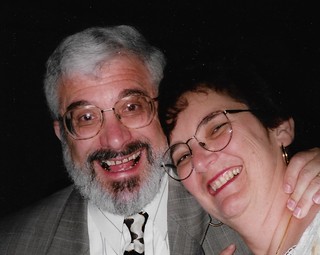 Bill and Rita married in 1967 and soon set off on an adventure westward, settling in Northern California near San Francisco and the Russian River Valley during the height of the counterculture era. On a road trip back east, their van broke down in Denver—an unexpected twist that led them to decide to make the Mile High City their home. Colorado remained Bill's home for the rest of his life. He spent more than 30 years in Conifer and nearly 20 years in Littleton.
An avid sports fan with enough knowledge to fill a stadium, Bill remained loyal to the New York Yankees while also enthusiastically cheering for his adopted hometown teams: the Denver Broncos, Denver Nuggets, Colorado Rockies, and Colorado Avalanche. Above all, he simply loved a good game.
He was also an enthusiastic reader of mystery novels, and always had a stack of new titles within easy reach.
Bill built a distinguished career in numismatics beginning in 1971, becoming one of the field's most widely respected specialists in the coins and currency of Israel, Palestine, and Jewish numismatic history—from ancient to modern—as well as in coins, paper money, tokens, and medals from around the world. He published more than 250 auction catalogs and price lists, and was an active member of numerous numismatic organizations. Bill was also known for his generosity in sharing his knowledge. A Life Member of the Denver Area World Numismatists club, he rarely missed their monthly meetings. He contributed to many publications in the field, and taught courses for the American Numismatic Association in Colorado Springs. Bill's contributions enriched the study of numismatics and earned him the admiration of colleagues, collectors, and institutions worldwide.
A Celebration of Life honoring Bill and his wife Rita will be held on Saturday, April 11, at 11:00 a.m. at The Barn at Memorial Park, 26964 North Turkey Creek Road, Evergreen, Colorado.
To read the complete obituary, see:
William Marc Rosenblum
(https://everloved.com/life-of/william-rosenblum/obituary/)

Bill's friends at the Denver Area World Numismatists (DAWN) are preparing another obituary focusing on his numismatic career. He was a regular reader and contributor to The E-Sylum; some earlier articles are linked below. -Editor
Howard Berlin, aka The Numismatourist writes:
I was traveling in Berlin, Germany when I received word that Bill Rosenblum has passed away. I first met Bill, his brother Andy, and his parents in 1979 at their table at the America Israel Numismatic Association (AINA) coin convention in New York City. My interest was first in Palestine Mandate coins and Bill got me interested in collecting the banknotes as well.
At one time Bill and NASCA were the prominent sources of Palestine Mandate material, especially the rare high-end items. At one time or another, Bill handled all the rarities, some multiple times such as the 1929 double proof set with case. I dare say that his knowledge was without equal in this small area of the numismatic world. He was always ready to share his knowledge and provided me with photos of specimens that he handled for use in my book, "The Coins and Banknotes of Palestine Under the British Mandate, 1927-1947." When it came time to dispose of my collection, which was one of the most complete in existence, I had Bill auction the coins which included all 59 issued coins in highly uncirculated state, 1 of 4 known 1947 1-mil coins, three varieties of the Holyland Token, and the rare 1927 double proof set with case. Bill helped to acquire many specimens for me.
When I would travel to ANA conventions and those in New York, I would always stop by his table to say hello to Bill and his wife Rita and chat when there were no customers to attend to. He taught me a lot and I will sadly miss him.
Aaron Oppenheim writes:
A Tribute to Bill Rosenblum: A Scholar, a Dealer, and a Friend
I first encountered the Rosenblum name in the late 1960s, when Bill was establishing himself alongside his father, Carl, and his brother, Andy. Even in those early days, it was evident that Bill brought something special to the world of numismatics. He didn't just trade in history; he lived it, researched it, and—perhaps most importantly—shared it.
Through the Judaic Numismatic Newsletter (JNN), Bill became a vital educator for the community. He possessed a rare philosophy: he believed that sharing his personal data and decades of experience was to everyone's benefit. While some might have guarded their "trade secrets," Bill published them with honesty, his opinion, and a sense of humor that made his writing a joy to read. He understood that a more informed collector was a more passionate one, and through the JNN, he helped build the very market he loved.
At coin shows, Bill and his late wife, Rita, were an inseparable team—a constant, welcoming presence amid the rows of tables. Other dealers always knew that if they came across a rare Judaic, Holocaust, Israel, or Palestine coin, Bill was the first and last stop. Because of the deep trust he had built with his clientele, he was consistently able to make the strongest offers, ensuring that the most significant pieces of history found their way into the right hands.
His auctions were a reflection of his integrity and his eye for the unique. They were a "must" for the avid collector, often featuring items—from ancients to modern, world coins, medals and notes—that simply couldn't be found anywhere else. In an industry of rising fees, Bill's "no buyer's premium" policy was a testament to his old-school approach: fair, honest, and focused on the transaction between people rather than the margins.
In a recent conversation, we spent time looking back at the 1970s and the legendary NASCA auctions. We talked about the characters and the camaraderie that made those years so much fun. Bill was, quite simply, the "go-to" expert in his field, but he was also a man who was easygoing and could chat about any topic under the sun.
I truly miss Bill and Rita. The hobby feels a bit smaller without them, but the wealth of information Bill left behind ensures that his influence on Judaic numismatics will be felt for generations to come.
To read earlier E-Sylum articles, see:
OF HEXAGRAMS AND PENTAGRAMS
(https://www.coinbooks.org/esylum_v05n42a11.html)
LAPA COUNTERFEITS
(https://coinbooks.org/esylum_v05n52a07.html)
BILL ROSENBLUM'S NUMISMATIC TRAVEL TIDBITS
(https://www.coinbooks.org/esylum_v15n45a10.html)
RICHARD MARGOLIS (1931-2018)
(https://www.coinbooks.org/v21/esylum_v21n48a06.html)
ROSENBLUM'S NUMISMATIC LITERATURE MINILIST
(https://www.coinbooks.org/v23/esylum_v23n23a02.html)
WOMEN COIN DEALERS PAST & PRESENT
(https://www.coinbooks.org/v26/esylum_v26n26a09.html)
RITA ROSENBLUM (1948-2020)
(https://www.coinbooks.org/v23/esylum_v23n46a05.html)

NEWMAN PORTAL ADDS VINTAGE PCNS / CSNA VIDEO
The latest addition to the Newman Numismatic Portal is video from the 2001 California State Numismatic Society Symposium. Project Coordinator Len Augsburger provided the following report. -Editor
Newman Portal Adds Vintage PCNS / CSNA Video
Courtesy of Elliot and Michael Wehner, NNP has added video from the 2001 California State Numismatic Society Symposium, which was hosted by the Pacific Coast Numismatic Society. Speakers include Bill Metcalf on "The Mint at Rome," David Lange on Philippine coinage produced by the U.S. Mint, Duane Feisal on California saloon tokens, and Joe Boling on "Counterfeiting Paper Money."
One of our favorite things to do with NNP is leverage NNP itself to add context to new content. In this case, the Winter 2002 edition of the Calcoin News supplies the full particulars regarding these presentations, and we can now associate the when, where, and why with what started as an undigitized videotape. Thanks to Michael Wehner for making this material available to NNP!
Michael Wehner adds:
"Former YN Elliot did the actual filming. He was 12 at the time."
Link to PCNS video on NNP:
https://nnp.wustl.edu/library/multimediadetail/545904
Link to Calcoin News on NNP:
https://nnp.wustl.edu/library/book/516578
RESEARCHER SEEKS BOIS DURCI, A NATURAL PLASTIC 1855-1927
Newman Numismatic Portal Project Coordinator Len Augsburger also passed along the following ask from a researcher. -Editor
 Researcher Seeks Bois Durci, A Natural Plastic 1855-1927
Medals in wood? Indeed, probably just about any solid substance has been die struck, or at least a crude attempt has been made. Bois Durci Un Plastique Naturel, A Natural Plastic 1855-1927, by Gaston Vermosen, documented such pieces made following an 1862 London exhibition. Michelle Lowe-Holder, a UK artist, seeks a copy of this book for research purposes and may be contacted at michelle@lowe-holder.com.
Link to Richard Jewell's review of Bois Durci:
https://www.coinbooks.org/esylum_v11n36a04.html
Bois Durci is having a renaissance, I suppose. In January I sold my copy of the book to another reader who'd asked about it. -Editor
 Link to Michelle Lowe-Holder home page:
https://www.lowe-holder.com/
To read the earlier E-Sylum articles, see:
BOOK REVEW: BOIS DURCI, A NATURAL PLASTIC 1855-1927, BY GASTON VERMOSEN
(https://www.coinbooks.org/esylum_v11n36a04.html)
NOTES FROM E-SYLUM READERS: FEBRUARY 1, 2026 :
Bois Durci Information Sought
(https://www.coinbooks.org/v29/esylum_v29n05a09.html)

VIDEO: LINCOLN'S 1860 NOMINATION
The David Lisot Video Library on the Newman Numismatic Portal can be found at:
https://nnp.wustl.edu/library/multimediadetail/522852
We highlight one of his videos each week in The E-Sylum. Here's one from 2026 with Robert I. Girardi speaking about the 1860 nomination of Abraham Lincoln. -Editor
Background and what was involved in the nomination of Lincoln for president. Speaker: Robert I. Girardi. Running time: 31:24. From the 2016 Central States Numismatic Society convention.

To watch the complete video, see:
Nomination of Abraham Lincoln in 1860
(https://youtu.be/jUMYV_tjRVw)
Nomination of Abraham Lincoln in 1860
(https://nnp.wustl.edu/library/book/540211)
HAPPY 250TH EVACUATION DAY!


On Tuesday John Sallay wrote:
"While many people — especially here in Boston — are celebrating St. Patrick's Day, today is also Evacuation Day, the day George Washington and his Continental soldiers secured an important early victory in the American Revolution. And indeed, this year is the 250th anniversary of that great event on March 17, 1776!
"The scene is depicted on the reverse of the Washington Before Boston Medal, with the legend HOSTIBUS PRIMO FUGATIS, "the enemy for the first time was put to flight".
"For those unfamiliar with the story, Heather Cox Richardson summed it up nicely in her daily email yesterday, at: https://heathercoxrichardson.substack.com/p/march-16-2026 ."
Thank you. The piece is well worth reading. Here's an excerpt from a Washington Post article. -Editor
As a Revolutionary War general, George Washington is most remembered for his victories at Trenton, Princeton and Yorktown. But his earlier expulsion of the British army from Boston on March 17, 1776, should stand alongside these. After their ouster, the British would have to reconquer America.
 The British evacuated Boston in 120 vessels, taking with them some 1,100 loyalists. The retreat represented the end of a siege that began almost a year earlier when American militia, citizen soldiers and provincial units followed British troops back from Lexington and Concord to surround Boston.
During the protracted siege, [British commander] Burgoyne relieved his boredom by establishing a riding school for the British cavalry in the Old South Meeting House and writing plays including "The Blockade of Boston," which portrayed Washington as a bumbling figure with an oversized wig and trailing sword and New Englanders as "Ye tarbarrell'd Lawgivers, yankified Prigs, Who are Tyrants in Custom, yet call yourselves Whigs."
On Jan. 8, 1776, as the curtain rose on a performance of "Blockade," a soldier — in costume for the play — ran onto the stage shouting, "The Yankees are attacking!" The audience laughed and applauded until they heard real alarm guns. The officers immediately dispersed to their units and posts, while the soldier-actors wiped makeup off their faces and jumped over the orchestra pit, "leaving the Ladies in the House in a most terrible Dilema."
As 1776 arrived, Washington lacked the artillery to launch a full-scale attack on the British in Boston. But toward the end of January, his situation improved dramatically with the arrival of 60 tons of artillery captured from the British at Fort Ticonderoga and dragged across ice and over mountains under the supervision of Col. Henry Knox, a former Boston bookseller.
The endgame came in March. After placing some of the cannon in Cambridge, to the northwest of Boston, Washington ordered the bombardment of the city as a smoke screen to allow 2,000 men to occupy the commanding position of Dorchester Heights. They crept up overnight and dug emplacements for the guns, making the city indefensible. Upon seeing the artillery mounted on the high ground across South Bay, [British senior commander] Howe ordered the evacuation. His army's departure was swift, and it left behind large quantities of military supplies, including spiked cannon, mortars, artillery carriages, shells and shot, as well as rugs, blankets and other items useful to the Continental Army. To spare the city, Washington chose to let the retreat proceed unmolested.
The patriots had now gained control of much of the country through the militia, committees of safety, the law courts and the assemblies, with most royal governors in exile. Even the British foothold in Canada had nearly fallen to Benedict Arnold and Ethan Allen. Yorktown and "final exclusion" were still more than five years off, but Washington's victory in Boston had set the stage for what was to come.
To read the complete article and a related one, see:
When 120 ships carried Britain out of Boston Harbor
(https://www.washingtonpost.com/opinions/interactive/2026/american-revolution-siege-boston-george-washington/)
A British general's lost journal reveals life inside the siege of Boston
(https://www.washingtonpost.com/opinions/2026/03/17/burgoyne-journal-american-revolution-siege-boston/)

CONECA TO EXAMINE ERROR AND VARIETY COINS
CONECA will be manning tables at upcoming coin shows to examine error and variety coins in the next few months. Here is a press release. -Editor
at Major Coin Shows Across the USA Throughout 2026
 CONECA, the international error coin and variety club, will be offering free examination of error
and variety coins to collectors at educational tables at coin shows across the United States
throughout this year. Everyone is welcome to ask questions and bring coins.
CONECA, the international error coin and variety club, will be offering free examination of error
and variety coins to collectors at educational tables at coin shows across the United States
throughout this year. Everyone is welcome to ask questions and bring coins.
The Combined Organizations of Numismatic Error Collectors of America, is the largest coin specialty club in the United States and has actively been educating collectors about mint error and variety coins for the last five decades.
At their coin show tables, different members of CONECA will offer free examination to collectors who bring coins from their collection to the show with questions. This is offered as a free service to help the hobby grow.
CONECA is devoted to education about errors and varieties and will not be buying or selling coins at their tables. The club requests that collectors have an idea of what they are asking about on the coins they bring to the shows, to allow for as many collectors as possible to have a chance to have their coins examined. The show schedule is as follows. Check each show for daily hours.
CONECA will have a table at the Quad City Coin Club Spring Coin Show, to be held 9AM-4PM at the Camden Center on Sunday April 12th 2026 in Milan IL (2701 1st St. E, next to Camden Park on US Route 67). For more information: QuadCityCoinClub@gmail.com.
CONECA will have a table at the Central States Numismatic Society show April 23-25th 2026. The show will be held at the Renaissance Hotel and Convention Center 1551 North Thoreau Drive, Schaumburg, IL. 60173. For more info see csns.org.
CONECA will have a table in the educational area at the spring Pennsylvania Association of Numismatists (PAN) show May 28-30th 2026. The show will be held at the Monroeville Convention Center, 209 Mall Blvd, Monroeville PA, 15146. More info at https://pancoins.org.
CONECA will also have a table at the summer FUN show, July 9-11th 2026, in Orlando Florida at the Orange County Convention Center, 9800 International Drive, in the West Building, Orlando Florida. More info at http://www.funtopics.com.
CONECA will also have a table at the World's Fair of Money August 25-29th 2026 in Pittsburgh PA. The show will be held at the David L. Lawrence Convention Center, 1000 Fort Duquesne Blvd, Pittsburgh, PA 15222. For more information: https://www.money.org/worldsfairofmoney/
In addition, multiple CONECA representatives are often available to give educational programs about error and variety coins, both virtually and in person, to coin clubs nationwide. Please inquire via email: minterrors@gmail.com. CONECA can be found online at conecaonline.org.

2026 ANA SUNDMAN LECTURE SPEAKERS SOUGHT
E-Sylum readers are a smart and sharing bunch; who would like to share their numismatic knowledge at the Sundman Lecture Series at the ANA World's Fair of Money in Pittsburgh? -Editor
Submissions are being accepted for the Maynard Sundman/Littleton Coin Company Lecture Series, taking place during the American Numismatic Association's (ANA) Pittsburgh World's Fair of Money, August 25-29. The theme this year is "Striking Independence: 250 Years of American Numismatics," which focuses on how money tells the story of the United States from 1776 to today.
Topics can be wide-ranging but should focus on early struggles with coinage and reliance on foreign money to the evolving imagery, language, and innovation found on American coins and paper money. New, original research will be prioritized. Only four proposals will be selected.
Event Details
The Symposium will be held at the David L. Lawrence Convention Center on Wednesday, August 26, 10 a.m. to 4:15 p.m.
To present, submit a summary of your lecture proposal (500 words max) by April 13, 2026, to Douglas Mudd at mudd@money.org. The summary must contain an introduction, a brief discussion of the subject, sources, and research method. Presenters will be notified if they have been selected by April 20. Selected presenters will receive a $250 honorarium and can attend the Sundman Series Luncheon free of charge.

About the Convention
The World's Fair of Money is an annual convention hosted by the ANA that features educational seminars, lectures, and presentations from noted numismatists; hundreds of dealers to give coin appraisals, buy, and sell inventory; rare treasures on display, auctions, and more. For more information about the event, visit
WorldsFairOfMoney.com.
EUREKA BAR PARTIAL OWNERSHIP OFFERED
Kagin's will be offering fractional ownership shares in the legendary "Eureka Bar", recovered from the S.S. Central America wreck. -Garrett
For the first time, fractional ownership shares in the legendary "Eureka Bar," a massive 64-pound California Gold Rush sunken treasure gold ingot, are being offered by Kagin's Digital (https://kagins.digital), a subsidiary of Kagin's Inc. of Belvedere Tiburon, California.

"The 933.34 troy ounces gold bar, recovered from the famed 1857 shipwreck of the SS Central America, known as the ‘Ship of Gold,' is widely regarded as the largest surviving gold artifact of the California Gold Rush and one of the most historically significant gold bars ever produced," stated Dr. Donald Kagin, President of Kagin's Digital and author of the reference book Private and Pioneer Gold Coins of the United States 1786-1862.
Shares in the Eureka Bar will be offered through a digital fractional ownership structure pursuant to Rule 506(c) of Regulation D under the Securities Act of 1933, allowing accredited investors to participate in ownership of the historic treasure. Investors interested in learning more about the offering can visit https://kagins.digital.
The announcement about the Eureka Bar comes amid renewed public attention surrounding the SS Central America treasure following the recent release from prison of treasure hunter Tommy Thompson. His expedition team of scientists and engineers originally recovered the shipwreck in the late 1980s, the most important numismatic recovery in American history.
The SS Central America Treasure
The SS Central America yielded what Life magazine famously described as the "Greatest Treasure Ever Found." Valued at more than $100 million, the sunken treasure was initially salvaged between 1988 and 1990 by the Columbus-America Discovery Group led by Thompson, with additional recovery conducted in 2014 by Odyssey Marine Exploration.
Much of the treasure was subsequently marketed by the California Gold Marketing Group and Adam Crum of FinestKnown.com.
The Eureka Bar
The "Eureka Bar" was produced in 1857 during the height of the California Gold Rush by San Francisco assayer Augustus Humbert and private coiner John Glover Kellogg.
"The massive ingot represents both a monumental Gold Rush artifact and a tangible financial instrument of its era, often described as a monetary document made of gold," said Dr. Kagin.
The bar was privately acquired in 2002 for $8,000,000 as part of a larger transaction involving several ingots and gold coins recovered from the wreck site, setting a record for a numismatic rarity. Today, the Eureka Bar is insured for $10,000,000.
Fractional Ownership Offering
The Eureka Bar has now been structured as a $6,500,000 digital fractional offering, with 1,500 shares being offered to members of the Kagin's Digital community.
"While it remains one of the most valuable numismatic items in existence, this structure allows individuals to participate in ownership of an incredibly important California Gold Rush artifact and iconic treasure for an average share price of $4,333," Dr. Kagin explained.
Crum, Managing Partner of National Treasures and widely recognized as one of the foremost authorities on the SS Central America treasure, added: "Over the course of my career, I have handled and sold more than $100 million in SS Central America treasure, including the majority of all the ingots recovered. The Eureka Bar stands alone as the largest California Gold Rush artifact and, in my view, the most important surviving gold bar in the world."
Blockchain-Secured Ownership
Ownership of the Eureka Bar will be offered through fractional shares, allowing accredited investors to participate in one of the most iconic surviving treasures of the California Gold Rush. The offering will be conducted as a securities offering under Regulation D, Rule 506(c) of the Securities Act of 1933.
Through Kagin's Digital platform, each share is securely recorded using blockchain-based technology, creating a transparent and tamper-proof record of ownership. This digital infrastructure allows fractional shares to be managed efficiently while maintaining the security and provenance expected of a museum-grade historical artifact.
About Kagin's Digital
Kagin's Digital, a subsidiary of Kagin's Inc., specializes in digital fractional offerings of rare and historic numismatic assets secured through blockchain technology. Visit https://kagins.digital/ or https://www.kagins.com/ to learn more. Kagin's Inc., founded more than 90 years ago, has been associated with numerous historic treasure offerings, including the $10 million Saddle Ridge Hoard, widely recognized as the most valuable buried treasure ever discovered in North America.
Important Disclosure
This press release does not constitute an offer to sell or the solicitation of an offer to buy any securities. Any offering of securities will be made only to accredited investors pursuant to Rule 506(c) of Regulation D and only through official offering documents.
Fractional ownership of numismatic items has been done before, mostly under partnerships that sell shares in a large numismatic inventory. A newer wrinkle is selling shares of a single (very expensive) numismatic item such as this. But even that has been done before, usually with just handshake agreements among dealers. That can make compiling pedigrees at little challenging, but usually they just list one primary owner. These partnerships are rarely reported in the numismatic press. -Editor

FINEST KNOWN OFFERS SS CENTRAL AMERICA CATALOG
With the publicity surrounding the release from prison of Tommy Thompson, the leader of the 1980s expedition that recovered treasure from the wreck of the SS Central America, Adam Crum's Finest Known seized the day on Monday to promote its catalog along with a chance to win a free Seated Liberty dime from the famed ship. Here's their emailed offer. Alas, their Friday drawing deadline has already expired. But see my Numismatic Diary elsewhere in this issue for a different offer I took them up on recently to purchase one of these babies along with some free numismatic literature. -Editor

With the recent news of the release from jail of controversial treasure hunter Tommy Thompson, the incredible story of the SS Central America is once again capturing national attention. Thompson, the leader of the 1980s expedition that discovered the wreck nearly 8,000 feet beneath the Atlantic, spent years in federal custody after refusing to disclose the location of certain treasure assets connected to the recovery.
Much of the media coverage surrounding his imprisonment — and now his release — has focused on claims that hundreds of valuable gold coins remain hidden away. Some reports have suggested that as many as 500 coins are secretly stashed somewhere, with dramatic headlines estimating their value at $50 million.
In Reality the story is far less sensational than many headline suggest.
The coins in question are believed to be 2.5-ounce gold commemorative pieces struck using gold recovered from the SS Central America shipwreck to celebrate the extraordinary discovery. While certainly valuable and historically fascinating, even if such a group of coins truly exists in some hidden cache, their estimated market value would likely be closer to $7.5 million — still a remarkable sum, but far from the dramatic figures being circulated.
Not exactly pocket change… but also not quite the buried $50 million treasure many reports have suggested.
Of course, the full story may not yet be told. Perhaps someday the rumored coins will resurface — or perhaps the mystery will remain part of the enduring legend of the Ship of Gold. As sailors might say, the truth may still be resting somewhere in Davy Jones' locker.
What is certain, however, is that the treasure of the SS Central America remains one of the most important discoveries in numismatic history.
And interest in shipwreck treasure coins is stronger today than ever. Collectors and investors alike are drawn to these tangible pieces of history — coins that survived one of the most famous maritime disasters in American history.
To celebrate the renewed attention surrounding this historic treasure, Finest Known is offering a FREE SS Central America Treasure Catalogue for a limited time.
- The dramatic story of the Ship of Gold
- Rare coins recovered from the legendary treasure
- Historical details of the voyage, sinking, and recovery
- Exceptional collectible specimens from this famous shipwreck

Anyone who requests their FREE catalogue by Friday, March 20, 2026 will automatically be entered to win a genuine pre-1857 Seated Liberty Dime recovered from the purser's safe aboard the SS Central America.
These historic coins are tangible artifacts from one of the most important shipwrecks in American history.
Request your FREE catalog today and secure your entry into the drawing.
To order the free catalog, see:
https://finestknown.com/checkout/?add-to-cart=%2053121&coupon_code=freetreasurecatalog
To read the earlier E-Sylum article, see:
SS CENTRAL AMERICA LEADER TOMMY THOMPSON FREED
(https://www.coinbooks.org/v29/esylum_v29n11a24.html)
THE BOOK BAZARRE
VOCABULARY TERM: SHRINKAGE
Here's another entry from Dick Johnson's Encyclopedia of Coin and Medal Terminology. -Editor
Shrinkage. A reduction in size particularly in cast objects caused by the cooling of the metal from the original size of the mold. Among the properties of each metal is its rate of contraction (molecules are drawn closer together during cooling usually in uniform rate, but uneven contraction voids are known to exist). In numismatics the most popular casting metal – bronze – can shrink form 1 1/2 to 2% in diameter. For this reason a second generation cast, or any succeeding cast (called an after-cast), can be differentiated from an original by its slightly smaller diameter.
It must be remembered in all cases of shrinkage, however, that if a mold is made from the original medal the mold itself shrinks as it cools. A cast made from that mold would exhibit the combined shrinkage of both mold and cast. Thus there is no precise percentage that a second, or subsequent generation cast, can differ from the original item. Along with the shrinkage there is some loss of definition and sharpness of detail – largely due to the experience of the caster – but the most obvious criterion is the smaller diameter. See cast medals.
Measurements should be carefully made. For medallic items it is best to measure from outside rim across the widest part, to that outside rim (not necessarily from edge to edge). A method of eluding shrinkage measurement is to have a wider diameter piece (easy to accomplish in casting) that could measure greater than the original!
Foundry workers use a rule of thumb of 3/16-inch shrinkage per linear foot – or 1.56% – for copper, bronze or thin brass. Thicker castings shrink somewhat less than thinner castings. Since cast medals are among thinner castings their shrinkage tends toward the high degree of shrinkage. See Chart.
| Casting Metal | Per foot | Percent |
|---|---|---|
| Pure tin | 1/32-inch | 0.26% |
| Cast iron, malleable iron | 1/8-inch | 1.04% |
| Britannia metal | 11/64-inch | 1.43% |
| Copper, bronze, thin brass or nickel casting alloys | 3/16-inch | 1.56% |
| Pure aluminum | 13/64-inch | 1.69% |
| Zinc, lead | 5/16-inch | 2.60% |
To read the complete entry on the Newman Numismatic Portal, see:
Shrinkage
(https://nnp.wustl.edu/library/dictionarydetail/516750)
WORLD-WIDE COIN INVESTMENTS
E-Sylum Feature Writer and American Numismatic Biographies author Pete Smith submitted this article on two people behind the World-Wide Coin Investments dealership. Thanks! -Editor
World-Wide Coin Investments, Limited
Wayne suggested this as the subject for an article. Like a tree, this topic has many roots and branches that could be the source for another story. I will focus on two people. One built the company while the other ruined it.

World-Wide Coin Investment Inc. was founded in 1962 by John B. Hamrick, Jr. as president and Warren E. Tucker as vice-president. Each drove a Mark IV Lincoln as their company car.
In 1965, World-Wide Coin Investments, was selling copies of Sheldon's Penny-Whimsy from 1201 Fulton Bank Building in Atlanta. In 1968, the firm was operated by Hamrick at 346 Peachtree Street in N. E. Atlanta, Georgia. The company name was shown as World-Wide Coin Investments, Inc. In Apil 1968, the company began regular monthly ads in The Numismatist.
In 1971, World-Wide acquired Peachtree Coin Shop owned by Blaise Dantone. He remained on as a consultant.
 In 1972, World-Wide Coin Investments was the first rare coin firm to have a main-frame
computer on site. In 1974 they offered a free computer Want List Service.
In 1972, World-Wide Coin Investments was the first rare coin firm to have a main-frame
computer on site. In 1974 they offered a free computer Want List Service.
In 1972, Hamrick in quick succession bought an 1894-S dime for $50,000, an 1804 dollar for $80,000 and a 1913 Liberty Nickel for $100,000. These brought the firm the desired result with positive publicity.
World-Wide Coin Investments became the first publicly traded rare coin company in February, 1972. The end of the company name was changed from Inc. to Ltd. The original issue was 140,000 shares sold for $5 each. The value quickly rose to $10 per share.
In 1973, they were World-Wide Coin Investments, Limited. Their address was 2970 Peachtree Street N. W. Suite 430. P. O. Box 11666 Atlanta, Georgia, 30305. Chattanooga Coin & Stamp Co. Inc, was a subsidiary and Gary B. Fillers was added to the board.
Things were going well for World-Wide in 1974 and Hamrick announced earnings of 22 cents per share in the second quarter. The World-Wide Rare Metals Exchange was thriving.
In 1974, J. Brian Skone was appointed president. Hamrick remained as chairman of the board. Under the leadership of Skone, much of the numismatic assets of their Florida store were sold off to GBH, Inc, (George B. Humphreys) in 1975. The firm suffered during the stagflation of 1975 and operated at a loss.
In 1976, World Wide Mint was a division of World-Wide Coin Investments, Ltd. They promoted bicentennial medals. Other subsidiaries included World-Wide Metals Exchange Ltd., and World- Wide Camera Fair, Ltd,
In 1977, Skone shifted activity from dealing in rare coins to marketing Coca-Cola memorabilia and production of silver ingots. It was reported that World-Wide operated at a loss in 1977. Skone resigned as president and CEO in 1978 and Hamrick returned in the role of president and chairman of the board. Skone remained as president of a subsidiary, World-Wide Camera Fair, Inc.
World-Wide Coin published The Coin Wholesaler after 1970.
World-Wide had retail stores in Augusta, Athens, Savannah, Columbus, Georgia and Jacksonville, Florida,
 In 1979, John B. Hamrick, Jr. sold 51 percent of the company to an undisclosed investor. Price
was 75 cents per share for 290,000 shares. It was later reported that on July 24, 1979, Joseph H.
Hale acquired 65 percent of the company. At that time the company had 40 employees. He was a
childhood coin collector with no experience as a dealer. Joseph H. Hale was apparently
successful in acquiring businesses but not good at managing them.
In 1979, John B. Hamrick, Jr. sold 51 percent of the company to an undisclosed investor. Price
was 75 cents per share for 290,000 shares. It was later reported that on July 24, 1979, Joseph H.
Hale acquired 65 percent of the company. At that time the company had 40 employees. He was a
childhood coin collector with no experience as a dealer. Joseph H. Hale was apparently
successful in acquiring businesses but not good at managing them.
Floyd Seibert joined the board of directors in September 1979 and served as the firm's audit committee. Following the sale, the previous board resigned and on September 1, 1979, a new board was formed consisting of Hale, Jones and Siebert without an election by shareholders. Hale failed to file the proper forms to register change of ownership with the SEC.
World-Wide sold off their retail stores in 1980. After his separation from his company, in 1980 Hamrick was with Precious Metals Trading Corp.
Hale proposed the issue of 300,000 new shares of stock at a price of 75 cents ($225,000) and produced minutes of a meeting on July 24, 1979. allowing Hale to trade coins or medallions in exchange for these shares of stock. Others who attended the meeting testified that no minutes were taken and no action was taken to accept coins or medallions for the stock. The SEC had strong evidence that the minutes were fabricated.
Hale then sold medallions to World-Wide in exchange for the 300,000 shares of stock. Later testimony stated that his appraised value was greatly overstated and that the medallions had no value in the secondary market.
In 1981, the Boston Stock Exchange suspended trading in stock of World-Wide. By August, 1981, the company had been reduced to three employees. In October 1983. The National Association of Securities Dealers, Inc. dropped the company from the NASDAQ exchange since there was no public trading of the stock.
The Securities and Exchange Commission (SEC) filed suit against Hale and Siebert in August 1981 for violations of the Foreign Corrupt Practices Act. Presiding Judge Robert Vining made this statement:
"The deterioration of World-Wide's internal controls and accounting procedures constituted the primary thrust of the SEC's complaint. The SEC contended that the combination of late filings, lack of internal controls, transactions unsupported by adequate documentation, and a total disregard for proper accounting procedures resulting in the precarious position of the company. The company's accounting books were virtually ignored, general ledgers and general journals were not kept, and the checks written on the World-Wide's five checking accounts were not reconciled."
Hale and Siebert resigned from the board of World-Wide in July 1982 and were replaced by Larry Amick as chairman of the board.
On February 27, 1985, Joseph H. Hale was sentenced to five years in prison with five additional years of probation. He was ordered to pay a fine of $60,000 and ordered to pay $175,000 in restitution to the shareholders.
By 1985, the company name was back to World-Wide Coin Investments, Inc. with Tom Byrd as manager. They were at 3145 Peachtree Road N. E. Atlanta, Georgia 30305.
An unsatisfied customer won a court case against World-Wide in 1986 for failure to deliver Noble platinum coins that were ordered.
Their last ad in Coin World was February 17, 1988. Their last ad in The Numismatist was in the issue for June, 1988. Closing of the company and its subsidiaries was not noted.
Hamrick continued in business as John B. Hamrick & Co. Hamrick died on November 4. 2023, at age 81.
In 1977, Merritt Matherson Richardson, president of World Wide Coin Investments of Atlanta, Inc. was charged with nine counts of theft by receiving stolen property.
The original company ran a large display ad in 1977 with the statement, "World-Wide Coin Investments, Ltd., a Delaware corporation with its principal; office in Atlanta, is not affiliated with a certain Georgia corporation of a similar name whose president was recently indicted by the Fulton County Grand Jury."
 World-Wide Mint had a Minneapolis address. About ten years ago I drove by there and found a
small auto repair garage. I doubt if that was a production facility and they marketed products
produced somewhere else, possibly Handy & Harman. I did not trace their ownership history.
World-Wide Mint had a Minneapolis address. About ten years ago I drove by there and found a
small auto repair garage. I doubt if that was a production facility and they marketed products
produced somewhere else, possibly Handy & Harman. I did not trace their ownership history.
Thanks, Pete - I was unaware of this history. I suggested the topic after reading in the new book Finding the Fort that a portion of an 1850s U.S. Army post payroll coin hoard was sold into the numismatic market in the 1970s by World-Wide Coin Investments, Inc. -Editor
To read the earlier E-Sylum article, see:
NEW BOOK: FINDING THE FORT
(https://www.coinbooks.org/v29/esylum_v29n10a02.html)

DIE ENGRAVING PRODIGY JOHN GREGORY HANCOCK
Allan Davisson released the following article on die engraving prodigy John Gregory Hancock, whose work is represented in The Harold Welch Collection in Davissons' upcoming Auction 45, closing March 25. -Garrett

Genius can occasionally shine in children whose ages are measured in single digits – Mozart composing and performing from the age of five is perhaps the most widely known. You can google child geniuses and see others. For some reason, John Gregory Hancock did not show up on any of the lists I found but his exceptional talent at the age of seven certainly qualified him to be on the list. Born into a family of engravers including a well known British engraver, Robert Hancock, the young John was exposed to the work and the technology and early in his life produced some amazing copper tokens.


He was also born at a time when coin manufacture changed forever. In 1788 the steam power Matthew Boulton and James Watt harnessed led to the first automatic steam powered coin minting press. It replaced the screw press that required placing a flan on a base with the engraved obverse die, slamming the reverse die down, and then manually removing the piece. This worked pretty well on gold but cold copper was another matter. With the even and powerful steam press it also resulted in an even and powerful impact on the flan.


The result turned into a series of tokens with a remarkable range of designs—buildings, people, animals—an artistic revolution in copper. The pieces in this catalog were carefully selected for their design merit and contemporary significance from different consignments. The Hancock pieces from the Harold Welch collection are the central feature of the offering.


ATLAS NUMISMATICS SELECTIONS: MARCH 22, 2026
Atlas Numismatics has updated their website with 423 new coins, medals, and tokens at fixed prices. Select items are discussed below. -Garrett

1085481 | ROMAN REPUBLICAN. ETRURIA. Populonia. Struck circa 300-250 BC. AV 25 Asses. NGC Ch. MS (Choice Mint State) Strike 5/5 Surface 4/5. 12mm. 1.35gm. ??V (retrograde). Lion's head with tongue protruding, right (Blank). Vecchi, Etruscan Coinage Serie 21, O1; HN 128.
The spiky mane and ferociously curled lips of the lion invite comparison to the bronze Chimaera of Arezzo now in Florence. Traditionally the dating of this issue approximated to that of the statue (c. 400 BC), however its weight standard links it to Rome's Mars/eagle gold issue (after 211 BC) and it has been plausibly suggested that its production was connected to Rome's war with Hannibal. Superb and exceptional.
To read the complete item description, see:
1085481 | ROMAN REPUBLICAN. ETRURIA. Populonia.
(https://atlasnumismatics.com/1085481/)

1085644 | AUSTRIAN NETHERLANDS. Maria Theresa. 1750-(lion) R AV 2 Souverain d'Or. PCGS MS63. By Jacques Roëttiers. Bruges. 27mm. 11.12gm. Crowned bust right Crowned arms with mm and date below. KM 11; Delmonte 569; VH 807.
Superb and exceptional.
To read the complete item description, see:
1085644 | AUSTRIAN NETHERLANDS. Maria Theresa. 1750-(lion) R AV 2 Souverain d'Or. PCGS MS63.
(https://atlasnumismatics.com/1085644/)

1085159 | CEYLON. 1808 AR 24 Stivers. NGC MS63. Adriaan Pieter Blume's (private) mint. 16mm. 18gm. Denomination Elephant left, denomination below. KM 76; Pridmore 17.
Hammered Coinage.
Ex R.L. Lissner Collection – Ex St. James's & Classical Numismatic Group Auction 29 (1-2 August 2014) Lot 87.
To read the complete item description, see:
1085159 | CEYLON.
(https://atlasnumismatics.com/1085159/)

1086309 | GREAT BRITAIN. England. Anne. (Queen, 1702-1714). 1706 AV Five Guineas. PCGS MS61. 38.3mm. 41.80gm. ANNA · DEI · - GRATIA ·. Without VIGO below bust MAG - BR · FRA - ET · HIB - REG ·. Crowned shields in cruciform, scepters at angles. KM 520.2; SCBC-3566; Schneider 529; MCE 200; Fr.-31.
Superbly struck and an excellent portrait; semi-prooflike surfaces.
Ex Eli Wallit Collection, Morton & Eden, December 11, 2003, lot 385. .
To read the complete item description, see:
1086309 | GREAT BRITAIN. England.
(https://atlasnumismatics.com/1086309/)

1086047 | GREAT BRITAIN. Victoria. (Queen, 1837-1901). 1848 AR Pattern Gothic Florin, Two Shillings. PCGS PR65. London. Edge: Plain. VICTORIA REGINA. Crowned bust left Crowned shields of England, Scotland and Ireland in cross formation with flowers at corners. cf. KM 745. Proof. Plain edge; ESC-2917.
To read the complete item description, see:
1086047 | GREAT BRITAIN.
(https://atlasnumismatics.com/1086047/)

1086057 | ITALIAN STATES. Genoa. 1796? (1814) AV 96 Lire. PCGS MS65?. 33.75mm. 25.21gm. DUX · ET · GUB REIP · GENU ·. Crowned arms with supporters on mantle above lion head ET · REGE · EOS ·. Madonna and child above value. KM 251; Fr.-444.
The more scarce Restoration period 1814-restrike, as indicated by the star-icon located at the end of the date.
To read the complete item description, see:
1086057 | ITALIAN STATES. Genoa.
(https://atlasnumismatics.com/1086057/)
Updates to their online inventory are issued monthly.
For more information and to sign up for the firm's monthly newsletter, visit:
atlasnumismatics.com.
NUMISMAGRAM MEDAL SELECTIONS: MARCH 22, 2026
Numismagram's Jeremy Bostwick sent along these five medals from his most recent upload of new material to his site. For all of the new items, please visit https://www.numismagram.com/inventory. -Garrett

103308 | UNITED STATES & ITALY. Christopher Columbus/"Civilization" bronze Medal. Issued 1892 for the 400th anniversary of the discovery of America (102mm, 12h). By Ludovico Pogliaghi & Angelo Cappuccio for Stefano Johnson in Milano.
Central medallion reading CRISTOFORO COLOMBO and with robed bust facing slightly left; around, native princess and Columbia clasping outstretched arms; above, globe focused upon the Western hemisphere; below, eagle perched slightly left, head upturned right, with wings spread; all over wreath composed of palm fronds and laurel branches // The fruits of Columbus's first voyage: Winged personification of Civilization facing slightly left, head right, surrounded by Genii representing Education, Commerce, and Industry; to lower right, native chief, maiden, and two warriors crouching defensively; at a distance, coastline with the U.S. Capitol before rising sun; around, border comprised of alternating stars and state shields.
Eglit 106; Starlust ST-eg-106brc; Rulau B10 var. (white metal). PCGS SP-58.
During the lead-up to the quadricentennial of Columbus's initial contact with the New World, numerous medals were designed and struck, both in the United States—in conjunction with the 1893 Columbian Exposition in Chicago—and abroad—sometimes for this event or for similar others. In this case, the so-called "Civilization" medal was produced commemorating the quatercentenary in Italy by the highly-accomplished medal manufacturer, Stefano Johnson in Milano, and features tremendous relief and intricacy—especially upon its obverse. Rulau mentions that "...this medal is generally considered to be the most beautiful of all Columbian medals." He also writes that "...the Columbus head apparently is an amalgam of design concepts from the Capriolo engraving, Yanez, and Rincon portraits, adapted by Pogliaghi," and that "...a spokesman for Stefano Johnson S.p.a. stated: 'It has received ecominum beyond expectation, being pronounced by the artistic world 'of marvelous art, rare artistic work and perfect in execution.'" That point is fully realized in this exceptionally impressive, ultra-large format.
To read the complete item description, see:
103308 | UNITED STATES & ITALY. Christopher Columbus/"Civilization" bronze Medal.
(https://www.numismagram.com/product-page/103308)

103117 | GERMANY. Scarcity of Living Space cast bronze Medal. Dated 1921. "Wohnungsnot 1921"—on the scarcity of living space following World War I (59mm, 67.64 g, 12h). By Karl Goetz in München.
WAS–AUCH HIER NOCH EIN / WOHNRAUM? ("what, yet another living room?"), housing inspector standing facing, opening the door to a bathroom; disgruntled family to right // View of the typical living conditions: triple bunk bed, with each lower bunk shared by two individuals; small child sleeps in the drawers of a chest; a baby is sleeping in a wicker basket under the table; the child standing in the center of the room is urinating into a chamber pot. Edge: Some filing marks as made, otherwise plain.
Kienast 280. Choice Mint State. red-brown surfaces, with a charming matte nature.
Following the ravages of World War I, the scarcity of living space allowed for a very small amount of square footage per person, and was enforced by inspectors who would record and utilize any surplus space. During this time, three to four families could be crammed into just one apartment, leading to obvious poor conditions and public outcry.
To read the complete item description, see:
103117 | GERMANY. Scarcity of Living Space cast bronze Medal.
(https://www.numismagram.com/product-page/103117)

103390 | UNITED STATES & MEXICO. John F. Kennedy & Abraham Lincoln Silver Medal. Issued 1965 (43mm, 12h). By an unknown artist and of uncertain Mexican manufacture.
PALADIN DE LOS DERECHOS CIVILES / J. F. K., head of Kennedy facing slightly left // LIBERTADOR DE LOS ESCLAVOS / A. LINCOLN, facing head of Lincoln before billowing American flag; below, crossed hands holding up figures of the same man: to left, facing left upon his knees; to right, standing upright facing slightly left.
King K-65-4. PCGS MS-63. Extremely vibrant and brilliant, as well as being immensely blast white and argent. Seemingly a bit conservatively assessed as merely choice mint state. A scarce and impressive Mexican-produced medallic issue for two slain American presidents. Serially numbered 421.
Assassinated nearly a century apart, presidents Abraham Lincoln and John F. Kennedy have been linked in various other ways, from intriguing trivia such as both being succeeded by Johnsons (Andrew and Lyndon, respectively) and having secretaries with the other's surname, to more consequential aspects such as their concern for human rights. It is the latter point which is the focus of this commemorative medal issued in Mexico, which celebrates Lincoln as the great emancipator and Kennedy as the champion of civil rights.
To read the complete item description, see:
103390 | UNITED STATES & MEXICO. John F. Kennedy & Abraham Lincoln Silver Medal.
(https://www.numismagram.com/product-page/103390)

103357 | ITALY, FINLAND & SWEDEN. Leonardo da Vinci three-piece bronze Medal. Issued 1974 for the 455th anniversary of the death of the High Renaissance polymath (59mm, 336.8 g, 12h). By Kauko Räsänen for Sporrong in Norrtälje.
Top piece, obverse: LEONARDO DA VINCI, fourfold face of an older da Vinci, borrowed from a self-portrait, with movement from left to right showing an increasingly open mouth and angrily widening and narrowing of the eyes // Top piece, reverse: The position of man in the cosmos: Incuse square, astronaut standing facing, with face partially hidden and with arms outstretched in the style of da Vinci's Vitruvian Man; to left, small sphere containing smaller figure with arms similarly outstretched. /// Middle piece, obverse: Raised square, with da Vinci gazing to right, showing increasingly smaller reflections as one moves inward—a symbol of his enduring legacy // Middle piece, reverse: Raised square, with da Vinci's architectural designs and inventions: glider spiral (helicopter), parachute, repeating cannon (machine gun), armored car, waterwheel, submarine, diving suit, etc., with his birth year (1452) and death year (1519) in field to left and right, respectively. /// Bottom piece, obverse: Horse galloping left, with nude male rider looking right—a paraphrase of the equestrian monument planned and sketched by da Vinci for Duke Francesco Sforza // Bottom piece, reverse: Incuse square featuring facing female head modeled after the Mona Lisa, with her skull superimposed to and facing left—a symbol of the transience of life. Edge: 0726•5000 / SPORRONG.
Hackl & Klose 63. As Made. Deep brown surfaces, with some lighter hues in the recesses. An extraordinary work of modern medallic art in triplicate.
The very definition of a Renaissance man, Leonardo da Vinci excelled in seemingly all aspects, with this complex, three-part medal by Räsänen capturing many of those important areas.
To read the complete item description, see:
103357 | ITALY, FINLAND & SWEDEN. Leonardo da Vinci three-piece bronze Medal.
(https://www.numismagram.com/product-page/103357)

103482 | UNITED STATES. Uriah P. Levy bronze Medal. Issued 1988. Jewish-American Hall of Fame series: commemorating the first Jewish Commodore of the United States Navy (46mm x 44mm, 55.31 g, 12h). By Hal Reed for the Medallic Art Co.
COMMODORE URIAH P LEVY • 1792 • 1862, bust facing slightly left in naval attire; scroll (mentioning Levy's anti-flogging bill), ship, and banner in background // Perspective exterior view of Monticello; facsimile of Th. Jefferson's signature above, Monticello in script below. Edge: MAGNES MUSEUM / 9 / MACO-BRONZE.
JAHF 20. Choice Mint State. Glossy pale-bronze surfaces, with some darker antiqued hues in the recesses. Serially numbered 9 of 350.
Though serving as the first Jewish Commodore of the United States Navy later in life, Uriah Levy faced numerous earlier courts-martial instigated solely upon his Jewish faith. One of his proudest achievements was securing enough support for the abolishment of the barbaric punishment in the U.S. Navy known as flogging. Another important act for which Levy is greatly known connects him with Thomas Jefferson, of whom he was a great admirer. Following Jefferson's death in 1826, his estate (Monticello and the surrounding grounds) had fallen into severe disrepair. Levy purchased the estate, funded renovations, and even expanded upon the existing land. After Levy's death in 1862, the grounds were dedicated to the American people, and Jefferson's home remains what it is today thanks to the vision and funding of Levy.
To read the complete item description, see:
103482 | UNITED STATES. Uriah P. Levy bronze Medal.
(https://www.numismagram.com/product-page/103482)

HERITAGE: MARCH 2026 WORLD PAPER MONEY
Heritage Auctions will be hosting their World Paper Money Signature Auction on March 26. Select items are discussed below. -Garrett

Inflationary issues are curious, they speak of desperate times, but also to the resourcefulness of industry to "keep the ball moving." It never ceases to amaze me how "crafty" world-wide, economic systems become to protect their interests, and most importantly to continue spinning the proverbial rat-wheel. Similarly, emergency issues and overprint types, also display ingenious "shortcuts" devised from necessity. This auction is peppered with utterly rare inflationary examples for Austria, Germany, Russia and more. This has become the next frontier, so to speak, evidenced by the recent surge in demand for Eastern European material, for example. This type, although not aesthetically striking, is packed with historical importance and utmost rarity, as it is the first and only PMG graded example. If I were a betting man, I would predict an almost certain excitement for this note come auction day.
To read the complete item description, see:
Austria
(https://currency.ha.com/itm/world-currency/austria-austrian-hungarian-bank-1-000-000-kronen-18111918-pick-36-pmg-about-uncirculated-53/a/4058-24046.s?ctrack=200071&type=bodylink-1+-currency-picks-4058-WPM-tem031326)


This grandly sized, highest denomination for Lebanon is astoundingly rare, a key variety, and lingers on most wantlists for the region. Beautifully designed, this note effortlessly ticks all the right boxes: having achieved the elitest of grades, rarity and desirability. Printed on delicate French-like paper, it is unfathomable to how this large-sized example managed to withstand the unforgiving elements and climate, time, and redemption for its sheer buying power. A showstopper of Middle Eastern numismatics, this piece will have no problem in finding an advanced collection to welcome it home.
To read the complete item description, see:
Lebanon
(https://currency.ha.com/itm/world-currency/lebanon-banque-de-syrie-et-du-liban-250-livres-1939-pick-21-pmg-extremely-fine-40/a/4058-24362.s?ctrack=200071&type=bodylink-2+-currency-picks-4058-WPM-tem031326)


This famed type in Specimen format is very unusual. One really needs to consider the chaos that ensued not only in business, but also in currency production of the time. With new hyper-inflationary denominations being added at a whim, it is almost extraordinary that the Reserve Bank of Zimbabwe was able adhere to standard practices like producing Specimen. An opportunity not to be overlooked, any example is missing from most collections.
To read the complete item description, see:
Zimbabwe
(https://currency.ha.com/itm/world-currency/zimbabwe-reserve-bank-of-zimbabwe-100-trillion-dollars-2008-pick-91s-specimen-pmg-gem-uncirculated-65-epq/a/4058-24527.s?ctrack=200071&type=bodylink-3+-currency-picks-4058-WPM-tem031326)


Zanzibar's Government issues of 1908-1928 have long held a special place in my mind and in the minds of advanced collectors everywhere. They are rare, undeniably exotic, and among the most beautifully engraved colonial notes ever produced. The 5 Rupees denomination was issued with three dates 1908, 1916, and 1928 - all scarce, but the 1916 variety is particularly elusive. In fact, this is only the second example we have had the privilege to offer.
This piece has been thoughtfully conserved to preserve an issue that is seldom encountered in any form. What strikes me most is the eye appeal: despite the technical grade, the front presents with impressive clarity and charm, allowing the artistry to shine through. Withdrawn beginning in 1936 and replaced by East African issues, Zanzibar's notes mark a brief but extraordinary chapter in monetary history. Opportunities to acquire a 1916 5 Rupees are few and far between, so this is your chance!
To read the complete item description, see:
Zanzibar
(https://currency.ha.com/itm/world-currency/zanzibar-zanzibar-government-5-rupees-181916-pick-2-pmg-choice-fine-15-net/a/4058-24526.s?ctrack=200071&type=bodylink-7+-currency-picks-4058-WPM-tem031326)


The Banque du Congo Belge issues of the 1940s and early 1950s form one of the most impressive and widely collected African currency series of the twentieth century. At the pinnacle stands the formidable 10,000 Francs dated 10 March 1942, the highest denomination of the era and a note that speaks to the extraordinary economic demands placed on the Belgian Congo during the Second World War. Large in format and striking in presence, this uniface design was likely intended for interbank or high-level financial transactions, and it may never have seen public circulation. PMG has graded just nine Specimen examples and no issued notes, underscoring the extreme rarity of the type.
This Specimen, graded PMG 58, displays two bold red overprints across the face and retains completely original paper on both sides, an exceptional state of preservation for such a large and seldom-seen issue. It is the first example we have had the privilege to offer, and the denomination is virtually absent from the collector marketplace today. As both a historic artifact of wartime Central Africa and the apex denomination of a beloved series, this 10,000 Francs stands as a major African rarity not to be missed.
To read the complete item description, see:
Belgian Congo
(https://currency.ha.com/itm/world-currency/belgian-congo-banque-du-congo-belge-10-000-francs-1031942-pick-20s-specimen-pmg-choice-about-unc-58-epq/a/4058-24064.s?ctrack=200071&type=bodylink-8+-currency-picks-4058-WPM-tem031326)


Issued in 1948 by the Inner Mongolia People's Bank, this 200 Yuan note captures a pivotal and short-lived chapter in China's monetary history. Produced during the final years of the Chinese Civil War, the regional issues of Inner Mongolia were limited in both scope and duration, with only a handful of denominations released in 1948 and 1949. Survival rates are low, and the type is rare in any grade today. The design is especially appealing, featuring traditional scenes from the sweeping high plateau of Inner Mongolia, an evocative tribute to the region's landscape and culture during a time of profound political transformation.
Graded PMG 64, this piece stands as the single finest graded example in the PMG Population Report at the time of writing. Its originality and superior preservation elevate an already scarce type to the highest level of collectability. For the advanced collector of Chinese or regional issues, this is a condition rarity of the highest order.
To read the complete item description, see:
China
(https://currency.ha.com/itm/world-currency/china-inner-mongolia-peoples-bank-200-yuan-1948-pick-s3494-s-m-n12-pmg-choice-uncirculated-64/a/4058-24147.s?ctrack=200071&type=bodylink-9+-currency-picks-4058-WPM-tem031326)


The term "Mark" was already used in the early Middle Ages and remained in use through the 19th century as a unit of weight for silver. The exact weight varied by region; one documented standard is the "Cologne Mark," equivalent to 234 grams of silver, from which various coins were struck. Prior to German unification in 1871, the many independent German states issued a wide variety of currencies, most commonly Thalers and Gulden. In order to unify these different monetary systems, it became necessary to adopt a single currency name acceptable throughout the entire German Empire—one that would not favor any particular region.
As a result, the long-established unit "Mark" was revived, and following the Imperial Currency Act of 1873, banknotes and coins bearing this new denomination were issued beginning in 1874. The 5 Mark note dated July 11, 1874, offered here at auction, is therefore the first banknote denominated in "Mark." It is listed as Pick 1 in the Standard Catalog of World Paper Money. Notes from this first issue of the German Empire are extremely rare and essential to any advanced collection. This example shows expected circulation for its age and has been graded PMG Very Fine 20.
To read the complete item description, see:
Germany
(https://currency.ha.com/itm/world-currency/germany-imperial-treasury-note-5-mark-1171874-pick-1-pmg-very-fine-20/a/4058-24289.s?ctrack=200071&type=bodylink-10+-currency-picks-4058-WPM-tem031326)


After the vast Soviet empire collapsed in 1991, the transition from a planned economy to a market economy plunged the country into deepening economic turmoil. The political situation was equally volatile, particularly in the wake of the Soviet collapse and the power struggle between Boris Yeltsin and Mikhail Gorbachev. The ruble steadily depreciated, and the denominations printed on banknotes rose rapidly as inflationary pressures intensified. By the mid-1990s, the issuance of a 500,000 Ruble note marked a new peak. Despite this enormous face value, its purchasing power amounted to only approximately 100 to 150 U.S. dollars. Empty store shelves further fueled widespread public dissatisfaction.
Only after the 1998 currency reform—when the ruble was redenominated at a rate of 1,000 old rubles to 1 new ruble—did meaningful stabilization begin. The 500,000 Ruble note offered here, in flawless condition and graded PMG Gem Uncirculated 66 EPQ, would undoubtedly be a highlight of any collection.
To read the complete item description, see:
Russia
(https://currency.ha.com/itm/world-currency/russia-bank-of-russia-500-000-rubles-1995-nd-1997-pick-266-pmg-gem-uncirculated-66-epq/a/4058-24441.s?ctrack=200071&type=bodylink-11+-currency-picks-4058-WPM-tem031326)


With the end of democracy in Austria's First Republic under Chancellor Dollfuss and the country's increasing alignment with National Socialist Germany, Austria was annexed into the German Reich on March 13, 1938. As a result, existing banknotes denominated in Schilling became obsolete and were replaced by Reichsmark, the legal tender of the German Reich. The 100 Schilling note dated January 2, 1936, ceased to be issued. However, in June of the following year, the design reappeared in modified form—this time as a 20 Reichsmark note. The new version was printed primarily in brown rather than green and, in keeping with the era, prominently featured a large swastika at the center.
The 100 Schilling note offered here at auction, overprinted and perforated "Muster" (Specimen), is one of the few surviving examples of this issue and highly sought after by collectors. Its impeccable preservation, graded PMG Gem Uncirculated 66 EPQ, makes it an icon in any world-class paper money collection.
To read the complete item description, see:
Austria
(https://currency.ha.com/itm/world-currency/austria-austrian-national-bank-100-schilling-211936-pick-101s-specimen-pmg-gem-uncirculated-66-epq/a/4058-24053.s?ctrack=200071&type=bodylink-11+-currency-picks-4058-WPM-tem031326)


This large, striking Specimen captures a brief but intense chapter in Hawaiian history. It hails from the fleeting era of the Republic of Hawaii, formed after a group of men who overthrew the reigning Queen Lili‘uokalani established a provisional government of their own. This republic existed only until the turn of the century, when Hawaii was formally annexed into the United States. In my opinion, it is pieces like this that offer a beautiful glimpse into those fleeting historical moments that are so often overlooked. It is a rare and meaningful Specimen, a true numismatic treasure.
To read the complete item description, see:
Hawaii
(https://currency.ha.com/itm/world-currency/hawaii-republic-of-hawaii-department-of-finance-20-dollars-1895-nd-1899-pick-8s-specimen-pmg-superb-gem-unc-67/a/4058-24318.s?ctrack=200071&type=bodylink-12+-currency-picks-4058-WPM-tem031326)


I absolutely adore this note due to the fabric! The woven nature of the textile itself is incredibly fascinating to me. So often, I get caught up examining the imagery and details printed on a banknote and forget to appreciate the material it is made from. Unusual notes like this pull me back to the physicality of the object. I'm also drawn to the history behind them, as these notes capture yet another moment framed by geopolitical realignment. Khwarazm, under the Khanate of Khiva, became a Russian protectorate in 1873 when it was conquered. Yet, after the fall of a khanate and the collapse of Russian monarchy in 1917, the Khwarazm People's Soviet Republic emerged in the early 1920s. This was short-lived, as it was absorbed into the USSR by 1924.
To read the complete item description, see:
Russia
(https://currency.ha.com/itm/world-currency/russia-khwarezm-people-s-soviet-republic-2000-rubles-1921-pick-s1084-very-fine-extremely-fine/a/4058-24451.s?ctrack=200071&type=bodylink-13+-currency-picks-4058-WPM-tem031326)


I will admit, I do have a soft spot for notes in this series. The wonderful Lady Hazel Lavery adorns the front of the note, acting as an allegorical representation for Ireland, a design her husband, Sir John Lavery, was commissioned to create. On the back, a sculpture of a river god is presented. This vignette was inspired by the Edward Smyth's keystone sculptures that adorn the Customs House in Dublin, Ireland. There are fourteen of his sculptures at the Customs House, representing the many rivers that flow through the Land of Eire. Yet, beyond the familiar vignettes, this particular note stands out for its vivid, contrasting colors, and the wonderful grade it holds with EPQ status. It is an enchanting note that I am sure will captivate many collectors.
To read the complete item description, see:
Ireland - Republic
(https://currency.ha.com/itm/world-currency/ireland-republic-central-bank-of-ireland-50-pounds-441977-pick-68c-pmg-gem-uncirculated-65-epq/a/4058-24351.s?ctrack=200071&type=bodylink-13+-currency-picks-4058-WPM-tem031326)


This note speaks to me in part because I feel that the Standard Catalogue and Banknote Book did a disservice to the breathtaking statue illustrated on the obverse of the 500 Francs French West African note. Their records simply describe either a ‘mask' or ‘bronze head of a young girl.' The bronze statue in question is, in fact, the head of Queen Idia, mother of King Oba Esigie from the 16th century Kingdom of Benin. Queen Idia was credited with much of her son's military success against neighbouring peoples. Interestingly, this is communicated through her hairstyle, which was only permitted on a war chief. After her death, Oba Esigie had four bronzes of his mother's head cast, with the one featured here currently held in the British Museum. Not only is Britain's relationship with the Benin Bronzes an ethical can of worms, but the story of Queen Idia's statue is worthy of a much lengthier exploration than I can write here. Suffice it to say, there is much more to unpack here than ‘bronze head of a young girl' suggests. This rarely offered example in remarkable Uncirculated grade is, just as Queen Idia's image, certainly worthy of additional attention.
To read the complete item description, see:
French West Africa / Togo
(https://currency.ha.com/itm/world-currency/french-west-africa-togo-institut-d-emission-de-l-aof-et-du-togo-500-francs-23101956-pick-47-pmg-choice-unci/a/4058-24281.s?ctrack=200071&type=bodylink-12+-currency-picks-4058-WPM-tem031326)


Last year, I went on a solo trip to the museums and galleries of Paris. I ate more French onion soup than was good for me, saw some of the world's greatest masterpieces, and spent an entire day wandering the galleries of the Louvre. I did not expect to see Mona Lisa again so soon, let alone on a Costa Rican banknote. With such a typical reverse vignette of a farmer, cattle, and a wagon, it has always baffled me that La Gioconda would be featured on a note from the Banco Internacional de Costa Rica. I don't think you could find a more unusual choice for a portrait on any other currency. This 2 Colones note is subtly coloured and presented in an exceptional grade, with only three notes in higher grades on the PMG census — an attractive and interesting piece, in outstanding condition.
To read the complete item description, see:
Costa Rica
(https://currency.ha.com/itm/world-currency/costa-rica-banco-internacional-de-costa-rica-2-colones-1031936-pick-167-pmg-choice-uncirculated-64/a/4058-24175.s?ctrack=200071&type=bodylink-13+-currency-picks-4058-WPM-tem031326)


For the first time in 60 years, the 2026 Chinese New Year has heralded the Year of the Fire Horse. In the Chinese Zodiac, the horse represents freedom, strength, and a drive to succeed, and the pairing with the element of fire purportedly adds fuel to these traits. This is magnificently represented by the running horse motif and lucky red colour of the National Industrial Bank of China 1 Yuan, overprinted by the Bank of Communications. Given 2026 is my first year with Heritage Auctions, I couldn't be happier with the auspicious signs for the year to come. I anticipate that this beautiful banknote will represent good fortune for its new owner when the hammer falls in this upcoming auction.
To read the complete item description, see:
China
(https://currency.ha.com/itm/world-currency/china-bank-of-communications-1-yuan-1935-pick-152-s-m-c126-240-pmg-gem-uncirculated-65-epq/a/4058-24143.s?ctrack=200071&type=bodylink-13+-currency-picks-4058-WPM-tem031326)
HERITAGE: MARCH 2026 ERROR COINS SHOWCASE
Heritage Auctions will be Error Coinage US Coins Showcase Auction on March 23. Select items are discussed below. -Garrett


The off-center 1817 large cent in lot 54002 has caught my eye every time I've perused this auction over the last couple of weeks. Early (screw press) coinage errors are quite scarce compared to the myriad modern errors that one tends to see, so when a dramatic piece like this 30% off-center strike shows up, I have a special appreciation for it. This piece is also well worn, meaning it circulated extensively without being set aside for its unusual nature. Part of this is due to the lack of widespread numismatic interest in the United States that early, but it is also due to the fact that screw press coinage was often imperfect, and many coins still circulated without issue even if they exhibited striking abnormalities.
To read the complete item description, see:
1817 1C Large Cent, 13 Stars, N-11, R.1 -- Struck 30% Off-Center
-- VG10 PCGS.
(https://coins.ha.com/itm/errors/1817-1c-large-cent-13-stars-n-11-r1-struck-30-off-center-vg10-pcgs/a/60524-54002.s?ctrack=200071&type=featured-1-coinus-news-tem031726)


There are a number of planchet strips in this auction, all from the collection of Fred Weinberg, though this cent strip stands out to me. Not only is it a partially punched planchet strip, but it shows the punches overlapping. This is a planchet strip that produced clipped planchets, some of which may have ended up as error coins if they were not sifted out of the planchet hoppers.
To read the complete item description, see:
Overlapped Copper Small Cent Punched Planchet Strip,
Uncertified.
(https://coins.ha.com/itm/errors/overlapped-copper-small-cent-punched-planchet-strip-uncertified-4-x-4-1-2-ex-fred-weinberg/a/60524-54006.s?ctrack=200071&type=bodylink-5+-coinus-picks-60524-Error-tem032026)

This coin is visually exceptional. It is a clear double strike, with the second strike far off center and rotated. The planchet shape is only slightly distorted, which likely allowed the coin to circulate extensively prior to being preserved for numismatic purposes. Double strike errors are somewhat plentiful in the entirety of mint errors, but not so much in the Indian cent series, especially this "perfect." This is one of the most visually interesting coins I see in this auction.
To read the complete item description, see:
1880 1C Indian Cent -- Double Struck, 2nd 45% Off-Center. --
VF30 PCGS.
(https://coins.ha.com/itm/errors/1880-1c-indian-cent-double-struck-2nd-45-off-center-vf30-pcgs/a/60524-54014.s?ctrack=200071&type=featured-2-coinus-news-tem031726)


There is a nice selection of off-center Buffalo nickels in this auction, but the two coins in lots 54088 and 54090 stand out, being further off center than typical for Buffalo nickel errors. The spreads are 30% and 35%, respectively. One coin is AU55, the other is MS63. These are outstanding, widely off-center Buffalos with clear dates. Perhaps one would be enough for your collection, but you have the opportunity to acquire the pair, and it would be an impressive display at a coin club meeting.
To read the complete item descriptions, see:
1920 5C Buffalo Nickel -- Struck 35% Off-Center -- MS63
PCGS.
(https://coins.ha.com/itm/errors/1920-5c-buffalo-nickel-struck-35-off-center-ms63-pcgs/a/60524-54090.s?ctrack=200071&type=bodylink-5+-coinus-picks-60524-Error-tem032026)
1920 5C Buffalo Nickel -- Struck 30% Off Center-- AU55
PCGS.
(https://coins.ha.com/itm/errors/1920-5c-buffalo-nickel-struck-30-off-center-au55-pcgs/a/60524-54088.s?ctrack=200071&type=bodylink-5+-coinus-picks-60524-Error-tem032026)


The widely off-center double strike caught my eye on this piece, but the fact that the second strike is actually three different off-center strikes makes this coin stand out among the many Statehood quarters in the auction. Another visually spectacular coin.
To read the complete item description, see:
2000-P 25C Massachusetts Statehood Quarter -- Struck Four Times;
Second, Third, and Fourth Strikes 50% Off Center -- MS64
PCGS.
(https://coins.ha.com/itm/errors/2000-p-25c-massachusetts-statehood-quarter-struck-four-times-second-third-and-fourth-strikes-50-off-center-ms64-pcg/a/60524-54142.s?ctrack=200071&type=bodylink-5+-coinus-picks-60524-Error-tem032026)
ST. JAMES AUCTIONS 120
St. James Auctions will be holding its Auction 120 on April 15. Select items are discussed below. -Garrett

Wessex, Alfred the Great (871-899), penny, Phase III, London Monogram type [BMC ix], Tilewine, ælfr ed rex, diademed bust right wearing decorated tunic, rev. londonia monogram, tilevine above, moneta below, wt. 1.50gms. (S.1062; N.646; BMC 116; MacKay B 9.2 [O3/R8], this coin; SCBI Fitzwilliam 549 = MEC 8, 1259, same dies), well struck on a regular flan, minor planchet flaw in reverse field, otherwise good extremely fine and attractively toned, rare
To read the complete item description, see:
Wessex, Alfred the Great (871-899)
(https://bsjauctions.auctionmobility.com/lots/view/1-C5Z4Y7/british-coins)

Anne, half guinea, 1711, bust l., rev. crowned cruciform shields, sceptres in angles (S.3575), about extremely fine
To read the complete item description, see:
Anne, half guinea, 1711, bust l., rev. crowned cruciform shields, sceptres in angles (S.3575)
(https://bsjauctions.auctionmobility.com/lots/view/1-C5Z4YT/british-coins)

George IV, proof penny, 1825, bare head left, rev. Britannia seated (S.3823), certified and graded by NGC as Proof 64 Brown Cameo, some small ancient abrasions (from the time of minting) but here is a gem of a copper penny, fully struck showing a1874 wonderful portrait and luscious surfaces retaining most of the original red lustre just slightly faded over the past two centuries-among the finest to be found anywhere, a true copper jewel!
The highest graded example
The pennies made from 1825-27 of this design were the first minted since the 1806-1807 coins made at the Soho Mint. It had been a long time since the king's Royal Mint had struck coppers (although the farthings of this reign appeared first, in 1821). Copper coinage was quite limited in this period because the massive output of the Soho Mint had fulfilled the needs of homeland commerce. New need was just beginning to be felt in the 1820s; it continued in the following decade as the Soho coins remained circulating, and wearing down. It was not until Victoria's reign that copper coins again began to be produced in larger quantities. A penny like the one in this lot turned out to be a very rare exception, somehow miraculously surviving much as struck
To read the complete item description, see:
George IV, proof penny, 1825, bare head left, rev. Britannia seated (S.3823)
(https://bsjauctions.auctionmobility.com/lots/view/1-C5Z4ZV/british-coins)

Victoria, sovereign, 1850, second young head l., rev. crowned shield of arms within wreath (S.3852C; M.33), certified and graded by NGC as Mint State 66
*ex D. Moore Collection
To read the complete item description, see:
Victoria, sovereign, 1850, second young head l., rev. crowned shield of arms within wreath (S.3852C; M.33)
(https://bsjauctions.auctionmobility.com/lots/view/1-C5Z507/british-coins)

Elizabeth II, piedfort gold proof fifty pence, 2021, The 50th Anniversary of Decimal Day, head r., wearing tiara, rev. array of pre-decimal coins, wt. 31.1gms. (S.H92), in case of issue, with certificate, FDC
One of 205 minted.
To read the complete item description, see:
Elizabeth II, piedfort gold proof fifty pence, 2021, The 50th Anniversary of Decimal Day, head r., wearing tiara, rev. array of pre-decimal coins, wt. 31.1gms. (S.H92)
(https://bsjauctions.auctionmobility.com/lots/view/1-C5Z51X/british-coins)

Charles I, Return to London, gold medal, 1633, by Nicolas Briot, King on horseback rides to l., holding baton, crowned rose on flank, his plumed helmet amidst flowers on ground, legend with eye of Prudence at start, CAROLVS AVGVSTISS ET INVICTISS MAG BRIT FRAN ET HIB MONARCHA, rev. panoramic view of London seen from the south bank of the Thames (after Claes Visscher), showing old St. Paul's Cathedral, boats and swans on the river and London Bridge with traitors' heads on spikes at the Stone Gateway on the south bank, legend after E mint mark, SOL ORBEMREDIENS SIC REX ILLVMINAT VRBEM, 42.11mm., 24.96gms. (MI 266/62; Eimer 124; BMC [Jones – French Medals] 157 [struck gold]; Platt p. 135, type B; - Companion volume, p. 130, this specimen illustrated in both), an excellent cast, good very fine and exceptionally rare
*ex. Morton & Eden, June 2009 (lot 331), "The Property of a Gentleman" .
Examples of this medal in gold are excessively rare, especially so in the commercial market. This is possibly because, when Charles I arrived back in London, the city was at the tail-end of a period of outbreaks of plague and the planned procession from the Tower of London to Westminster was cancelled. This may be so, however after the Coronation ceremony held on 18 June 1633 and the King's stay in Edinburgh, where he had entertained lavishly, there was a disaster at Burntisland at the start of his journey home. The King witnessed the small ship carrying all his belongings and plate sank, with the total loss of the cargo and 35 lives (of the 37 on board). The King finally left on Friday 12th July arriving at Greenwich on Saturday 20th July. He would have been in no mood to hand out gold medals on his return to London.
The British Museum have a struck specimen in gold, presented to them by Sir Augustus Wollaston Franks, however there is no gold specimen in the Royal Collection. In commerce, an example in gold is found in the Montagu Collection, 24 May 1897 (lot 121), sold £8-15-0 to H[enry] Osborne O'Hagan (1853-1930). When re-sold in the O'Hagan sale, 27 April 1908 (lot 849 - on the 5th day), it sold for £3-15-0, less than half his purchase price. A second gold specimen was in the Murdoch Collection, 2 June 1904 (lot 57), which sold for £15 to Ready. Neither of these medals are illustrated in the respective catalogues.
To read the complete item description, see:
Charles I, Return to London, gold medal, 1633, by Nicolas Briot, King on horseback rides to l., holding baton, crowned rose on flank, his plumed helmet amidst flowers on ground, legend with eye of Prudence at start, CAROLVS AVGVSTISS ET INVICTISS MAG BRIT FRAN ET HIB MONARCHA, rev. panoramic view of London seen from the south bank of the Thames (after Claes Visscher)
(https://bsjauctions.auctionmobility.com/lots/view/1-C5Z59L/british-medals)
WAYNE'S NUMISMATIC DIARY: MARCH 22, 2026
Tuesday March 17 was the date of the latest dinner meeting of my Northern Virginia numismatic social group, Nummis Nova. Tom Kays attended and submitted this great write-up. He'd asked about a length limit, but with paper and ink free and unlimited online, I told him to go to town, and he did. Thanks!
Tom's Nummis Nova March 2026 Notes
Southern comfort food was on tap at Southside 815 as Nummis Nova dined again. We happily occupied the Alexandria restaurant on St. Patrick's Day, adjacent their noisy bar at full capacity which was hopping with revelers in green. Some of us got the memo about the wearing of the green, and in one case the orange, but for the most part, Nummis Nova assumed a neutral stance on Irish-American displays of festivity-readiness. We are always ready to party.

From left to right are many of the usual suspects including Roger Burdette, Chris Neuzil, Dave Schenkman, Eric Schena, Wayne Homren, Mike Packard., Julian Leidman (presiding head of table), Tom Kays, Robert Hoppensteadt, Mike Markowitz. Jon Radel, Erik Douglas, and Roger's guest Curt Gammer. Steve Bishop is out of frame at the other head of table. Before arrival of preliminary bread baskets with apple butter and peach salsa, the long table was awash with show-and-share items and stories moving in both clock-wise and anti-clock-wise directions simultaneously, making it difficult to know on first glance, who brought what, and why it has a cool backstory. For example, a normal-looking, high-grade, 1850 Seated Liberty dime passed by.


Seems nice and normal right? This coin was discovered locked in the safe of a ship's purser on the S.S. Central America. The S.S. Central America was a ship of gold coming East from the California gold fields, a sidewheel steamer that sank 8000 feet deep, 200 miles off the coast of the Carolinas during a hurricane in 1857. After a century and a half in the deep, the massive safe was located underwater by teleoperated submersible, safe-cracking robots that opened the safe underwater and pulled out a canvas bag full of dimes used for small shipboard transactions. Did I mention the ship also carried about 30,000 pounds of California gold? Its loss contributed to the Panic of 1857. Purchasing a dime from the salvors, one also gets their yarns about the ship, its voyage, all the artifacts, their recovery and dispersal at auction. Included is a special edition of R. S. Yeoman's 2002 Red Book of United States Coins with S.S. Central America embossed in gold on the cover, Lost Gold of the Republic by Priit J. Vesilind, and Christies December 14th, 2000 Auction Catalog of Gold Rush Treasures from the S.S. Central America.
As befits a Nummis Nova evening, here are more curiosities seen before Red Beans and Rice and the other fabulous Southern Comfort entrees arrived.


Amazing sculptural art medal "Autoritratto di Fantasia" by James Licaretz, a retired U.S. Mint Sculptor-Engraver and past president of the American Medallic Art Association


Cuban Medal for the Veterans of the Spanish-American War of 1898


1871 Republic of Mexico Twenty Pesos of Guanajuato with mintage of 20,000

1932 George Washington Bicentennial Medal – Given to Florence Marydell of Baltimore, Maryland by William Tyler Page, Clerk of the House of Representatives for many years


Art Deco 100 mm Titanium, Brass, and Plexiglass Commemorative Medal for Christian Johannes van der Hoef, with silhouettes/shadows of Eagle, Flying Eagle and Vulture by Da van Daalen


Silver 1872 New England Agricultural Society Medal by William Barber and struck at the U.S. Mint – Awarded to S. Lawrence for Best Dentistry

Five Cent (Half Dime) Note issued by the C.B. Rouss Auction House in Winchester, Virginia from September 7, 1861 – Not shown is the (one bit) Twelve and a Half Cent C. B. Rouss Auction House Note (Probably unique and quite fragile)

"Counterfeit" Corporation of Winchester, Virginia 15 Cent Note of June 24, 1861

A L Halsted & Son (Importers & Dealers in English, German & American Hardware Cutlery &c.) Fifty-Cent Advertising Note – 259 Pearl Street, New York
By chance, several of us brought Achaemenid Empire coins of the 5th-4th Century BC. Here is a gold Daric showing a hero-king with bow and spear, having an incuse punch reverse.


This same design was also used on the silver "Siglos," as seen in a small collection of coins of the Bible below.

- Persian (Achaemenid) Kings (485 – 420 BCE) from the time of Artaxerxes I, silver "Siglos" shows king kneeling holding a bow and spear with incuse punch mark on the reverse from the time of the Old Testament Book of Nehemiah when Hebrew people return from Babylonian exile to rebuild the walls of Jerusalem.
- "Star of Bethlehem" bronze of Antioch, Syria from Year 43 of the Caesarian era, Augustus (12 – 13 AD) with Head of Zeus / Aries the Ram (Zodiac) looking back at a star. Recently scholarly studies say this was the Star of Bethlehem (Jupiter appearing after an eclipse by the moon on April 7th in the year 6 BCE) an astrological portent of the birth of a divine and immortal person that caused the Magi (three Wise Men) from the East to go looking for a new King of the Jews per the Gospel of Matthew.
- "Herod the Great" bronze Prutah (40 – 4 BCE), the King of Judea under Roman rule at the time of Jesus birth showing double cornucopia with caduceus / anchor reverse mentioned in the Gospel of Matthew who met with the wise men seeking to find any new King of the Jews to pay his respects (and reduce competition)
- "Widows Mite" bronze Prutah (103 – 76 BCE) of Alexander Jannaeus with Greek and Hebrew legends showing an eight-rayed diadem (crown) and Anchor as mentioned by Jesus in the Gospel of Mark 12:41-44.
- "Divine Augustus" bronze of Rome struck after his death under Tiberius (22 – 30 AD) during Jesus lifetime with Ara Providentiae Augusti (Roman altar of the Forethought of Augustus) that celebrated the continuity of the imperial house and elevated Augustus to an official Roman deity.
- "Tribute Penny" of Tiberius Caesar (14 – 37 AD) is a silver denarius showing Tiberius as Pontifex Maximus (High Priest of the Church of Rome) with his mother Livia as "Pax" on the reverse. Mentioned in Mark 12 and Matthew 22 in a challenge to Jesus about paying annual taxes "Render unto Caesar what is Caesars and to God what is Gods."
- Herod Archelaus (Son of Herod the Great) (4 BC to 6 AD) bronze Prutah with bunch of grapes and tall Macedonian helmet with crest and cheek straps. He ruled over Jews in Samaria, Judea, and Idumea. In Matthew 2, an angel told Joseph in a dream to return with Mary and Jesus from Egyptian exile back to Israel, since those trying to find them were dead. Joseph soon found another Herod "Herod Archelaus" in power in Judea causing Joseph instead to flee to Galilee to the town of Nazareth.
- Herod Agrippa (41 – 42 AD) bronze Prutah of Jerusalem struck under Claudius for Herod Agrippa in Year 6 of his rule over Judea (37 – 44 AD), with royal umbrella-like canopy and three ears of barley. In the Book of Acts 12, Herod Agrippa put to death James, the brother of John during the Feast of Unleavened Bread and then seized Peter for trial.
- Antonius Felix was the Judean Procurator under Claudius (52 -59/60AD), bronze Prutah of 54 AD with two shields and spears / six branched Palm Tree with two bunches of dates and ( "Brittanicus"). He imprisons Paul in Acts 21.
- Porcius Festus of the Judean Kingdom under Roman rule (58 – 62 AD), bronze Prutah struck by Nero for Porcius Festus in year 5 of Nero's rule with upright palm. Porcius Festus in Acts 25 contends with Paul asking him to go to Jerusalem to stand trial among Jews. Paul appeals instead to Caesar and Porcius Festus decides to send Paul to Rome to stand trial.
Coins from the Roman Province of Judea, the breadbasket of Rome at the time of Christ, seem small and monetarily inconsequential compared to the grandeur of the Roman Empire, despite having wonderful historical provenance. Artifacts from the long ago beginning of great things often pale in comparison to artifacts at the zenith of achievement. For example, lets look at coins of the United States before/after 250 years.


New 1776 – 2026 Liberty Cap Dime from the Denver Mint with "Liberty over Tyranny" motto
We understand the right talon is empty for now, but we wonder if it will pick up an olive branch by 2033 at the 250th anniversary of the conclusion of the War for American Independence as peace in 1783 was once and again established.
As we look for more of our redesigned change for America's quarter millennial birthday in juxtaposition was a frame of "American Coins from Year Zero" including artifacts found at colonial sites in DelMarVa (prior to 1776). These are real colonial money found in the ground or underwater that were above dirt just prior to 1776, as an unhappy English colony began separating from the Mother Country.
Ready money was scarce and everyday change in both Patriot and Tory purses included many cut coins "frontier change" or "sharp silver." Most abundant were English Georgian copper half pence, Spanish silver pistareens, and recently acquired, Spanish Colonial big silver "pieces-of-eight" that suffered a blacksmith's "guillotine" into useful-size, bits and bobs. Pieces of Massachusetts silver, English silver, Irish copper, Spanish coppers, and counterfeits added to the common man's stash. Bright Virginia Half Pence were released into commerce at the Virginia Capitol at Williamsburg on the eve of Independence at the end of the colonial era. Colonial coins are scarce finds today. Additional period-correct items from spur buckles to buttons and cufflinks fill out the case as typical items found alongside cut pieces.
Many more coins, medals, books, and ephemera were passed around but not pictured including a "Half Baked" Medal, a Pennsylvania State Agricultural Society Medal, 19th century private notes issued by the Colorado Supply Company, the Victor Fuel Company, the Coeur D'Alene Water Supply in the Territory of Idaho, the Vulcan Iron Works Company Store, and the Beaver Creek and Cumberland River Coal Company. As empty Key Lime Pie with raspberry sauce plates littered the table after another grand Nummis Nova evening, we departed Southside 815 filled with good food, genial comradery, and expansive and educational numismatic experiences.
Wayne's Numismatic Literature
Our table was packed tight without proper room for me to photograph my show-and-tell items. So I took some photos at home Saturday. As usual, my exhibits consisted mostly of numismatic literature, but I did bring one of the coins Tom highlighted, and it's pictured here showing its full slab.


 I'd been wanting to buy a silver coin recovered from the S.S. Central America but hadn't been able to find one at shows or on the Finest Known website. When they emailed an offer for a random dime with some free books for $199, I was happy to press the buy button, and even more delighted when the well-packed shipment arrived. The 2002 Special Edition S.S. Central America Red Book
is one I've never owned, neither have I had a hardbound copy of the 2000 Christie's sale of recovered SSCA gold. Rounding out the group was a copy of a book on the SS Republic that I'd never owned or read, and naturally some marketing literature. All were in as-new condition. As a collector of both coins, coin books, and numismatic ephemera, I was very pleased. Some of my fellow Nummis Nova members were interested as well. I don't know how long the offer will last, but contact Troy Baker at 888-751-1933 ext. 4530.
I'd been wanting to buy a silver coin recovered from the S.S. Central America but hadn't been able to find one at shows or on the Finest Known website. When they emailed an offer for a random dime with some free books for $199, I was happy to press the buy button, and even more delighted when the well-packed shipment arrived. The 2002 Special Edition S.S. Central America Red Book
is one I've never owned, neither have I had a hardbound copy of the 2000 Christie's sale of recovered SSCA gold. Rounding out the group was a copy of a book on the SS Republic that I'd never owned or read, and naturally some marketing literature. All were in as-new condition. As a collector of both coins, coin books, and numismatic ephemera, I was very pleased. Some of my fellow Nummis Nova members were interested as well. I don't know how long the offer will last, but contact Troy Baker at 888-751-1933 ext. 4530.
See an article elsewhere in this issue for another (way more expensive) SSCA artifact - the 64-Pound 'Eureka" gold bar.


Here's another book I brought along, and my cameo photo of the gang talking and looking at the goodies being passed around the table early in the evening.

Next up is Eric Schena's commentary. Thanks!
Eric Schena's Rarities
I brought a number of items to pass around the table: a selection of Colorado coal mining notes, a very rare privately issued 12½ cent note from Winchester, VA, a couple of Upham counterfeits (mostly to show Dave since he and I are working on an article on him presently), a 1932 Washington Bicentennial Commission medal, and a very nice Cuban Span-Am War veteran's medal.
I got a few Colorado coal mining notes (all from Denver) over the past several months and wanted to bring a couple of neat ones. The 5¢ note from the Colorado Supply Company (the company store for the Colorado Fuel & Iron Co.) is dated 1905 and is not especially rare as these things go (a "common" Western mining note is still quite a rare thing comparatively speaking), the reverse is neat. There's a notation from a Mrs. Westfall of Floresta, Colorado, dated August 8, 1906. Floresta was a coal camp for CF&I and there was a Colorado Supply store there). Today, Floresta is a ghost town. The 10¢ note, also from Colorado Supply, is dated 1910 and interesting because it's in high grade and says it's good everywhere except their store at Trinidad, CO. The Victor Fuel Co. note is quite rare and seldom shows up. The Western Trading & Supply Co. of Denver $1 note is a case of "ratty but rare." It's in an uncommented (!) PCGS G4 holder and really isn't much of a looker, but it may be a very, very long time before I see another.


I also brought a pair of S. C. Upham counterfeits: a 15¢ Corporation of Winchester, VA note in a PCGS AU58 holder and a raw 25¢ note from the County of Camden, NC. What's nice about these is that they both have fully intact Upham imprints, something that was usually cut off promptly so they could be passed in the South during the war.
The 1932 Washington Bicentennial Commission medal came with most of its original Bailey, Banks & Biddle box which was helpfully annotated on the inner lid: "Given to Florence Marydell of Baltimore, Maryland by William Tyler Page, Clerk of the House of Representatives for many years."

This medal is an interesting one. It's the Medal for Veterans of the Spanish-American War awarded by the Cuban Republic in 1912 to US veterans of the conflict. This one is particularly nice because of the fully intact original ribbon in the form of the Cuban flag. It's small and hard to see, but the brooch is marked: Villardebo y Riera/Hecho en Cuba.


I hope everyone enjoyed their dinner at Southside 815. I know it's a crowd favorite and somewhat centrally located for our motley assemblage.
Wrapping Up
For an overview of Samuel Upham and his counterfeits, see the article elsewhere in this issue. We'll look forward to Eric and Dave's detailed treatment.
It was a great turnout and another great nice of numismatic fellowship. I always enjoy the wide range of material our members and guest bring along. 'Til next time.
THE MEDIEVAL COINAGE OF GEORGIA
Mike Markowitz wrote an article in CoinWeek on Medieval Coinage of Georgia. Here's an excerpt - see the complete article online. -Garrett
The medieval coinage of Georgia reflects a remarkable intersection of cultures, empires, and religious traditions. Located in the Caucasus region between Europe and Asia, Georgia developed a distinctive monetary system during the Middle Ages. Georgian rulers issued coins influenced by Byzantine, Islamic, Persian, and Mongol traditions.
At the same time, these coins expressed the identity and authority of the Georgian kingdom.
Archaeological evidence shows that the Georgian people have inhabited this region since prehistoric times. Early discoveries include some of the world's oldest evidence of winemaking, gold mining, and textile production.
In the fourth century CE, Georgia adopted Orthodox Christianity, which became a central element of its culture and political identity.
From the late 11th century through the 13th century, Georgia experienced a period historians call the Georgian Golden Age . During this era, powerful monarchs expanded the kingdom and issued some of the most distinctive coins in medieval Eurasia.
Bagrat IV and the First Byzantine-Style Georgian Coins

Bagrat IV. 1027-1072. AR Dram (1.97 g, 12h). Struck 1060-1072. + HA/GI A/T/KOC, facing bust of Theotokos (Virgin Mary), orans / "+ God preserve Bagrat, King of the Abkhazians, Sebastos" in Georgian, in margin and continuing in central field. Pakhamov pl. III, 42; Kapanadze 46; Dobrovolsky -; Lang pp. 19-20. Near EF, attractively toned. Extremely rare
Bagrat IV (born 1018) ruled Georgia during a turbulent period. He was the son of King Giorgi I and spent part of his childhood as an honored political hostage at the court of Byzantine Emperor Basil II in Constantinople.
Bagrat became king at only nine years old after his father's death. His mother served as regent during his early reign.
However, his rule brought constant challenges. Georgian nobles repeatedly rebelled, while the expanding Byzantine Empire threatened Georgia's independence. In 1051, Bagrat even fled temporarily to Constantinople while negotiating Byzantine neutrality.
Soon afterward, a new threat appeared. The Seljuq Sultan Alp Arslan invaded southern Georgia and devastated several provinces.
Despite these dangers, Bagrat IV preserved the unity of his kingdom. He died in 1072, leaving behind a stable and independent Georgian state.
Töregene Khatun and Mongol Authority in Georgia

MONGOLS: Töregene, 1241-1246, AR dirham (2.86g), Tiflis (Tbilisi), AH642,, Bennett-235, horseman right, turned back and shooting arrow at bird, ulugh mughul ulush bik above ( "chief of the great Mongol nation"), hare below, mint & date fully legible, Estimate: $800-1,000
In 1241, the Mongol Empire reached the height of its power when Great Khan Ögedei, the third son of Genghis Khan, died unexpectedly.
His widow Töregene Khatun became regent for their son Güyük Khan.
Silver dirhams issued in Georgia during this period carry her authority.
The obverse shows a mounted archer turning to shoot at a bird.
The Mongol reverse inscription in Arabic script reads:
"Ulugh Mughul Ulush Bik"
(Chief of the Great Mongol Nation).
These coins use the Islamic calendar, which begins in 622 CE.
An example sold for $5,000 at auction in 2023.
To read the complete article, see:
Mike Markowitz: Medieval Coinage Of Georgia
(https://coinweek.com/medieval-coinage-of-georgia-power-faith-and-empire-in-the-caucasus/)
THE DIME WITHOUT AN OLIVE BRANCH
About the dime with the eagle lacking an olive branch - the Washington Post has an article explaining how it came about. Despite the confusion and controversy, I'm glad it has people looking at their coins again instead of blindly spending them. Of course, these days I'm sure there are a lot of people who've never actually seen one yet but already have an opinion because of what they've consumed on social media. When I speak to kids about coins, I encourage them to pick one up and just look at it and notice parts of the design. Then I tell them, "congratulations - you're a numismatist - someone who studies coins." -Editor

The current and commemorative dime reverses
A temporarily new-issued dime that commemorates America's 250th anniversary is drawing criticism for its lack of olive branches — a symbol of peace.
Instead, the back of the dime showcases the Great Seal of the United States, featuring a bald eagle, but it's clutching only arrows, a symbol of war, and lacks the traditional olive branch in its other talon.
The design for the reimagined commemorative dime took shape months before President Donald Trump was reelected and was intended as a nod to the Revolutionary War that created the nation, not modern times. But the dime started going into circulation the same week that Trump seized Venezuelan strongman Nicolás Maduro in early January.
The design of the back of the new dime, unveiled in December, depicts an eagle with an empty right talon clutching arrows in its left claw — inscribed with the phrase "LIBERTY OVER TYRANNY." On its front, the dime illustrates a "determined Liberty as the winds of revolution waft through her hair," according to the U.S. Mint material explaining the change.
The new dime is part of a broader set of redesigned coins circulating this year to celebrate America's semiquincentennial. The final design of the coin was one of several illustrations reviewed by the Citizens Coinage Advisory Committee in 2024. That October, right before Trump would be elected for a second presidential term, the impartial federal advisory committee recommended the design to the treasury secretary.
The medallic artist behind it, Eric David Custer, told the news publication Spotlight PA in February that his design was inspired by the Great Seal of the United States. In 1782, Charles Thomson, who presented the final design of the great seal to Congress, explained that "the Olive branch and arrows denote the power of peace & war which is exclusively vested in Congress."
Custer, who has worked for the U.S. Mint since 2008, told Spotlight PA that his new design represents the colonists before and during the American Revolution. He said he omitted the olive branch to show that the colonies had not yet reached peace, but a talon remained empty to show that they were waiting for it.
McNally said in a statement that the designs, which also include new illustrations on the quarter, nickel and half dollar, "depict the story of America's journey toward a ‘more perfect union,' and celebrate America's defining ideals of liberty."
This is what I think Tom Kays was referring to in his mention of the coin in my Numismatic Diary elsewhere in this issue: "We understand the right talon is empty for now, but we wonder if it will pick up an olive branch by 2033 at the 250th anniversary of the conclusion of the War for American Independence as peace in 1783 was once and again established."
But yeah, the missing branch can indeed be interpeted another way. -Editor
The U.S. Mint first made dimes in 1796. Beginning in 1946, soon after the death of President Franklin D. Roosevelt, the Mint released a dime to honor his birthday. The front of the Roosevelt dime shows the former president in profile. The U.S. Mint describes the rear of the Roosevelt coin as showing a torch, olive branch and oak branch to "represent liberty, peace, and strength."
The U.S. Mint says that in 2027, the dime will return immediately to its previous design featuring Roosevelt.
To read the complete article, see:
New dime to celebrate America's birthday takes on new meaning under Trump
(https://www.washingtonpost.com/business/2026/03/13/dime-redesign-trump-america/)
Arthur Shippee and Robert Laviana passed along the Fortune article on the new dime. Thanks. -Editor

It's interesting to note, however, the 1916 Standing Liberty Quarter, a medal that also will be released this year in commemoration of the 250th anniversary (dubbed by the Mint as the SemiQ), features a standing Liberty holding an olive branch on the front, and on the back, the talons of an eagle gripping an olive branch.
Perhaps the most famous dime is the Mercury dime which was minted between 1916 and 1946. Designer Adolph Weinman chose to use a Roman fasces—an axe bound tightly in a bundle of rods—wrapped in an olive branch, together symbolizing military readiness tempered by a desire for peace, in a nod to the Roman Republic. Three years after the Mercury dime debuted, Benito Mussolini adopted the fasces as the emblem of his Italian fascist movement, even where the name derived from. It was then replaced in 1946 by the Roosevelt dime, in honor of President Franklin D. Roosevelt following his death. The dime remains the one in use today.
The eagle didn't always err on the side of peace, and instead, faced the arrows between 1877 and 1945, until President Harry S. Truman signed Executive Order 9646 on Oct. 25, 1945, which changed the direction of the eagle from the arrows to the olive branch. Reportedly, according to the Winston Churchill archives, the president was very happy about the change, and told the British prime minister "The eagle used to face the arrows but I have redesigned it so that it now faces the olive branches."
Churchill's response? "With the greatest respect, I would prefer the American eagle's neck to be on a swivel so that it could face the olive branches or the arrows, as the occasion might demand."
To read the complete article, see:
The U.S. Mint dropped the olive branch from the dime. What does that mean for the country?
(https://fortune.com/2026/03/12/us-mint-drops-olive-branch-dime-peace-war/)
See also (per Pablo Hoffman):
First Trump Scrapped "DEI" Coins. Now the New Dime Is Losing the Olive Branch.
(https://www.motherjones.com/politics/2026/03/donald-trump-us-mint-dime-olive-branch-arrows-dei-a250-revisionism/)
THE PROPOSED TRUMP GOLD COIN
The Washington Post also weighed in with an article about the design of the proposed Trump gold coin. They didn't like it. -Editor
 The making of a coin is like the making of a successful political campaign: The artist must clarify and concentrate a big idea into a symbol or slogan, so simple and telling that even the distracted eye can absorb it in a glance.
It's all about reduction, condensation and distillation. Politicians may get only a few minutes of genuinely undivided attention from their voters, while coin designers must create something iconic on a canvas the size of a thumbnail.
"With coin design, less is more," said Caroline Turco, curator at the American Numismatic Association's Money Museum in Colorado Springs. And coinage, she added, is one of the oldest and most effective forms of political messaging, or propaganda.
On Thursday, the Trump administration won approval for an unprecedented coin design from the Commission of Fine Arts, the advisory panel founded in 1910 that evaluates the aesthetic merit of new federal architecture, landscaping and the design of our money, medals and other commemorative works.
The design of the coin, though not beautiful, is perfectly clear in its message. And the message is chilling.
The Trump gold coin would be issued under the U.S. Mint's authority to create gold coins and silver medals without explicit congressional authorization. But its use of a portrait of the 47th president is an extraordinary break with centuries of democratic aversion to depicting living presidents on the nation's money.
On several occasions when Congress has authorized a particular series of coins, such as ones honoring the national parks, it has made explicit a prohibition against the use of images of living people or presidents. Experts in the history of U.S. currency can cite only one example of a coin bearing the image of a living president. That was in 1926 when the profile of Calvin Coolidge was placed next to and decorously behind that of George Washington on a sesquicentennial commemorative half dollar.
"People cite that as a precedent, but it only happened that one time, and it was unpopular," said a member of the Citizens Coinage Advisory Committee, who spoke on the condition of anonymity because they weren't authorized to speak for the group, established in 2003 to advise the secretary of the Treasury on the design and iconography of new coins. "A lot of them were returned and melted down."
But Trump proposed honoring himself on at least two coins, a circulating one-dollar piece that was reviewed by the Commission on Fine Arts in January and the commemorative gold coin that was approved Thursday. The administration has claimed that there are loopholes in the law governing the dollar coin, despite a long history of congressional attempts to prevent honoring presidents on money while they are alive, and an even longer history of American cultural aversion to the concept, dating back to George Washington.
"When Washington was approached about it," Turco noted, "he said that we literally fought a war against monarchy, and only monarchs put their faces on coins."
Legal or not, the design of the new gold coin suggests a troubling evolution in the once-freewheeling iconography of Donald Trump — which includes presidential portraits, collectible coins offered for sale by Trump's private organization, digital trading cards, banners on buildings, Trump-branded T-shirts and gold golf club covers, as well the inexhaustible production of memes and images from his social media team. More than a year into his second term, Trump is settling on recurring themes of resolution, anger and determination over his earlier displays that referenced personal vitality, competence, vision and sometimes even humor or irony.
The obverse of the coin shows the president facing the viewer, slightly bent over with his fists resting on a what looks like a narrow table or wide railing. The reverse shows an American eagle bearing neither the usual arrows and olive branch that symbolize war and peace but the wooden yoke of the Liberty Bell — a bit like an aggressive seagull making off with your hot dog.
To read the complete article, see:
The message on Trump's coin is clear. And it's chilling.
(https://www.washingtonpost.com/style/2026/03/20/trump-coin-caesar-review/)
The New York Times also weighed in, with comments from the Citizens Coinage Advisory Committee (CCAC). -Editor
The Commission of Fine Arts had already recommended in January designs for two smaller coins showing a close-up of Mr. Trump's face on one side and a heraldic eagle on the reverse. One would be a $1 circulating coin, while the other would be a collectible made from an ounce of 24-karat gold and marked with a face value of $250. Based on that recommendation, Mr. Bessent earlier this month approved moving forward, and the U.S. Mint in Philadelphia has already produced prototypes, according to a person familiar with the matter who spoke on condition of anonymity to discuss the sensitive issue.
Last month the Citizens Coinage Advisory Committee, which is statutorily required to review the themes and designs of coins, declined to review the proposed Trump gold coin — shortly after also declining to review a Trump one-dollar coin being proposed as part of the semiquincentennial celebrations, and featuring the sitting president in profile.
The U.S. treasurer, Brandon Beach, said in a statement on Thursday that the coin advisory committee "had multiple reasonable opportunities to review the proposed designs," but "expressly declined."
"Accordingly, the Mint's statutory obligation to seek CCAC review has been fulfilled," Mr. Beach said — something that the coin advisory committee's chairman, Donald Scarinci, disputed.
"If the Mint makes these coins without the review of the CCAC, the coins are illegal," Mr. Scarinci said. But he acknowledged that there was no way that the committee would review these proposed Trump coins anyway.
Why?
"Because this is what kings and dictators do and there's no getting around that," Mr. Scarinci said. "This is a democracy, not a monarchy, not a dictatorship. And democracies do not put their elected leaders on coins."
To read the earlier E-Sylum article, see:
Trump's Handpicked Arts Commission Approves Gold Coin With His Face on It
(https://www.nytimes.com/2026/03/19/us/politics/trump-gold-coin.html)
These are interesting times for the CCAC. -Editor
In a phone conversation on Tuesday, Scarinci explained how the February 24th meeting was immediately contentious, and the subsequent sharp questioning of Mint legal counsel Greg Weinman by CCAC board member Kellen Hoard added to the seriousness.
"Over the last several months, the committee has been faced with a number of challenges unprecedented in its history," Hoard began. "These challenges have resulted in a lack of legal, procedural, and operational clarity, which directly impacted the ability of the committee and its members to fulfill their responsibilities in the years to come."
Hoard read aloud an email he sent to Mint officials in December letting them know he believed the selections of the American 250 quarter designs—ones that do not feature Trump's name or face, but images of American themes—were made "in violation of the law" because they were never okayed by his committee. Hoard never received a reply to his email, and despite his salient objections, the Mint has since gone ahead with producing the quarters anyway.
The ultimate design discretion for the Trump gold coin lies with Treasury Secretary Scott Bessent. As opposed to commemorative coins with actual denominations that require Congressional approval, the gold coin is discretionary, meaning the secretary can authorize it on his own without CCAC review. Still though, there was something unique about this discretionary coin: Mint representatives said the idea for the gold coin came from "outside the agency." That "has never happened before in my 20 years there," Scarinci told me.
Commemorative gold coins are not unheard of. Right now you can purchase one with an image of Wonder Woman, part of the Mint's Comic Art Coin & Medal Collection. The Wonder Woman coin retails for $4,110. It's unclear if it's produced how much the Trump gold coin will be sold for, but Scarinci explained the price will include a premium over the price of gold, which right now is $5,000 an ounce.
To read the earlier E-Sylum article, see:
US Mint takes down video of meeting criticizing proposed Trump 24K gold coin
(https://www.thehandbasket.co/p/mint-trump-gold-coin-ccac-video-removed)
Thanks to Tom Kays, Paul Horner, Dick Hanscom and others for passing along articles. -Editor
See also:
Gold Trump coin moves forward after Treasury invokes rare authority
(https://www.foxbusiness.com/politics/gold-trump-coin-moves-forward-after-treasury-invokes-rare-authority)
Trump-appointed panel approves 24-karat-gold coin featuring his image
(https://www.theguardian.com/us-news/2026/mar/19/trump-coin-24-karat-gold)
Trump to appear on 24K gold coin to commemorate America's 250th birthday after federal arts panel approval
(https://nypost.com/2026/03/19/us-news/federal-arts-panel-approves-24-carat-gold-trump-coin-design/)
Trump-approved gold coin moves forward for 250th anniversary
(https://www.yahoo.com/news/articles/trump-approved-gold-coin-moves-104124423.html)
Design approved for US Mint's 24k gold Trump coin, despite objections
(https://www.msn.com/en-us/news/politics/design-approved-for-us-mint-s-24k-gold-trump-coin-despite-objections/ar-AA1YZPJD)
SAMUEL UPHAM'S COUNTERFEITS
Here's a short article I came across this week with a short overview of Samuel Upham's counterfeit Confederate currency. See my Numismatic Diary elsewhere in this issue for a circulated example. Found via News & Notes from the Society of Paper Money Collectors (Volume XI, Number 40 March 17, 2026). -Editor

A US stationery store owner began a counterfeiting operation on March 12, 1862, which would crash an entire country's economy.
As the Confederate States of America broke away from the US during the Civil War, the new nation began to print its own banknotes.
One of those notes ended up in the hands of Samuel Upham, a Philadelphia merchant.
With the means to make copies of the new money, Upham began printing his own version to sell as souvenirs to curious northerners.
Unlike in the loyal Northern states, the Confederacy did not have the technology to print high-quality currency.
Instead, it was printed on what was effectively newsprint - cheap, simple and remarkably easy to duplicate.
Upham's duplicates were essentially identical to the Confederate legal tender, save for the note printed along the bottom: "Fac-simile Confederate Note – Sold wholesale and retail by S.C. Upham 403 Chestnut Street, Philadelphia".

He started to sell the dollars as souvenirs for a penny each.
But he found people weren't buying the cash as curiosities. Instead, buyers were seeking to buy his money in bulk.
So he started printing more and more. For two US dollars, you could buy a hundred Confederate notes. You could buy a thousand for $15.
Savvy black market merchants were buying the money, snipping his name off the bottom, then using the cash to surreptitiously buy items in the South.
The Confederacy was flooded with these bogus notes, indistinguishable from the real thing.
The Confederate government was well aware of his exploits, with eager black marketeers sometimes forgetting to cut his name off the fake money.
They ended up placing a $10,000 bounty on his head, though nobody attempted to murder him. Would-be assassins could buy that much money for $150 from the man himself.
To read the complete article, see:
Today in History - March 12: How a stationery store owner crashed an entire economy
(https://www.9news.com.au/world/today-in-history-march-12-what-happened-on-this-day/1d873918-5057-4a15-a8e6-4e0da54eb438)
THE REPUBLICA FILIPINA 5 PESOS
Heritage published the following article in their latest Currency News email entitled Issued in Revolution: The República Filipina 5 Pesos by Olivia Collier. -Garrett


Few banknotes so vividly capture a nation suspended between empires as the República Filipina 5 Pesos. More than a circulating medium of exchange, this note stands as material evidence of a revolutionary government's brief assertion of sovereignty — a fragile republic born in war and extinguished in transition.
To understand its significance, one must return to 1898. The Spanish-American War reshaped the colonial map of the Pacific. With the signing of the Treaty of Paris in December of that year, Spain ceded the Philippines, along with Guam and Puerto Rico, to the United States, and relinquished its claims to Cuba. Yet the Filipino revolutionary government — which had been fighting for independence from Spain — did not recognize the transfer of sovereignty from one imperial power to another.
In January 1899, the First Philippine Republic was formally ratified under President Emilio Aguinaldo. It was Asia's first constitutional republic of the modern era. Its existence, however, was immediately threatened. By February 1899, open conflict erupted between Filipino and American forces in what would become the Philippine-American War.
It was during this narrow and volatile window that the República Filipina issued its own currency.
The República Filipina functioned as an intermediate issuing authority during the transition from Spanish colonial administration to American rule. Prior to 1898, currency in the islands had been dominated by the Banco Español Filipino. Following the American takeover, this institution evolved into the Bank of the Philippine Islands, and its currency increasingly mirrored U.S. monetary conventions.
But the revolutionary government sought expression of sovereignty through its currency as well. The issuance of national currency was both a practical necessity and a political declaration: a republic requires its own money.
Only two denominations were printed under the authority of the República Filipina — of which the 5 Pesos is the most iconic and historically resonant. While additional denominations (2, 10, 20, 50, and 100 Pesos) were designed, no examples are known today in issued, Proof, or Specimen form. A red 5 Pesos design dated 1898 was prepared but never released, making the issued type the sole circulating design of its denomination during the republic's existence.
According to The Banknote Book, examples may bear the signatures of Mariano Limjap, Telesforo Chuidian, or Pedro Paterno — each a prominent figure in the independence movement during the transition from Spanish to American control. Of particular importance is the signature of Pedro Paterno, seen on this note. A complex and controversial statesman, Paterno had earlier negotiated the Pact of Biak-na-Bato with Spain and later served as the Second Prime Minister of the Philippines under Aguinaldo. His signature on the note ties this modest piece of paper directly to the political leadership of the nascent republic.
Issued examples of the República Filipina 5 Pesos are rarer than remainders, and their survival is remarkable given the republic's short life and the chaos of wartime conditions. These notes were not preserved by institutions; they endured because individuals chose to keep them.
The present example survives through precisely such personal history.
 Dr. James B. Cutter served as an officer in the Hospital Corps during the Philippine-American War. Like many American servicemen stationed in the islands, he encountered a society in political transformation. That this note was retained — rather than spent, exchanged, or discarded — suggests it was kept as a memento of a formative and turbulent period.
Cutter later became a prominent citizen of Watsonville, California, where Cutter Drive bears his name. More than a century later, his decision to preserve this artifact allows collectors to hold tangible evidence of a fleeting republic and a pivotal chapter in Pacific history.
The República Filipina 5 Pesos is not merely a rarity. It embodies both personal memory and national aspiration — a banknote issued by a government that existed for barely two years, yet stood as Asia's first modern constitutional republic, and preserved by a participant in that history for future generations of collectors. Look for this treasured banknote in our upcoming World Paper Money Signature Auction March 26.
HAWAII'S STORY THROUGH BANKNOTES
Heritage also published this article in their latest Currency News email entitled Echoes of a Lost Kingdom: Hawaii's Story Told Through Its Banknotes by Morgan Yount. -Garrett
With the advent of the vernal season, the true countdown begins towards Heritage Auction's March 26, 2026 World Paper Money Signature Auction and its marvelous offering of rare and beautiful banknotes. Among the lineup is a variety of notes from Hawaii, one Republic of Hawaii Specimen and four Kingdom of Hawaii Proprietary Proofs. Proprietary Proofs are modern reprints of the original Proof using the original plates. In this instance, the Hawaii Proprietary Proofs were printed in the 1980s, yet reflect on an incredibly intriguing moment in Hawaiian history. While the enchanting islands often bring recollections of peace and relaxation, the history of Hawaii is one of political puppeteering, cultural reconstruction, and constant shifts in power.
The beautiful Hawaiian archipelago, made up of eight major islands located in the central Pacific Ocean, were first settled between 940 and 1130 CE by Polynesian voyagers traveling from the Marquesas Islands. Over time, the settlers developed a rich cultural landscape shaped by Polynesian traditions, including a hierarchical caste system, the kapu (a complex set of social and religious codes), and deeply rooted spiritual practices. Leadership was organized under island rulers, known as ali‘i nui, and chiefs, or ali‘i ‘aimoku. For several centuries, the islands functioned as independent chiefdoms, largely isolated from the rest of the world.

Hawaii Kingdom Of Hawaii, Department of Finance 20 Dollars Pick 2pp1 Front Proprietary Proof PMG Gem Uncirculated 65 EPQ
The first documented European contact with the islands was made by nonother than infamous British explorer Captain James Cook, who exposed the islands to devastating diseases and firearms. On his third exploration across the Pacific Ocean, Cook reached Waimea, Kauai, on January 18th, 1778, but left shortly after to continue his voyage. When he returned to Kealakekua Bay, Hawaii, in November of the same year, he was killed during a dispute with the locals. Yet, through publications of his journey, James Cook opened Hawaii to the rest of the world, as travelers from afar would begin to journey to the mystery islands. Not long after the death of Captain Cook, a rising King Kamehameha utilized military tactics and weapons and began his 15 year-long military campaign to unify the Hawaiian Islands. He successfully established the Kingdom of Hawaii in 1795, with the addition of Kauai in 1810.

Hawaii Kingdom Of Hawaii, Department of Finance 50 Dollars Pick 3pp1 Front Proprietary Proof PMG Superb Gem Unc 67 EPQ
Throughout the 19th century, Hawaii underwent profound and rapid socio-cultural transformation. New England missionaries introduced Christianity and played a major role in teaching literacy. Meanwhile, the promise of sandalwood and sugar production attracted foreign businessmen and traders, drawing the Kingdom of Hawaii into economic alignment with the United States. Gradually, traditional Hawaiian ways of life gave way to churches, American schools, global commerce, and a reorganized government based on Western political models. In 1840, the Kingdom adopted its first constitution, followed by additional constitutions in 1852 and 1864, each reshaping the balance of power between the monarchy and an evolving, mostly foreign, legislative branch. During this time, both the United States and major European powers, particularly Great Britain, maintained strong interest in Hawaii. The islands were not only vital for sugar production but also held immense strategic value for naval control in the Pacific.

Hawaii Kingdom Of Hawaii, Department of Finance 100 Dollars Pick 4pp1 Front Proprietary Proof PMG Gem Uncirculated 66 EPQ
Foreign involvement in Hawaii intensified steadily in the late 19th century. In 1887, a small yet powerful group of American and European businessmen, supported by an armed militia, coerced King Kalakaua into signing what became known as the Bayonet Constitution. This new constitution dramatically reduced the authority of the monarchy and transferred significant political power to foreign legislators. It also expanded voting and land rights for foreign residents while simultaneously restricting those of Native Hawaiians. As a result, King Kalakaua was effectively reduced to a figurehead, and foreign business interests gained dominant control over the kingdom's political and economic landscape.

Hawaii Kingdom Of Hawaii, Department of Finance 500 Dollars Pick 5pp1 Front Proprietary Proof PMG Gem Uncirculated 66 EPQ
After King Kalakaua's death in 1891, his sister, Queen Lili‘uokalani, ascended to the throne. Determined not to serve merely as a figurehead, she sought to restore political power to Native Hawaiians and reestablish stronger monarchical authority. As one can assume, these efforts were not welcomed by the foreign businessmen who had benefited from the existing power structure. On January 17, 1893, a group of American-aligned businessmen enlisted support from local U.S. naval forces to overthrow the Queen, placing her under house arrest. In the aftermath, they established the Republic of Hawaii, with Sanford Dole acting as its president. The Republic existed from 1894 to 1898, until it was dissolved following the annexation of Hawaii by the United States on July 7, 1898.


Hawaii Republic Of Hawaii, Department of Finance 20 Dollars 1895 (ND 1899) Pick 8s Specimen PMG Superb Gem Unc 67 EPQ
On August 21, 1959, Hawaii officially became the 50th state of the United States. Decades later, in 1993, the U.S. government, under President Bill Clinton, passed Public Law 103-150, formally apologizing for the United States' involvement in the overthrow of the Hawaiian monarchy and acknowledging that the Hawaiian Kingdom never voluntarily relinquished its sovereignty. Queen Lili‘uokalani petitioned for the restoration of those rights until the end of her life, and many Native Hawaiians today continue to share that sentiment. Hawaii has always been a vibrant and culturally rich community, yet its history is marked by profound political injustices. The notes referenced capture a remarkable moment in this history, one in which the Hawaiian people still governed themselves, and a rare four-year republic that briefly existed. These pieces represent a unique and precious era, and I have no doubt they will attract significant interest from collectors around the world.
BRITISH BANKNOTES, BEAVERS AND BACKLASH
Earlier this month, Kavan Ratnatunga passed along a BBC News article about the Bank of England's plans to replace historical figures on banknotes with images of wildlife. The story has taken on a life of its own, with strong opinions on the issue. -Editor

Four former Tory chancellors have joined a backlash at the Bank of England for ditching Winston Churchill from banknotes in favour of images of wildlife.
George Osborne, Rishi Sunak, Jeremy Hunt and Nadhim Zahawi all hit out at the decision by Threadneedle Street to shake up the designs on paper money.
The Bank's move marks a shift after more than 50 years of showcasing people from Britain's history on notes, including Churchill, Alan Turing and Jane Austen.
It said the change to wildlife imagery creates an opportunity to celebrate another important aspect of the nation.
The Bank also said to make it more difficult for the notes to be counterfeited while making security features more distinguishable.
But Threadneedle Street has been accused of 'erasing Britain's history' with its actions.
In his own criticism of the move, Mr Osborne - who was chancellor between 2010 and 2016 - told The Sun on Sunday: 'Banknotes may become a thing of history themselves.
'So it seems strange, this late in the day, to be giving up on the tradition of celebrating the people who made our amazing country what it is.'

'We all love a roe deer or a red robin, but I think I'd rather see the great novelist Emily Brontë out on the Yorkshire moors, or Barbara Hepworth in her studio in St Ives, on our new bank notes,' Mr Osborne added.
'The Bank is independent and can make its own decisions but why not try to learn a little while we spend?'
Mr Sunak, who was in charge of the Treasury between 2020 and 2022, said: 'Our banknotes should celebrate our history.
'They should remind us of the geniuses, the pioneers, the leaders who helped make Britain great.'
The Bank's move follows a public consultation on new designs for banknotes in which the UK wildlife theme received the highest proportion of nominations, at 60 per cent.
Architecture and landmarks was a close second at 56 per cent, followed by notable historical figures (38 per cent), arts, culture and sport (30 per cent), innovation (23 per cent) and noteworthy milestones (19 per cent).
More than 44,000 responses were received, including from online surveys, emails and designs submitted by schools and the public.
A second consultation will be run this summer to gather views on the specific wildlife they would like to feature, which can include plants, landscapes and animals.
It will be several years before the banknotes are issued and they will continue to show a portrait of the monarch.
On our side of the Atlantic, the National Review summed up the opposition well. -Editor
Winston Churchill was instrumental in the saving of Great Britain — and, for that matter, of the wider world. Is there some statute of limitations on the celebration of such figures of which I was previously unaware? Great nations have great heroes. One could perhaps understand if the Bank of England had chosen to rotate those heroes on a schedule, but to remove all of them — and to replace them with animals! — is something else entirely. By the time that this process is complete, no Great Briton from any field of endeavor will be featured. Currently, British banknotes depict Winston Churchill, Jane Austen, JMW Turner, and Alan Turing. Previously, British banknotes have depicted James Watt, Charles Darwin, Elizabeth Fry, Edward Elgar, Isaac Newton, Charles Dickens, Adam Smith, Michael Faraday, George Stephenson, Christopher Wren, Florence Nightingale, and William Shakespeare. Henceforth, British banknotes will depict badgers, foxes, and robins.
Ask a foreigner to tell you what is unique about Britain, and fewer than one in ten thousand will say, "Oh, yeah Britain. Isn't that the place with the rich and varied wildlife?" No. They'll mention Churchill and Shakespeare and the Beatles and Isaac Newton and Florence Nightingale. Every country has animals. Not every country has Churchill or Shakespeare or the Beatles or Isaac Newton or Florence Nightingale. By choosing to depict animals instead of those people, the Bank of England has decided to be less British, not more.
Which, of course, is the point. Animals aren't "controversial." People are... Animals are abstractions; people are not. People — real, discrete, identifiable people, with names and achievements and sins — are invariably imperfect. People have attributes that are unpleasant or embarrassing or awkwardly rooted in their eras. People require defending from the cultural vandals who like to elevate their flaws over their virtues. That defense takes patience, grace, and courage.
Evidently, the Bank of England no longer has that courage.
To read the complete article, see:
(https://www.nationalreview.com/corner/britains-decision-to-remove-churchill-from-its-banknotes-suggests-that-its-all-but-given-up/)
To read other articles, see:
Wildlife to replace historical figures on banknotes - and you get a say
(https://www.bbc.com/news/articles/c4geyyg9en6o)
Banknotes, beavers and a very British backlash
(https://www.bbc.com/news/articles/cy03zy1lr8go)
Alan Turing and other historical figures to be replaced with animals on UK banknotes
(https://uk.news.yahoo.com/alan-turning-other-historical-figures-160458262.html)
Churchill to be replaced by wildlife on banknotes:
Plans for major redesign dismissed as ‘absolutely crackers'
(https://www.telegraph.co.uk/news/2026/03/11/winston-churchill-to-be-replaced-by-wildlife-on-banknotes/)
LOOSE CHANGE: MARCH 22, 2026
Here are some additional items in the media this week that may be of interest. -Editor
In the maybe-better-never-than-late department, states and the Feds are still trying to decide on rules for rounding transactions now that the one cent coin has been discontinued. -Editor
 A bill introduced last year in Congress and passed out of the House financial services committee would apply symmetrical rounding across the country. U.S. Rep. Lisa McClain, R-Mich., said in an email the federal law is important to prevent a "confusing patchwork of state policies."
The bill hasn't been voted on in the House and would still need to move through the U.S. Senate before reaching Trump's desk.
In the meantime, bills to deal with penniless cash transactions have passed both chambers and await the governor's signature in Arizona, Florida, Oregon, Tennessee, Virginia and Washington. Some states are proposing to allow businesses to round cash purchases, while others consider requiring it.
In Indiana, a bill signed into law this month by Republican Gov. Mike Braun tells businesses they must round cash purchases for all transactions that do not end in a zero or five. Lawmakers revised that provision in a second bill that makes rounding optional, which would take effect Sunday if Braun signs it into law.
To read the complete article, see:
(https://www.pbs.org/newshour/economy/without-new-pennies-state-lawmakers-rush-to-set-rounding-rules)
Over on Numismatic News, Patrick Heller published an article about the youngest person known to strike a U.S. coin - his son Daniel. -Editor
 I filled out the requisite application for myself and my six-year-old son, Daniel. In his application, I noted that he was officially too young to participate in the strike ceremony, but asked if he could be allowed to attend as an observer. Once again, the governor's liaison had to ask three times before finally being told, "We'll do something."
In early January 2004, Daniel and I flew to Denver the day before the ceremony. Some of us who arrived that day gathered in the lobby of the nearby hotel to plan the program. To my surprise and delight, Daniel was included as one of the participants who would strike coins at the ceremony.
As production of the 2004 Michigan Statehood Quarters had already begun, the event was labeled the 2004 Michigan Statehood Quarter Ceremonial Strike Ceremony. It turned out that the head of the Denver Mint was born in Muskegon, Mich., and obtained his college degree from Western Michigan University. I didn't ask, but assumed that was why he requested to host the program at this Mint facility.
No official representing the state of Michigan was in attendance, so the Mint Superintendent had the honor of striking the first piece, which now resides in the Michigan Historical Museum in Lansing. Daniel struck the second piece, which was presented to the current Michigan governor at the public release ceremony held on January 26 (the anniversary of Michigan's statehood). A ten-year-old son of another Commission member struck the third coin that was later presented to the prior governor who had appointed the Commission members. Then the six Commission members in attendance, in alphabetical order, struck a specimen that they were given during the public release ceremony (I struck coin #6).
To read the complete article, see:
The Youngest Person Known to Strike a U.S. Coin
(https://www.numismaticnews.net/the-youngest-person-known-to-strike-a-u-s-coin)
In the paper-or-plastic department, it seems that fewer people eat banknotes now after a switch to polymer. -Editor
 Since the Bank of England (BOE) switched to printing on polymer from paper 10 years ago, Britons now eat much less cash.
Data from the UK central bank shows that the number of damaged notes has declined precipitously in the past decade, especially when it comes to those taken out of circulation because they've been "chewed or eaten".
In the year before the BOE started rolling out plastic notes – a process it kicked off in 2016 with the Churchill fiver – there were almost 22,000 claims made for damaged notes made by the public, banks, businesses and the police. That included 5,364 that it said were mangled by attempted consumption.
For last year, the figures show a mere 274 were chewed or eaten, with overall claims for damaged notes halving from 2015. That comes despite the number of notes in circulation increasing to record highs.
To read the complete article, see:
An unexpected benefit of UK banknote innovation: Britons eat less cash
(https://www.businesstimes.com.sg/lifestyle/unexpected-benefit-uk-banknote-innovation-britons-eat-less-cash?)
ABOUT THIS ISSUE: MARCH 22, 2026
My Numismatic Diary elsewhere in this issue covers Tuesday's dinner meeting of my local numismatic social group. Friday night after work I met up with our daughter and oldest son for a movie night - we saw the new Ryan Gosling film "Hail Mary" based on the book by Andy Weir. Said son had given me a copy of the 2021 book and I'd enjoyed it a lot. Like Weir's "The Martian", the story is driven by science and experimentation, which the film, by necessity, skips or fast-forwards through. Critics describe it as an "upbeat science-fiction fantasy" mixing elements of "The Martian," "E.T." and "Interstellar." Having read the book I was eager to see the film and I liked it, but it came off as more of a sappy buddy comedy in space despite the gravity of the premise - a clock ticking down to the end of the universe.
Spring arrived here this weekend - I took walks outside without a jacket for the first time this season. And short sleeves today!
Finally, here are some interesting non-numismatic articles I came across this week.
The tradition of using three names dates back to ancient Rome. (https://historyfacts.com/world-history/fact/the-tradition-of-using-three-names-dates-back-to-ancient-rome/)
A ‘Hail Mary' for Earth, Built on Solid Science (https://www.nytimes.com/2026/03/18/science/hail-mary-andy-weir.html)
Why Do Some Words Defy Standard Phonetics? (https://wordsmarts.com/spelling-against-phonetics/)
A man let ChatGPT sell his home. It beat every agent's estimate by $100K—and closed in 5 days (https://fortune.com/2026/03/21/florida-man-chatgpt-sells-house-ai-jobs-marketing-pricing/)
Trucks and tractors reflect a bubbling frustration in rural America: The right-to-repair movement (https://www.washingtonpost.com/opinions/2026/03/18/right-to-repair-movement-pickups-tractors/)
Woodstock survivors: What musicians remain from the 1969 festival (https://www.post-gazette.com/ae/music/2026/03/16/woodstock-surviving-musicians/stories/202603110020)
-Editor


Editor Wayne Homren, Assistant Editor Garrett Ziss
Wayne Homren
Wayne Homren is the founding editor of The E-Sylum and a consultant for the Newman Numismatic Portal. His collecting interests at various times included U.S. Encased Postage Stamps, merchant counterstamps, Pittsburgh Obsolete paper money, Civil War tokens and scrip, Carnegie Hero Medals, charge coins and numismatic literature. He also collects and has given presentations on the work of Money Artist J.S.G. Boggs. In the non-numismatic world he's worked in artificial intelligence, data science, and as a Program Manager for the U.S. Department of Defense.
Garrett Ziss
Garrett Ziss is a numismatic collector and researcher, with a focus on American paper money and early U.S. silver and copper coins. He is also a part-time U.S. coin cataloger for Heritage Auctions. Garrett assists Editor Wayne Homren by editing and formatting a selection of articles and images each week. When he's not engaged in numismatics, Garrett is pursuing a Master's Degree in Quantitative Economics at the University of Pittsburgh.

Contributors Pete Smith and Greg Bennick
Pete Smith
Numismatic researcher and author Pete Smith of Minnesota has written about early American coppers, Vermont coinage, numismatic literature, tokens and medals, the history of the U.S. Mint and much more. Author of American Numismatic Biographies, he contributes original articles to The E-Sylum often highlighting interesting figures in American numismatic history.
Greg Bennick
Greg Bennick (www.gregbennick.com) is a keynote speaker and long time coin collector with a focus on major mint error coins and US counterstamps. He is on the board of both CONECA and TAMS and enjoys having in-depth conversations with prominent numismatists from all areas of the hobby. Have ideas for other interviewees? Contact him anytime on the web or via instagram
@minterrors.


Website host John Nebel and webmaster Bruce Perdue
John Nebel
Numismatist, photographer, and ANS Board member and Fellow John Nebel of Boulder, CO helped the ANA and other clubs like NBS get online in the early days of the internet, hosting websites gratis through his Computer Systems Design Co. To this day he hosts some 50 ANA member club sites along with our
coinbooks.org site, making the club and our E-Sylum archive available to collectors and researchers worldwide.
Bruce Perdue
Encased coinage collector (encasedcoins.info) Bruce Perdue of Aurora, Illinois has been the volunteer NBS webmaster from its early days and works each week to add the latest E-Sylum issue to our archive and send out the email announcement.

|
|
The E-Sylum is an electronic publication of the Numismatic Bibliomania Society Copyright © 1998 - 2026 | |