Visit our NBS Sponsors











About UsThe Numismatic Bibliomania Society is a non-profit association devoted to the study and enjoyment of numismatic literature. For more information please see our web site at coinbooks.org SubscriptionsThose wishing to become new E-Sylum subscribers can go to the following web page
Subscribe
MembershipThere is a membership application available on the web site Membership Application To join, print the application and return it with your check to the address printed on the application. Print/Digital membership is $40 to addresses in the U.S., and $60 elsewhere. A digital-only membership is available for $25. For those without web access, write to: Jeff Dickerson, Treasurer AsylumFor Asylum mailing address changes and other membership questions, contact Jeff at this email address: treasurer@coinbooks.org SubmissionsTo submit items for publication in The E-Sylum, write to the Editor at this address: whomren@gmail.com BUY THE BOOK BEFORE THE COINSale Calendar
|
- WAYNE'S WORDS: THE E-SYLUM APRIL 12, 2026
- MORE WORKMAN'S BOOKS SALE 8 SELECTIONS
- NEW BOOK: PROMOTIONAL SHEET & TEST NOTES 2026
- NEW BOOK: PAY TO THE ORDER OF VICTORY
- NEW BOOK: BANKNOTE AND COIN UPDATE 2025
- PERIODICAL: NUMISMATIQUE ASIATIQUE NO. 57
- APRIL 2026 NNP SYMPOSIUM ANNOUNCED
- NNP ADDS SOUTHERN GOLD SOCIETY NEWSLETTERS
- VIDEO: PAPER MONEY OF THE CONFEDERACY
- GOLD.COM ACQUIRES SUNSHINE MINTING
- NOTES FROM E-SYLUM READERS: APRIL 12, 2026
- SIX YNS RECIEVE PNG NEXGEN SCHOLARSHIPS
- 2026 ACEF KREUZER AWARD
- VOCABULARY TERM: SILHOUETTE
- LUTHER C. BRYANT (1801-1886)
- TREASURE TALK WITH BOB EVANS, EPISODE 13
- EXHIBITING THE SS CENTRAL AMERICA ARTIFACTS
- NUMISMATIC AUCTIONS LLC SALE 70, PART 3
- STACKS BOWERS: APRIL 2026 HONG KONG SALE
- CNG: THE PLZ COLLECTION OF ROMAN COINS
- THE COINAGE OF PROBUS
- 1715 FLEET SOCIETY'S APRIL 2026 TREASURE
- 8TH REGIMENT U.S. COLORED TROOPS MEDAL, PART 1
- PHYSICAL CRYPTOCURRENCY
- OPERATION EPIC FURY SHIP SCRIP
- THE LIBERTY DOLLAR BILL ACT
- LOOSE CHANGE: APRIL 12, 2026
- FEATURED WEBSITE: JEFFERSON SPACE MUSEUM
- ABOUT THIS ISSUE: APRIL 12, 2026
Content presented in The E-Sylum is not necessarily researched or independently fact-checked, and views expressed do not necessarily represent those of the Numismatic Bibliomania Society.
WAYNE'S WORDS: THE E-SYLUM APRIL 12, 2026
 Thank you for reading The E-Sylum. If you enjoy it, please send me the email addresses of friends you think may enjoy it as well and I'll send them a subscription. Contact me at whomren@gmail.com anytime regarding your subscription, or questions, comments or suggestions about our content.
This week we open with more Workman's Books numismatic literature sale highlights, three new books, a periodical issue, updates from the Newman Numismatic Portal, notes from readers, and more.
Other topics this week include test notes, U.S. government checks, the Southern Gold Society, the NNP Symposium, silhouette medals, Luther Bryant, the SS Central America, auction previews, the U.S. Colored Troops medals, physical cryptocurrency, ship scrip, and the Liberty Dollar Bill Act.
To learn more about the Dahlonega Mint, money of the Khmer Rouge, one of America's earliest women in numismatics, Sunshine Minting, Numismatics International, the 1938 Canada Silver Dollar, and space-flown currency, read on. Have a great week, everyone!
Wayne Homren
Editor, The E-Sylum

Image of the week
MORE WORKMAN'S BOOKS SALE 8 SELECTIONS
Here's another group of selected lots from Alan Workman's numismatic literature sale closing April 25, 2026. -Editor




Lots 7 and 23
Lot 7: Anthony, John. COLLECTING GREEK COINS. Longman Group Ltd., New York. 1983. 12mo. (6), 301, (1) pages. original pictorial card covers. Maps. Suggested Reading. B&w coin photos throughout. English text. Near Fine. This book is a practical, introductory guide tailored specifically for hobbyists looking to navigate the vast world of ancient numismatics. It provides a historical and geographic framework, using maps and over 530 photographs to help collectors identify and appreciate the artistry of Hellenistic coinage. Rather than being a dense academic catalog, it focuses on making the field accessible by offering essential background information and tips on building a meaningful collection. Lot weight: 1 lbs 0oz. Subject(s): Ancient Greek Coinage.
Lot 23: Birdsall, Clair M. THE UNITED STATES BRANCH MINT AT DAHLONEGA, GEORGIA - ITS HISTORY AND COINAGE. Southern Historical Press, Easley. 1984. 4to. xvi, 122, (6) pages. original red cloth, black title block, gilt. First edition. Maps. Tables. Appendix. Bibliography. 6 color coin plates. B&w photos throughout. English text. Fine. This book is the definitive numismatic reference for the Dahlonega Mint, prized for its detailed analysis of the gold coinage produced there between 1838 and 1861. It provides essential data for identifying and evaluating the rarity of gold dollars, quarter eagles, three-dollar pieces, and half eagles, including year-by-year mintage figures and historical context on the die varieties. Because the Dahlonega Mint exclusively struck gold in limited quantities, this out-of-print text is considered an indispensable tool for serious collectors looking to authenticate and understand the provenance of these high-value, southern-minted coins. Lot weight: 1 lbs 10oz. Subject(s): United States Mint History.


Lots 26 and 34
Lot 26: Bolender, Milfred H. THE UNITED STATES EARLY SILVER DOLLARS FROM 1794 TO 1803. Bebee's Inc., Omaha. 1969. 4to. 71, (3) pages. original blue cloth, gilt. Second Revised Edition. Grading guide. 9 b&w coin plates. 1971 valuations sheet laid in. English text. Very Good. This book is the "bible" for identifying and attributing early United States silver dollars minted between 1794 and 1803. Before modern minting processes, each coin was struck using hand-engraved dies, resulting in hundreds of tiny, unique variations - such as the positioning of stars, the number of berries on a branch, or "errors" in lettering. Bolender established the definitive "B-number" system (e.g., B-1, B-2) to categorize these die varieties, which allows collectors to determine the rarity and specific history of an individual coin [4, 14]. Owning the Third Revised Edition is essential for any numismatist looking to distinguish a common early dollar from a high-value, rare variety that might otherwise be overlooked. Lot weight: 1 lbs 9oz. Subject(s): United States Coinage.
Lot 34: Bowers, Q. David. AMERICAN COIN TREASURES AND HOARDS AND CACHES OF OTHER AMERICAN NUMISMATIC ITEMS. Bowers & Merena Galleries, Wolfeboro. 1997. 4to. 456 pages. original pictorial boards. Inscribed by the author. First edition. Appendix. B&w photos throughout. English text. some foxing along the edges, else Fine. This book is a treasure map of historical data and a cautionary guide to the "buy the book before the coin" philosophy. Q. David Bowers meticulously chronicles hundreds of accounts of discovered American coin hoards - from small backyard finds to massive shipwreck recoveries like the SS Central America. Beyond just storytelling, it provides invaluable context on how these hoards impacted the rarity, market value, and availability of specific coin series, making it an essential reference for understanding the provenance and "population" of the coins in your own collection. Lot weight: 3 lbs 8oz. Subject(s): United States Coinage, Buried, Sunken Treasure.


Lots 43 and 50
Lot 43: Briggs, Larry. THE COMPREHENSIVE ENCYCLOPEDIA OF UNITED STATES LIBERTY SEATED QUARTERS. Larry Briggs Rare Coins, Lima. 1991. 4to. vi, (2), 255, (1) pages. original pictorial card covers. Inscribed by the author. First edition. Glossary. B&w coin and detail photos throughout. English text. Fine. This book is the "bible" for the Liberty Seated Quarter series (1838–1891). Its primary value lies in its exhaustive die variety analysis, which uses a specialized numbering system to help collectors identify rare sub-types and specific die marriages that aren't listed in general price guides. By providing detailed historical context and high-quality visual references, Larry Briggs enables collectors to attribute their coins with professional precision, making it an essential tool for anyone looking to build a specialized or "deep" collection of this classic American silver series. Lot weight: 1 lbs 15oz. Subject(s): United States Coinage.
Lot 50: Burzio, Humberto F. DICCIONARIO DE LA MONEDA HISPANOAMERICANA. Fondo Historico Y Bibliografico, Santiago. 1956-1958. 4to. xix, (1), 327, (3); 453, (5); (6) pages. original matching tan printed card covers. Three volumes complete: Volumes I (A a LL), II (M a Z), & Laminas. Line illustrations. 116 b&w coin plates. Spanish text. Very Good. This work is the definitive "Bible" for documenting Spanish-American colonial and post-colonial coinage. It acts as an exhaustive inventory, meticulously cataloging types, mints, and technical specifications of coins minted across the Americas under Spanish rule. While Volumes I and II provide an alphabetical reference of historical context and terminology, the Volume III Atlas is the most prized by collectors; it contains over 100 photographic plates illustrating approximately 700 rare specimens, making it an indispensable tool for identifying and authenticating high-value pieces. Lot weight: 6 lbs 7oz. Subject(s): Spanish American Coinage.


Lots 65 and 104
Lot 65: Cassidy, Daniel G. THE ILLUSTRATED HISTORY OF FLORIDA PAPER MONEY. Daniel G. Cassidy, Jacksonville. 1980. fo. vi, 248 pages. original pictorial card covers. First edition. Map. Population figures. b&w historical and currency photos throughout. English text. Fine. This book serves as a vital numismatic reference for identifying and valuing the diverse paper currencies that circulated in Florida before the mid-20th century. It provides detailed documentation of obsolete bank notes, territorial issues, and National Bank Notes, which are often rare and highly localized. By categorizing these notes by city and issuing institution, the guide helps collectors navigate the complex history of Florida's private and state-chartered banks, making it an essential tool for verifying the authenticity and rarity of specimens from the 19th and early 20th centuries. Lot weight: 2 lbs 2oz. Subject(s): United States Paper Money.
Lot 104: Davis, David J., Russell J. Logan, Allen F. Lovejoy, John W. McCloskey & William L. Subjack. EARLY UNITED STATES DIMES 1796 - 1837. John Reich Collectors Society, Ypsilanti. 1984. 8vo. xvi, 279, (1) pages. original blue cloth, lettered in silver, jacket. First edition. Tables. Diagrams. Graphs. Appendix. Bibliography. B&w coin photos throughout. English text. Fine. This book is the "bible" for attributing and understanding Draped Bust and Capped Bust dimes. Rather than just listing dates, it provides a scientific breakdown of every known die marriage (the specific combination of front and back dies used) through the JR numbering system. It is an essential tool for collectors who want to go beyond a basic set and instead hunt for rare sub-varieties, understand survival rates, and accurately grade the earliest silver dimes struck by the U.S. Mint. Lot weight: 2 lbs 8oz. Subject(s): United States Coinage.
For more information, or to bid, see:
A Fine Selection of Numismatic and Treasure Books, Auction Catalogs and Magazines, Sale 8
(https://www.icollector.com/A-Fine-Selection-of-Numismatic-and-Treasure-Books-Auction-Catalogs-and-Magazines-Sale-8_as113955)
To read the complete .pdf catalog, see:
https://workmansbooks.com/downloads/WB%20Auction%20008%20catalog.pdf
To read the earlier E-Sylum article, see:
WORKMAN'S BOOKS SALE 8 SELECTIONS
(https://www.coinbooks.org/v29/esylum_v29n14a03.html)

NEW BOOK: PROMOTIONAL SHEET & TEST NOTES 2026
Roland Rollins has published an updated edition of his book on banknote company promotional sheets and test notes. Here's the announcement. -Editor
 The "North American Printers Promotional Sheets & Test Notes" from 2023 has been revised with an updated version for 2026. There are many new finds and new companies with test and advertising notes in three years!
North American Printers Test and Advertising Notes - 2026 now runs 401 pages, (280 pages last issue) That's 43% more pages! The catalog is now on Adobe pdf format. This provides several advantages. If electronic download is chosen, the file can be sent in seconds, with NO shipping fees. Like all PDF files, the entire catalog is searchable with a word or phrase. Common names of test notes added to aid search, such as "Washington", "Tyvek", "Lupo", "Reapers", "color chart", or "calendar". ALL test note issuing firms are bookmarked, allowing moving from one firm to another available with a single click. The file is 43 MB.
138 known North American printer firms producing test notes (9 new firms attributed!), including Printer's test, house and advertising notes from the 1815 forward. The catalog also includes any firm used to produce bank notes, including security ink, security paper mills, polymer producers, holographic and other security devices, and banknote design firms. The 1815 advertising note is a new company and is the oldest test note attributed in the world!

Attributing 1,001 (50 new this issue) notes documenting all sub-varieties, such as date, logo, address, color, material, security device differences, and others. With sub-varieties, there are 1,941 cataloged notes, 229 more than the last issue.
All COLOR NOTE IMAGES, totaling 2,094. (1,338 last issue)

Since the catalog is now on pdf the book is available for less than half of the previous book! It's on eBay for $20 + $5 shipping for domestic orders if a CD with the file is mailed or $20 + FREE shipping for instant electronic download. To avoid a $5 refund on eBay, feel free to email me at currencyden@yahoo to buy directly. I will send a PayPal invoice and send the link to download the file from the mailbigfile.com cloud.


To order on eBay, see:
2026 eBook North American Test & Advertising Notes catalog - 401 pages
(https://www.ebay.com/itm/206195742800)

NEW BOOK: PAY TO THE ORDER OF VICTORY
The MPC Gram is an email newsletter for collectors of Military Payment Certificates and other military numismatica. MPC Gram Series 27 No. 2653 published on April 6, 2026 announced a new book on United States Checks in WWII. -Editor
 Many types of World War II paper money are popular with collectors. A new book by James Downey covers one of the little-appreciated byways—checks. It turns out that the category checks is itself broad.
The book titled Pay to the Order of Victory: United States Checks in World War II includes a foreword by Fred Schwan. The book is dedicated to the memory of Neil Shafer.
The book introduces each of these areas with text and illustrations—and always of interest to collectors values—for each check type. Many of the checks were issued for very low amounts (one cent in many cases) thus adding interest for collectors.
Some of the types of checks discussed and listed are what you might expect: payment for government purchases or refunds for things like overpayment of income tax and war (or defence) bonds. Other types of check discussed and illustrated are fascinating stories in and of themselves.
Thousands of executives from private industries were hired by the government at one dollar per year. Checks were sent each year for one dollar or less for parts of a year. These checks were accompanied by thank you letters from the government and were nearly always saved by the recipients thus becoming important collectors' items eighty years after the war. Government programs were run soliciting unused automobile tires and binoculars. Both of these programs produced government checks that are now sought by collectors. At the end of the war, thousands of prisoners of war were sent home from the United States. Each former POW carried a government draft covering unpaid earnings from his time as a prisoner. Read about all of these checks and more here.
Here is a partial list of check types: War Department checks, Navy checks, US Navy binocular checks, Coast Guard checks, family allowances checks, furlough subsistence checks, US Army checks on English Banks, armed forces leave bond checks, Army and Navy postal money orders, Philippine bank checks, American Red Cross in India, POW payment orders, ration checks, income tax refund checks, idle tires checks, dollar-a-year man checks, savings bond redemption checks, defense and war bond refund checks, US government operation of Montgomery Ward checks and personal and private business checks.
The full color, large-format 24 page book was released on April 10th at MPCFest in Port Clinton, Ohio. It is available in a printed and digital version. The printed book is available in very limited quantities at $20 (plus $3 postage). The digital version is only $10 for emailed copies or $17 for a mailed thumb drive. Payment is preferred by check (of course!) (address below, shipped immediately upon email reservation).
Reserve your copy at fredschwan@yahoo.com. For USPS payment (and purchase for those inclined to snail mail ordering write BNR Press, 132 E. Second St., Port Clinton, Ohio 43452. For inquiries and other matters contact fredschwan@yahoo.com.

NEW BOOK: BANKNOTE AND COIN UPDATE 2025
Pabitra Saha passed along this new resource for information on new banknotes and coins issued in 2025. Thank you. -Editor
 Welcome to this round-up of all new banknotes and coins
issued in 2025, brought to you by the publishers of Currency
News™ and Coin & Mint News™. This annual summary is the
second of its type, covering the previous year's new issues.
Welcome to this round-up of all new banknotes and coins
issued in 2025, brought to you by the publishers of Currency
News™ and Coin & Mint News™. This annual summary is the
second of its type, covering the previous year's new issues.
The somewhat prosaically-titled Banknote and Coin Update 2025 has been compiled using the DataVault searchable database of banknotes and coins. This resource, which is available to all those involved in the industry, enables users to search and sort all of the world's banknotes and circulating coins via various parameters relating to size, orientation, date of issue, theme, substrate or composition, features and more – with a powerful search engine saving hours if not days of time-consuming research.
The information covers circulating notes and coins only (including, for banknotes, circulating commemoratives) issued during 2025. Whilst other notes and coins were unveiled during the year, they have only been included if they have actually been put into circulation.
By this measure, 38 countries issued new notes or coins in 2025, of which 33 issued one or more new banknotes – 79 in total.


Of those banknotes, 43 were new series introduced by 13 central banks and note issuing authorities. 19 were upgrades by 11 issuers (as in one or more features were changed or added, albeit the design remained the same) and seven were on new substrates, switching from paper to polymer. In three countries and economic areas the new series also involved a change of substrate from paper to polymer – including the Falkland Islands, Turkmenistan, and the United Arab Emirates. In addition, two of the banknotes issued last year were new high denominations for Sudan and Turkmenistan.
On the coin side, eight countries or economic areas issued new coins. This includes new series for the Central African States (nine coins), Curaçao and Sint Maarten (12), Zambia (four), and Namibia (five). Four countries issued redesigned coins, including the United Kingdom (one), Solomon Islands (one), Denmark (five), and Monaco (two).


The information on each new note and coin in the report is an abbreviation on the information provided in DataVault itself, more information on which can be found at datavault.reconnaissance.net.
We hope you enjoy reading this annual update and urge you to delve deeper into the data behind it, via DataVault, to find out more about how banknotes and coins are changing and evolving.
For more information, see:
https://datavault.reconnaissance.net/

PERIODICAL: NUMISMATIQUE ASIATIQUE NO. 57
Here are the contents of the latest issue of Numismatique Asiatique. -Garrett
 Numismatique Asiatique
No. 57 | March 2026
ÉDITORIAL
De nouvelles découvertes dans nos musées nationaux
New discoveries in French National museums
ACTES DES VIe RENCONTRES DE NUMISMATIQUE ASIATIQUE
DEUXIÈME PARTIE
Les Khmers rouges et la monnaie
by François Joyaux
Les billets de banque "tatoués" du Cambodge et du Siam : note d'ethno-numismatique
by Olivier de Bernon
Les spécificités du Musée de la Banque Nationale du Cambodge en cours d'achèvement à Battambang
by Jean-Daniel Gardère
Les monnaies d'Extrême-Orient dans les collections des musées d'Occitanie : état des lieux et nouveautés (Première partie)
by Marie-Laure Le Brazidec
Série « Monnaies d'Asie »
70 pages in full color. Format A4 (21 x 29 cms).
To order, see:
https://sites.google.com/site/societedenumismatiqueasiatique/adhesion
For more information on the the Asian Numismatic Society, see:
https://sites.google.com/site/societedenumismatiqueasiatique/home

APRIL 2026 NNP SYMPOSIUM ANNOUNCED
The Newman Numismatic Portal Symposium is a highlight of the numismatic year, bringing great speakers direct to you remotely (and like recent years, in person, too)! Here's the announcement. -Editor
April 23-25, 2026
 The next NNP Symposium, our tenth such event, will take place at the Central States Numismatic Society (CSNS) convention in Schaumburg, IL, April 23-25. This event will be live-streamed. Featured speakers include U.S. Mint Director Paul Hollis, who will present at 10:30AM on Thursday, April 23 on "The US Mint's Celebration of the Semiquincentennial." Among others, ANS Executive Director Ute Wartenberg Kagan will speak on "Coin Portraiture in Antiquity and Today," while Lawrence S. Brown, Jr., former member of the Citizens Coinage Advisory Committee, will present "Congressional Gold Medals: Intersection of Art and History."
The CSNS "State Showcase" annually features one member state, and this year Missouri will be highlighted with related exhibits and presentations. As part of the NNP Symposium, four presentations are dedicated to Missouri numismatics. The full schedule, 21 sessions total, is now posted on the NNP Symposium site. Zoom links will be posted shortly before the event.
Here are some other presentations that caught my eye. See the full schedule linked below. -Editor
The Scrapbooks of Rebecca Salisbury: One of America's Earliest Women in Numismatics
Pat McMahon
Pat McMahon received a Newman Grant in 2025 for his research into Rebecca Salisbury, one of the earliest female American numismatists, through her scrapbooks at Yale University. He previously presented at the Fall 2023 NNP Symposium on "Anna Powell Jones and Rebecca Salisbury: The Women Who Founded the Numismatic Collection at the Museum of Fine Arts, Boston." This year's presentation will focus on Salisbury and the discoveries made possible by the Newman Grant.
Models, Markets, and Mania: How AI Is Destroying The Hobby [And How It Can Save Us]
Justin Hinh
AI isn't the "new kid" in numismatics; it's been failing here since the 1990s, leaving behind a trail of dead companies and ignored patents. While the current hype fixates on technical hurdles, the real barrier to AI grading is a collision of market dynamics and a growing "trust gap" fueled by clickbait apps and bad data. We're cutting through that noise to show exactly where AI can actually solve problems for the hobby instead of just creating more.
Congressional Gold Medals: Intersection of Art and History
Lawrence S. Brown, Jr., MD, MPH
For over 250 years, Congressional Gold Medals have been among the most powerful and enduring ways our nation tells stories of extraordinary service, sacrifice, and historical significance. Focusing on the Harlem Hellfighters of World War I and the 6888th Central Postal Directory Battalion of World War II, this presentation highlights how CGMs honor courage and achievement in the face of discrimination and delayed recognition.
Link to NNP Symposium Schedule: https://nnpsymposium.org/schedule (scroll down the page)

NNP ADDS SOUTHERN GOLD SOCIETY NEWSLETTERS
The latest additions to the Newman Numismatic Portal are the 2025 Southern Gold Society newsletters. Project Coordinator Len Augsburger provided the following report. -Editor


Southern Gold Society Newsletters on Newman Portal
Courtesy of David Crenshaw, the Southern Gold Society (SGS) newsletters for 2025 are now available on Newman Portal. The (SGS) is devoted to the study and appreciation of gold coins produced in the American South. Its primary focus is on coins from the branch Mints - Charlotte, Dahlonega, and New Orleans - as well as early private minters such as the Bechtler family and Templeton Reid. The society serves collectors, historians, and enthusiasts who are interested in the historical context, production, and collecting of these coins, which are closely tied to early American gold rushes and regional history. The SGS may be contacted at contactus@southerngoldsociety.org.
Images: 1856-O $20, PCGS SP63 / CAC. Ex. Heritage Long Beach May 2009, realized $1,437,500. Images courtesy of Heritage Auctions.
Link to SGS Newsletters on Newman Portal::
https://nnp.wustl.edu/library/publisherdetail/555594
Link to Southern Gold Society home page:
https://www.southerngoldsociety.org/

VIDEO: PAPER MONEY OF THE CONFEDERACY
The David Lisot Video Library on the Newman Numismatic Portal can be found at:
https://nnp.wustl.edu/library/multimediadetail/522852
We highlight one of his videos each week in The E-Sylum. Here's one from 2016 with Jeff Paunicka speaking about Confederate paper money. -Editor
The Confederacy issued few coins but a lot of paper money. Learn the issues and how and why they were printed.
Speaker: Jeff Paunicka. Running time: 52:17. From the 2016 Central States Numismatic Society convention.

To watch the complete video, see:
Paper Money of the Confederacy
(https://youtu.be/let-JFUuPHo)
Paper Money of the Confederacy
(https://nnp.wustl.edu/library/book/540214)
GOLD.COM ACQUIRES SUNSHINE MINTING
Gold.com, an alternative assets platform offering precious metals, coins, and collectibles, has acquired Sunshine Minting, one of North America's largest precious metal minting platforms. Gold.com is the parent company of Stack's Bowers. -Garrett

Gold.com, Inc., a fully-integrated alternative assets platform offering an extensive range of precious metals, numismatic coins, and collectibles, today announced the acquisition of Sunshine Minting, Inc. (SMI), a leading manufacturer of precious metals mint products and long-standing supplier to the Company.
The acquisition significantly expands Gold.com's vertically integrated minting platform and increases total production capacity to more than three million ounces of finished precious metals products per week across Sunshine Minting and Silver Towne Mint (STM).
Founded in 1979, SMI has built its industry leadership on an adept combination of art, technology, science, and craftsmanship. Through its state-of-the-art minting facilities, including a modern, full-service 142,000-square-foot operation in Henderson, NV and a 36,000-square-foot facility in Shanghai, China focused on Asia and the export market, SMI is a globally recognized leader in the supply of high-quality blanks, coins, and medallions, as well as a wide array of custom minted products with various finishes.
As the primary supplier of precious metal blanks struck by the United States Mint to create bullion, and a trusted partner to many of the world's largest sovereign mints, SMI also manufactures legal tender bullion for several countries, serving sovereign governments, major marketing companies, financial institutions, corporations, and private groups around the world.
Also included in the transaction is the acquisition of Liberty Refining in Hayden, ID, which was acquired by SMI in 2023. Serving as SMI's primary refining services partner since 2007, Liberty Refining provides ultra-high purity outturns to its customers with silver up to 99.99% purity and gold up to 99.999% purity.
Concurrent with the transaction, Jamie Meadows, President of STM, will become the CEO of the Company's newly created Minting & Refining Division and retain his position as President of STM. SMI CEO and majority owner Tom Power is remaining with SMI as a special advisor to the executive team.
 "Sunshine Minting has been a trusted partner to Gold.com for decades, and we are excited to bring the business fully under our umbrella," said Greg Roberts, CEO of Gold.com. "By combining Sunshine Minting with Silver Towne Mint, we are creating one of the largest minting networks in North America, whose expanded platform will enhance Gold.com's ability to develop differentiated products, secure bullion supply during periods of strong demand, and deepen our relationships with the United States Mint and sovereign mints around the world."
Meadows added, "I'm excited to take the helm at what we intend to be the most preeminent minting network in North America. By bringing these two industry-leading mints together, we can better serve our customers and support the growing demand we are seeing across the global precious metals market."
Power commented: "Almost eight years ago when I was looking for the right partner to help bring additional value to our business, Gold.com (formerly A-Mark Precious Metals) was the perfect fit. Since then, Gold.com has been an outstanding partner, and I am excited to continue working with the team as the business enters its next phase of growth."
Jason Trubey will continue to serve as President and Chief Operating Officer of SMI, and Brent McCormick will become the Chief Operating Officer of STM. Each has served as a critical daily operations executive for more than 10 years and provides stability and continuity to support the minting businesses in periods of peak demand.
The Company initially acquired a 31.1% stake in Sunshine Minting in December 2020 and subsequently increased its ownership to 44.9% in May 2021. The current all-cash transaction acquires the remaining 55.1% ownership stake.
About Sunshine Minting
 Sunshine Minting Inc. (SMI) was established in 1979, and Tom and Patricia Power acquired 100% of the operations in 2007. The company is a leading domestic and global supplier of precious metal mint products with manufacturing facilities in Nevada and Idaho, as well as a joint venture in Shanghai, China. SMI's primary customers are sovereign governments, financial institutions, corporations, major marketing companies, other businesses, and private groups. The company's commitment to excellence in customer service is evident across all facets of its business, as demonstrated by its ISO 9001:2015 Quality Management Systems certification. SMI's success is based on customer trust and respect, backed by its highly trained staff and utilization of the most modern melting, casting, rolling, and minting equipment available. Its dedication to continuous improvement enables SMI to meet the exacting requirements of its customers now and in the future. For more information, visit www.sunshinemint.com.
See the linked E-Sylum articles for some numismatic aspects of Sunshine Minting. Leading American medalist and sculptor Heidi Wastweet was chief engraver for Sunshine Mint for 11 years, and the Sunshine mint in Idaho struck silver and gold Liberty Dollar coins for Bernard von NotHaus. -Editor
To read the complete article, see:
Gold.com Acquires Sunshine Minting, Creating One of North America's Largest Precious Metals Minting Platforms
(https://ir.gold.com/news-events/press-releases/detail/218/gold-com-acquires-sunshine-minting-creating-one-of-north-americas-largest-precious-metals-minting-platforms)
To read the earlier E-Sylum article, see:
FAKE SILVER BARS OFFERED ON EBAY
(https://www.coinbooks.org/esylum_v16n06a15.html)
LIBERTY DOLLAR CREATOR TO BE SENTENCED
(https://www.coinbooks.org/esylum_v17n47a27.html)
WASTWEET, WARTENBERG HONORED AT ANA BANQUET
(https://www.coinbooks.org/v27/esylum_v27n39a21.html)
STACK'S BOWERS PARENT BECOMES GOLD.COM
(https://www.coinbooks.org/v28/esylum_v28n45a09.html)

NOTES FROM E-SYLUM READERS: APRIL 12, 2026
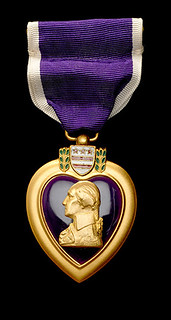 Heartwarming Purple Heart Story
Susan Sims writes:
"I was deeply touched by the story of Michael, who found the Purple Heart. I am so glad to see young people honoring our warriors. He clearly has a mind for business, but his heart is in the right place."
Agreed! -Editor
To read the earlier E-Sylum article, see:
PURPLE HEART MEDAL FOUND IN LOCKER
(https://www.coinbooks.org/v29/esylum_v29n14a32.html)
Abraham Jones
Sorry for the delay - this was sent in by a reader and got trapped in my inbox for a couple weeks. -Editor
 I don't believe in his discussion that this was mentioned … the person who confirmed, with his partner, Henry Asbury, the candidacy of Lincoln for president.
Semi centennial (celebration) of the Grand Lodge of Illinois 1840-1889 with Abraham Jonas & J.C. Smith, both Grand Masters on a commemorative medal.
 Jonas (and his brothers) was the 1st Jew to settle west of the Alleghenies (1819), he & his brother Joseph married 2 sisters, daughters of the 1st rabbi born in America (G.M. Seixas), he served in the state legislature of both Kentucky & Illinois, he was the 1st Jewish resident of Quincy & postmaster (1849-53). As a friend of Abraham Lincoln (and the person who confirmed, with his partner Henry Asbury, the candidacy of Lincoln for president), he was appointed by the president for another term as postmaster from 1861 until his death in 1864. Four of his sons fought for the Confederacy & 2 others were with the Union. His son, Charles received a presidential release from a prisoner of war camp to be with his dying father.
John C. (Corson) Smith was an American general, state treasurer & lieutenant governor of Illinois.
The medal measures approximately 1.75 inches diameter with Illinois top bar & ribbon.
To read the earlier E-Sylum article, see:
VIDEO: LINCOLN'S 1860 NOMINATION
(https://www.coinbooks.org/v29/esylum_v29n12a07.html)
More on Martin Logies
Regarding Martin Logies,
Alan Weinberg writes:
"I knew Martin fairly well. I once drove him to LAX for a flight home. He was unusually soft spoken and reserved in manner.
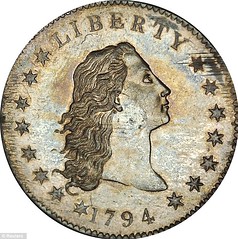 "I was offered his 1794 dollar (raw at the time) at a 1970's ANA for $375,000 by dealer Ed Milas and coin partner / very reluctant seller Texas collector Marvin Browder. I believe Andy Lustig acquired it at that show. At that time it was not yet realized as having a center silver plug.
"The later Stacks auction at $10M to Laura Sperber was controversial as it was telephonically advanced in one fell swoop from underbidder Mack Pogue (the father) sitting in the auction room front to Legend / Sperber bidding on the phone for a client at auction room rear from $8M to $10M, allegedly only because Legend wanted it to be the first $10M coin! The entire incident was captured live on video and much discussed in the aftermath.
"It is said that Martin/"Cardinal Foundation" financed the $7.5M purchase of the 1794 dollar and never actually took physical possession of the coin.
"As a CPA, Martin arranged with the late large cent collector Walter Husak to create a foundation to minimize taxes by arranging educational exhibits of Walt's large cents, many being ex. Lord St Oswald coins from the 1964 London auction."
To read the earlier E-Sylum article, see:
MARTIN ANTHONY LOGIES (1960-2025)
(https://www.coinbooks.org/v29/esylum_v29n14a09.html)
Numismatics International Website Issue
Eric Hodge writes:
"Regarding Philip Mernick's query about Numismatics International. Yes it is still going. It would appear that with the death a few years ago of the person responsible for the website it has proved difficult to access it. I am not fully conversant with the website problem, but the hard copy is still issued every two months."

That's great to hear - thank you! Above is an image of the March/April 2026 issue Eric provided. -Editor
To read the earlier E-Sylum article, see:
NOTES FROM E-SYLUM READERS: APRIL 5, 2026
: Query: Numismatics International
(https://www.coinbooks.org/v29/esylum_v29n14a13.html)
More on the Ed Schedler Counterstamp
Adrian Gonzalez-Salinas writes:
I would like to thank so much to Bill Groom for his comments that I share 100%. Also, I'd like to add the following:
 a) I could find only one reference to a Schedler person (1) appearing in the National Digital Newspapers Archive of Mexico (Hemeroteca Nacional Digital de México).
b) I didn't find any indexed references to any Schedler man in the "Family Search" genealogical website for Mexico. So, I could deduce it was not a person living in Mexico.
c) I wish another different host coin could appear with this counterstamp (Ed Schedler) with additional information in the short term.
Note:
(1) Divorce proceedings initiated by Mrs. Ruth Spencer Schedler against Mr. Edmund W. Schedler in Ciudad Juárez, Chihuahua, Mexico.
"Periódico Oficial del Estado de Chihuahua" newspaper, 07 September 1940, page 19. Ciudad Juárez is a sister city of El Paso, Texas since 2002.
To read the earlier E-Sylum article, see:
NOTES FROM E-SYLUM READERS: APRIL 5, 2026 : Thoughts on the Ed Schedler Counterstamp
(https://www.coinbooks.org/v29/esylum_v29n14a13.html)
Iola Historical Society Numismatic Image Sales
George Cuhaj writes:
 I am selling for the benefit of the Iola Historical Society several discs of Stack's catalog images which were gathered from their former printer Cosmos Communications.
Some of these sales are Ford Sales. Also, some 35mm B&W negatives. Kurt Krueger's 1904 St Louis World's Fair catalog #358425483232. and Texas or Alaska US Tokens, and one canister labeled Chet's Hard Times Tokens.
I have several other similar groups of negatives to list this week. Auctions start ending next Wednesday, seller name Cuhaj, for 100% benefit of the Iola Historical Society.
For more information, or to bid, see:
Stacks's Rare Coins March 2005 Sale. 5 discs of images. Mixed Jpgs and Eps
(https://www.ebay.com/itm/117132746115)
https://www.ebay.com/sch/i.html?item=117132746115&rt=nc&_trksid=p4429486.m3561.l170197&_ssn=cuhaj
Trump Currency Signature Cartoon
Kavan Ratnatunga passed along this editorial cartoon. -Editor

To read the complete article, see:
Editorial Cartoons for March, 2026
(https://www.theglobeandmail.com/opinion/gallery-editorial-cartoons-for-march-2026/)
To read the earlier E-Sylum article, see:
TRUMP TO PUT SIGNATURE ON U.S. CURRENCY
(https://www.coinbooks.org/v29/esylum_v29n13a25.html)

SIX YNS RECIEVE PNG NEXGEN SCHOLARSHIPS
Six rising-star Young Numismatists are awarded 2026 PNG nexGen Scholarships to attend ANA's Summer Seminar to further their numismatic knowledge. -Garrett
 The Professional Numismatists Guild (www.PNGdealers.org), with generous support from eBay (www.eBay.com) and the National Silver Dollar Roundtable (www.NSDR.org), awarded six scholarships to talented young numismatists as part of PNG's nexGen annual scholarship program, supporting the growth and integrity of the numismatic community. Recipients will each attend a week-long session of the American Numismatic Association (www.money.org) 2026 Summer Seminar in Colorado.
Launched in 2023, the nexGen program assists future coin dealers by connecting interested young adults with mentors and uses PNG's resources to build relationships with numismatic organizations worldwide.
"This year, with the support of eBay for five scholarships and the National Silver Dollar Roundtable for one, PNG has increased the number of nexGen scholarships awarded – reflecting our shared commitment to elevating and expanding the field of numismatics. The recipients reflect the passion of this discipline, and we're proud to support their ambitions," said PNG Executive Director John Feigenbaum.
"eBay has long been a destination for coin collectors and dealers, with an incredible array of inventory spanning history and the globe," said Luci Yang, Senior Director and General Manager of US Collectibles at eBay. "We're happy to support the next generation that is not only continuing the tradition of coin dealing, but is innovating for the future of numismatics."
"This scholarship reflects the National Silver Dollar Roundtable's ongoing commitment to promoting education, professional development, and integrity within the numismatic community. By supporting emerging professionals through initiatives such as the ANA Summer Seminar scholarship, the NSDR continues to foster excellence and advance the study and appreciation of numismatics," said NSDR Board Member and PNG President James Sego.
This year's Summer Seminar sessions on the campus of Colorado College near ANA headquarters in Colorado Springs, Colorado, will be conducted June 21-26 and June 28-July 3. The scholarships will cover airfare, tuition for one of the week-long sessions, meals, and dormitory accommodations.
This year's six recipients are:
Rene Alvarenga, 22, of Dallas, Texas
 Rene began collecting Wheat Cents he found in change at a sandwich shop his parents owned in California. He has worked at coin companies in Florida and California, and is currently a Junior Numismatist at Heritage Auctions in Dallas.
"While at the 2026 ANA Summer Seminar, I would like to learn more about the insights of collecting and investing in silver dollars since my primary duties at Heritage involve grading and sorting bulk silver dollars for sale to our clients, and also since I am a seasoned silver dollar collector myself. Also, I am looking to learn more about how to detect artificial toning and doctored surfaces on coins, which I can apply to my evolving grading skills, and to prevent myself from accidentally purchasing a ‘problem' coin, since I am also a seasoned collector of toned silver dollars as well," he explained.
Jacob Nathaniel Gonzalez, 20, of Weslaco, Texas
 Jacob became interested in numismatics after coming across his grandmother's old leather pouch containing older U.S. coins with designs he didn't recognize.
"That discovery sparked my curiosity and ultimately fueled my continued and growing involvement in the field," he recalled.
He is a Criminal Justice and Legal Studies graduate of the University of Texas Rio Grande Valley, has worked as a coin dealer, and plans to go to law school.
"At Summer Seminar, I am especially interested in honing my skills in grading and authentication of both U.S. and world coins. I look forward to doing so by taking courses taught by Bill Shamhart and Andrew Chipman on this subject," explained Gonzalez.
Benjamin Alexander Kagay, 18, of Katy, Texas
 Benjamin began his numismatic journey in 2020 when his uncle took him to his first coin show in Houston and bought him an 1883 No Cents "Racketeer" Nickel and a Confederate States of America $10 banknote. A student at the University of Oklahoma, he will be working this summer at U.S. Coins and Jewelry in Houston. He is the recipient of the National Silver Dollar Roundtable scholarship.
"At the ANA Summer Seminar, I will take the class, ‘A Study in the Grading of U.S. and World Coins.' I hope to build upon my coin grading skills so that I can better appreciate the coins I collect," said Kagay.
"Benjamin is a dedicated young numismatist who regularly deals in silver dollars and recently presented the exhibit ‘Sub-1 Million Minted Morgan Dollars' at the Houston Money Show," stated PNG President Sego.
David Vitaly Khaskin, 24, of Austin, Texas
 David is a graduate of the University of Florida who became "hooked forever" in numismatics at the age of six when his grandfather gave him a Wheat Cent album.
"I am looking forward to taking the Counterfeit Detection of United States Coins course at the ANA Summer Seminar," he said.
Marc Vazsonyi, 22, of Lexington, Kentucky
Marc started collecting Wheat Cents around the age of seven, fascinated by their design and the rarity of different dates and mints. His grandmother was also an important influence on the start of his collecting journey, often showing him old silver and gold coins when he visited her in Switzerland.
 "This further fueled my interest in numismatics and gave me exposure to world coins very early on," he said.
Marc will graduate from the University of Kentucky with a degree in Mathematical Economics in May. During college, he interned with former PNG President Jeff Garrett at Mid-American Rare Coin Galleries in Lexington, Kentucky.
"I hope to further my knowledge on ancient coins through a course taught by Classical Numismatic Group's Dave Michaels at the ANA Summer Seminar," he said.
Jessica Evabella Withersfield, 20, of Grand Rapids, Michigan
 Jessica began collecting as a youngster and reignited her interest in numismatics when she recently began working at Grand Rapids Coins.
"I'm most interested in learning more about being a dealer and how to be a great one at that. I love acquiring knowledge, and this is such a vast field. There's always more to learn," she stated.
Her Summer Seminar course wish list includes Grading U.S. Coins 1, Counterstamps: coins that tell their own story, Auction World 101: An Insider Perspective; How to sell coins on eBay live, Whatnot, Instagram; Counterfeit Detection of U.S. Coins, Advanced Coin Dealing; and a beginner coin dealing course.
"My absolute favorite would have to be ‘Making Money The Medieval Way'! I do blacksmithing, and making my own coin would be so interesting and familiar in a good way!" she added.
For additional information about the Professional Numismatists Guild, visit online at www.PNGdealers.org or call (951) 587-8300, and for information about the PNG's nexGen mentorship program, visit www.PNGdealers.org/png-nexgen.
For information about the annual ANA Summer Seminar, visit www.money.org/summer-seminar.
Congratulations and good luck to all recipients. -Editor
2026 ACEF KREUZER AWARD
The Anti-Counterfeiting Educational Foundation's (ACEF) 2026 Alan Kreuzer Award, which recognizes anti-counterfeiting efforts, is open for nominations until June 1. -Garrett
 The Anti-Counterfeiting Educational Foundation's 2026 Alan Kreuzer Award will include stipends of between $1,500 and $2,000 in addition to the 3-inch bronze award medal.
"The award recognizes numismatists who volunteer their time and resources to combating counterfeit coins and collectibles. Fraudulent coins don't just undermine a marketplace; they devalue our American heritage," said Chandra Kreuzer Rudd, the daughter of Alan Kreuzer, for whom the annual memorial award is named. Her $50,000 donation in 2017 helped to launch the task force that later became the Anti-Counterfeiting Educational Foundation and her donations since have funded the annual memorial award.
The Alan Kreuzer Memorial Award recognizes the anti-counterfeiting efforts of collectors, dealers, law enforcement agents and others dedicated to protecting the numismatic marketplace. The late Alan "Al" Kreuzer was a Castro Valley, CA, coin dealer who was instrumental in alerting the hobby to help identify counterfeit third-party certification holders and fake insert labels.
The deadline for nominating a candidate for the 2026 Alan Kreuzer Award is June 1. A nomination form is available on the ACEF website. Nominations may be sent to info@acefonline.org and must include the nominee's full name, business affiliation and volunteer activity, as well as the nominee's contact information and, of course, the reason he or she should be considered for the award. The person submitting the nomination should also provide his or her name and contact information.

ACEF provides educational information to the collecting public about counterfeiters who prey on the collecting public. ACEF's website provides a free directory of more than 200 vetted Trusted Experts. A feature of the directory allows one to locate a knowledgeable and trustworthy dealer within 50 miles of his/her location. During major coins shows ACEF also offers to COPY mark counterfeit coins in compliance with the Hobby Protection Act, in order to identify the fakes and also to make them legal to own. The Anti-Counterfeiting Educational Foundation, Inc. is funded entirely by donations. Tax-deductible donations may be made to the 501(c)(3) non-profit Anti-Counterfeiting Educational Foundation, Inc. by using the online donation form on the ACEF website.

VOCABULARY TERM: SILHOUETTE
Here's another entry from Dick Johnson's Encyclopedia of Coin and Medal Terminology. -Editor
Silhouette. A medallic item trimmed to the outline of all or part of its design. The irregular silhouette shape is chosen for its artistic contribution to the design, emphasizing its configuration. To silhouette a medal is to cut out its shape by jigsaw, or jeweler's saw or by trimming tool to create the distinctive shape of the peripheral design. To hand silhouette a piece is to trim it at a bench with hand tools, using a saw capable of cutting in any direction, for example, to be able to cut out the outline of leaves of wreaths, the headgear or hair-do of heads, facial feature of portraits, the edges of frames, the curves of scrolls, scallops and ornate cartouches, or whatever the designer has brought to the edge of his medallic design.
Hand trimming is applicable only for short production runs, from one to perhaps fifty pieces. Longer production runs require a trimming tool which can uniformly cutout or silhouette the design on many pieces.
Silhouetting is a function of the designer, it gives the greatest emphasis to a design – by prohibiting any background or field to exist behind that which is silhouetted. It is the designer's responsibility to decide whether a medallic piece is to remain entirely on the flan of the piece (square, circular, rectangular or whatever) or if a portion of the design should exist beyond this fixed limitation, or if the entire piece should be silhouetted. All silhouetted items fall within the class of unusual shapes of medallic items. Those pieces with projections that extend beyond the fixed limitation of the main design, or perhaps the flan, are termed hyperdimensional.
While cast items can be easily made to any shape, struck pieces require the item to be struck on an oversize blank then cut or trimmed to the desired shape. Thus struck pieces that are silhouetted always require this trimming. As with all metalworking activity the trimming of the edge creates burrs and these must be deburred. Often the trimming tool leaves some handwork to be done to complete the piece, more so for a silhouetted design than perhaps of other unusual shapes. The undesired portion of the blank is cut away, the dead metal or skeleton scrap is trimmed and discarded as scissel. Silhouetting applies only to the outermost shape of the piece and not to any internal piercing (see openwork).
See also trimming, trimming tool, unusual shapes.
To read the complete entry on the Newman Numismatic Portal, see:
Silhouette
(https://nnp.wustl.edu/library/dictionarydetail/516755)
LUTHER C. BRYANT (1801-1886)
E-Sylum Feature Writer and American Numismatic Biographies author Pete Smith submitted this article on the enigmatic New York coin dealer Luther Bryant. Thank you. -Editor
 This week I came across the sensational story of the burglary of New York coin dealer Luther C.
Bryant. Often a statement in one source is contradicted in another source. Much of the story
cannot be verified and that may not be his true name.
This week I came across the sensational story of the burglary of New York coin dealer Luther C.
Bryant. Often a statement in one source is contradicted in another source. Much of the story
cannot be verified and that may not be his true name.
According to an 1886 interview, Bryant was born in Cummington, Berkshire County, Massachusetts, the son of a physician. He graduated from Williams College when he was fourteen years old, studied medicine, travelled to Europe and settled in Burlington, Vermont. During trips to Italy and the Holy Land, he collected coins. He left Charleston, South Carolina and moved to New York City about 1861. In an interview, he claimed that he brought with him assets of $60,000.
Luther also claimed to be the brother of William Cullen Bryant, romantic poet and editor of the New York Evening Post. However, this is not supported in the family history for William. There are no Census records for Luther. I found no public record of him before 1861. His true identity cannot be verified.
He set up a small stall at the lower end of City Hall Park and went into business as a dealer in old coins, mutilated currency, plus postal and revenue stamps. Around 1870 he relocated at the corner of Fulton and Williams Streets against the railing of the Old Dutch North Church. He was described as a miser who lived alone in two rooms at No. 1 Forsyth Street on the corner of Bayard and Forsythe Streets in New York City.
Some businesses in Manhattan received a lot of foreign correspondence with foreign stamps. They might bundle them up occasionally and sell them to Bryant who had a market for them.
Part of his business was buying mutilated currency at a discount and redeeming in at the Treasury for full face value. He also bought current postage stamps at a discount. It was alleged that his source was a criminal ring of delivery boys who stole from their employers. Private Detective Roscoe made unsubstantiated negative claims about his character.
Businesses in his neighborhood hired private detectives to investigate the loss of their postage stamps. They found that the company messengers were pilfering from the bookkeepers. The detectives followed the boys to Bryant's stall where he bought the stamps at a discount.
William K. Evans was bookkeeper for Eberhard Faber & Co, in the lead pencil business. He filed charges against Bryant who was arrested on October 7, 1874, by officer Peters of the Second Precinct. Bryant was locked up in the Tombs awaiting trial.
On the morning of October 12, Lizzie Neubauer came to the house with clean clothes for Bryant and noticed that his locks had been broken and called police. Detectives Lyon and Dyer found his rooms ransacked. When Bryant was notified, he became distraught, He informed the police that he had valuables worth more than $100,000 in his apartment.
When he was allowed to return. he furnished police with a list of his losses. They included $70,000 in United States gold Double Eagles, $12,000 in legal-tender notes, $1000 in mutilated currency, $700 in fractional currency, a gold watch worth $500 and many items of lesser value. He claimed that his collection of old coins was worth $25,000.
Bryant liked those twenty-dollar gold pieces. He took a punch and marked the head of Miss Liberty to identify them. Then he rolled them up in brown paper and silk in bundles of $100 (or, perhaps, it was 100 coins.).
In 1874, the value of gold was $20.67 per ounce. With each coin containing .96750 ounces, each coin was worth about $20 in bullion value and in face value. The bullion value of the gold today would be more than $16 million.
Bryant was released from jail as the charges were shown to be unfounded. In later years it was believed that the charges were fabricated to get Bryant out of his house.
Assigned to the case were detectives Reilly and Williamson. Eventually, they focused on two habitual criminals who were spending beyond their means. They were followed, watched and arrested.
The property of Robert Walsh, a/k/a Robert Murray, a/k/a "Bobby the Welchman" was searched. The detectives found a pearl-handled umbrella and a pawn ticked for a pistol. Both items were identified as taken in the burglary.
The residence of George "Rat" Reilly had an ivory handled umbrella and a quantity of postage stamps identified as stollen from Bryant. Both men were arrested and put on trial. The loot was never recovered although an occasional punch marked double eagle turned up later.
Reilly was sent to state prison for ten years. Robert Murray was granted a second trial and also received a ten-year sentence.
A few years before the burglary, Bryant met an attractive young woman who worked in a store selling neckties. He proposed marriage but his proposals were rejected. When he was absent from his apartment, Lizzie Neubauer took some of his valuable furniture. She claimed these were a gift. He filed charges claiming she had taken them by misrepresentation.
In 1875, Bryant's aunt died and left him a 200-acre farm and $7,000. Other relatives contested the will on the grounds of insanity.
Bryant came to the public attention again on January 7, 1886. He was noticed by police wandering in the rain without an overcoat on Charles Street and taken to St. Vincent Hospital. The next day he talked with a newspaper reporter.
He said that he had saved his money with the thought of setting up a Home for Old Bachelors in Philadelphia. He claimed that he had a secret that would be revealed after he was dead.
There were several premature reports of his death. The New York Gazette reported on November 14, 1885, that "Bryant subsequently died from grief." An article in the Buffalo Eagle reported on May 28, 1886, that Bryant had died at St. Vincent's hospital that morning. That same paper reported on October 11, 1886, that he was applying to be admitted to some charitable institution.
His death was recorded on January 16, 1888, and noted that he was widowed. This was not reported in the papers.
"Harry Hill's Gotham" was a column in the New York Sunday Mercury, ghost written by Isaac George Reed. The story of "The Robbery of Luther C. Bryant: was in the issue of April 12, 1885. This included much biographical information that is unavailable anywhere else. Other parts of the story are known to be incorrect, such as the statement, "He is dead now."
An article by Coleman O. Parsons, "William Cullen Bryant's Wayward Cousin" appeared in the April 1952 issue of New York History. While William had several cousins named Bryant, none were named Luther and none were born before 1823.
After I wrote this, I discovered that the story had been told by John Lupia in The E-Sylum ten years ago. I think it is worth retelling.
To me, the most intriguing part of this story is the reference to marking the gold pieces with a punch to identify them. The newspaper article mentioning this only says, "He had marked every one with a peculiar punch, and gold pieces thus punched were returned to him from out-of-town banks at odd times. The banks got them in the natural course of business from innocent holders." The article provides no further details on the punch. Was it his name? His initials? A pictorial? We may never know. Counterstamped gold coins are rare because so many ended up in the melting pot due to the value of the metal. Is anyone aware of a gold coin with an unattributable "peculiar" counterstamp that might match the description?
If it's true that bankers would return some of the marked coins, how would they even know? There must have been some police communication about them - would there be a flyer or notice in a banking publication? This is why bibliophiles collect and study numismatic ephemera - the Truth is Out There (maybe). -Editor
To read the earlier E-Sylum article, see:
LUTHER C. BRYANT (1801-1886)
(https://www.coinbooks.org/esylum_v19n36a18.html)
TREASURE TALK WITH BOB EVANS, EPISODE 13
In January 2025, our good friend Bob Evans began publishing a series of blog articles on the Finest Known website detailing his experience as co-discoverer and curator of the treasures recovered from the wreck of the S.S. Central America. Subject of the book "Ship of Gold", many exhibits, countless interviews and articles, books and auction catalogs feature the legendary haul of gold coins, bars, nuggets, gold dust and more from the 1857 shipwreck. Here's another excerpt - see the complete article online. -Editor

Anyone who has experienced rough weather at sea knows it can be hard to keep the dishes on the table. Gravity and "which-way-is-up" is variable at sea. Throughout the S.S. Central America shipwreck site we found broken plates, saucers, and other ceramics, testimony to the violence of the hurricane and the waves that battered the steamer.
Passenger Almira Kittredge heard a story about the tumbling dishes, "The tables were set on Friday, and some of the passengers – mostly second cabin passengers – had taken dinner, when the captain called up all hands to help in bailing. Two little girls, Miss Lockwood and Miss Pahud, got their dinner, nevertheless, and had a very merry time over it. The sea tossed the steamer about very violently, but the girls laughingly told us how they had braced themselves, to the table and ate away. When the dishes flew about smashing and crashing as they fell to the floor, the girls laughed merrily, thinking it was rare sport. They were decidedly jolly, little realizing the danger in which they stood."
New York Herald, Sept. 27, 1857
This broken wash basin, once used by cabin passengers to refresh and clean up, settled right next to the commercial shipment as the shipwreck collapsed. It achieved "celebrity status" by appearing in many photographs of the gold.

In several spots around the shipwreck, we encountered clusters of bottles, obvious vestiges of drink stored and ready for the passengers on this prestigious and well-stocked steamship. Here is what remains of one such case, a group of nine bottles fanned across a spot in the debris field of the shipwreck. From the shape of the bottles, it is likely that this was a case of whiskey. We see only nine out of a normal case of a dozen, so three had probably been consumed.

Other artifacts provide the historical record and context for the boxes of whiskey, wine and beer that now populate the debris. Purser William Hull of the S.S. Central America kept a stack of passenger ticket receipts bundle up in his safe. We opened the safe and recovered the contents during the 2014 expedition.
The passenger ticket receipts show "fine print" in the lower left corner, describing certain onboard rules, offerings and financial expectations.

It seems that the whiskey we saw in 2014, guarded by its starfish Steward, was once available "at a moderate price."
Remember, it gets dark after 11.

This tight grouping of coins appeared in September of 1988, shortly after we found the shipwreck.
We recovered Coin Pile #1 on May 9, 2014, this deposit of treasure that I had been thinking about for over a quarter century. Then we learned its true nature and what it had to tell us.
As the sun set on September 12, 1857, the situation on board the S.S. Central America was hopeless, so far as saving the ship was concerned. Lifeboats had ferried the women and children to rescue by the brig Marine, which had been carrying a cargo of molasses from Cuba. As it grew dark, the lower deck levels filled with water, and the swelling seas battered the foundering vessel. The stern was settling faster, so this sent hundreds of men crowding forward toward the bow, clutching their last precious possessions: their money, their jewelry, and their photographs.
There were scenes of despair, as some men threw coins into the sea, or dumped gold dust on the deck, knowing that the wealth they valued was worthless at that moment, in fact a dangerous weight that would drag them down. Finally, the ship lurched at a sharper angle and was engulfed by the sea. A whole host of men dropped their belts, bags, and satchels of gold onto the deck as the ship dropped from beneath them.
The ship remained upright during a spiraling 7,200-foot fall that last about half an hour. The ship's main and mizzen mast and rigging acted a little like a squirrel's tail, dragging through the deepening water, adjusting the sinking ship to where the bow was declined. Although it sank stern first, it impacted the bottom bow first, slightly listed to port. The impact at 3 knots made the ship forward of the central engineworks explode like a water balloon, the hydraulic force blowing the decks and even the boilers and water tanks over into a large portside debris field. This included the parcels of gold men had dropped on the foredeck.
Let's have a closer look at this parcel, Coin Pile #1, and see what it has to say. When we picked up these coins in 2014, I immediately noticed a difference, compared with what we had recovered from the commercial shipment in the earlier expeditions. From the haphazard pattern of the pile, I think it is likely that these coins, sixty-two $20 gold pieces, along with a long loop of gold chain, were the contents of a bag or purse that was dropped on the deck as the ship sank.
The commercial shipment's coins were mostly U.S. $20 double eagles, thousands upon thousands of them. This is where the similarity ends. The original owner of this bag was a wealthy man, traveling with other wealthy people. A $20 coin was not very useful in day-to-day transactions. (A modern analogy might be a $500 bill, if there still was one.) It is likely that this man was a merchant, or at least someone who needed $20 gold pieces. But he was probably not from San Francisco. As we spread the pieces from this pile on the black rubber mats of the exam table, I immediately noticed something different. I had personally examined and curated over 6,800 double eagles from the commercial shipment, and I thought I knew what to expect from a group of only sixty-some. But among the dozens of Liberty Heads there sat the billboard face of an Assay Office $20.
 The design didn't surprise me, but the size did. I had seen this sort of device on close to 200 $10 pieces made by Augustus Humbert or the successor Assay Office, coins that we recovered during the earlier expeditions. We found a whole box of privately-minted $10 coins in the commercial shipment, but not one single Assay Office $20. So, as I began examining the new recovery, cold, wet and glistening in front of me, I was smiling. This was clearly something new.
Quickly, I noticed that there were numerous other pioneer twenties, a lot of Kelloggs. I counted them up. Ten! We had found only 9 in the entire commercial shipment. There was also Moffat $20. Again, not something previously seen in the commercial shipment.

When the tally was finished, the sixty-two $20 coins broke down as follows: (numbers of coins in parentheses)
US Mints:
1857-S (23), 1856-S (7), 1855-S (7), 1854 (2), 1853 (6), 1852 (2), 1851 (2), 1850 (1)
Pioneer/Private Mints:
1855 Kellogg (4), 1854 Kellogg (6), 1853 Moffat (1), 1853 Assay (1)
So, who was the passenger who dropped his bag of coins onto the foredeck as the ship sank?
To read the complete article, see:
Treasure Talk 13: Shipwreck Scenes of History
(https://finestknown.com/treasure-talk-13-shipwreck-scenes-of-history/)
For the complete series, see:
Category Archives: Treasure Talk with Bob Evans
(https://finestknown.com/treasure-talk-with-bob-evans/)
To read the earlier E-Sylum article, see:
TREASURE TALK WITH BOB EVANS, EPISODE 1
(https://www.coinbooks.org/v28/esylum_v28n12a12.html)
TREASURE TALK WITH BOB EVANS, EPISODE 2.1
(https://www.coinbooks.org/v28/esylum_v28n13a17.html)
TREASURE TALK WITH BOB EVANS, EPISODE 2.2
(https://www.coinbooks.org/v28/esylum_v28n14a15.html)
TREASURE TALK WITH BOB EVANS, EPISODE 3.1
(https://www.coinbooks.org/v28/esylum_v28n15a16.html)
TREASURE TALK WITH BOB EVANS, EPISODE 3.2
(https://www.coinbooks.org/v28/esylum_v28n17a16.html)
TREASURE TALK WITH BOB EVANS, EPISODE 4.1
(https://www.coinbooks.org/v28/esylum_v28n18a13.html)
TREASURE TALK WITH BOB EVANS, EPISODE 4.2
(https://www.coinbooks.org/v28/esylum_v28n19a20.html)
TREASURE TALK WITH BOB EVANS, EPISODE 5.1
(https://www.coinbooks.org/v28/esylum_v28n22a13.html)
TREASURE TALK WITH BOB EVANS, EPISODE 5.2
(https://www.coinbooks.org/v28/esylum_v28n23a16.html)
TREASURE TALK WITH BOB EVANS, EPISODE 6.1
(https://www.coinbooks.org/v28/esylum_v28n27a14.html)
TREASURE TALK WITH BOB EVANS, EPISODE 6.2
(https://www.coinbooks.org/v28/esylum_v28n30a21.html)
TREASURE TALK WITH BOB EVANS, EPISODE 7.1
(https://www.coinbooks.org/v28/esylum_v28n32a16.html)
TREASURE TALK WITH BOB EVANS, EPISODE 7.2
(https://www.coinbooks.org/v28/esylum_v28n40a15.html)
TREASURE TALK WITH BOB EVANS, EPISODE 8
(https://www.coinbooks.org/v28/esylum_v28n42a21.html)
TREASURE TALK WITH BOB EVANS, EPISODE 9
(https://www.coinbooks.org/v28/esylum_v28n49a19.html)
TREASURE TALK WITH BOB EVANS, EPISODE 10.1
(https://www.coinbooks.org/v28/esylum_v28n51a17.html)
TREASURE TALK WITH BOB EVANS, EPISODE 10.2
(https://www.coinbooks.org/v29/esylum_v29n01a09.html)
TREASURE TALK WITH BOB EVANS, EPISODE 11
(https://www.coinbooks.org/v29/esylum_v29n04a13.html)
TREASURE TALK WITH BOB EVANS, EPISODE 12.1
(https://www.coinbooks.org/v29/esylum_v29n08a15.html)
TREASURE TALK WITH BOB EVANS, EPISODE 12.2
(https://www.coinbooks.org/v29/esylum_v29n08a16.html)
THE BOOK BAZARRE
EXHIBITING THE SS CENTRAL AMERICA ARTIFACTS
Numismatists drool over the rare coins and gold recovered from the 1857 wreck of the SS Central America, but historians and collectors of all stripes thrill just as much over the incredible artifacts recovered alongside the gold and silver treasures.
Earlier this month, Fred Holabird sent out an email to his extensive list promoting an upcoming Gold Rush show. Here's an excerpt of his recollections of working with the recovered SS Central America artifacts and the travelling exhibit that debuted at the 2022 show. -Editor

Then along came the SS Central America treasure. I worked on that from about 1998 to about 2001, then on and off for a few years as things arose that needed my attention. Then, sometime after the 2014 recovery, I got brought into the mix again by the Court's appointed representative on a number of matters.
Ultimately, I was asked to sell the artifacts. They were originally collected for a museum, a true cultural display. The expedition recovery team (note I didn't say "salvors" – it has a different connotation) was careful to take samples of all aspects of the cultural relics. But this collection never made it to a museum – it was an asset to the shareholders, since none had ever been paid back by Thompson. Columbus America did everything right along the way. They had a professional conservation team work on all the recovered clothing found in the sealed trunks that sat idly on the ocean floor, 8000 feet deep, for about 150 years. (remember Wm Ralston's personal shirt?) Years later, when the recovery team opened the nearly completely dissolved Purser's iron safe, out popped two bundles of documents, wrapped and tied, protecting most from the living organisms. Those were sent to the Northeast Document Conservation company in Andover, Mass. I got the call to take a look mid-project and was blown away- literally. This was the first time in history that documents had been preserved from a deep water ship – the staff there thought this was so, and i agreed, as I expressed my wonder at reading some of the names, Including James Birch, the young, energetic stage coach owner during the California Gold Rush, who lost his life on the SSCA.
I got a call from my friend Dwight Manley to come to Florida to look over the artifacts, most of which had not been seen in 25+ years, many items of which were still stored in desalinized, distilled water. I met Bob Evans there, and off we went into the tombs of NGC where the goods were then stored. That day will live in Bob and my mind's history forever. We discovered the massive key to the gold room. We uncovered the original treasure box lid (top) of a Wells Fargo treasure box, never seen before by anyone. My friend Bob Chandler, Wells Fargo Historian completely flipped when I sent him a photo via email, and my phone went off the hook seconds later as he called with his excitement. I did a little bit of careful curation to the lid to clean off the black goo from years of underwater exposure.
Fast forward… to about 2022.
The Gold Rush Show was upon us. I wanted to put on a helluva show at the Grass Valley event with the first public exhibit of the SSCA artifacts. I called McDowell and told him what we planned, and he was all for it. Our publicist, Donn Pearlman, one of the great masters at PR, let all the PR bells ring, and ring loudly! Bob and I, and probably 4 of my company team, arrived early and started setting up a very complex, compact exhibit. We printed professional labels for displays, and I wrote a promotional pamphlet especially for this show, aiming it directly at Gold Rush collectors, the main theme of the show.
The design of the exhibit was carefully thought out … we made it up on the spot! It came out great.


But life has a way of throwing a Tommy John sinker when you expected a Sandy Koufax fastball …
With the best PR machine on the West Coast hitting the Sacramento and central California markets hard, we got a completely unexpected response … nothing. We couldn't believe it. Not a single reporter ever called back, emailed, or showed up at the show.
We took that exhibit on the road, and continued to let loose with the PR. In Chicago, we even brought the original Nemo, the underwater high-tech contraption that used deep underwater computer controlled devices to "harvest" the gold bars and coins, as well as photograph the process. The first few days brought thousands. In Denver, we also had a strong showing, but at the last minute the building manager wouldn't let us bring in Nemo. The head of the Union in charge of running things at the Denver Convention Center, wanted it in there, but the manager still declined. So out it went to my friend Bryan Lees' Collector's Edge parking lot in Golden, out of the eye of the public. We didn't have the manpower to put it in front of the public away from the main display.
Then came the auction. It was in two parts, one in December, and the second and final sale in March. That story is fantastic, to be told another time. But the point of the entire story here is that the crowd at the Grass Valley Show was completely obsessed with the SSCA artifacts, and that crowd proved to be the important buyers.
The Press completely missed the boat – literally – in this case, the biggest gold treasure ship of all time from America and her artifacts on display at the Grass Valley Show. Today, it is estimated by some that the treasure has changed hands, some items several times, for an estimated whopping $300 million.
So come to the show this year, and see what treasures await you!!

For more information on the Grass Valley show, see:
http://www.grassvalleyshow.com/
NUMISMATIC AUCTIONS LLC SALE 70, PART 3
Steve Davis of Numismatic Auctions LLC is holding Sale 70, Part 3 this month. Here are some selections. -Editor


Lot 720
Canada Silver Dollar, 1938 Key Date - Finest Known Specimen Top Pop PCGS SP67 Colorful Gem Ex: Norweb/Belzberg. Singularly the finest of this highly sought after date, unparalleled in quality and a condition rarity - far superlative to the highest NGC graded example. Stunning cobalt blue, violet & lilac toning. Ex: Norweb and Belzberg prior to becoming part of the Jack Alston Collection. A legendary example that is a registry set crown jewel coin that we expect to well eclipse the record SP65 which sold for $22,325 in Jan of 2014. Brian Cornwell referred to this coin as by far the finest Specimen of this date ever graded by ICCS and the only hairline free 1938 Specimen Dollar he had ever seen. A phenomenal opportunity and an iconic trophy coin for the winning bidder as the new owner!
To read the complete lot description, see:
#720 | Canada Silver Dollar, 1938 Key Date - Finest Known Specimen Top Pop PCGS SP67 Colorful Gem Ex: Norweb/Belzberg.
(https://numismaticauctions.nextlot.com/auctions/1805061/lots/48182947)


Lot 721
Canada Silver Dollar, 1939 Tied for Second Finest Matte Specimen PCGS SP67 Gold & Violet Gem. A Stunning gold & blue to violet colored magnificent jewel toned condition rarity. Delicately toned and wonderfully original, worthy of a top-notch collection. Beautiful example!
To read the complete lot description, see:
#721 | Canada Silver Dollar, 1939 Tied for Second Finest Matte Specimen PCGS SP67 Gold & Violet Gem.
(https://numismaticauctions.nextlot.com/auctions/1805061/lots/48182954)


Lot 730
Canada Silver Dollar, 1948 Key Date - Flashy Semi-Prooflike Brilliant Unc. Hard, nearly mirrored fields of blistering radiant luster give the semi-frosted design elements a contrast of virtual cameo nature, only a few random fine contact lines and a tiny tick here and there from a lofty technical grade, lots of pizzaz and blast! Nice eye appeal & in hand presentation. Always in demand in all grades and this one is sure to please would be buyers!
To read the complete lot description, see:
#730 | Canada Silver Dollar, 1948 Key Date - Flashy Semi-Prooflike Brilliant Unc.
(https://numismaticauctions.nextlot.com/auctions/1805061/lots/48183017)


Lot 788
Canada Magdalen Islands Fisheries, 1815 One Penny Token - Choice VF. The sought after type Br. 520, LC-1 Variety. Lovely chestnut to deep brown color and Choice VF for the issue. A few tiny old contact marks, but largely superlative to the vast majority of the survivors on this popular One Penny token, also attributed as KM-Tn1 by many specialists using the now defunct Krause reference.
To read the complete lot description, see:
#788 | Canada Magdalen Islands Fisheries, 1815 One Penny Token - Choice VF.
(https://numismaticauctions.nextlot.com/auctions/1805061/lots/48183423)


Lot 843
South Africa Gold 5 Krugerrand 50th Anniversary Issue, 2017 - Cameo Proof with NGC Capsule Hologram Edge Seal. Large format 5 Krugerrand issue, Cameo Proof in original Capsule with NGC Hologram edge seal, accompanied by its giant, dramatically oversized wooden presentation case (shipping optional as it weighs nearly 45-50 lbs and will incur added size/weight charges accordingly). Reported mintage of 500pcs while some attest to only 242 struck. Seldom offered.
To read the complete lot description, see:
#843 | South Africa Gold 5 Krugerrand 50th Anniversary Issue, 2017 - Cameo Proof with NGC Capsule Hologram Edge Seal.
(https://numismaticauctions.nextlot.com/auctions/1805061/lots/48183808)
For more information, or to bid, see:
https://numismaticauctions.nextlot.com/auctions
STACKS BOWERS: APRIL 2026 HONG KONG SALE
Stack's Bowers Director of Consignments & Senior Numismatist Dennis Hengeveld published this article about Asian notes in the firm's Paper Money of The Week column. -Garrett
Our next major world paper money sale is our April 2026 Hong Kong (SAR) Showcase Auction. Offering more than 2,500 lots of world paper money, there many highlights worthy of inclusion in a blog article. However, here I take a look at a small group that stood out to me for one reason or the other. They are not necessarily the most expensive or rare notes; instead, these are notes that I personally like for one reason or the other.


Lot 30036 – CHINA–EMPIRE. Ta Ching Government Bank. 10 Dollars, ND (1910). P-A81r. S/M#T10-42. Remainder. PMG Choice Very Fine 35 EPQ.
That paper money can be art is undisputed, and this note is one of the reasons why that is such a simple statement to make. Printed in black on the front and blue on the back, this was engraved in the United States by L. Hatch, and features the portrait of Prince Chun at left, and a dragon flying over the Great Wall of China as the main design element. A hugely attractive note seen here as a remainder (as is typically the case).


Lot 30276 – CHINA–FOREIGN BANKS. Hong Kong & Shanghai Banking Corporation. 10 Dollars, 1.9.1922. P-S317a. S/M#Y13. PMG About Uncirculated 55 EPQ.
Your author has always thought that lightly circulated but fully original notes, such as the piece offered in this lot, offer tremendous value and should be preferred over uncirculated but not original notes. Here is a note that stood out for its originality and color; it is also a very scarce type from HSBC in Chefoo.


Lot 30606 – CHINA–MISCELLANEOUS. Champ de Courses Francais. 1 Chiao = 10 Cents, 1.8.1929. P-Unlisted. PMG Very Fine 20.
A rather obscure small-change issue from the French concession in Shanghai issued in 1929. Unlisted in most (if not all) major references, this appears to have been issued by what was at the time the biggest casino in the region, the Champ de Courses Francaise, in conjunction with greyhound racing. The text on the front includes the line ‘Promises to pay bearer in the Canidrome on racing days or in the Company's office, the sum of ten dollar cents Shanghai currency.' The first we have seen.


Lot 31459 – JAPAN. Great Imperial National Bank. 1 Yen, ND (1873). P-10. PMG Very Fine 25.
This series of Japan was inspired by the National Banknotes of the United States, and the design is rather similar. The notes were even printed in the United States by the Continental Bank Note Company. While few collectors collect these by bank due to their scarcity, every serious collector of classic 19th century notes should have at least one or more denominations of this iconic issue in their collection.

Lot 31485 – NETHERLANDS INDIES. Government of the Netherlands Indies. 5 Gulden, 1846. P-40a2. Recepis Issue. Uncut Pair. PMG Extremely Fine 40 EPQ.
The 1846 issue of the Netherlands Indies is typically encountered either as a remainder, without signatures or serial number, or in heavily circulated condition. This uncut pair of notes was meant to be issued, but was then canceled with a single pen cancel on each note. Amazingly, the pair survived in fantastic condition and was never separated, and these represent perhaps the most attractive surviving items from the rare 1846 issue.
The entire April 2026 Hong Kong (SAR) auction is available for viewing and presale bidding at StacksBowers.com.
CNG: THE PLZ COLLECTION OF ROMAN COINS
Classical Numismatic Group (CNG) will be selling the PLZ Collection of Roman coins on May 18-19, 2026. Here is the press release. -Garrett
The PLZ Collection, a remarkable holding of ancient Roman coins featuring gold, silver and bronze coins of the first 12 Roman Caesars in superb quality, will lead off Classical Numismatic Group's Feature Auction 132, scheduled for May 18-19, 2026.
Additionally, the PLZ Collection spotlights the famous "Travel Series" coinage of the Emperor Hadrian, called "the wandering emperor" for his extensive journeys throughout the Roman Empire.
"When I first had a chance to see this collection in person, I immediately saw its incredible quality," said Michael Gasvoda, CNG's president and managing director. "This group of coins, when seen in hand, is almost mind-boggling. I know because I spent more than 30 years building my own collection of Twelve Caesars coinage."
The PLZ Collection comprises 61 Roman Imperial coins, which are featured in a special catalog with extensive historical notes on each coin. An additional six Roman Republican, Greek and Celtic coins will be featured in the main catalog for Feature Auction 132. The total estimate for the PLZ holding is $1.16 million.
The PLZ Collector himself cites a decades-long interest in ancient Rome, which started when he visited the Eternal City during his junior year in High School. Much later in life, in 2008, he began collecting Roman coins under the guidance of Steve Rubinger, a well-known and highly regarded numismatist in Southern California. "Guided by the inestimable expertise of Steve Rubinger, over the course of my first two years I acquired stunning examples of aurei and denarii for each Emperor in this period. Steve's knowledge and eye for both beauty and quality helped me quickly assemble complete collections that look even better as a set than their individual pieces."
Although every coin in the collection would be a "highlight" in any high-end auction, standout coins from the set include:

Lot 2
Lot 2, an extremely rare portrait gold aureus of Julius Caesar, struck in 43 BC by his grand-nephew and eventual heir Octavian, later known as Augustus Caesar. Portraits of both Octavian and Caesar appear on opposite sides of the coin. The catalog states: "The key factor for this coin is that this Julius Caesar die is almost universally accepted as being the finest die for the type. His portrait is spectacular. Thus, this is likely the finest representation of Julius Caesar found on a Roman gold coin." First offered in Triton XII in 2009, this aureus carries an estimate of $100,000.

Lot 15
Lot 15, a gold aureus of Gaius Germanicus Caesar, better known to history by his nickname Caligula (Latin for "Little Boot"). Struck at the outset of his brief reign in AD 37, the stunning obverse portrait is paired with a reverse depicting an oak wreath representing the Corona Civica, or Civic Crown, bestowed on a Roman for saving the life of a fellow citizen. The wreath encloses the letters S.P.Q.R. P.P OB C.S, abbreviating the legend "[by] the Senate and People of Rome, [to] the Father of the Fatherland, for Service to the Citizenry." One of only two specimens known to exist for this issue, the aureus grades EF and is well-struck and beautifully centered. Furthermore, it is pedigreed to the extremely prestigious Leo Biaggi de Blasys Collection formed in the early 1900s. It carries an estimate of $150,000.

Lot 22
Lot 22, a gold aureus of Claudius, the fourth Caesar, depicting the camp of the Praetorian Guard on the reverse. After Caligula's assassination in AD 41, the Praetorians found Claudius hiding behind a curtain in the palace and acclaimed him as emperor, after which they whisked him away to their camp within the city and forced the Roman Senate to accept his elevation. Graded Extremely Fine, the aureus is pedigreed to the famous New York Metropolitan Museum of Art collection, sold by Sotheby's in 1972.

Lot 28
Lot 28, a bronze sestertius of Nero featuring a reverse depiction of the Port of Ostia. Shown in a bird's eye view, this large coin shows a circular harbor with seven ships and small boats floating within, while a figure of Neptune, god of the sea, reclines at the base of the enclosure. Graded Extremely Fine with a deep green patina, this rare and impressive piece is estimated at $30,000.

Lots 30
Lots 30, 34 and 36 are gold aurei of the short-lived Emperors Galba, Otho and Vitellius, all of whom reigned briefly in AD 69, the "Year of the Four Emperors." Estimated at $40,000, $40,000 and $50,000 respectively, they represent exceptional examples of the three key acquisitions in any Twelve Caesars in gold.

Lot 42
Lot 42, a magnificent "Judaea Capta" bronze sestertius of Vespasian, the Roman general who was sent to crush the first Jewish rebellion against Rome, but later made a successful bid for the throne and established the Flavian dynasty. The reverse depicts a triumphant Vespasian standing before a palm tree, at the base of which sits a female representation of Judaea weeping bitter tears over her country's defeat and occupation. Graded Superb EF, with an attractive dark brown patina, this exceptional bronze is estimated at $50,000.

Lot 45
Lot 45, a silver denarius of Titus, the conqueror of Jerusalem, depicting an elephant on the reverse. Struck in AD 80, the silver piece celebrates the opening of the Colosseum, the enduring symbol of Rome, built in large part with spoils and slave labor provided by the Judean War. Graded Extremely Fine with a light iridescent tone, this denarius carries an estimate of $3000.
Lots 53-61 are all gold and bronze coins celebrating Hadrian's travels. Struck circa AD 133-135, these beautiful pieces come at the peak of Roman representational art and depict the provinces Africa, Egypt, Spain, and the River Nile, along with the city of Rome (wolf-and-twins), a Roman galley (the conveyance mainly used on his journeys), and a Victory type marking the end of the Bar Kochba rebellion in Judaea (AD 132-135).
CNG Feature Auction 132 will kick off with the PLZ Collection, with the live auction commencing at 9 a.m. Eastern Daylight Time on Monday, May 18. The PLZ offering will be followed by Greek and Roman Republican offerings from CNG 132, and will conclude on Tuesday, May 19 with the Roman Imperial, Byzantine, World and British coins from the sale.
All sessions can be viewed, and bid upon, online using CNG's Auction Mobility platform available on the firm's website, www.cngcoins.com. All lots may be viewed at the Central States Numismatic Convention in Schaumburg, IL April 23-25 (Thursday-Saturday).
Classical Numismatic Group Inc. is the foremost U.S. numismatic firm dealing in Ancient, World and British coinage. To receive a printed copy of CNG Feature Auction 132 and the special PLZ Collection catalog, to enquire about lot viewing or bidding, or to ask about consigning to future auctions, call (717) 390-9194 or write to CNG@cngcoins.com.
Embedded below is CNG's excellent teaser video for the sale. -Garrett
THE COINAGE OF PROBUS
Mike Markowitz wrote an article in CoinWeek on the Coinage of Probus. -Garrett
Gold Coinage: Aurei and Biniones

Double Aureus (Binio) Gold ‘Heavy' Aureus. Siscia, AD 277. IMP C M AVR PROBVS P F AVG, laureate, draped and cuirassed bust to right / ORIENS AVGVSTI, Sol standing facing, head to left, raising right hand in salutation and holding globe in left; SIS in exergue. RIC V.2 590 var. 7.34g, 23mm. Roma Numismatics Auction XXIII – 24 March 2022 – Lot: 1068 realized: $26,368
The Roman Empire operated on a gold standard. The aureus contained nearly pure gold. Initially, it weighed about 8 grams. However, emperors gradually reduced the weight:
- Nero: ~7.3 grams
- Caracalla: ~6.5 grams
- Third century: often under 3.5 grams
Even so, gold purity remained high. Therefore, coins often traded by weight.
To pay troops, the empire introduced the double aureus (binio). These coins remain rare today.
For example, a Siscia mint specimen sold for over $26,000 in 2022 .
Portraiture and Imperial Power

Aureus, Serdica 276–282, AV 22 mm, 6.59 g. IMP C M AVR PROBVS P – AVG Helmeted and cuirassed bust l., holding spear in r. hand and shield over l. shoulder. Rev. VICTORIAE Victory in slow quadriga l., holding wreath in r. hand and palm in l.; in exergue, AVG. C 784. RIC 833. Calicó 4229 (these dies). Very rare. A magnificent portrait of fine style perfectly struck in high relief. Numismatica Ars Classica Auction 150 2 December 2024 Lot: 904 realized: $78,847
Probus often appears in military attire. He wears armor and a helmet. He also carries a spear and shield.
A Serdica mint aureus shows exceptional artistry. Auctioneers praised its high relief and fine style. Consequently, it realized over $78,000 in 2024 .
To read the complete article, see:
The Coinage Of Probus
(https://coinweek.com/the-coinage-of-probus-276-282-ce/)

1715 FLEET SOCIETY'S APRIL 2026 TREASURE
The 1715 Fleet Society's April 2026 Treasure of the Month is a high-grade 2 escudos from the Spanish colonial mint at Lima, Peru. -Garrett
 It is no secret that we have an affinity for featuring gold coins as our Treasure of the Month. In fact, since August of 2024, we have featured gold coins on five different occasions January 2026 (1 escudo from the Mexico City mint); July 2025 (Two 8 escudos from the Mexico City mint); June 2025 (Three 2 escudos from Santa Fe de Bogota and Cuzco mints); August 2024 (escudo from the Lima mint); and October 2024 (One 8 escudos from the Lima mint).
This might seem like a lot, but when we come across a beautiful gold coin, it is hard for us to resist. That is the case for our Treasure of the Month for April, a high-grade 2 escudos from the Spanish colonial mint at Lima, Peru. Aside from its beauty, this coin has other distinguishing features and an historic pedigree.
Bearing a 1711 date (actually just 711 as Lima did not use the first digit on its gold or silver coins) it was the most common date in the Lima 2 escudos series. Interestingly, because of the 711 date, they were very popular in Las Vegas. In Numerology, 711 is a "message of encouragement" from the universe, indicating spiritual growth." But in Las Vegas, there was nothing spiritual about the number. It was simply associated with winning. This has cemented the phrase "7 come 11" and the idea of 711 as a winning combination. These coins were often committed to jewelry, where they were worn proudly by gamblers for good luck.
Generally speaking, Lima 2 escudos from the 1715 Fleet are quite rare. The mintage of 2 escudos in 1711 was only 7,367. It is significantly rarer than its big brother, the Lima 8 escudos, which boasted a mintage of over 52,000 in 1711. Just how rare can be seen by an inventory conducted in 1968 by Lou Ullian, an original Real Eight Company member. He prepared an inventory of all gold coins found by the Real Eight Company from the beginning of operations (1961) up to and including 1968. According to that inventory, there were 1,604 2 escudos gold coins found. Of that number, only 146 were from the Lima mint. That amounts to only 9% of all 2 escudos found. Since that time, several other 2 escudos from the Lima mint have been recovered at the Douglas Beach wreck site, but still far below those from the Mexico City mint.
Our featured treasure has a full weight of 6.8 grams and an NGC grade of MS 63. This coin is further distinguished by the fact that it was part of the Tricentennial Treasure of the 1715 Fleet. In June 2015, a large group of gold coins (estimated at approximately 100) was recovered at the Douglass Beach wreck site by the Schmitt family, who were subcontractors of 1715 Fleet — Queens Jewels, LLC. This was just a month before the 300 th anniversary of the loss of the 1715 Fleet on July 31 (specifically 299 years and 322 days). Quite remarkable!

Special thanks to Sal Guttuso (Member #226), Director of Operations for 1715 Fleet – Queens Jewels, LLC, for providing images for our post. This coin can be found on page 59 of his book "Gold Coins of the Tricentennial Discovery", published in 2025 (see cover image below). Also, thanks to Fleet Society Vice President Phil Flemming for his research on gold coins from the Lima mint that was used to prepare the text for our Treasure of the Month.
To read the complete article, see:
April 2026 — Treasure of the Month
(https://1715fleetsociety.com/april-2026-treasure-of-the-month/)
To read the earlier E-Sylum article, see:
NEW BOOK: 1715 TRICENTENNIAL DISCOVERY
(https://www.coinbooks.org/v27/esylum_v27n51a04.html)

8TH REGIMENT U.S. COLORED TROOPS MEDAL, PART 1
Matthew Robinson submitted this article on his research into the rare and historically important medal for the U.S. Colored Troops 8th Regiment. Here's the first of two parts. -Editor


Figure 1: The 1863 8th Regiment U.S.C.T. Medal predates the 1865 Butler medal, making it the earliest known example of a Civil War military medal made for African-American soldiers (actual size: 31mm).
Until very recently, the Butler Medal of Honor was the only medal known to have been made during the Civil War for the U.S. Colored Troops. General Benjamin F. Butler commissioned this medal in 1865 to recognize the heroic part played by the soldiers of the U.S.C.T. at the Battle of Newmarket Heights on September 29, 1864.
In a letter written on May 28, 1865 to General Godfrey Weitzel (commander of the 25th Corps, which included the largest number of African-American soldiers serving in the Union Army at the time), Butler laments the lack of recognition given to the U.S. Colored Troops and states that the medals he had commissioned would "be the only rewards the colored troops will get. They are not even allowed to march in review in the Grand Army triumph."
This long-held belief that only one medal had been made during the Civil War for the U.S. Colored Troops was proven false in October 2021, when I acquired an undocumented Civil War medal from an online auction (Figure 1). To my amazement, the inscription on the reverse of this medal read "LIBERTY AND UNION, CO. B, 8th REGIMENT, 1863, U.S. COLORED TROOPS," which refers to one of the first regiments of African-American soldiers to be trained at Camp William Penn in Chelten Hills, Pennsylvania.
Given that the 8th Regiment U.S.C.T. Medal is dated 1863 and Butler's medal was struck in 1865, this newly discovered medal holds the distinction of being the earliest known medallic work to recognize African-American soldiers in the Civil War. Furthermore, it is very likely that this is the first medal in U.S. history to portray Black Americans in a positive light.
Prior to the Butler medal and the medals made for the 8th Regiment U.S.C.T., the only medallic work made exclusively for African Americans were "slave badges." These included a "freed man's badge," which was a form of identification issued by the city of Charleston, South Carolina, from 1783 to 1789 to freed slaves as a way of proving their status as emancipated individuals; and a "slave hire badge," which served to identify enslaved people who were being hired out and allowed them the "freedom" to move about town unescorted.
The slave badges and the U.S. Colored Troops military medal served very different purposes. Slave badges were made to identify and control the movement of African Americans in a society in which they were viewed as chattel property. The Butler and 8th Regiment military medals were medallic tributes to free Black men serving in the United States Army.

Figure 2: Example of the HONOR IS THE REWARD OF LOYALTY obverse used by Robert Lovett Jr. on his trio of military-themed medals.
The Maker
The obverse of the newly discovered 8th Regiment medal
(Figure 1) displays the inscription, "HONOR IS THE REWARD
OF LOYALTY" above the image of a seated goddess—the
same design that engraver and die sinker Robert Lovett Jr. is
known to have used on a variety of medals. His business was
based in Philadelphia when the 8th Regiment was in basic
training at Camp William Penn, which was located outside
Philadelphia.
Lovett Jr. is best known for designing the infamous 1861 Confederate Cent, the only coin created for use by the Confederacy, and the subject of countless articles as well as an entire book. To this day, the Confederate Cent continues to generate great interest among collectors, even though it never went into circulation during the Civil War.
Lovett's least-known contribution to Civil War medallic art is a trio of military-themed medals all of which share the "HONOR IS THE REWARD OF LOYALTY" obverse (Figure 2).
The first of these medals was an identification disc (or dog tag) whose reverse bears the inscription "War of 1861," the opening year of the war (Figure 3a). The second medal in the series references the "2nd REGT., BLUE RESERVES," a regiment of White soldiers called into action as an emergency force to counter Robert E. Lee's first Pennsylvania Campaign in September 1862 (Figure 3b). The third and final medal of this trio was made for the 8th Regiment, U.S. Colored Troops in 1863 (Figure 3c). Considering the wide spread bigotry and prejudice against African Americans at the time Lovett made these medals, it is notable that he used the same "HONOR IS THE REWARD OF LOYALTY" obverse on medals he designed for both White (the 2nd Regt., Blue Reserves) and Black (8th Regiment, U.S.C.T.) soldiers.

Figure 3a: An identification disc bearing the inscription "War of 1861."
Figure 3b: Lovett Jr. military medal made for the 2nd Regiment Blue Reserves, a regiment of White soldiers who fought Robert E. Lee's first Pennsylvania campaign in 1862.
Figure 3c: The third Civil War-related military medal that Lovett Jr. made for the 8th Regiment U.S.C.T. (Photos from Author's collection.
Historical Context
The 8th Regiment U.S.C.T. Medal was made at a time in
U.S. history when African Americans had reason to believe
that they would not only gain their freedom, but also enjoy
the right to vote, participate in the political process, own
land, access education, and seek employment and representation in government. This time period officially began
on January 1st of the year this medal was made (1863),
when President Abraham Lincoln issued the Emancipation
Proclamation, freeing enslaved African Americans. Later
that year, the Federal Government began to allow Black
Americans to enlist in the Union Army, bear arms, and
fight against the White oppressors who for generations had
enslaved them.
On a more somber note, this medal also marks the beginning of a recurrent cycle in American history: When African Americans take the opportunity to exercise the same rights as White citizens, their actions trigger an unequal but opposite reaction of violence and discrimination from a racist and more powerful White population. Black Americans, especially those living in the South, had to pay a high price for having put their faith in the Federal Government. Black soldiers had been led to believe that if they played their part in saving the Union, then they would be granted the same protections under the law that the Federal Government extended to all of its citizens. Tragically, history shows that the U.S. government turned its back on them once their services were no longer required, leaving them to fend for themselves against a powerful White backlash. When the Compromise of 1877 ended Reconstruction, the Southern Democrats regained control of the South, and quickly, methodically, and with a vengeance reasserted their dominion over the African American population living within their borders.
A Remarkable Discovery
The 1863 U.S. Colored Troops medal serves as a powerful
reminder of the pivotal changes occurring in African
American history during this period. For generations prior
to their emancipation, enslaved people had been denied
the right to own property. Because of this, there are very
few personal belongings that have been left to help us see
the individuals who make up the millions of nameless
and faceless men, women, and children who lived and
died under the tyranny of slavery. This medal provides
a tangible way to directly connect to the men of the 8th
Regiment and compels us to learn more about them, their
struggles, and their triumphs.
This find is also remarkable because very few military medals of any kind were struck during the Civil War. The paucity of military medals during the war applies to both the varieties that were made, as well as to the number of medals that were actually issued. The fact that there are now two different medals known to have been made for the U.S. Colored Troops defies the odds.
The Medal of Honor helps to illustrate this point. It was the only military medal issued by the Federal Government during the entire war for personnel in all branches of the military. Furthermore, it was the only medal approved for display on a military uniform during the Civil War.
Aside from the Medal of Honor, every other military medal struck during the war was privately minted and falls into one of roughly three categories: medals to reward valor, service or campaign medals, and society membership badges. Each of these medals was commissioned by either an individual (such as a military officer), a military society, or a community or civic organization.
Matthew adds:
"Part two of this article introduces the reader to the only other example of the 8th Regiment USCT medal that is known to exist today. The reader will be introduced to the little known Civil War Battle of Olustee and shown how the medal is only the tip of the iceberg when it comes to the extraordinary - and largely suppressed - story of the 8th Regiment USCT. Although this story is a dark chapter in Civil War history it is one of the greatest Civil War stories that has never been told."

PHYSICAL CRYPTOCURRENCY
From Casascius coins to polymer notes, physical cryptocurrency transforms digital assets into scarce collectibles with growing appeal among numismatists. Here's an article from Heritage's Intelligent Collector publication. -Garrett
Imagine holding a real, physical Bitcoin in your hand — not just numbers on a screen, but a gleaming metal coin or crisp polymer note worth thousands (or even millions) of dollars, complete with a hidden private key that unlocks its digital fortune. Tangible Bitcoin bridges the abstract world of cryptocurrency with the timeless allure of physical collectibles, creating one of the most intriguing niches in modern numismatics.
Physical cryptocurrency consists of tangible items — metal coins, bars, or banknote-style notes — that embed real cryptocurrency value through hidden private keys. These pieces combine the hands-on appeal of traditional collectibles with blockchain technology.


Casascius Gold Proof 1000 Bitcoin (2012, Unfunded, PR69 Ultra Cameo NGC). Sold for $97,600 in a January 2026 Heritage auction. A loaded, unpeeled example of this rare 1-ounce gold coin from Mike Caldwell's series ranks as the world's most valuable known coin — worth around $70 million.
The category extends beyond coins to include "currency" formats, such as polymer banknotes that serve as cold-storage wallets for Bitcoin or fractions thereof. They feature tamper-resistant seals, verification tools, and designs that echo fiat notes while championing decentralized money. Series like Casascius, Lealana, Kialara, and Polymerbit frequently trade at significant premiums over their embedded digital or material value, driven by rarity, historical significance, craftsmanship, and growing collector interest.
A key dynamic is the accelerating scarcity of unpeeled (unredeemed) early pieces. As Bitcoin's value surges, more owners redeem them to access the underlying crypto, shrinking the pool of intact, loaded examples and making surviving unredeemed specimens increasingly rare and desirable as historical artifacts. With Bitcoin prices often in the high five to six figures in recent years, these artifacts bridge eras, appealing to both crypto enthusiasts and traditional numismatists.
Bitcoin was designed as decentralized money, capped at 21 million coins and verified by blockchain consensus. Its fixed supply recalls precious metal coinage more than fiat currency, yet its purely digital existence prompted early adopters to create tangible embodiments.


Lealana Brass 0.1 Bitcoin (2013, Loaded/Unredeemed, MS68 NGC). Sold for $19,520 in a January 2026 Heritage auction. This coin holds 0.1 BTC precisely (= peel value). The auction value consists of what that 0.1 BTC is in spot BTC converted to USD on the day of the sale ($9,320 in this case, as spot was ~$93,200), and the premium over peel was $10,200 ($9,320 + $10,200 = $19,520) — more than 100% premium over peel for the collectability of the tiny brass piece.
In 2011, Mike Caldwell introduced Casascius coins: struck metal pieces incorporating private keys beneath holographic security seals. They functioned as cold-storage wallets while giving Bitcoin material presence. Other creators followed. Lealana issued fractional pieces with limited mintages. Kialara produced sculptural bars and art notes blending contemporary design with secure storage. Polymerbit adapted high-security polymer substrates to user-loaded Bitcoin notes.
A hybrid field emerged — part monetary instrument, part collectible object.
Physical cryptocurrency typically derives value in two ways. Loaded examples retain embedded digital currency, often referred to as peel value. Unfunded or unloaded pieces trade on metal content, rarity, condition, and historical importance. As Bitcoin's price has risen, many early loaded pieces have been redeemed, permanently reducing the supply of intact examples and increasing the scarcity of those that remain.


Kialara Silver ‘To the Moon' 2 Bitcoin Cold Storage Bar (2017, Unfunded). Sold for $6,100 in a January 2026 Heritage auction. Meticulously crafted by visionary Maxfield Mellenbruch and featuring rocket and moon engravings nodding to crypto memes, this artistic bar was designed for secure storage with hidden private key.
As documentation and authentication standards developed — including Elias Ahonen's Encyclopedia of Physical Bitcoins and Crypto-Currencies and third-party grading by PCGS and NGC — the field moved from experiment to structured collecting category.
Heritage Auctions entered the physical cryptocurrency field in October 2023 with the first installment of the OTOH Collection, presenting the category within the structure of a major numismatic auction house. Since then, offerings have broadened to include early Casascius and Lealana issues, contemporary works by Kialara and Polymerbit, and crypto-adjacent collectibles reflecting the wider decentralized movement. Participation has grown accordingly, attracting established collectors and digitally native buyers alike.


Kialara Uncertified Loaded (Unredeemed) ‘Thug Life' Art Note 0.23 Bitcoin (BTC) 2016. Available in Heritage's April 29-30 CSNS World & Ancient Coins Platinum Session and Signature® Auction.
Heritage's engagement with the community continues at the Bitcoin 2026 conference in Las Vegas (April 27–29), followed by Part VII of the OTOH Collection, presented in a Signature® Auction on April 30. The highlight is the exceptionally rare Kialara Uncertified Loaded (Unredeemed) "Thug Life" Art Note 0.23 Bitcoin (BTC) 2016 — one of only 10 issued and appearing publicly at auction for the first time. Blending contemporary design with embedded digital value, it exemplifies the scarcity and artistic ambition now defining the field.
From electrum staters to engraved banknotes to polymer security notes, money has repeatedly changed form while preserving its essential attributes: scarcity, portability, and trust. If cryptocurrency represents financial innovation, physical cryptocurrency, like the iconic Thug Life note, reflects creative innovation — artists and makers giving form to a revolution still unfolding.
For all its cryptography and code, the story of physical cryptocurrency is ultimately one of human ingenuity — designers and visionaries giving weight to an idea whose possibilities are still emerging.
To read the complete article, see:
Tangible Bitcoin: Holding Millions in Your Hand
(https://intelligentcollector.com/tangible-bitcoin-holding-millions-in-your-hand/?ctrack=200071&type=article4-read-www-icmag-apr-tem040726)

OPERATION EPIC FURY SHIP SCRIP
In the April 1 issue of MPC Gram, the newsletter for collectors of Military Payment Certificates and other military numismatic items, editor Fred Schwan noted that CNN had reached out for information about certificates that were being used in Operation Epic Fury. I don't know the outcome, but here's an excerpt from that Gram. -Editor

A few minutes later the images arrived and with only a little trouble I was able to open them.
I do not remember what I expected. Certainly not a new series of MPC. Actually, I did not expect anything. I was surprised. Amazed actually!
The first mystery is solved. There are some notes but not MPC (or even Military Pay Certificates). It would be easy to say simply, oh they are Ship Scrip, but what the heck is Ship Scrip?
The most likely possibility is that ship scrip notes are naval souvenirs without any value whatsoever in commerce. Still, there is the possibility that the notes have some unofficial value like POGs did.
In spite of my negative comments, the notes are beautiful and I would like to have a set! I anticipate putting some pressure on my CNN contact to obtain some SS notes, but that seems like a long shot.
Obviously the notes are beautiful. Each note has a navy ship making likely that these notes were issued by the navy. Dies that mean that there are scrip notes for the Air Force and army? I was so overwhelmed by the designs that I did not notice the serial numbers at first. They are most strange. Three of the six denominations are serial number 00000008 and the other three are 00000039. It is as though a collector put these sets together. Having three notes with SN 39 would normally indicate that at least 39 full sets were assembled for collectors (think Allied military lire and Philippine VICTORY notes).
The best chance of obtaining some notes might lie with the Gram/Fest community. We have a few active duty Gramsters and quite a few parents and grand parents of active duty personnel. Perhaps a little networking can turn up some notes.
For me, the only thing to do today is to wait. You on the other hand can take action if you have family members or friends overseas with Operation Epic Fury, you can contact them and inquire about Ship Scrip.
To subscribe to the MPC Gram, see: https://guide.us13.list-manage.com/subscribe?u=10eb366ab80344a56657e0d5d&id=58874b37e1 .
THE LIBERTY DOLLAR BILL ACT
Back in 2000, a bill sponsored by a Virginia Congressman gathered 107 cosponsors before losing momentum following the events of 9/11. The bill would have amended "... Federal law to mandate that the design of the reverse side of $1 Federal reserve notes incorporate: (1) the preamble to the Constitution; (2) a list describing the Articles of the Constitution; and (3) a list describing the Articles of Amendment." A Washington Post opinion article advocates for its revival. Here's an excerpt - see the complete article online. -Editor
 By the time a dollar bill reaches your hands, it has traveled through those of countless other Americans. It is one of the most commonly shared physical objects in the United States. What if that dollar bill also carried the most important words Americans share?
As the 250th anniversary of the nation's founding nears, it is worth remembering that patriotism is not a campaign slogan or a partisan ideal. Patriotism is a commitment to the principles that define the U.S. Here's a powerful, surprisingly simple way to reaffirm that commitment: printing passages from the U.S. Constitution on the back of the one-dollar bill.
The idea is one that I raised in the 1990s as an eighth-grade civics teacher in Virginia. My students and I launched a project that eventually made its way to Congress and became known as the Liberty Dollar Bill Act. The proposal: that Congress place an abridged version of the Constitution on U.S. currency. Our goal was to put a civics lesson in every American's pocket.
Two months later, the Liberty Dollar Bill Act vanished from Congress's radar in the wake of 9/11... But now, more than 25 years after the Liberty Dollar Bill Act was first introduced, the country could benefit more than ever from its unifying message.
Paper money isn't as universal as it was in the 2000s, but a Siena Research Institute poll of more than 5,000 U.S. residents last year found that 85 percent said they had used cash for a purchase in the previous 30 days. If Congress reconsiders the proposal, everyone handling a dollar bill could see the government's framework in the Constitution and Bill of Rights: the separation of powers, the limits placed on authority, the rights guaranteed to citizens. The First Amendment's protections on freedom of speech and religion. The Fifth Amendment's guarantee of due process. The Eighth Amendment's prohibition of cruel and unusual punishment. With nearly a third of Americans unable to name all three branches of government, these words should not be confined to textbooks or courtroom arguments but instead woven into daily life.
In an era when patriotism is often reduced to rhetoric, the Liberty Dollar Bill Act offers something better: a daily reminder of the ideals that bind Americans together.
Not a slogan. Not a campaign promise. Just the inspiring words of the Constitution — in millions of American pockets.
To read the complete article, see:
How Congress could put the Constitution in every American's pocket
(https://www.washingtonpost.com/opinions/2026/04/05/congress-liberty-bill-act-virginia-constitution/)
To read the text of the original bill, see:
H.R.903 - Liberty Dollar Bill Act
(https://www.congress.gov/bill/106th-congress/house-bill/903)
LOOSE CHANGE: APRIL 12, 2026
Here are some additional items in the media this week that may be of interest. -Editor
A Numismatic News article by Sierra Holt highlights Richard Jurek's space-flown currency. -Editor
On the first day of April this year, the Artemis II spaceflight mission launched from the Kennedy Space Center for a ten-day mission to fly by the Moon. This journey to space is just one of many conducted by NASA. On these flights, astronauts are fully prepared for a venture into the cosmos, taking with them gear, personal care items, and even snacks. On past missions, currency was often kept as personal items for astronauts or wrapped in parts of the ship with supportive messages from family and flight crew.
Currency flown into space is no longer allowed on NASA spaceflights, so the coins and bank notes that have flown into the cosmos are now prized treasures for collectors from a broad spectrum of fields, including numismatics, history, and aerospace.
One of the most prominent collectors in this genre is numismatist Richard Jurek, who has been researching and collecting numismatic space memorabilia for over 30 years. Alongside his collection, Jurek has written numerous articles about space-flown currency, authored books, such as The Ultimate Engineer: The Remarkable Life of NASA's Visionary Leader George M. Low and Marketing the Moon: The Selling of the Apollo Lunar Program, and created and runs the website, the Jefferson Space Museum, which is dedicated to $2 bills sent to space.
To read the complete article, see:
The Final Frontier of Collecting
(https://www.numismaticnews.net/richard-jurek-space-coin-collection-final-frontier)
As inflation rages in Cuba, the government plans new higher-denomination bills. -Editor
Cubans accustomed to shopping with wads of bills stuffed into bags because of skyrocketing inflation will get some relief Wednesday when two new high-denomination banknotes go into circulation.
Cuba's Central Bank was set to release 2,000 and 5,000 Cuban peso notes, equal to roughly $4 and $10, after they were previewed Tuesday on the government website Cubadebate.
It will be the first time the island's paper currency features women. The 2,000 Cuban peso note in violet and pink tones will feature a portrait of Mariana Grajales, a patriot of Cuban independence and mother of several of its heroes. The 5,000 peso note in blue will depict Celia Sánchez, a guerrilla fighter who became a close collaborator of former President Fidel Castro.
The new notes will "facilitate cash transactions, respond to the real needs of an economy that demands large amounts of cash… reduce the costs of cash logistics, and improve operational efficiency during the current period of inflation," Cubadebate said.
The highest denomination until now has been the 1,000 peso note, but rising inflation since 2001 has meant that many people are forced to carry around bills that don't fit in their wallets.
To read the complete article, see:
Cuba to introduce two new banknotes honoring women to ease inflation as crises persist
(https://www.winknews.com/news/international/cuba-to-introduce-two-new-banknotes-honoring-women-to-ease-inflation-as-crises-persist/article_7851c4d0-b9cc-5f0f-958b-c5b61f0dcf81.html)
Leon Saryan passed along this article about a collection of pre-revolution coins found under a house in Russia. Thank you. -Editor

A hoard of 409 gold ruble coins dated to over a century ago was discovered underneath a home in Torzhok, Russia, the Institute of Archaeology of the Russian Academy of Sciences shared in early March.
Discovered during a joint expedition between the Institute and the All-Russian Historical and Ethnographic Museum in 2025, the hoard is one of the largest hoards of late Imperial Russian gold coins ever to be recovered.
Part of the property under excavation contained the foundations of a house believed to have been destroyed during World War II. After the war, the home's new owners rebuilt the wooden house on the surviving stone foundations.
Found hidden within a broken kandyushka (glazed clay vessel) in a pit under the house's foundation, the hoard consisted of 387 gold 10-ruble coins, 10 five ruble coins, 10 coins worth 15 rubles, and two seven-and-a-half ruble coins were found.
The earliest coin, a five ruble piece from the reign of Nicholas I, was minted in 1848, and a second five-ruble coin bears dates back to the reign of Alexander III.
To read the complete article, see:
Revolutionary find: Hoard of century old gold coins discovered under a house in western Russia
(https://www.jpost.com/archaeology/archaeology-around-the-world/article-891182)
Paul Horner passed along this article "about guys getting caught with materials to wash ink off small notes and reprint as bigger ones." Thanks. Some scams never die. -Editor

Police in Arizona arrested two Las Vegas residents as part of a multi-state "bill washing" scheme.
On Tuesday, March 24, special crimes and K9 units were conducting an investigation "after learning that a serious crime was afoot," according to the Yavapai County Sheriff's Office in Arizona.
During the department's investigation into two people, Las Vegas residents Leeclark Fallah, 40, and Kenneh Pisco, 46, deputies located their vehicle and, during a search, found a suitcase that contained a safe.
After gaining access to the safe, deputies found it was filled with specialized paper used for currency production, ink, gloves, and partially printed $100 bills.
To read the complete article, see:
Las Vegas residents arrested in Arizona for multi-state ‘bill washing' scheme
(https://www.yahoo.com/news/articles/las-vegas-residents-arrested-arizona-175134012.html)

FEATURED WEBSITE: JEFFERSON SPACE MUSEUM
This week's Featured Website is the Jefferson Space Museum.
Astronauts, ground support crews, and even a few cosmonauts, have sometimes carried or sent U.S. $2 bills into the deep, black void of space during many historic missions that span manned spaceflight history. They took or sent these symbols of home as mementos, good luck charms, or simply favors for family or friends. For the astronauts, some have even suggested they took the bills in homage to the fighter pilot tradition of the "short snorter." Whatever the reason, they have made Thomas Jefferson a sort of honorary, accidental astronaut of manned spaceflight history. What you are about to experience in our $2 Bill Gallery is the world's largest collection of space flown U.S. $2 bills, spanning the entire history of U.S. manned space flight.

https://www.jeffersonspacemuseum.com/

ABOUT THIS ISSUE: APRIL 12, 2026
I got a late start on the issue this week, beginning with Pete Smith's submission Saturday morning. My wife and oldest son were on a day trip to see our daughter at college to celebrate her birthday. I stayed behind to look after my wife's 91-year-old Mom. I did some chores, too, sweeping leaves from our basement stairs and doing a couple loads of laundry. After lunch I took a walk for exercise. By 3pm I only had the one article ready to go. But Garrett had completed seven of them, and I pulled them into the issue. By the end of the evening I had 15 articles ready, a good enough start that I could finish off the issue on Sunday without too much stress.
I've been checking my change looking for the new semiquincentennial coins, but so far, no luck. I had a false alarm Saturday when one shiny piece with an unfamiliar design turned out to be the 2009 Northern Mariana Islands quarter.
Here are some interesting non-numismatic articles I came across this week. Were any of our readers born on April 11, 1954? Maybe that day had something going for it after all.

How Amazing Stories Served as the Blueprint for American Science Fiction (https://lithub.com/how-amazing-stories-served-as-the-blueprint-for-american-science-fiction/)
Original Memphis: The Legendary Sun Studio (https://focuslgbt.com/blog/original-memphis-the-legendary-sun-studio/)
April 11, 1954, may have been the most boring day in the 20th century. (https://interestingfacts.com/fact/april-11-1954-may-have-been-the-most-boring-day-in-the-20th-century/)
7 Weird Spellings That Are Actually Correct (https://wordsmarts.com/weird-spellings/)
Time Brings Order to the Universe (https://nautil.us/time-brings-order-to-the-universe-1279584)
The busiest place you've never seen: What life looks like on the world's most remote inhabited island (https://apps.npr.org/life-on-tristan-da-cunha/)
Your Boss Should Be Making You Learn to Vibe Code (https://www.thefp.com/p/your-boss-should-be-making-you-learn-to-vibe-code)
-Editor


Editor Wayne Homren, Assistant Editor Garrett Ziss
Wayne Homren
Wayne Homren is the founding editor of The E-Sylum and a consultant for the Newman Numismatic Portal. His collecting interests at various times included U.S. Encased Postage Stamps, merchant counterstamps, Pittsburgh Obsolete paper money, Civil War tokens and scrip, Carnegie Hero Medals, charge coins and numismatic literature. He also collects and has given presentations on the work of Money Artist J.S.G. Boggs. In the non-numismatic world he's worked in artificial intelligence, data science, and as a Program Manager for the U.S. Department of Defense.
Garrett Ziss
Garrett Ziss is a numismatic collector and researcher, with a focus on American paper money and early U.S. silver and copper coins. He is also a part-time U.S. coin cataloger for Heritage Auctions. Garrett assists Editor Wayne Homren by editing and formatting a selection of articles and images each week. When he's not engaged in numismatics, Garrett is pursuing a Master's Degree in Quantitative Economics at the University of Pittsburgh.

Contributors Pete Smith and Greg Bennick
Pete Smith
Numismatic researcher and author Pete Smith of Minnesota has written about early American coppers, Vermont coinage, numismatic literature, tokens and medals, the history of the U.S. Mint and much more. Author of American Numismatic Biographies, he contributes original articles to The E-Sylum often highlighting interesting figures in American numismatic history.
Greg Bennick
Greg Bennick (www.gregbennick.com) is a keynote speaker and long time coin collector with a focus on major mint error coins and US counterstamps. He is on the board of both CONECA and TAMS and enjoys having in-depth conversations with prominent numismatists from all areas of the hobby. Have ideas for other interviewees? Contact him anytime on the web or via instagram
@minterrors.


Website host John Nebel and webmaster Bruce Perdue
John Nebel
Numismatist, photographer, and ANS Board member and Fellow John Nebel of Boulder, CO helped the ANA and other clubs like NBS get online in the early days of the internet, hosting websites gratis through his Computer Systems Design Co. To this day he hosts some 50 ANA member club sites along with our
coinbooks.org site, making the club and our E-Sylum archive available to collectors and researchers worldwide.
Bruce Perdue
Encased coinage collector (encasedcoins.info) Bruce Perdue of Aurora, Illinois has been the volunteer NBS webmaster from its early days and works each week to add the latest E-Sylum issue to our archive and send out the email announcement.

|
|
The E-Sylum is an electronic publication of the Numismatic Bibliomania Society Copyright © 1998 - 2026 | |