Visit our NBS Sponsors











About UsThe Numismatic Bibliomania Society is a non-profit association devoted to the study and enjoyment of numismatic literature. For more information please see our web site at coinbooks.org SubscriptionsThose wishing to become new E-Sylum subscribers can go to the following web page
Subscribe
MembershipThere is a membership application available on the web site Membership Application To join, print the application and return it with your check to the address printed on the application. Print/Digital membership is $40 to addresses in the U.S., and $60 elsewhere. A digital-only membership is available for $25. For those without web access, write to: Jeff Dickerson, Treasurer AsylumFor Asylum mailing address changes and other membership questions, contact Jeff at this email address: treasurer@coinbooks.org SubmissionsTo submit items for publication in The E-Sylum, write to the Editor at this address: whomren@gmail.com BUY THE BOOK BEFORE THE COINSale Calendar
|
- WAYNE'S WORDS: THE E-SYLUM APRIL 19, 2026
- MORE WORKMAN'S BOOKS SALE 8 SELECTIONS
- LANG NUMISMATIC LITERATURE AUCTION 11
- NEW BOOK: EVASION AND EVASION-RELATED TOKENS
- NEW BOOK: 4 PESOS FUERTES 1867
- NEW BOOK: CHEMISTRY OF MEDALS, VOLUME 2
- BOOK REVIEW: EUGENE DAUB
- VIDEO: 2027 RED BOOK AND MEGA RED X
- PAUL REVERE DUAL USE ENGRAVING PLATE
- 10TH NNP SYMPOSIUM ZOOM LINKS POSTED
- VIDEO: DAVID LISOT'S 2016 CSNS MEDAL OF MERIT
- POSSIBLE 1782 CONTINENTAL DOLLAR SALE
- NOTES FROM E-SYLUM READERS: APRIL 19, 2026
- MORE ON THE 8TH REGIMENT USCT MEDAL
- 8TH REGIMENT U.S. COLORED TROOPS MEDAL, PART 2
- VOCABULARY TERM: SILHOUETTE RELIEF
- THE GOLDFINGER MURDER
- RUFUS LAWSON MILES JR.
- CONTINENTAL CURRENCY AND LORD DEXTER
- WITTER COIN 2026 SCAVENGER HUNT
- ATLAS NUMISMATICS SELECTIONS: APRIL 19, 2026
- NUMISMAGRAM MEDAL SELECTIONS: APRIL 19, 2026
- 17TH CENTURY TOKENS OF CORNWALL
- HERITAGE: 2026 CSNS CURRENCY AUCTION
- WRESTLERS ON ANCIENT COINS
- THE CONFEDERATE MONTGOMERY NOTES
- SAFE DEPOSIT HORROR STORY
- LOOSE CHANGE: APRIL 19, 2026
- ABOUT THIS ISSUE: APRIL 19, 2026
Content presented in The E-Sylum is not necessarily researched or independently fact-checked, and views expressed do not necessarily represent those of the Numismatic Bibliomania Society.
WAYNE'S WORDS: THE E-SYLUM APRIL 19, 2026
 New subscribers this week include:
Landon Edminster courtesy George Cuhaj;
and Karl Shea.
Welcome aboard! We now have 6,564 subscribers.
New subscribers this week include:
Landon Edminster courtesy George Cuhaj;
and Karl Shea.
Welcome aboard! We now have 6,564 subscribers.
Thank you for reading The E-Sylum. If you enjoy it, please send me the email addresses of friends you think may enjoy it as well and I'll send them a subscription. Contact me at whomren@gmail.com anytime regarding your subscription, or questions, comments or suggestions about our content.
This week we open with two numismatic literature sales, four new books, updates from the Newman Numismatic Portal, and more.
Other topics this week include British Evasion Coppers, Paraguay's first gold coin, sculptor and medalist Eugene Daub, Paul Revere, the Continental Dollar, silhouette relief, collector R. L. Miles, Lord Dexter, fixed price and auction selections, wrestlers on ancient coins, Montgomery notes, and a safe deposit horror story.
To learn more about the coinage of Peru, the chemistry of medals, the 2027 Red Book, the NNP Symposium, Scottsdale Stackers, the 8th Regiment U.S. Colored Troops, the Witter Coin scavenger hunt, 17th century Cornish tokens, Gazaway Bugg Lamar and the Goldfinger Murder, read on. Have a great week, everyone!
Wayne Homren
Editor, The E-Sylum

Image of the week
MORE WORKMAN'S BOOKS SALE 8 SELECTIONS
Last chance! Here's a final group of selected lots from Alan Workman's numismatic literature sale closing April 25, 2026. -Editor




Lots 151 and 152
Lot 151: Grellman, J.R. & Jules Reiver. ATTRIBUTION GUIDE FOR UNITED STATES LARGE CENTS 1840–1857. John R. Grellman, Jr., Montgomery. 1987. 4to. Unpaginated pages. original brown leatherette, gilt, gilt numismatic device. Signed by the author. Second edition. Illustrated endpages. Glossary. Rarity Guide. Line illustrations and figures throughout. English text. Ex James E. Marino Library. Fine. This book is an essential "Rosetta Stone" for identifying the highly specific die varieties of late-date U.S. large cents. Unlike general price guides, it focuses on the minute physical differences—such as date placement, die cracks, and re-punched numbers—that occur when a coin is struck from a particular set of dies. By using the book's detailed pictorials and the "Reiver method" of attribution, a collector can determine the exact variety of their coin, which is critical because some varieties are significantly rarer and more valuable than others even if the year and basic design are the same. Lot weight: 4 lbs 0oz. Subject(s): United States Coinage.
Lot 152: Gresham, Carling. TERRITORIAL FLORIDA BANKS & BONDS 1821-1845. Graphics II, Palatka. 1993. 12mo. 39, (1) pages. original printed card covers. Signed by the author. Revised Second Printing. Limited numbered edition #172 of 300 copies. Reference List. b&w photos throughout. English text. Fine. This book is an essential numismatic reference for identifying and authenticating rare paper currency and "faith bonds" from Florida's territorial era. Carling Gresham, a respected researcher and former editor of FUN Topics, provides a detailed catalog of the seventeen chartered banks active between 1821 and 1845, offering historical background and listing known issues that are now highly prized as "broken bank notes". For specialists in Florida history or obsolete currency, the book serves as a vital guide for understanding the scarcity and origins of these early financial instruments, many of which became worthless after the territory's banking collapse. Lot weight: 0 lbs 3oz. Subject(s): United States Paper Money.


Lots 154 and 164
Lot 154: Grunthal, Henry & Dr. Ernesto A. Sellschopp. THE COINAGE OF PERU. Numismatischer Verlag P.N. Schulten, Frankfurt. 1978. 8vo. 303, (1) pages. original russet cloth, lettered in white. Bibliography. b&w coin photos throughout. English and German text. Fine. This book includes a short survey of the historical development of Peruvian coinage that covers the periods from Pre-Columbian through the modern decimal coinage. The coins are organized by assayer and sub-organized by denomination and then by date. Each denomination has a number reference and each date has a bibliographic/research reference. Lot weight: 1 lbs 5oz. Subject(s): Peruvian Coinage.
Lot 164: Heiss, Aloiss. MONEDAS HISPANO-CRISTIANAS. TOMOS I, II & III. Juan R. Cayon, Madrid. 1975. 4to. Matching green leatherette, gilt. some cracking along the front cover edges of the spine of each volume (as is typical of this publication), else Fine. This lot includes the following volumes:
(1) Heiss, Aloiss. Monedas Hispano-Cristianas. Tomo Primero. Juan R. Cayon, Madrid. 1975. vii, (6), 433, (2) Pages. 4to. Green leatherette, gilt. Facsimilie reprint of the 1865 edition. Madrid. Tables. Documents. Nos.1-70, A-E b&w line-drawn coin plates.
(2) Heiss, Aloiss. Monedas Hispano-Cristianas. Tomo Segundo. Aragon. Juan R. Cayon, Madrid. 1975. (8), 502, (2) Pages. 4to. Green leatherette, gilt. Facsimilie reprint of the 1867 edition. Madrid. Tables. Nos. 71-143 b&w line-drawn coin plates.
(3) Heiss, Aloiss. Monedas Hispano-Cristianas. Tomo Tercero. Navarra. Juan R. Cayon, Madrid. 1975. 298, (2) Pages. 4to. Green leatherette, gilt. Facsimilie reprint of the 1869 edition. Madrid. Tables. Nos. 144-203 b&w line-drawn coin plates.
The old standard reference on post-Islamic Spain. The coin descriptions include full legends, and there are wonderful line drawings of the coins. A great reference that has not been replaced by more modern references like Cayon and Castan. Lot weight: 13 lbs 4oz. Subject(s): Spanish Coinage.


Lots 165 and 168
Lot 165: Hendin, David & Herbert Kreindler. GUIDE TO BIBLICAL COINS - THIRD EDITION. Amphora, New York. 1996. 8vo. 316 pages. original black cloth, gilt, jacket. Signed by the author. Maps. Tables. Bibliography. 32 b&w coin plates. line illustrations. English text. Errata sheet laid in. Fine. This is the third edition of the most widely used reference in the field of ancient Biblical and Jewish Coins. Hendin has dramatically expanded the text with extensions and significant new material. This edition contains a full 32 pages of photographic plates illustrating more than 500 coins and weights. Aimed at both beginning and advanced collectors, Hendin compiles the knowledge he has accumulated in the 34 years since his year-long stay in Israel as a volunteer of the Six Day War. At that time his weekly trips to the markets in Jerusalem led him into one of the world's most fascinating hobbies--collecting Biblical coins--with which he has remained fascinated every since. Lot weight: 1 lbs 7oz. Subject(s): Ancient Coinage.
Lot 168: Hill, Philip V. THE MONUMENTS OF ANCIENT ROME AS COIN TYPES. B.A. Seaby Ltd., London. 1989. 4to. 145, (1) pages. original blue cloth, lettered in silver, jacket. Maps. Glossary. Bibliography. Index. B&w coin photos throughout. English text. Fine. This book is an introduction to the subject which includes sections on temples and shrines, public buildings, arches, columns and cippi, altars, equestrian statues and statues of ancient Rome. Information on the Augustan regions is also given. This work aims at identifying as many as possible of the numerous architectural images appearing on the Roman coinage. Important book on Roman architectural type of coins. Lot weight: 1 lbs 4oz. Subject(s): Ancient Coinage.


Lots 177 and 189
Lot 177: Jenkins, G. K. ANCIENT GREEK COINS. G. P. Putnam's Sons, New York. 1972. Small 4to. 310, (2) pages. original blue cloth, gilt, jacket. Maps. Glossary. Bibliography. Color and b&w coin plates throughout. English text. Fine. Considered an essential reference for any numismatic library, this book provides a comprehensive introduction to the field for collectors and scholars alike. Jenkins, a former Keeper of Coins and Medals at the British Museum, balances historical context with a focus on the artistic evolution of coinage across the ancient Mediterranean, from its 7th-century BCE origins to the fall of the Hellenistic kingdoms. For a collector, the book's primary value lies in its high-quality iconographic apparatus, featuring hundreds of detailed black-and-white illustrations and color plates that aid in identifying and appreciating the exceptional craftsmanship of ancient die-engravers. Its clear organization by region and period makes it an authoritative guide for understanding the civic identity, economic significance, and stylistic nuances of the coins that once circulated from Spain to Afghanistan. Lot weight: 2 lbs 13oz. Subject(s): Ancient Greek Coinage.
Lot 189: Kinder, Gary. SHIP OF GOLD IN THE DEEP BLUE SEA. Vintage Books, New York. 1999. 12mo. xvi, 536, (2) pages. original pictorial card covers. Frontispieces color photos. B&w illustrations. English text. Fine. This book is a gripping non-fiction narrative that weaves together two extraordinary maritime stories. The first is the historical tragedy of the "SS Central America", a side-wheel steamer that sank during a 1857 hurricane while carrying hundreds of passengers and 21 tons of California gold. The second follows the modern-day quest of engineer Tommy Thompson, who led a team in the 1980s using pioneering deep-sea technology to locate and recover the legendary "Ship of Gold" from the ocean floor. The book is a celebrated account of historical drama, scientific ingenuity, and the human drive for discovery. Lot weight: 1 lbs 0oz. Subject(s): Sunken Treasure.


Lots 203 and 268
Lot 203: Lee, Kenneth W. CALIFORNIA GOLD. George Frederick Kolbe Publications, Santa Ana. 1979. 4to. xx, 120, (8) pages. original blue leatherette, gilt. First printing. Frontispiece, author portrait. b&w coin photos throughout. valuations sheet laid in. English text. Fine. This book is a foundational reference guide for attributing and verifying "fractional" gold coins - the tiny, privately minted 25-cent, 50-cent, and 1-dollar gold pieces issued in California during the mid-19th century. Kenneth W. Lee's work is essential because it provides a systematic, descriptive catalog of the different die varieties, shapes (round vs. octagonal), and designs used by private assayers when official U.S. currency was scarce. Rather than just historical narrative, the book serves as a technical tool used to identify authentic period pieces versus later souvenir tokens, making it a staple for anyone serious about collecting or dealing in California Pioneer gold. Lot weight: 1 lbs 12oz. Subject(s): United States Coinage.
Lot 268: Noyes, William C. UNITED STATES LARGE CENTS 1816-1839. Litho Technical Services, Bloomington. 1991. 4to. Unpaginated pages. original maroon leatherette, gilt. First Edition. b&w coin photos throughout. English text. Fine. This book is considered an essential reference for identifying and valuing the "Middle Date" series of American copper coinage. The book is primarily prized as an attribution guide, providing specialized "Sheldon" and "Newcomb" variety numbers that help collectors distinguish between subtle die variations. It features highly detailed, enlarged photographs that allow for a "face-to-face" recognition of individual dies and their unique characteristics, such as cracks and wear patterns known as die states. Additionally, the work is a significant historical record, often including a condition census that lists the finest known examples of specific varieties, making it a "must-have" for both serious researchers and enthusiasts looking to "cherry-pick" rare varieties from the market. Lot weight: 3 lbs 3oz. Subject(s): United States Coinage.
For more information, or to bid, see:
A Fine Selection of Numismatic and Treasure Books, Auction Catalogs and Magazines, Sale 8
(https://www.icollector.com/A-Fine-Selection-of-Numismatic-and-Treasure-Books-Auction-Catalogs-and-Magazines-Sale-8_as113955)
To read the complete .pdf catalog, see:
https://workmansbooks.com/downloads/WB%20Auction%20008%20catalog.pdf
To read the earlier E-Sylum articles, see:
WORKMAN'S BOOKS SALE 8 SELECTIONS
(https://www.coinbooks.org/v29/esylum_v29n14a03.html)
MORE WORKMAN'S BOOKS SALE 8 SELECTIONS
(https://www.coinbooks.org/v29/esylum_v29n15a02.html)

LANG NUMISMATIC LITERATURE AUCTION 11
The 11th numismatic literature auction from Numismatic Antiquarian Bookshop Lang closes April 29, 2026. Here's the announcement. -Editor

It's finally here - our 11th auction of numismatic literature will take place on April 29, 2026, as usual on the Auex platform. This time, the auction is divided into two parts:
Part 1 (Lot numbers 1 – 485):
Duplicates from the Leu Numismatik AG library (Part Two). Focusing particularly on ancient numismatics as well as auction catalogs prior to 1945, including several important collections.
At the express request of Leu Numismatik AG, the starting prices have once again been set very conservatively - even for rare titles and magnificently bound auction catalogs - to encourage a broad audience to participate and thus facilitate a lively, competitive auction. It's especially worth coming this time.
Part 2 (Lot numbers 500 – 1418):
Numismatic literature from various libraries, including bibliophile works (complete series of Köhler's Münzbelustigung - Lot No. 532, or Monnoies en or by Duval - Lot No. 515). In addition, a wide range of ancient numismatics, medieval and modern times, journals, and auction catalogs.
Details:
- Date: April 29, 2026
- Location: Online on the auction platform Auex.de
- Time: From 3:00 p.m. CEST

As usual, you can find the complete range of items and the option to place advance bids at Auex.de. Advance bids can also be placed via the following platforms: Biddr, Sixbid, or NumisBids.
Please remember to register in good time in order to participate in the auction. If you have any questions or are interested in specific literature, we are of course happy to advise you at this stage.
For more information, or to bid, see:
Katalog - Auktion 11
NEW BOOK: EVASION AND EVASION-RELATED TOKENS
Jeff Rock submitted this description of a useful new 88-page book on British Evasion Coppers. Thanks! -Editor
Evasion and Evasion-Related Tokens: A Pictorial Directory
 A new digital work on evasion coppers has just been released, by Timothy Montgomery, a friend whose evasion collection I photographed earlier this year. This is the first substantive update to the Cobwright book, which was done in 1993, which bore the wonderfully absurd title A Journey Through the Monkalokian Rain Forests in Search of the Spiny Fubbaduck - a series as weird as evasions simply needed a weird book title too. I did a very long article on evasions for the Journal of Early American Numismatics a few years ago, which went into what the series is, who made them, when they were made and where they circulated - but that was an intro to the series, not an updated reference guide of any sort.
Evasion coppers are imitations of regal British and Irish copper coins that nearly always have the correct style of design - a left or right facing bust on the obverse and either a seated Britannia figure or a harp on the reverse - and come in both halfpenny and farthing sizes. What differentiates them from counterfeits of regal coins (of which there are MANY!) is that the legends on one or both sides was purposely made different from that of an official coin. For example, instead of GEORGIUS III REX which is found on the obverse of regal and counterfeit issues, an evasion might have the legend read GDOROVIS TII RDX, or an Irish style reverse might read HIBERSIA instead of HIBERNIA. These legend changes were supposedly done because they would evade the law on counterfeiting, which stated that a counterfeit needed to be "an exact similitude."
All evasion coppers were made in the last half decade of the 18th century, and came to an end when Matthew Boulton's Soho Mint coins were circulated in large enough numbers to drive out the lightweight evasions, counterfeits, and Conder tokens. There are roughly 850 known varieties of evasion coppers, and though they were literally being collected and listed while they were being made (James Conder included 100 or so in his 1798 work on tokens, and Miss Sarah Sophia Banks collected over 100 just in the 1796-7 period), the literature on them has always been meager.


US dealer Lyman Low did the first detailed listing of 200-odd varieties, which was then expanded and appeared in James Atkins 1892 book on 18th century tokens, where just under 500 were listed. The series remained more or less dormant in terms of research (though still avidly collected) for the next century, until the publication of the Cobwright book which gave a new attribution system that was flexible enough to incorporate new dies as they were discovered. The biggest drawback of the Cobwright book was that it was just a listing of the legends found on each die, but with no photographs - and sometimes the descriptions were vague enough that they could apply to more than a single die.
This update is a nice addition to Cobwright, and fixes some of the errors in that book - and provides photographs of an awful lot of obverse and reverse dies, which is what the series greatly needs. He is making it available on eBay for a minimal price (just $5).
A few notes: you get a PDF file, not a printed version, but you are able to print it if you wish. Also, while this fixes a lot, there are many unlisted varieties that are not in it, and not all the dies listed in Cobwright are photograped simply because they weren't in his collection. BUT this is a very useful stopgap until a more thorough book comes out, and it will be useful enough to attribute an awful lot of varieties, and is best used alongside the Cobwright reference (though the PDF does contain a listing of the legends, so even without Cobwright you would be able to attribute most examples). The PDF version will give a link to the photo itself (all of which I photographed with my new camera setup, and look quite good!) so that you can enlarge it and look at finer details, which is something a print book doesn't offer!
If you have any interest at all in the series - and you should, because it crosses over into the colonial series (Washington North Wales and Auctori Plebis tokens), counterfeit British and Irish coppers (with many shared dies between them), and Conder token series (with a number of Conder dies becoming evasion dies late in their lives) - this is a phenomenal new addition to your library!


For more information, or to order, see:
British Evasion Token Pictorial Directory. Full listings w/detailed pictures.
(https://www.ebay.com/itm/287256972231)
To read the earlier E-Sylum articles, see:
A SPINEY WHAT?
(https://coinbooks.org/esylum_v05n15a15.html)
A JOURNEY THROUGH THE MONKALOKIAN RAIN FORESTS IN SEARCH OF THE SPINEY FUBBADUCK
(https://www.coinbooks.org/esylum_v12n10a19.html)
MORE ON THE SPINEY FUBBADUCK
(https://www.coinbooks.org/esylum_v12n11a08.html)

NEW BOOK: 4 PESOS FUERTES 1867
Raúl Olazar has published a pamphlet on Paraguay's first gold coin, the 1867 four pesos. -Editor
 It has been years since the Republic of Paraguay, in the heart of South America, published numismatic pamphlets in print. This year, a new research work will be presented in print and available to the public.
Thanks to the support of the Library of Congress of the Nation – AUGUSTO ROA BASTOS, and its Director General, Mr. José Samudio Falcón, we will be presenting the research work of numismatist Raúl Olazar, entitled:
NUMISMATIC PAMPHLET – 4 PESOS FUERTES 1867 – Paraguay's First Gold Coin.
Olazar has presented several books to us previously, but this will be his first Numismatic Booklet published in physical format in the country. This high-quality publication aims to educate and contribute to culture, especially for those who are passionate about Paraguayan numismatics and everything related to the FIRST GOLD COIN of 1867. With this, he continues his arduous task of educating and disseminating the monetary history of Paraguay.
 The work focuses on a highly historic piece that currently resides in neighboring countries such as Argentina and Brazil, but none are found in any local numismatic museum (in Paraguay). The FIRST GOLD COIN carries with it a rich history, minted during a dark period for the country and imbued with fascinating symbolism, as it was minted during the War of the Triple Alliance.
This is a significant achievement for Paraguayan numismatics, which will have future support materials where students, scholars, and interested parties in general can consult the topic.
The design and creative work of this publication is by the esteemed Johnson Quiñonez.
The brochures will be distributed entirely and exclusively by Mr. Olazar to friends, collectors, numismatists, and the general public interested in purchasing them.
The cost of each copy is $10 USD, and shipping is the responsibility of the purchaser.
For inquiries: olazarraul@gmail.com.
To read the earlier E-Sylum article, see:
THE FIRST GOLD COIN OF PARAGUAY
(https://www.coinbooks.org/v21/esylum_v21n37a28.html)

NEW BOOK: CHEMISTRY OF MEDALS, VOLUME 2
A new volume edited by Mark A. Benvenuto on the Chemistry of Medals has been published by the American Chemical Society. Contributors include Jim Licaretz, Jeanne Stevens-Sollman, Stephen K. Scher, Kathy Freeland, and Mel Wacks.
Here's the book's Introduction. -Editor
 We have reprinted the preface to the original Chemistry of Medals volume that was published
in 2022 below this first paragraph. Our aims have not changed in creating this volume, and in
incorporating some of the most accomplished individuals in the field of medallic art. It is hoped that
the chapters in this second volume provide guidance and inspiration to anyone who is working in this
field, be they artist or scientist. This area is a bridge between chemistry and art, one that we hope will
be of interest to anyone reading the chapters found here.
We have reprinted the preface to the original Chemistry of Medals volume that was published
in 2022 below this first paragraph. Our aims have not changed in creating this volume, and in
incorporating some of the most accomplished individuals in the field of medallic art. It is hoped that
the chapters in this second volume provide guidance and inspiration to anyone who is working in this
field, be they artist or scientist. This area is a bridge between chemistry and art, one that we hope will
be of interest to anyone reading the chapters found here.
An ACS volume on chemistry and medals may at first seem a bit odd or out of the ordinary, since the entire volume is devoid of chemical reactions, percent yields, and the creation of new molecules. But this area is a junction of science and art that is educational and wonderful—chemistry at its most elemental and art at its most tactile. Chemists teach and study metal elements and alloys as part of our academic discipline, and artists use such materials, as well as numerous plastics, resins, and plaster, to create truly amazing works of art. The art of the medal is art that is made to be touched, t o be felt, and to be held in the hand.
Medals have been with us since ancient times, often in some place of honor. Commanders of the Roman legions at times presented medals to the leaders of neighboring nations and tribes, usually as signs of friendship. Centuries later, European generals or field marshals, and later the officials of a young and growing United States of America, bestowed medals upon chiefs of the Native American peoples as tokens of fellowship and trust, as a means to seal alliances. These can sometimes be seen in the formal photographic portraits of Native American chiefs taken in the nineteenth century. Also, as mass armies and navies came into existence to defend nations and empires, medals and orders were awarded to the best and bravest soldiers and sailors, often for bravery and valor in combat. More broadly, we are familiar with medals as tokens of athletic, diplomatic, or scientific achievement, prowess, and excellence.
In this volume, we have gathered authors who are world-renowned artists, as well as scientists and others who are involved in some way in the production, use, or care of medals and other related artistic, numismatic items. In doing so we hope readers of this volume will see all the aspects of the production of medals, from the inception of ideas through all the steps of production, and ultimately to their continued care.
Additionally, while metals chemistry and the formation of alloys seems to have been largely displaced from our laboratory classes in the undergraduate curriculum, often for experiments that have some biochemical focus, there is no reason they need to be. Such experiments are certainly educational, they teach the rising generation the importance of these materials, and they possess a certain draw for students. Put simply, students find melting, solidifying, and using metals to be fun and engaging.
It is hoped that the chapters here will stimulate new ideas in anyone who reads them, possibly sparking in them other means by which chemistry and art can be brought together. Creating bridges of this sort has the potential to both advance our science and to make our world a far more beautiful, enchanting place.
Title:
Chemistry of Medals, Volume 2
Series:
ACS Symposium Series 1516
Editor:
Benvenuto, M.
ISBN:
9798331330088
Pages:
191 (1 Vol)
Format:
Softcover
Publisher:
American Chemical Society (ACS)
POD Publisher:
Curran Associates, Inc. ( Jan 2026 )
To read the table of contents, see:
https://www.proceedings.com/content/083/083277webtoc.pdf
For more information, or to order, see:
https://www.proceedings.com/search-result/?search_query=Chemistry%20of%20Medals
CHEMISTRY OF MEDALS.
(https://www.proceedings.com/72712.html)
CHEMISTRY OF MEDALS, VOLUME 2
(https://www.proceedings.com/83277.html)

BOOK REVIEW: EUGENE DAUB
The new book on sculptor Eugene Daub has arrived! George Cuhaj submitted this illustrated review. Thank you! -Editor
Eugene Daub
Portraits, Medals, and Monuments
 The book's title introduces us to the artistic works of Eugene Daub in his
three major fields of work – Portraiture, Medals, and Monuments.
The book's title introduces us to the artistic works of Eugene Daub in his
three major fields of work – Portraiture, Medals, and Monuments.
Profusely illustrated with concept sketches, works in progress and finished pieces; the range of Daub's career is well documented with works in clay and ceramics, bronze, cast or struck medals, plastics and cardboard.
Some of his commissions are very well known such as the Rosa Parks statue in the U.S. Capitol and Corps of Discovery in Kansas City, to the Sonny Rollins portrait medal which graced cover of the deluxe CD box set of his works by Milestone Records.
Other works have a smaller audience such as numerous religious theme statues for local churches.

1981 Paoli Presbyterian Church "Enter to Worship" lunette plaster
Familiar with numismatics, he designed a recent set of gold bullion coins for the Paris Mint, many recent medals in the Jewish – American Hall of Fame series as well as portraits for several past presidents of the New York Numismatic Club as well as member's medals for Brookgreen Gardens and the new Huntington Medal of the ANS.


New York Numismatic Club medals for Michael Druck and Mark Anderson
Bridging the gap of numismatics and sculptures is a recent larger than life-size statue of Chester L. Krause for a legacy park in Iola, Wis. The book is interspersed with Daub's commentary and there is a forward by Rosa Lowinger, an interview by Ron Linden, biography by Wofgang Mabry and a chapter on Medallic Art by George Cuhaj, so I'm not an impartial critic.
As a forty-five year friend of Eugene, and one who was aware of many of these projects as they went thru the production stages during visits to his studios it is nice to see things well documented and nicely presented in this book.

 180 pages
8-1/2 x 11 inches
Card Cover
ISBN# 979-8-218-80483-1
The book can be ordered and paid for several ways:
$47.50 postpaid in the US
Paypal to Anne Olsen Daub
Venmo Anne- Olsen- 18
Zelle Anne Olsen Daub 310 707 8536
Snail Mail Check to:
Eugene Daub
295 West 15 St.
San Pedro CA 90731
To read the earlier E-Sylum articles, see:
EUGENE DAUB RETROSPECTIVE
(https://www.coinbooks.org/v24/esylum_v24n39a10.html)
NEW BOOK: PORTRAITS, METALS, AND MONUMENTS
(https://www.coinbooks.org/v27/esylum_v27n32a02.html)
EUGENE DAUB BOOK UPDATE
(https://www.coinbooks.org/v27/esylum_v27n33a06.html)
VIDEO: 2027 RED BOOK AND MEGA RED X
The latest Red Book podcast features Editor Jeff Garrett and Publisher John Feigenbaum discuss the 2027 Red Book and the Mega Red 10th Edition. -Editor

In this episode, John Feigenbaum and Jeff Garrett sit down together to break down two of the most important releases in numismatics:
- Mega Red 10th Edition
- 2027 Red Book (A Guide Book of United States Coins)
We dive deep into:
- What's NEW in Mega Red 10th Edition
- Major upgrades and changes in the 2027 Red Book
- Why collectors should care about pricing, varieties, and grading updates
- Behind-the-scenes decisions on removing and restoring key features
- The impact of silver and gold prices on coin values
- Why the Red Book remains the most important tool in coin collecting
Whether you're a beginner or an advanced collector, this episode gives you insider knowledge on how these books are evolving—and how it affects the future of the hobby.
Plus: Learn why EVERY collector should own a Red Book and how it helps grow the coin community.
To watch the podcast video, see:
2027 Red Book & Mega Red 10th Edition Explained: Major Changes Every Coin Collector Needs to Know!
(https://www.youtube.com/watch?v=81ERBmI6F-A)
To read the complete article, see:
Red Book Podcast with John Feigenbaum and Jeff Garrett [Video]
(https://www.greysheet.com/news/story/red-book-podcast-with-john-feigenbaum-and-jeff-garrett-video)
PAUL REVERE DUAL USE ENGRAVING PLATE
The latest addition to the Newman Numismatic Portal is the current issue of the C4 Newsletter. Project Coordinator Len Augsburger provided the following report. -Editor
A Remarkable Dual Use Copper Engraving Plate

In the current issue of the C4 Newsletter, Roger Siboni contributes a fascinating article on a copper plate that hosted important engravings on both sides. The plate was initially used by Paul Revere to engrave one of the most iconic images of the Revolutionary era, The Bloody Massacre Perpetrated in King Street Boston on March 5th, 1770, by a Party of the 29th REGT. There is much more to this part of the story (including Revere's plagiarism) and we encourage everyone to read the full article.
Later, Revere used the other side of the plate to engrave the May 25, 1775 10, 12, and 18-shillings issues of Massachusetts paper money. Incredibly, this dual-sided printing plate survives in the Massachusetts Archives. Dual use printing plates from this era are not unknown, but to numismatic eggheads like us the association with a visceral Revolutionary War graphic is especially appealing.

While current issues of the C4 Newsletter are not available on Newman Portal, perhaps readers will take this opportunity to subscribe! In the meantime, issues published more than three years ago may be found on Newman Portal.
Link to Massachusetts May 25, 1775 currency issue in Early Paper Money of America:
https://nnp.wustl.edu/library/imagecollection/514457
Link to C4 Newsletters on Newman Portal:
https://nnp.wustl.edu/library/publisherdetail/510357
Link to Colonial Coin Collectors Club (C4) home page:
https://colonialcoins.org/

10TH NNP SYMPOSIUM ZOOM LINKS POSTED
NNP Symposium Newman Numismatic Portal is Project Coordinator Len Augsburger provided the following update on the NNP Symposium. -Editor
NNP Symposium Zoom Links Posted
 The tenth NNP Symposium will be held April 23-25, in conjunction with the Central States Numismatic Society convention. All sessions will be live streamed, and the full schedule with Zoom links is now posted on the NNP Symposium website. For those attending in person, we will be in the Nirvana C conference room, just above the convention registration area.
U.S. Mint Director Paul Hollis will present at 10:30AM Central time on Thursday, April 23, speaking on the Semiquincentennial coin programs. Further coverage of the Semiquincentennial follows on Saturday – at 4pm we will present our feature video "U.S. Anniversaries in Numismatics, 1776-2026," and at 5pm Dennis Tucker speaks on "The Semiquincentennial Coins: What's Going Right…and What's Going Wrong."
This year's Symposium includes 21 sessions total, with a wide array of covered topics. Check out the full schedule!
Link to NNP 2026 Symposium schedule:
https://nnpsymposium.org/schedule
To read the earlier E-Sylum article, see:
APRIL 2026 NNP SYMPOSIUM ANNOUNCED
(https://www.coinbooks.org/v29/esylum_v29n15a07.html)
VIDEO: DAVID LISOT'S 2016 CSNS MEDAL OF MERIT
The David Lisot Video Library on the Newman Numismatic Portal can be found at:
https://nnp.wustl.edu/library/multimediadetail/522852
We highlight one of his videos each week in The E-Sylum. Here's one from 2016 with David receiving the CSNS Medal of Merit. -Editor

David Lisot is honored by Central States Numismatic Society with the Medal of Merit for his service producing videos about numismatics. Speaker: Kevin Foley. Running time: 3:11.
To watch the complete video, see:
David Lisot Receives 2016 CSNS Medal of Merit
(https://youtu.be/JNAljSaDJBo)
David Lisot Receives 2016 CSNS Medal of Merit
(https://nnp.wustl.edu/library/book/540216)

POSSIBLE 1782 CONTINENTAL DOLLAR SALE
Julia Casey submitted these research notes on her discovery of a possible mention of a Continental Dollar in a 1782 English sale. Interesting! -Editor
 In their groundbreaking January 2018 Numismatist article "The Myth of the Continental Dollar,"
Erik Goldstein and David McCarthy mention that Pierre Eugène Du Simitière noted that these
1776-dated "type metal" coins were struck in London. However, so far, our earliest
documentation of these pieces dates to sometime in 1783, in connection with the publication of a
German almanac. In 2021, I found documentation in a 1785 German auction catalog for the sale
of a Continental dollar. That catalog description was well-detailed and clearly identified the item
as a pewter Continental dollar coin/medal.
In their groundbreaking January 2018 Numismatist article "The Myth of the Continental Dollar,"
Erik Goldstein and David McCarthy mention that Pierre Eugène Du Simitière noted that these
1776-dated "type metal" coins were struck in London. However, so far, our earliest
documentation of these pieces dates to sometime in 1783, in connection with the publication of a
German almanac. In 2021, I found documentation in a 1785 German auction catalog for the sale
of a Continental dollar. That catalog description was well-detailed and clearly identified the item
as a pewter Continental dollar coin/medal.
As well, the style of these coins, with their European flair, decorative edges, and tantalizing maker initials "E.G.," possibly being that of the Swiss/German engraver Elias Gervais, placed the focus on Germany as the origin of their minting. I still believe it is possible that the Continental dollars were made in Germany for the British consumer market. Could the following catalog listing push the date of their minting back another year to sometime prior to February 1782?
On February 21–22, 1782, the Soho auctioneer, John Gerard, sold an unnamed "Collection of Ancient and modern Coins and Medals." At lot 3 under the title of "Copper and Pewter Medals and Coins," was a miscellaneous group of 138 pieces: "Farthings of James I and Charles I. 41, English half-pence and farthings from Charles II. 30, Scotch and Irish 23, Manks 5, James II. Irish brass crowns 2, half crowns 13, shillings 15, sixpences 6, East India coin 2, continental currency 1." Written in a contemporary hand, this lot was said to have been purchased by "Hill," and on the title page, it is noted that these coins were chiefly from the collection of Jacob of Faversham.

This collection is attributed to Edward Jacob (1713–1788), whose Wikipedia page describes him as "an English antiquary, naturalist and mayor from Kent."
Jacob was an antiquary, bibliophile, scientist, botanist, and fossil collector. He wrote a number of papers and books. 1774 saw his Plantae Favershemiensis appear, 1777 his History of the Town and Port of Faversham. He also republished the anonymous 16th-century play Arden of Faversham and was the first person to suggest that Shakespeare had a hand in writing it. He was elected to the Society of Antiquaries in 1755.
He was mayor of Faversham on four occasions, namely, 1749, 1754, 1765, and 1775. His practice must have flourished, for he acquired three estates in Kent.
It would seem logical that Edward Jacob would have traveled in the same circles as fellow botanist Sir Joseph Banks and his numismatist sister, Sarah Sophia Banks (whose many claims to fame include preserving a Continental dollar with a descriptive leaflet).
Is this catalog selling a Continental dollar? I cannot think of another coin or medal that would be a better fit, but perhaps E-Sylum readers can suggest other ideas.
Interesting discovery! Certainly possible. Is a "Hill" on the pedigree chain of any known examples? -Editor
To read the complete catalog, see:
A catalogue of a collection of ancient and modern coins and medals, in gold, silver, and copper: consisting of Greek, Roman, Saxon, English, &c. many of them rare and in fine preservation: which will be sold by auction, by Mr. Gerard, ... on Wednesday the 20th, ... of February, 1782. ... 1782
(https://archive.org/details/bim_eighteenth-century_a-catalogue-of-a-collect_gerard-mr-john_1782/page/n4/mode/1up)
To read the earlier E-Sylum articles, see:
CONTINENTAL DOLLAR OFFERED FOR SALE IN 1785
(https://www.coinbooks.org/v24/esylum_v24n12a10.html)
MORE ON THE 1785 CONTINENTAL DOLLAR SALE
(https://www.coinbooks.org/v24/esylum_v24n13a08.html)
1785 CONTINENTAL DOLLAR SALE IN NUREMBERG
(https://www.coinbooks.org/v25/esylum_v25n32a13.html)
NOTES FROM E-SYLUM READERS: APRIL 19, 2026
About That Epic Fury Ship Scrip
John Regitko of
Toronto, Canada writes:
 "Fred Schwan's Operation Epic Fury Ship Scrip discovery covered in
the April 1 issue of the MPC Gram sure sounded convincing.
"Fred Schwan's Operation Epic Fury Ship Scrip discovery covered in
the April 1 issue of the MPC Gram sure sounded convincing.
"It had me fooled until he mentioned two sets of serial numbers that are collected by two dedicated MPC Festers who always attend the MPCFest looking for serial numbers ending in 08 and 39.
"I am waiting for Fred to announce the discovery of a new batch of Ship Scrip notes ending in my favourite number: 666!"
I was unaware of the significance of the serial numbers, but did ask Fred if this was an April Fool's item. I didn't hear back until after we published, but he confirmed - yep, it was a joke. Well done, Fred! -Editor
To read the earlier E-Sylum article, see:
OPERATION EPIC FURY SHIP SCRIP
(https://www.coinbooks.org/v29/esylum_v29n15a25.html)
Scottsdale Stackers
Jeff Starck writes:
"I am just now catching up to the April 5 edition which has a story about the Wyoming Gold stash.
 "You show a "recently stamped [gold] coin" and asked for more details about it.
It happens to be a
Scottsdale Stacker® 1 oz Gold Round, which is not surprising since Josh Phair (who is quoted in the original story about the gold reserve) is the founder and CEO of the Scottsdale Mint, which has contracts to produce private bullion coins for issuers around the globe, in addition to its own series of Scottsdale-branded products.
"You show a "recently stamped [gold] coin" and asked for more details about it.
It happens to be a
Scottsdale Stacker® 1 oz Gold Round, which is not surprising since Josh Phair (who is quoted in the original story about the gold reserve) is the founder and CEO of the Scottsdale Mint, which has contracts to produce private bullion coins for issuers around the globe, in addition to its own series of Scottsdale-branded products.
"Despite the name, now Scottsdale products are mostly if not all made in Casper.
Scottsdale Mint plans to convert former Star-Tribune building into 'major site' for manufacturing, crypto - Casper, WY Oil City News
."
Thanks! Here's a related article I came across this week about how some states are stockpiling gold and encouraging consuners to save and spend gold. -Editor
More states are piling up gold bars, or encouraging residents to use gold-backed debit cards, to hedge against inflation.
Several states, including Western ones with rich mining histories, have been stockpiling gold as part of their broader state savings. And more states are looking to follow the lead of Texas and Florida by passing so-called transactional gold laws that would invite consumers to save and spend gold through their own accounts.
Critics question the need for these bills and some have panned them as potentially market-disrupting measures that could ultimately provide tax havens for the wealthy. But proponents say they can help bring gold to the masses and provide ordinary consumers an important protection against the creep of inflation, since gold has generally increased in value over time.
To read the complete article, see:
A new gold rush: States stockpile bars, encourage gold-backed debit cards
(https://stateline.org/2026/04/10/a-new-gold-rush-states-stockpile-bars-encourage-gold-backed-debit-cards/)
To read the earlier E-Sylum article, see:
WYOMING'S GOLD STASH
(https://www.coinbooks.org/v29/esylum_v29n14a30.html)
Summer Seminar Class on Exposition Medals

Jeff Shevlin writes:
"I will be teaching a class at the ANA Summer Seminar during week two, with co-instructor David Menchell. The class will cover medals from expositions and is titled "Take Me to the Fair." Four people have signed up to take the class. If you are interested, you need to sign up before the end of the month, before April 30th. Go to the ANA website Money.org to sign up."
The ANA Summer Seminar is a marvelous opportunity to learn new topics and meet and mingle with students and instructors from all over. Check out the syllabus and sign up! -Editor

For more information, see:
2026 Summer Seminar
(https://www.money.org/summer-seminar/)
THE BOOK BAZARRE
MORE ON THE 8TH REGIMENT USCT MEDAL
Before we get into the second and final part of Matthew Robinson's article on his research into the medal for the U.S. Colored Troops 8th Regiment, here are reader notes inspired by the first part last week. -Editor


Jim Contursi writes:
"I enjoyed, and was enlightened by, Mathew Robinson's, "8TH REGIMENT U.S. COLORED TROOPS MEDAL, PART 1." That said, it is of issue that, unfortunately, he also perpetuates an oft-occurring historical inaccuracy: the Emancipation Proclamation did NOT free enslaved African Americans. The Emancipation only applied to enslaved persons in the Confederacy, and since the Confederacy did not recognize Lincoln's authority, the Proclamation had no standing. Enslaved persons in border, Unionist states—Delaware, Kentucky, Maryland and Missouri—were unaffected, i.e., slavery persisted."
Matthew Robinson writes:
"I am very happy to have made enough of an impact to start a discussion, and I stand corrected. I did unintentionally perpetuate an oft-occurring historical inaccuracy. I could have gotten away with what I said if I had only left out the words "freeing enslaved African Americans". I would bet that the largely illiterate former slaves of that period who were enlisting in the Union Army were even more confused by what they were hearing about the abolition of slavery than I am trying to get the facts straight today."
Here are some notes and images submitted by Alan Weinberg on a related medal. Thank you! -Editor
The 1865 Butler Colored Troops medal was struck at the U.S. Mint, paid for personally by General Benjamin Butler. It is extremely rare in silver fully intact and rare in bronze, the latter only struck for collectors. It occasionally appears in mint state bronze - perhaps averaging oncr every 10 yrs ( mainly in StacksBowers auctions ) and brings well in excess of $5000. due to its rarity, Civil War connection, aesthetic appeal and unique racial significance.


The complete 1865 General Butler silver medal with an additional silver hand engraved silver " plaque" added at the top identifying the original recipient. Ex Dr York collection Roland NYC auction decades ago.
A 2nd complete Colored Troops medal in original presentation case with a handwritten General Benj Butler note accompanying the cased badge sent to a British friend by Butler ended up in a British auction several yrs ago.
Both medals are in Alan Weinberg collection.


The silver Colored Troops Butler medal - holed - sold for approximately $10K a year ago. It is only the bottom pendant of the full badge.
To read the earlier E-Sylum article, see:
8th Regiment U.S. Colored Troops Medal, Part 1
(https://www.coinbooks.org/v29/esylum_v29n15a23.html)
8TH REGIMENT U.S. COLORED TROOPS MEDAL, PART 2
Matthew Robinson submitted this article on his research into the rare and historically important medal for the U.S. Colored Troops 8th Regiment. Here's the second of two parts. -Editor


Figure 4: The second U.S.C.T. 8th Regiment Medal that surfaced in 2023 is made of what appears to be brass. This new example shows the type of corrosion characteristic of medals that may have been dug up from battle sites.
A Second 8th Regiment Medal Surfaces
A second example of the 8th Regiment medal surfaced
on eBay in December 2023 (Figure 4), providing an
opportunity to compare the two examples of the medal.
To minimize confusion throughout the following
discussion, the medal that is the subject of this article
will be designated "Medal 1" and the new example,
"Medal 2." The new example is evidence that Lovett
Jr. made the medals in at least two materials: white
metal (Medal 1) and what appears to be brass (Medal 2).
Finding this new variation adds to my hope that a greater
number and/or more varieties of these medals are yet to
be discovered.
Robert Lovett Jr.'s design for this medal uses a clever and efficient way to make a single reverse die that could service all the different companies in the regiment. To this purpose, he left a blank space after the Company abbreviation ("CO"), making it possible to hand-stamp each successive company's letter designation (in whatever quantity was required). This design feature is evident in these two medals (Figure 5), where the letter "B" appears after "CO" on Medal 1 (a.), but the corrosion on Medal 2 makes it uncertain which, if any, company designation may have been applied (b.).


Figure 5: a. Detail of the reverse of the first 8th Regiment Medal found shows the letter "B" appearing after the Company abbreviation (enlarged). b. The Company letter is not evident on the reverse of the brass version of the 8th Regiment medal (enlarged).


Figure 6: Medal 2 (the brass version of the 8th Regiment med al) reveals that much of the original detail remains intact (enlarged view).
Figure 7: Detail of the obverse of Medal 1 (the first 8th Regiment Medal found), which is marred by scratches and with a total loss of detail in the main design (enlarged view).
The condition of the medals offers possible clues to their respective history. In Medal 2 (Figure 6), the effects of exposure to the elements has resulted in significant corrosion, which is likely a result of years of being buried in the ground. Nevertheless, much of its original detail remains visible, particularly in the clothing and other features of the seated goddess and her surroundings. In contrast, the surface of Medal 1 (Figure 7), heavily defaced by scratches, shows no signs of having been unearthed. It does show, however, a total loss of detail in the main design, which appears flat and featureless. Such loss of detail occurs naturally from abrasion when any coin or medal is worn or handled for a long period of time. These observations suggest that the owner of Medal 1 may have survived the war and carried the medal for years afterward.
From Camp William Penn to the Grave
Tragically, the owner of Medal 2 may not have been so lucky. Historical records indicate that during the Civil War, approximately one in five Black soldiers died—a mortality rate 35% higher than that of their White counterparts. Losses in the 8th Regiment were even more severe. By the war's end, it had the third-highest number of casualties among the 175 United States Colored Troops (U.S.C.T.) regiments.
These heavy losses were largely the result of a single engagement. On February 20, 1864, shortly after departing Camp William Penn, the 8th Regiment experienced its first combat in the Battle of Olustee in north-central Florida. Although the soldiers fought with determination, the regiment's limited combat experience and ineffective leadership contributed to exceptionally high casualties—even by Civil War standards.
The discovery of a second 8th Regiment U.S.C.T. medal underscores the uncertainty surrounding how many such artifacts may still lie lost on Civil War battlefields. At the same time, ongoing research by historian Dr. Barbara Gannon of the University of Central Florida is shedding new light on the fate of the soldiers who once carried them.
Dr. Gannon and her students have spent years investigating the events surrounding the Battle of Olustee and its aftermath. Their findings suggest that, in violation of congressional mandates, the remains of nearly two hundred Union soldiers who died in the battle remain buried in two unmarked mass graves—one near the battlefield and another close to a field hospital used after the Union retreat. Evidence also indicates that local residents who controlled the site after the Union defeat obstructed federal efforts to recover and properly inter the dead. Moreover, historical records reveal multiple instances in which the federal government itself failed to meet its obligations to fallen soldiers and their families.
Efforts to deny proper burial to the Union dead began soon after the war. The Ku Klux Klan used intimidation to prevent government agents from relocating the remains to a national cemetery. In subsequent decades, the United Daughters of the Confederacy, which managed the battlefield into the twentieth century, exercised their considerable political influence to block further attempts at reinterment.
Union forces at Olustee included three Black regiments—the 54th Massachusetts, the 35th U.S.C.T., and the 8th U.S.C.T.—and five White regiments: the 7th Connecticut, 7th New Hampshire, and the 47th, 48th, and 115th New York. Driven by racial hostility and hostility toward interracial military cooperation, the Ku Klux Klan and the United Daughters of the Confederacy contributed to the erasure of these soldiers' memory. This erasure has persisted for more than a century.
Dr. Gannon's research is now helping to restore that lost history. By drawing renewed attention to the Union dead at Olustee, her work calls for long-overdue recognition. The recently discovered medals hold significance not only for the 8th Regiment U.S.C.T., but also as tangible links to the broader community of soldiers who fought and died there.
For these men, honor has long been denied. Greater awareness offers the possibility that their service and sacrifice will finally be acknowledged—and remembered.
To learn more about Dr. Gannon's research on the aftermath of the Battle of Olustee, including the treatment of Union dead and the long struggle for recognition, visit:
https://www.aaihs.org/black-burials-and-civil-war-forgetting-in-olustee-florida/
https://storymaps.arcgis.com/stories/5bb2fea06b014a8fbd868556dca19feb
Matthew Robinson adds:
Almost three years ago, in The E-Sylum (Volume 26, Number 8, February 19, 2023), I published an article titled "Query: 1863 U.S. Colored Troops Medal." In it, I asked readers for help uncovering the story behind a previously undocumented Civil War medal I had discovered.
Since then, I have learned very little more about the medal itself. What has changed, however—and what compels me to write this follow-up—is what I have discovered about the fate of the men of the 8th Regiment for whom this medal was created.
For nearly a decade, Dr. Barbara A. Gannon and her students at the University of Central Florida have been researching the Battle of Olustee, fought in Florida on February 20, 1864. It was here that the 8th Regiment, United States Colored Troops, experienced its baptism by fire. They fought alongside two other Black regiments—the 35th USCT and the 54th Massachusetts—as well as several white regiments, including the 7th Connecticut, 7th New Hampshire, and the 47th, 48th, and 115th New York.
It is not only the battle itself, but its aftermath, that gives this story its urgency. Evidence suggests that Union soldiers who died at Olustee were deliberately denied the dignity afforded to the fallen. Their bodies were mishandled, and their memory—particularly that of Black soldiers—was systematically obscured.
Today, approximately 200 Union soldiers—both Black and white—lie in a mass grave adjacent to the Olustee battlefield. For all intents and purposes, their sacrifices and individual identities have been erased from the historical record.
I now turn again to my fellow numismatists—not simply for information, but for action. I believe that this medal, though still not fully understood, can serve as a powerful tool to restore attention to a forgotten tragedy. Through it, we have an opportunity to demonstrate how numismatics can contribute meaningfully to the recovery and reinterpretation of history.
To read the earlier E-Sylum articles, see:
QUERY: 1863 U.S.COLORED TROOPS MEDAL
(https://www.coinbooks.org/v26/esylum_v26n08a08.html)
8th Regiment U.S. Colored Troops Medal, Part 1
(https://www.coinbooks.org/v29/esylum_v29n15a23.html)

VOCABULARY TERM: SILHOUETTE RELIEF
Here's another entry from Dick Johnson's Encyclopedia of Coin and Medal Terminology. -Editor
Silhouette Relief. A flat, raised-relief design of outline form with no modulated detail; a sculptural pictograph. The style is considered futuristic, as if the object has not yet existed therefore its surface details are not yet known. (It also implies the artist is lazy or incompetent to model the detail, so artists are hesitant to do many of these in their careers.) Silhouette relief is ideal for creating by tracer controlled pantographs where an operator of minimal skill can cut dies in silhouette relief without the knowledge of sculptural ability. These are formed from two-dimensional drawings or cartoons.
To read the complete entry on the Newman Numismatic Portal, see:
Silhouette Relief
(https://nnp.wustl.edu/library/dictionarydetail/516756)
THE GOLDFINGER MURDER
E-Sylum Feature Writer and American Numismatic Biographies author Pete Smith submitted this article on the shocking Goldfinger Murder. Thank you. -Editor
 You won't find this story on the pages of Coin World, Numismatic News or The Numismatist.
You may have seen the story on NBC's "Dateline" TV program. Or, you can read about it this
week in The E-Sylum.
You won't find this story on the pages of Coin World, Numismatic News or The Numismatist.
You may have seen the story on NBC's "Dateline" TV program. Or, you can read about it this
week in The E-Sylum.
James and Pamela Fayed were millionaires from their successful business, Goldfinger Coin and Bullion Sales. However, money cannot assure happiness and there was trouble in their marriage.
James Michael Fayed was born in Washington, D.C., on February 5, 1963. He was working in 1998 as an electrical contractor on a military base.
Pamela Goudie was born in Tennessee on August 30, 1964, and grew up in Salt Lake City. She was trained as a jeweler and worked in shops in Southern California. When she met James in 1998, she was a single mother of an 18-year-old daughter.
 James and Pamela were introduced by friends on a motorcycle ride. Their daughter, Jeanette, was
born in January of 1999. After an appropriate wait, they were married five months later. A year
after the birth of their daughter, James filed for divorce but withdrew his claim two weeks later.
James and Pamela were introduced by friends on a motorcycle ride. Their daughter, Jeanette, was
born in January of 1999. After an appropriate wait, they were married five months later. A year
after the birth of their daughter, James filed for divorce but withdrew his claim two weeks later.
Goldfinger was incorporated in 2000 and went on-line on the Fourth of July 2001. They were affiliated with a website, e-Bullion. This was used to facilitate the trade of precious metals, gold, silver and platinum. They offered e-Bullion as a digital gold currency (DGC). They were the first to offer a credit card so transactions could be made through an ATM.
By 2008, the company had a million clients and gold reserves of 50,000 ounces in their vaults in Los Angeles and at The Perth Mint in Australia. Although the company may have been legitimate, it was used by clients to conduct fraud. money laundering and Ponzi schemes.
The couple was moving up in the world. They had a house in Camarillo and bought a 200-acre ranch in Moorpark in Venture County they called "Happy Camp Ranch."
James Fayed filed for divorce in October 2007. Pamela told her sister-in-law that everything about Fayed disgusted her. At the time the couple had assets of 12 million dollars. Pamela told prosecutors that she wanted to cooperate with an investigation into their gold trading business. James wanted to keep Pamela away from the business they owned jointly.
James and Pamela met with their divorce attorneys on August 28, 2008. Pamela left about 6:30 to get her car in the Watt Plaza parking garage at 1875 Century Park East in Century City, California. She was stabbed thirteen times by a hooded assailant and died soon after the attack.
Video surveillance showed, as Pamela's screams echoed through the parking ramp, James sat on a bench calmly texting on his phone. A red Suzuki SUV seen leaving the garage was rented with a credit card linked to Fayed's company. Cell phone records place three defendants near the scene at the time of the crime.
His conversations with a jailhouse informant were recorded. Fayed complained that the killers were incompetent. They had missed the opportunity to kill Pamela at a Fourth of July party. Instead, they chose a well-lighted parking ramp with surveillance cameras. On the recording, Fayed also asked his cellmate to hire a fictitious hitman to solicit the murder of Jose Moya to silence him. During this conversation, Fayed drew a sketch of the ranch to show the hitman where to find the potential victim.
Just three days after the murder, Fayed was arrested on August 1 and charged with operating an illegal money transferring business. The charges were withdrawn when Fayed was charged with murder.
Fayed was put on trial for the murder on October 8, 2008. Also on trial was Fayed's ranch employee, Jose Luis Moya. Authorities alleged that Fayed paid Moya $25,000 to arrange with gang members the murder of Pamela. Both pleaded not guilty.
Fayed was found guilty on May 19, 2011, of first-degree murder and conspiracy plus special circumstances for killing by lying in wait and for financial gain. He was sentenced to death on November 17, 2011. This went through a series of appeals.
California Governor Newsom signed an executive order suspending executions during his term. There has not been an execution in California since 2006. However, more than 500 inmates remain under a death sentence.
Jose Luiz Moya was convicted of the same charges on February 20, 2015, and sentenced to life in prison without parole. He drove the getaway car. In 2026 he is at California State Prison, Centinela.
Steven Vicente Simmons was the nephew of Gabriel Marquiz. He had several driving violations but no felony charges. Two years later he was arrested for the murder on June 14, 2010. It was believed that he was the actual killer. He was sentenced to life in prison without parole. In 2026 he is at the Wasco State Prison in Los Angeles.
Gabriel Jay Marquez was the boyfriend of Jose Moya's niece. He was arrested for the murder on June 14, 2010, while in jail in Ventura. He had a long criminal record. He was convicted on February 20, 2015, and sentenced to life in prison without parole. In 2026 he is at California State Prison, Corcoran.
Fayed's case made it all the way to the United States Supreme Court. In 2025, he claimed that his confession was invalid because he had been unlawfully denied bail. His claim was denied.
The government seized the company assets amounting to about $24 million dollars in July 2012. This was distributed back to thousands of company clients in 2014 to 2019.
In 2026, James Fayed is at the California Health Care Facility in Stockton, California.
The NBC series "Dateline NBC" carried the story of "The Goldfinger Mystery." It was broadcast on January 20, 2012.
Apple TV told the story with "A Glittering Murder – American Greed Deadly Rich" broadcast on July 23, 2018.

RUFUS LAWSON MILES JR.
Wes Brush published a collector bio in an April 2, 2026 email to DLRC clients. -Editor
While many of us appreciate the history of both numismatics and the individual coins themselves, there's also a rich history of collectors and a study of past pedigrees that is important to the hobby. While collecting has evolved greatly over the years, there's still one core tenant, an appreciation of coins! On our journey to learn more about individual coins, we sometimes happen upon a collector that we don't know much about. An interesting pedigree came across our desks a few months ago with an intriguing local flavor to us. So, Wes did a little digging into this underrated collector's story.
R.L. Miles Jr. (Rufus Lawson Miles Jr.)
R.L. Miles Jr. was born on July 26, 1907, in Norfolk. Virginia, to Rufus Lawson Miles and Julia Lawson Miles. He later attended the University of Pennsylvania, majoring in Economics. His father was extremely well known in the state of Virginia for leading J.H. Miles and Company, one of the largest oyster harvesters and packagers in the United States. As an adult, R.L. Miles Jr. worked in multiple positions at the company, retiring as Secretary/Treasurer. The firm opened in 1900 in the Atlantic City area of Norfolk and expanded in the 1960s to include clams and other oceanic life. Unfortunately, the company closed its doors in 2015, so we were unable to check the floorboards for missing coins!
Mr. Miles was not only an avid numismatist, but he also collected classic literature, with the core of his library centered around 1st edition Mark Twain tomes. His overall collection added up to nearly 300 specimens! Interestingly, it also contained an extremely significant letter from Mr. Twain to his brother, frustrated about his pen name and his desire to outsell a fellow author at the time, Bret Harte.
Miles' numismatic journey started at a young age while organizing payroll in his father's office, seeing how many dates and mint marks he could find. Originally, his favorite design was the Barber Half Dollar. He noticed that the 1914 and 1915 issues were much tougher to locate than some of the earlier dates in the series. Later in his career, he began to hoard the proofs and business strikes of those dates, amassing hundreds of each, according to Harvey G. Stack.


As he matured in the hobby, he filled out many albums and boards with coins he found in circulation. He also began to read about the famous collectors of his time, most notably Louis Eliasberg. It was at this time that the famed Eliasberg Collection was on display in various banks, mostly in the Baltimore, Maryland area, where Mr. Miles had the ability to view the collection. Miles then began to expand his collection, working with the firm Stack's in New York City. He would regularly travel to New York to bid in their public auctions as well as view their regular retail inventory. His focus quickly moved towards gold, and he desired to one day complete a collection of US Gold coins. Some of the major acquisitions he made in his years of collecting were the Atwater specimen of the 1854-S $2.5, which now resides in a PCGS VF Details Repaired holder, the Wolfson 1875 Proof $3 Gold, and the Wolfson 1870-S Silver Dollar.
Towards the end of his collecting career, he began to display his collection in a pair of banks in the Norfolk area, the Virginia National Bank, where R.L. Miles was a director, and the Bank of Virginia.
In 1968, Miles determined it was time to part with his collection and chose the Stack family to auction the collection for him. Split into two parts, the first consisting of his gold coins and the second his silver and copper pieces. The first part of the sale occurred on October 25th and 26th, 1968 in New York City at the Manhattan-Skyline Suites at the Park Sheraton Hotel. The second part of the sale, again at the Park Sheraton Hotel, occurred on April 10th-12th, 1969, held in conjunction with the Metropolitan New York Numismatic Convention. The sales were a massive success, with the total price realized for both auctions being $1,100,172, setting a then-world record for the highest amount realized from the property of a single collector.
Miles lived until July 1984, when he passed away at the age of 76 in Virginia Beach, Virginia. If it weren't for the 1904-O $10 CACG MS64 we sold in early December, I would have never had the pleasure of knowing of the collection or Mr. Miles. However, the pedigree pushed me into a deep dive that ended up having a local impact on us! If you enjoyed this background on a different part of numismatics, feel free to let us know!
To read the complete DLRC Coins We Love newsletter, see:
R.L. Miles Jr. (Rufus Lawson Miles Jr.)
(https://mailchi.mp/davidlawrence/coins-we-love-jan-118638-kdnpph5ks4-15220299?e=7378ee340c)

CONTINENTAL CURRENCY AND LORD DEXTER
Here's another numismatics-connected figure I came across this week - Massachusetts eccentric Timothy Dexter. -Editor
 Timothy Dexter (born January 22, 1747, Malden, Massachusetts [U.S.]—died October 23, 1806, Newburyport, Massachusetts) was an American businessman known for his eccentric personality. He grew extremely wealthy through schemes that should have bankrupted him, and he performed outrageous stunts that alienated him from the upper class.
Dexter had little formal education. At age eight he began working on a farm, and six years later he became an apprentice at a tannery. While in his early 20s, he married a well-to-do widow, and her money helped him open a leather shop in Newburyport, Massachusetts. Dexter did well in his business, and he eventually began to engage in speculative enterprises, earning enormous profits. Most notably, he bought up Continental currency—the first paper money that the Continental Congress issued—after too much was printed and it was discontinued during the American Revolution. Paying just a few cents for each dollar, he collected the currency with the hope that it would one day be put back in circulation. In the 1790s the U.S. Constitution provided that all Continental money could be traded in for bonds, an act that made Dexter rich.
Dexter was also known for reaping profits from highly unusual business endeavors, often suggested to him by acquaintances who were trying to ruin him. On one occasion he reportedly was encouraged to sell coal in Newcastle upon Tyne, England, not realizing that the city had its own profitable coal mine. When he traveled there with a shipment of coal, Dexter discovered that the Newcastle miners were on strike. He was thus able to sell his coal at a great profit. Another time Dexter's associates were said to have convinced him to sell warming pans (to heat beds) in the West Indies, although Dexter did not realize that the islands' warm climate meant that the pans would be useless. Upon arrival, however, Dexter had the pans adjusted and called them ladles, selling them at a high price to the owners of the numerous sugar and molasses plantations. The veracity of these claims, however, has been disputed. Given the hyperbole surrounding Dexter's life, it is often difficult to sort fact from fiction.

Timothy Dexter's mansion in Newburyport, Massachusetts
Dexter tried to win acceptance from the sophisticated upper-crust citizens, but he always fell short under their disdain and snobbery. He openly courted attention, whether good or bad. He lived in a lavish mansion that featured minarets and a gold eagle on the roof. The surrounding grounds were adorned with wooden statues of such prominent men as George Washington and Napoleon. Dexter also had two statues created in his likeness, one of which had an inscription that read, "I am the first in the East, the first in the West, and the greatest philosopher in the Western world." In addition, he insisted that his servants call him Lord Timothy. At one point, Dexter staged his own funeral to see who would mourn his death. Some 3,000 people attended, and the ruse was kept up until he began to beat his wife (who knew about the stunt) because he did not feel she was sufficiently mourning him.
To read the complete article, see:
Timothy Dexter
American merchant
(https://www.britannica.com/biography/Timothy-Dexter)
There is a connection for bibliophiles as well. -Editor
Dexter was eccentric but not a fool. Everything that he undertook worked well. He would inquire if any article was scarce in the market, and if so, he would buy up all he could find, and not infrequently raised the price of it to double or more. Shrewd merchants were suspicious of selling him an article, apprehensive that it was almost a sure sign that it was going to rise, although they could see no reason for it.
 Lord Timothy Dexter, by every devise, was notorious, but not popular. He found that people did not always find respectability in proportion to their profusion. The men would not associate with him, the women shunned him, and the boys used him at times for their mirth. The story of his attempts at improper liberties with his female visitors diminished every day. When disappointed with his prey, he would rave about the house and curse his family for joining in the league against him.
Dexter wrote a book about himself titled "A Pickle for the Knowing Ones," a collection of anything and everything that entered the head of this motley fool. He spelled as he wished, and left out all punctuation, putting them all on the last page, requesting the reader to place them where he pleased. In the book, he declared himself "the greatest philosopher in the known world," and hinted at the hoax that is the subject of this story...
While we couldn't call Dexter a collector of colonial currency, he was certainly a holder/investor/speculator who at one time held a quantity of it. Are there government records indicating the size/volume of his cache? Was it turned in all at once, or in batches?
So what happened to Continental currency once it was turned in to the government? Were the notes marked as cancelled, or just destroyed? Just curious if any notes in existence today might have passed through his eccentric Midas-touch hands. -Editor
To read the complete article, see:
Lord Timothy Dexter
(https://historicipswich.net/2025/08/08/lord-timothy-dexter/)
See also:
Timothy Dexter
(https://en.wikipedia.org/wiki/Timothy_Dexter)
THE PECULIAR LORD TIMOTHY DEXTER
(https://www.amazon.com/PECULIAR-LORD-TIMOTHY-DEXTER/dp/B0BRZ2YNPD)
Timothy Dexter
(https://prabook.com/web/timothy.dexter/1107129)
WITTER COIN 2026 SCAVENGER HUNT
Coin drops and treasure hunts are a fun way to promote numismatics. Seth Chandler's Witter Coin is upping the ante with even more valuable prizes in this year's hunt. -Editor
 The Gold Rush is returning to San Francisco this month for one day only - well, kind of.
Marina district coin dealer Witter Coin plans to hide 10 rare pieces across the city as part of its third annual scavenger hunt on April 25, coinciding with National Coin Week. Owner Seth Chandler expects the event to draw thousands, based on the success of past iterations.
"This is just a crazy and fun idea," Chandler told the Chronicle. "I had no idea it was going to be this big, and that's what makes it fun … It fuels me to do more."
In an Instagram reel first shared to Witter Coin's account on April 2, Chandler explained that the hidden coins will have a total value of $50,000. The most expensive coin hidden will be a Gold Rush-era gold coin worth $25,000. Whoever finds each coin gets to keep it.
"I can't believe I'm doing this," the 54-year-old San Francisco resident said, noting that it's "a really strange feeling to walk away from like all that money that you just hid under a park bench."
Nonetheless, Chandler says the effort is well worth it for the chance to foster community and encourage exploration of the city.
"I just want people to have a good time," he said.
 Clues about each of the coins' whereabouts will be posted to Witter Coin's Instagram every hour on the hour starting at 7 a.m. on the day of the event. Chandler said that in past years, the hunt has lasted the entire day.
Coins will be hidden in "safe" locations in various neighborhoods across the city, with "no digging or trespassing" required, according to Witter Coin's Instagram post.
"We want to make it challenging and make it worthwhile," Chandler said, citing the gold foil chocolate bars from "Willy Wonka & the Chocolate Factory" as inspiration. "We try to have a lot of fun with the clues."
Chandler said that he and his team spend dozens of hours planning out the scavenger hunt each year, though he's always got his radar on for a good hiding spot. In past years, coins have been found at locations such as Fort Point, LucasFilm headquarters and Fort Mason Center.

To read the complete article, see:
Live your Gold Rush fantasy with S.F.'s $50,000 rare coin scavenger hunt
(https://www.yahoo.com/lifestyle/articles/live-gold-rush-fantasy-f-004443595.html)
To read other articles, see:
$50K treasure hunt hits San Francisco streets with rare coins hidden across iconic neighborhoods
(https://nypost.com/2026/04/16/us-news/50k-treasure-hunt-hits-san-francisco-rare-coins-hidden-across-city-for-one-day-frenzy/)
Witter Coin's Third Annual Scavenger Hunt – $50,000 Hidden Across San Francisco
(https://www.einpresswire.com/article/906168090/witter-coin-s-third-annual-scavenger-hunt-50-000-hidden-across-san-francisco)
ATLAS NUMISMATICS SELECTIONS: APRIL 19, 2026
Atlas Numismatics has updated their website with 589 new coins, medals, and tokens at fixed prices. Select items are discussed below. -Garrett

1085365 | GREEK. SICILY. Syracuse. Dionysios I. (Tyrant, 407-367 BC). Struck c. 405-400 BC. AR Decadrachm. NGC VF (Very Fine) Strike 4/5 Surface 5/5 Fine Style. Dies by Kimon (unsigned). 31.5mm. 43.12gm. Charioteer, holding kentron in extended right hand and reins in left, driving fast quadriga left; above, Nike flying right, crowning charioteer with wreath held in her extended hands; below heavy exergual line, [military harness], shield, greaves, cuirass, and crested Attic helmet, all connected by a horizontal spear Head of Arethousa left, wearing wreath of grain ears, triple-pendant earring, and pearl necklace; four dolphins swimming around. Jongkees 8; SNG ANS 360; Gulbenkian 309; HGC 1298.
One of the largest silver denominations minted in classical antiquity, the decadrachm of Syracuse remains one of the most alluring and celebrated coins in history. The immense size of this 10 drachm denomination offered the engravers of Syracuse the scope to fully display their mastery of the medium. After a brief "trial run" in the 460s BC, the decadrachm was reintroduced in Syracuse by the tyrant Dionysius following his assumption to power in 405 BC, testament to his grandiose vision to make Syracuse the foremost city in the Greek world. Two of the greatest local numismatic artists, Kimon and Euainetos, produced dies for the new series, each bringing their own distinctive style to the already iconic emblems of Syracuse: A racing four-horse chariot (quadriga) backed with a head of the beautiful Arethusa, nymph of the spring of Ortygia, surrounded by frolicking dolphins.
Ex SBV Auction 41, Zürich (September 1996) Lot 19.
To read the complete item description, see:
1085365 | GREEK. SICILY. Syracuse. Dionysios I. (Tyrant, 407-367 BC). Struck c. 405-400 BC. AR Decadrachm. NGC VF (Very Fine) Strike 4/5 Surface 5/5 Fine Style.
(https://atlasnumismatics.com/1085365/)

1085073 | GERMAN STATES. Bavaria. Ferdinand Maria. 1678 AV Ducat. PCGS MS62. 3.50gm. Elector standing facing with left hand on helmet on pedestal Madonna and child with angels above view of Munich in inner circle. KM 330; Fr.-213; Hahn 173.
Includes original collector's ticket.
To read the complete item description, see:
1085073 | GERMAN STATES. Bavaria. Ferdinand Maria. 1678 AV Ducat. PCGS MS62.
(https://atlasnumismatics.com/1085073/)

1086567 | GREAT BRITAIN. England. Anne. (Queen, 1702-1714). 1703 AR Halfcrown. PCGS MS62. ANNA · DEI · - GRATIA ·. VIGO below bust MAG - BR · FRA - ET · HIB - REG ·. Crowned shields in cruciform. KM 518.2; SCBC-3580; ESC-569.
Struck from silver seized at Vigo Bay, Spain.
To read the complete item description, see:
1086567 | GREAT BRITAIN. England.
(https://atlasnumismatics.com/1086567/)

1085694 | HUNGARY. Kremnitz. c.1820 (ND) AV Medal of 7 Ducats Weight. NGC MS68 Restrike. By Karl Wilhelm Becker (1771-1830). 44mm. 24.20gm. S:GEORGIUS • EQVITUM • PATRONUS. St. George slaying the dragon, right; signed below IN • TEMPESTATE • SECURITAS •. Christ with followers on boat in a storm. Huszar 29 variant; Hill 354; Unlisted in Friedberg .
Restrike from Thaler dies.
To read the complete item description, see:
1085694 | HUNGARY. Kremnitz.
(https://atlasnumismatics.com/1085694/)

1085001 | NEPAL. Shah Dynasty. Surendra Vikrama. (Shah, 1847-1881). SE1771 (1849) AV VIP Presentation 2 Tolas (Duitole Asarphi). PCGS SP65. Edge: Oblique milling. 32mm. 23.13gm. Sword with garland within circle, legend on either side of sword Sri Sri /Sri Surendra/Vikrama Sa/ha Deva, outside circle triple zig-zag line, forming an eight-pointed star, date between three lower points Small sword with garland within circle and legend Sri 3/ Bhava/ni, outside circle single zig-zag line, forming an eight-pointed star, legend within the star's points Sri Sri Sri Gorakhanatha, ornaments between the points, edge obliquely milled. KM 619; RGV 937, type 1.
Exceedingly rare. Jung Bahadur was the prime minister and de facto ruler of Nepal from 1846 to 1877. Jung Bahadur maintained a cordial relationship with Great Britain and sent Gurkha soldier to aid British war efforts during the Second Anglo-Sikh War (1848-49) and the Great Rebellion (1857). He made an official visit to London and met with Queen Victoria at St. James Palace on June 19, 1850. He presented the queen with specially made gold coins, known as the duitola asarphi (duitola means two tolas), which were struck in the name of Surendra and each of his five predecessors. They are dated as follows: Prithvi Narayan, SE1693 (1771); Pratap Simha, SE1698 (1776); Rana Bahadur, SE1718 (1796); Girvan Yuddha, SE1721 (1799); Rajendra Vikrama, SE1762 (1840); Surendra Vikrama, SE1769 (1847). The original examples of these types are all preserved at the British Museum. The first four are certainly made well after their stated dates, as the tola wasn't standardized at 180 grains (11.65g) until 1833 by the British East India Company. In fact, the reverse die for the Prithvi Narayan example was also used for the duitola asarphi of Surendra dated SE1769 (1847), the first year that this denomination was actually struck for circulation. It is very likely Jung Bahadur ordered the production of all six coins specifically for his visit.
Ex Nicholas Rhodes Collection. Includes original collector's ticket.
To read the complete item description, see:
1085001 | NEPAL. Shah Dynasty.
(https://atlasnumismatics.com/1085001/)

1084890 | NETHERLANDS. William III. 1849-(sword) (caduceus) AR 2-1/2 Gulden. PCGS PR64. By I.P. Schouberg. Edge: GOD*ZY*MET*ONS*. 38mm. WILLEM III KONING - DER NEDERLANDEN G.H.V.L. Head right (date) MUNT VAN HET KONINGRIJK DER NEDERLANDEN. Crowned arms divides value. KM 82. Sword.
Currently the finest known at PCGS as of October 2025
To read the complete item description, see:
1084890 | NETHERLANDS. William III. 1849-(sword) (caduceus) AR 2-1/2 Gulden. PCGS PR64.
(https://atlasnumismatics.com/1084890/)
Updates to their online inventory are issued monthly.
For more information and to sign up for the firm's monthly newsletter, visit:
atlasnumismatics.com.

NUMISMAGRAM MEDAL SELECTIONS: APRIL 19, 2026
Numismagram's Jeremy Bostwick sent along these five medals from his most recent upload of new material to his site. For all of the new items, please visit https://www.numismagram.com/inventory. -Garrett

103487 | GERMANY. Sachsen-Weimar-Eisenach. Reformation silver Medal. Issued for the 300th anniversary of the Reformation (39mm, 12h). By Daniel Friedrich Loos in Berlin.
Hand emerging from the left, pulling back curtain to reveal starry field and radiant Bible inscribed BI= / BLIA - SA= / CRA // SEGENREICHE / WIRKUNG / INS VIERTE / JAHRHUNDERT / WEIMAR / 31. OCT. 1817. in six lines.
Whiting 591; Opitz 3188; Brozatus 1245; Schnell 280; Sommer A-201. PCGS MS-64. Attractively toned with a delightful golden nature, and with great brilliance radiating among the fields. The only example of the type in the PCGS census.
Celebrated each century on the anniversaries of the Protestant Reformation which Martin Luther helped to bring about, this event was also celebrated in 1817 on account of the 300th anniversary of the Reformation in Sachsen-Weimar-Eisenach.
To read the complete item description, see:
103487 | GERMANY. Sachsen-Weimar-Eisenach. Reformation silver Medal.
(https://www.numismagram.com/product-page/103487)
103551 | UNITED STATES. "Old World, New World" bronze Medal. Issued 1939 (73mm, 163.23 g, 12h). By Edward McCartan for the Society of Medalists.
Draped female, wearing head cloth, kneeling left, cradling nude child and raising arm in horror; above, Four Horsemen of the Apocalypse flying right; in background, castle to left, ruins to right; gas mask in foreground to left; in exergue in two lines, THE OLD WORLD / 1939 // Female in dress, crouching left, reading book, and instructing child; in background, cityscape to left, forest to right; radiant sunrise in sky; in two lines in exergue, THE NEW WORLD / 1939. Edge: THE SOCIETY OF MEDALISTS NINETEENTH ISSUE 1939 EDWARD MCCARTAN SCULPTOR MEDALLIC ART CO. N.Y. BRONZE.
Alexander SOM-19.1. Choice Mint State. Even tan-brown surfaces.
This medal was issued just after the outbreak of conflict in Europe, with the horror of the still-recent World War I fresh on everyone's mind. In the "From the Artist" pamphlet about the medal's design, McCarten stated "...the broad Atlantic Ocean thankfully isolates us from forces which destroy life and liberty and which impede the normal pursuit of happiness. I have attempted to portray the fortunate position of the American home maker contrasted with her European sister who lives from day to day in a paralysis of fear and hate and regimentation. The Four Horsemen of the Apocalypse—Pestilence, Death, Famine, War—are riding high across the Eastern Hemisphere. I hope that in design and execution the medal has merit not only because it symbolizes the social forces which influence the lives of the Old World peoples and the New World peoples but also because it is a permanent, artistic record of rapid fire events in 1939." As we now know well, the ocean did not protect us, and war did find us. In a connected, global world, it is difficult for any nation, directly involved or not, to avoid the consequences and actions chosen by any particular country or régime. Case in point, the folly in which we now find ourselves, and the effect that it has had, and continues to have, upon countless other countries.
To read the complete item description, see:
103551 | UNITED STATES. "Old World, New World" bronze Medal.
(https://www.numismagram.com/product-page/103551)

103393 | SWEDEN & FRANCE. Society of Biochemistry bronze award Medal. Issued 1964 for the society's 50th anniversary and awarded to Hugo Theorell (63mm, 123.59 g, 12h). By Albert David at the Paris mint.
BIOCHIMIE, draped female figure right, representing biochemistry, holding up double helix; atoms representing various elements (potassium, oxygen, nitrogen, carbon, and hydrogen) around // CINQUANTENAIRE DE LA SOCIETE DE CHIMIE BIOLOGIQUE / FONDEE EN 1914, "ENZYMES, LIPIDES, GLUCIDES, ELEMENTS, MINERAUX, PROTIDES, HORMONES, VITAMINES" arranged multiple times in various fonts and directions; "HUGO THEORELL" engraved below. Edge: «cornucopia» BRONZE.
MdP –. Mint State. Brown surfaces, with a good deal of brilliance in the fields. A great allegorical type pertaining to the field of biochemistry and awarded to a Nobel laureate.
As this medal would indicate, Hugo Theorell was an accomplished Swedish scientist in the field of biochemistry, winning the Nobel Prize in Physiology or Medicine in 1955 for his discovery of oxidoreductase enzymes and their effects. Previously, he was appointed as the head of the Nobel Medical Institute's Biochemical Department in 1936, becoming the first researcher related to the Institute to garner the prize.
To read the complete item description, see:
103393 | SWEDEN & FRANCE. Society of Biochemistry bronze award Medal.
(https://www.numismagram.com/product-page/103393)

103316 | SWEDEN & FINLAND. "Only One Earth" multi-piece bronze Medal. Issued 1972 for the United Nations Conference on the Human Environment held in Stockholm (49mm, 226.24 g, 12h). By Kauko Räsänen for Sporrong.
Top piece, obverse: Facing female head, slightly left of center, with hair billowing in the wind (indicative of environmental influences) // Top piece, reverse: ONLY ONE EARTH EN ENDA VÄRLD, nude female (Mother Earth) curled left in fetal position within oval-like shape in relief and with lines of longitude and latitude /// Bottom piece, obverse: Nude female crouching slightly right, protecting her face with her left hand // Bottom piece, reverse: UNITED NATIONS CONFERENCE ON THE HUMAN ENVIRONMENT 5. – 16. 6. 1972, the same nude female from the reverse of the other piece, this time curled right in fetal position within oval-like shape, all in incuse and without the gridlines. Edge: 1356•3500 / SPORRONG.
Hackl & Klose 37. Essentially as made. Brassy-dark brown surfaces, with great brilliance and a two-toned nature. Includes original box of issue, as well as certificate of authenticity. A very moving and thought-provoking multi-piece medal that was very much the calling-card of Räsänen.
Räsänen's interesting take on the environmental movement came at a time of greater appreciation for the frailty of the Earth and the irreparable damage which man can create, has created, and continues to create. This multi-piece medal was made in conjunction with the conference held by the United Nations in 1972, even featuring their logo upon it.
To read the complete item description, see:
103316 | SWEDEN & FINLAND. "Only One Earth" multi-piece bronze Medal.
(https://www.numismagram.com/product-page/103316)

103521 | SWEDEN. Alfred Nobel silver Award Medal. Issued 1978 for participation on the nominating committee for the prize in medicine (26mm, 12h). By Erik Lindberg (in 1901).
Bust left in frock coat; ALFR• / NOBEL – NAT• / MDCCC / XXXIII / OB• / MDCCC / XCVI across field // INVENTAS • VITAM • IUVAT • EXCOLUISSE • PER • ARTES (and they who bettered life on earth by their newly found mastery), basin and serpent-entwined staff of Aesculapius; wreath behind.
Ehrensvärd 22; Lagerqvist 3A. PCGS SP-58. Gunmetal gray in hue, with some hints of burnished olive around the devices. A charmingly attractive example of the type.
In the world of medallic art, France may come to mind for its association with some of the most skilled and elegant craftsmen and their work, especially during the late 19th and early 20th centuries. Any survey of medals and coins from this period will show the beauty that the Art Nouveau and Art Deco movements provided to the numismatic scene. However, production of artistic medals was not limited to just France. Although Sweden is not as often represented in collections and literature devoted to numismatic art, it is not due to a lack of exceptional material produced by incredible sculptor-engravers.
One such artist was Johan Lindberg, most commonly known by his middle name, Erik. Born in Stockholm on the final day of 1873, Erik grew up with an artistic presence, as his father, Johan Adolph, was a famous sculptor and engraver of medals, even serving as a professor at the Royal Swedish Academy of Fine Arts. Focused intently upon his craft, Erik split most of the 1890s training at his father's studio and studying at the Academy. Following his graduation from the Academy, he earned a scholarship for study in Paris where he was greatly influenced by the styles of such luminaries as Louis-Oscar Roty and Jules-Clément Chaplain. It was during this period that he was tasked with the creation of the medals to be awarded for the newly established Nobel Prizes, one of the first of his numismatic contributions. While the reverse designs of these majestic medals vary based upon the subject matter celebrated, the obverses all display the same classical rendition of Alfred Nobel, the creator of the trust used to finance the prizes. Outside of the Peace Prize, presented instead in Oslo, and the Economics Prize, created much later by the Sveriges Riksbank, Lindberg's renditions continue to be used for the prize medals as well as the medals presented to the nominating committees.
Though the actual prize medals are almost never encountered in the market, the nominating medals do appear and have become quite popular, as they are generally as close as one can realistically get to an actual prize medal.
To read the complete item description, see:
103521 | SWEDEN. Alfred Nobel silver Award Medal.
(https://www.numismagram.com/product-page/103521)

17TH CENTURY TOKENS OF CORNWALL
Noonan's is offering an interesting collection of 17th century Cornish tokens. Here's the press release. -Editor
 A collection of more than 70 fascinating Cornish tokens from the 17th century representing traders spanning the county will be offered in an auction of British Trade Tokens, Tickets and Passes at Noonans Mayfair (16 Bolton Street) on Wednesday, April 22, 2026. Featuring tokens for people who lived in St Keverne; East Looe; Penzance; Liskeard; Lostwithiel; Padstow; Penryn; Truro; Camelford; Falmouth; Helston; Launceston; St. Ives; Fowey, plus many others, The collection was amassed by Cornishman Mac McCarthy over three decades and is estimated to bring up to £15,000.
Peter Preston-Morley, Special Projects Director (Numismatics) at Noonans explains: "Tokens were a currency substitute issued by private individuals, merchants and organisations when governments were not, for various reasons, issuing small change. They are mostly copper, although during the Napoleonic wars silver tokens were also made and circulated."

Lot 95 - Liskeard, Joseph Upcott
He continues: "Books focussing on the tokens of certain counties have been published, however no proper illustrated catalogue of the Cornish series has yet been published. Mr McCarthy is aiming to compile such a work."
A previously unpublished and rare farthing dating from 1656 and believed to relate to James Ingleton of St Keverne is estimated at £600-£800 [lot 125]; while from near Liskeard, Joseph Upcott was listed in the administration of his inventory as living in Morval, approximately 3 miles north of Looe and 5 miles south of Liskeard. He died intestate and left his wife, Anne, to sort out his affairs, leaving her with debts of £146 7 shillings and 4 pence. The rare farthing is estimated at £400-500 [lot 95].

Lot 110 - Penryn, Ursula Spurr
From Penryn, is a very fine and extremely rare farthing inscribed Ursula Spurr 1668, which is estimated at £400-£500 [lot 110]. As Mr Preston-Morley explained: "Tokens can provide the sort of fascinating, gritty local detail that other records miss when it comes to creating a clear picture of the past and this is one example! There is evidence in the 1658 Will of Vincent Smaley, father of Ursula Spurr, that she was married to an unsatisfactory husband. Smaley left his daughter £8 per year during her husband's life, but if he died, she was then to have £100 per year – presumably he felt the husband was not competent to handle such a large amount of money."

Lot 125 - James Ingleton of St Keverne
For more information, or to bid, see:
https://www.noonans.co.uk/
HERITAGE: 2026 CSNS CURRENCY AUCTION
Heritage Auctions will be hosting their Central States U.S. Currency Signature Auction from April 28 - May 1. Select items are discussed below. -Garrett


Serial Number 1 Salt Lake City, Utah Territory - $2 Original Fr.
389 The Deseret National Bank Ch. # 2059 PMG Choice Fine 15
Net.
A truly wonderful note from Utah Territory which we were privileged
to handle in its first public appearance in our 2023 FUN auction is
offered once again in this lot. Three years ago, we said that this
then-newly surfaced Deuce was, "the first Lazy Deuce issued by this
Territorial bank after it opened its doors in 1872. One of its most
prominent features is that it bears the bold pen signature of bank
founder Brigham Young as its President. Brigham Young (1801-1877)
was the second President of the Church of Jesus Christ of
Latter-day Saints from 1847 until his death in 1877 and led the
Mormon pioneers from Nauvoo, Illinois, to Utah where they founded
Salt Lake City and where Mr. Young also served as the first
Governor of the Utah Territory. This note is one of just 41 Serial
Number 1 Deuces reported for the entire country and the sole Number
1 example from Utah Territory, according to the National Currency
Foundation census. It has had some repairs but faces up quite
nicely for the grade with pleasing color and, as mentioned, the
bold pen signature of Brigham Young." That evening, it fetched a
solid $78,000, but circumstances have changed and it is now once
again available for one lucky bidder. While there are now 42 Serial
Number 1 Deuces in the census, this trophy note remains the only
Number 1 Deuce from Utah Territory and will, once again, generate
serious bidding interest.
To read the complete item description, see:
Serial Number 1 Salt Lake City, Utah Territory - $2 Original Fr.
389 The Deseret National Bank Ch. # 2059 PMG Choice Fine 15
Net.
(https://currency.ha.com/itm/national-bank-notes/utah/serial-number-1-salt-lake-city-utah-territory-2-original-fr-389-the-deseret-national-bank-ch-2059-pmg-choice-fine-15/a/3601-20865.s?ctrack=200071&type=bodylink-1+-currency-picks-3601-CSNS-tem041526)


Continental Currency May 10, 1775 $20 PMG Very Fine 25
Net.
The $20 is, of course, one of the keys to the Continental Currency
series. It is printed on polychromed or marbled paper, provided by
Benjamin Franklin, whose colorful end design was an interesting
counterfeit deterrent, but whose frailty led to many of these notes
having repairs and restorations. And so it is with this note. The
restoration appears to be the reinforcement of two rather large
splits. Importantly, the polychrome edge is not involved and the
note still faces up quite well.
To read the complete item description, see:
Continental Currency May 10, 1775 $20 PMG Very Fine 25
Net.
(https://currency.ha.com/itm/colonial-notes/continental-currency/continental-currency-may-10-1775-20-pmg-very-fine-25-net/a/3601-22001.s?ctrack=200071&type=bodylink-2+-currency-picks-3601-CSNS-tem041526)

Great Salt Lake City, Utah Territory- Deseret Currency
Association $3 Sept. 21, 1858 Rust 97 PMG Very Fine 25.
The $3 design features a sheep shearing scene at top center flanked
by two cattle vignettes. A seated man with a rifle looks through a
telescope at bottom left and similarly, a seated Native American is
holding a rifle at lower right. A large beehive is at bottom
center. The note, like all others from this issue, was payable in
livestock when presented in sums of $100. The entire issue totaled
$16,512 with $3s being issued in both A. and B. Series varieties
($900 in A series and $904 in B series notes). These notes were
used exclusively to retire earlier typeset DCA notes. This is only
the second $3 note we have offered and the first A series note. We
auctioned a B series $3 in similar condition in our 2016 Long Beach
Expo Currency Signature Auction which realized $4,700. PMG mentions
edge tears that appear to be quite minor and which have little
impact on the desirability of this Mormon rarity.
To read the complete item description, see:
Great Salt Lake City, Utah Territory- Deseret Currency
Association $3 Sept. 21, 1858 Rust 97 PMG Very Fine 25.
(https://currency.ha.com/itm/obsoletes-by-state/utah/great-salt-lake-city-utah-territory-deseret-currency-association-3-sept-21-1858-rust-97-pmg-very-fine-25/a/3601-20230.s?ctrack=200071&type=bodylink-3+-currency-picks-3601-CSNS-tem041526)


Low Serial Number B26 Fr. 240 $2 1886 Silver Certificate PMG
Extremely Fine 40.
A lightly circulated and nicely margined Hancock Deuce, this piece
is further enhanced by low two-digit serial number B26. This well
printed example made its last public appearance in a 2014 auction.
However, long before that, it was formerly lot 263 in the March 8,
1947 auction of the famous Albert A. Grinnell Collection that was
offered by auctioneer Barney Bluestone. This was the eighth
Grinnell part conducted by Bluestone. The eighth is known as the
"clean-up" sale as it was the final part and it also contained a
few lots that had been returned from the previous seven Bluestone
parts. The eighth part is not included with the original bound
copies of the Grinnell auction catalogs or the 1971 reprint by
Anton and Perlmutter, because Bluestone took orders for the bound
copies after the seventh part had concluded on November 30, 1946.
To read the complete item description, see:
Low Serial Number B26 Fr. 240 $2 1886 Silver Certificate PMG
Extremely Fine 40.
(https://currency.ha.com/itm/large-size/silver-certificates/low-serial-number-b26-fr-240-2-1886-silver-certificate-pmg-extremely-fine-40/a/3601-21122.s?ctrack=200071&type=bodylink-4+-currency-picks-3601-CSNS-tem041526)


Replacement Fourth Liberty Loan 4 1/4% Gold Bond of 1933-1938
$50 Oct. 24, 1918 PMG Choice Very Fine 35 Net.
A pretty Fourth Liberty Loan Bond, this offering is one of only two
replacement bonds known for the entire issue. Many may be surprised
to know that replacement bonds with an identifying "star" prefix
were printed and issued in an identical fashion as paper money
produced by the Bureau of Engraving and Printing. A star was placed
at the end of the serial number on the bond and each of its coupons
to signify that it was a replacement for a bond damaged or spoiled
during the printing process. Replacement bonds are extremely rare
and we are aware of the existence of only two to date, a $50 with
serial number H00049318* which is the current offering and brought
$13,512 in January 2015 and a $100 which realized $23,000 when sold
at auction in 2013. Excellent color is exhibited by the bond in
this lot. It has also retained 17 of its coupons, numbers 24-40.
However, coupon 31 has been reattached with tape and there is a
small amount of scattered rust. Neither of these foibles detract
from this bond's overall pleasing appearance.
To read the complete item description, see:
Replacement Fourth Liberty Loan 4 1/4% Gold Bond of 1933-1938
$50 Oct. 24, 1918 PMG Choice Very Fine 35 Net.
(https://currency.ha.com/itm/stocks-and-bonds/replacement-fourth-liberty-loan-4-1-4-gold-bond-of-1933-1938-50-oct-24-1918-replacement-pmg-choice-very-fine-35-net/a/3601-22169.s?ctrack=200071&type=bodylink-5+-currency-picks-3601-CSNS-tem041526)
 Portraits and Vignettes Engraved by the Bureau of Engraving and
Printing Treasury Department Vol. II Unpaginated (105 pages) 1883.
Presented to T(ruman) N. Burrill, Chief of Bureau (of Engraving and
Printing) Fine-Very Fine.
Portraits and Vignettes Engraved by the Bureau of Engraving and
Printing Treasury Department Vol. II Unpaginated (105 pages) 1883.
Presented to T(ruman) N. Burrill, Chief of Bureau (of Engraving and
Printing) Fine-Very Fine.
Volume II of a set is offered in this lot that is destined to
become a capstone for an important numismatic library. This
magnificent tome illustrates the very pinnacle of the BEP's art and
copies are seldom available. We see within its covers engravings of
politicians, government officials, allegorical figures, the
military, inventors, government buildings, eagles, and also many
superb vignettes. A large number of the over 100 portraits and
vignettes were part of the designs of our nation's 19th century
paper money. They are printed directly on to the pages of this
leather bound book that was crafted from the finest materials. It
consists of a ribbed spine, decorative end boards, interleaved
pages, gold leaf on the covers, and gilt edges. It exhibits very
little shelf wear, though the front cover has loosened itself from
the spine and should be restored by its next owner. Also, the pages
display foxing. Both of these are common conditions for the
presentation volumes of this era. Dimensions are approximately 8.5
by 9.75 inches. This example was presented to Truman N. Burrill.
Mr. Burrill joined the Bureau of Engraving and Printing in 1880 as
a storekeeper. He later served as the clerk in charge of proposals
and supplies. Burrill was appointed the sixth Chief of the Bureau
of Engraving and Printing with the death of O.H. Irish. Burrill was
promoted over the Assistant Chief and several others that were
closer in line for promotion to the top position. He served in this
capacity during the years of 1883-85.
I was never able to acquire one of these for my numismatic library. Great opportunity for the bibliophile - definitely a "magnificent tome." -Editor
To read the complete item description, see:
Portraits and Vignettes Engraved by the Bureau of Engraving and
Printing Treasury Department Vol. II Unpaginated (105 pages) 1883.
Presented to T(ruman) N. Burrill, Chief of Bureau (of Engraving and
Printing) Fine-Very Fine.
(https://currency.ha.com/itm/miscellaneous/other/portraits-and-vignettes-engraved-by-the-bureau-of-engraving-and-printing-treasury-department-vol-ii-unpaginated-105-pages-1883-presented-to/a/3601-20235.s?ctrack=200071&type=bodylink-6+-currency-picks-3601-CSNS-tem041526)

T1 $1,000 1861 PF-1 Cr. 1 PMG Choice About Unc 58 EPQ.
The only $1,000 to be emitted by the Confederate Treasury, the T1
was part of the iconic four-type Montgomery series issued from
Montgomery, AL, the temporary capital of the then newly established
Confederate States of America. After hostilities between the states
commenced, Confederate Secretary of the Treasury C.G. Memminger,
the driving force behind the fledgling nation's monetary system,
turned to printers in the North to create notes and other fiscal
paper documents, such as bonds, simply because Southern printers
did not possess the same capabilities as the more well-established
Northern companies. With the assistance of Gazaway Bugg Lamar, a
well-known Georgia banker with both Northern and Southern ties who
resided in New York at the time, the Confederacy secured a contract
with the NBNCo - a company founded in November 1859 after several
employees of the larger ABNCo split from the company. A total of $1
million in Confederate Treasury Notes were to be produced as part
of the March 9, 1861, Act, composed of 607 notes each of both the
$1,000 and $500 denominations and 1,606 notes each of both the $100
and $50 denominations.
Sheets of Montgomery notes were shipped beginning in late March and arrived in a timely manner. Representatives of the T1 commenced issuance on April 5, 1861. The elaborate green ornamentation on the face is courtesy of Cyrus Durand's invention of the geometric lathe in the early 1820s. This beautiful piece showcases portraits of two familiar Americans, John Caldwell Calhoun at lower left and Andrew Jackson at lower right. Calhoun, a senator from South Carolina, cemented himself in history as an ardent supporter of states' rights and a proponent of the nullification theory, which gave states the right to veto those federal laws with which they did not agree. Calhoun served as the seventh Vice President of the United States. Andrew Jackson, the seventh President of the United States, rose to fame through his work as a general during the War of 1812, specifically during the Battle of New Orleans. His presidential term was marked especially by his opposition to the Bank of the United States, expressed through such actions as the stoppage of federal funds to the institution and the vetoing of its recharter.
Our current offering was signed by the actual register, Alex(ander) B(aron) Clitherall, and the actual treasurer, E(dward) C(arrington) Elmore. Clitherall was elected the first Register of the Treasury and served in this capacity until shortly after the capital of the Confederacy moved to Richmond. Loyal to his state, he returned to Montgomery, but remained involved with the Confederacy and served as a Private in Co. H of the 11th Alabama Infantry. In contrast to Clitherall's short term as register, Elmore worked as Treasurer of the Confederacy for most of the country's existence. After the editor of The Richmond Examiner, John Moncure Daniel, accused him of gambling away the Confederate Treasury's money, Elmore challenged Daniel to a duel. Though he technically triumphed, Elmore was forced to resign because duels were illegal at the time. Thus, his term lasted from March 6, 1861, until July 18, 1864.
Undoubtedly, the most important feature of this incredible piece is its choice condition. Besides its nearly full frame and breathtaking green lathework color, the note displays virtually no evidence of circulation and was likely stored in a safety deposit box for the entirety of the war. In addition, it has achieved PMG's coveted Exceptional Paper Quality designation for its completely original paper surfaces, a truly impressive feat for a note of this type. According to the PMG Population Report, this representative is the sole finest that the company has encapsulated, and it is certainly among the finest known for the type. Several Uncirculated and Choice Uncirculated representatives purportedly exist, but these must be observed to verify their exact grades.
Only three T1 $1,000 examples which were graded at the AU or higher level have crossed our desk previously, but all three pieces displayed problems of varying degrees. A T1 which has remained in this state of preservation is exceptionally elusive indeed. One neatly executed hammer cut cancellation is present on this note which has little bearing when considering this piece's exemplary attributes. We have estimated quite conservatively for this spectacular note, and with the market for Confederate rarities flourishing in recent years, we would not be surprised to see our evaluation far outperformed tonight. Opportunities to acquire a type note of this caliber almost never manifest, and this fact should be reflected in the final price for this landmark offering.
To read the complete item description, see:
T1 $1,000 1861 PF-1 Cr. 1 PMG Choice About Unc 58 EPQ.
(https://currency.ha.com/itm/confederate-notes/1861-issues/t1-1-000-1861-pf-1-cr-1-pmg-choice-about-unc-58-epq/a/3601-22006.s?ctrack=200071&type=bodylink-7+-currency-picks-3601-CSNS-tem041526)

T48 $10 1862 "XX-3" PMG Choice About Unc 58.
The debate over what this note is and is not continues. The note
does have printed signatures and has vignettes that were used on
Hoyer & Ludwig products. The two most likely scenarios are that (1)
this note was printed by Hoyer & Ludwig during the war,
demonstrating printed signatures and, while they were at it, poking
fun at their arch competitor, Keatinge & Ball by means of the
garbled imprint (Keatings & Ball Columbus, SC.) or (2) It was
produced at some point after the Civil War, aimed at the
burgeoning collector market for Confederate rarities that began in
the 1870s. In either case, this is a rare and popular note in very
nice condition which should attract significant collector interest.
At present, this note carries the highest recorded grade for a T48
in the PMG Population Report. PMG mentions an insignificant
pinhole.
To read the complete item description, see:
T48 $10 1862 "XX-3" PMG Choice About Unc 58.
(https://currency.ha.com/itm/confederate-notes/1862-issues/t48-10-1862-xx-3-pmg-choice-about-unc-58/a/3601-22022.s?ctrack=200071&type=bodylink-8+-currency-picks-3601-CSNS-tem041526)

Boston, MA- Revere Bank $20 Mar. 1, 1860 G12a Proof PCGS
Banknote Choice Unc 64.
An absolutely spectacular multicolor Proof from this short lived
but well-known Boston institution, this lovely note features a
pronounced portrait of patriot, silversmith, and colonist Paul
Revere, from whose name the bank adopts its title, at right. At
lower left, the state auditor's seal is observed. As is the case
with several other Proofs which we also have the privilege to offer
in this auction, the note in this lot was produced by the ABNCo.
The company utilized gray and red-orange design elements in a
highly ornate fashion to deter would-be counterfeiters. At upper
left and right are identical "20" black and white outlined die
counters surrounded by scalloped red-orange borders. Gray lathework
panels on either side are complemented by a gray micro-letter tint
at center. A vibrant "20 Dolls." overprint at lower center finishes
the layout and adds both additional color and aesthetic appeal.
Printed on brilliant white India paper, this note has five punch
cancellations in its signature lines. Its beauty is accompanied by
generous margins and lack of meaningful condition impairments.
Currently, two representatives of this design and denomination in
Proof form are known to the collecting community, including our
current offering and one other example which served as the Haxby
Plate Note. We have not auctioned either piece previously. This
splendid note graced both the Peter Mayer and Charles River
collections before crossing our desk. Massachusetts Obsolete
Banknote collectors will undoubtedly appreciate this marvelous
representative for its great rarity and impressive design.
From The Charles River Collection
To read the complete item description, see:
Boston, MA- Revere Bank $20 Mar. 1, 1860 G12a Proof PCGS
Banknote Choice Unc 64.
(https://currency.ha.com/itm/obsoletes-by-state/massachusetts/boston-ma-revere-bank-20-mar-1-1860-g12a-proof-pcgs-banknote-choice-unc-64/a/3601-20101.s?ctrack=200071&type=bodylink-9+-currency-picks-3601-CSNS-tem041526)


Sioux Falls, SD - $5 1882 Brown Back Fr. 472 The Union National
Bank Ch. # 4629 PMG Choice Very Fine 35.
One of the pleasures of cataloging for Heritage is that, every day,
you just never know what surprises will come across your desk. This
offering definitely fits that category. It is a gorgeous note that
hails from one of South Dakota's most obscure and short-lived
issuers - a bank that opened in 1891, issued a handful of $5 Brown
Backs, and then disappeared forever in 1899 leaving just $540
outstanding in 1910. This piece is the first note to be reported
from this charter and what a survivor - it is a beautiful, well
margined note with blazing ink colors and dark pen signatures. It
has all the eye appeal of a much higher grade note and, only upon
close examination, can some light storage folds be found. This is a
true South Dakota trophy note fit for the finest of collections.
To read the complete item description, see:
Sioux Falls, SD - $5 1882 Brown Back Fr. 472 The Union National
Bank Ch. # 4629 PMG Choice Very Fine 35.
(https://currency.ha.com/itm/national-bank-notes/south-dakota/sioux-falls-sd-5-1882-brown-back-fr-472-the-union-national-bank-ch-4629-pmg-choice-very-fine-35/a/3601-20744.s?ctrack=200071&type=bodylink-10+-currency-picks-3601-CSNS-tem041526)


Gainesville, TX - $50 1902 Red Seal Fr. 664 The Lindsay National
Bank Ch. # (S)6292 PMG Very Fine 25.
An extraordinary Lone Star State rarity and one of the highlights
of the collection we are honored to offer this evening. This is one
of only three $50 Texas Red Seals known to exist, none of which are
in institutional collections which tells you that this type and
denomination eluded some of Texas' greatest collectors, including
William Philpott and John Rowe. The only one of the three known
examples to have been publicly offered since a Waco $50 Red Seal
was sold as part of the J.L. Irish holdings in 1997, this offering
was last on the market in our 2009 Long Beach auction where it
fetched $37,375. It is a most attractive piece that is very well
margined, vividly overprinted, and bears the bold pen signature of
L.B. Lindsay as Cashier, the founder of this private name
institution. PMG mentions minor repairs, but any such repairs do
not detract at all from the overall rarity and desirability of the
Texas trophy note.
To read the complete item description, see:
Gainesville, TX - $50 1902 Red Seal Fr. 664 The Lindsay National
Bank Ch. # (S)6292 PMG Very Fine 25.
(https://currency.ha.com/itm/national-bank-notes/texas/gainesville-tx-50-1902-red-seal-fr-664-the-lindsay-national-bank-ch-s-6292-pmg-very-fine-25/a/3601-20798.s?ctrack=200071&type=bodylink-11+-currency-picks-3601-CSNS-tem041526)


Low Serial Number 2 Fr. 1100* $100 1914 Federal Reserve Star
Note PMG Fine 12.
While this piece will certainly not triumph in any beauty contests,
however its incredible rarity compensates for any shortcomings
regarding condition. According to the Track & Price Census, this
piece is the only Fr. 1100* star note currently known to
collectors. It has remained unique since it last crossed our
auction block in May 2005 and realized $13,800. In addition, as we
described in our May 2005 listing, this piece possesses a low
serial number E2*. We declared that this serial number was the
lowest of any reported large size star and series. Inspecting
T&P, we find that this statement still rings true today. While
it has circulated extensively, this piece contains grade
appropriate wear and soiling. We will estimate conservatively, but
we would not be surprised to see this representative far outperform
our expectations tonight.
To read the complete item description, see:
Low Serial Number 2 Fr. 1100* $100 1914 Federal Reserve Star
Note PMG Fine 12.
(https://currency.ha.com/itm/large-size/federal-reserve-notes/low-serial-number-2-fr-1100-100-1914-federal-reserve-star-note-pmg-fine-12/a/3601-22139.s?ctrack=200071&type=bodylink-12+-currency-picks-3601-CSNS-tem041526)

WRESTLERS ON ANCIENT COINS
Mike Markowitz wrote an article in CoinWeek on Wrestlers on Ancient Coins. -Garrett
Ancient Greeks loved wrestling . Cities celebrated champion wrestlers as hometown heroes. They raised statues in their honor. Even today, modern Greco-Roman wrestling still echoes that old tradition, although ancient wrestlers competed naked. Several cities struck coins that show the sport in action, especially in Pamphylia and Pisidia on the southern coast of Anatolia.
A Tiny Silver Coin Starts the Story

Uncertain mint. Early-mid 5th century. trihemiobol (Silver, 9.5 mm, 0.94 g). Two wrestlers about to grapple with each other, their arms extended and their hands touching; between them, cauldron; below, dotted ground line. Rev. Rough incuse square. Extremely rare, and possibly unique. Porous. Nearly very fine. From the collection of Major Anthony F. Milavic, USMC (Ret.),Nomos Auction 32 8 June 2022 Lot: 93 realized: $2,231 Nomos Auction 32 8 June 2024 Lot: 93 realized: $2,231
In 1990, Major Anthony F. Milavic (USMC, retired) acquired an enigmatic little silver coin . It shows two wrestlers about to grapple. Over the next several decades, Milavic built a world-class collection of ancient coins with athletic themes. The style and fabric of this piece, especially its simple square punch-mark reverse, place it in the Archaic era, which numismatists date to before about 480 BCE.
The coin weighs 0.94 gram. That weight suggests a trihemiobol on the "Thraco-Macedonian" standard. The blank was too small for the die, so part of the design falls off the edge. A row of dots marks the ground line beneath the wrestlers. The source identifies the large pellet between their feet as a bronze cauldron, the prize awarded to winners in these contests .

Uncertain. Early-mid 5th century BC. AR Diobol or Eighth Stater (?) (10mm, 1.24 g). Two wrestlers grappling; aryballos (?) between / Incuse square punch.. Toned, granular surfaces. VF. Extremely rare. Classical Numismatic Group Triton XXVIII 14 January 2025 Lot: 341 realized: $450
Earliest Known Image of Wrestlers
Milavic later acquired a second, larger, and sharper example. A cataloguer suggests that this 1.24 gram coin may be a diobol or one-eighth stater (?) . The same cataloguer identifies the round object between the wrestlers as an aryballos, a small spherical flask that athletes used to carry scented olive oil to the gymnasium for skin preparation and cleaning. Together, these two pieces present the earliest known image of wrestlers on ancient coinage.
Aspendos Turns Wrestling Into a Civic Emblem

Aspendus Stater circa 420-370, AR 10.48 g. Two wrestlers grappling; in lower middle field, ?O. Rev. ESTFE?IIY Slinger standing r.; in r. field, forepart of horse above spearhead. Boston 2101 (these dies). Numismatica Ars Classica Auction 59 4 April 2011 Lot: 636 realized: $2,174
The city of Aspendos, or Aspendus, stood on the Eurymedon River about 16 km, or 10 miles, inland from the sea in Pamphylia, in today's Turkish province of Antalya. The city prospered through trade in salt, oil, and wool. It began issuing handsome and abundant silver coinage in the 5th century BCE.
To read the complete article, see:
Wrestlers On Ancient Coins
(https://coinweek.com/wrestlers-on-ancient-coins/)
THE CONFEDERATE MONTGOMERY NOTES
Heritage published the following article in their latest Currency News email entitled Stories in Banknote Printing: The Inseparable Connections between the ABNCo., NBNCo., and SBNCo. by Caleb Audette. -Garrett
The T1 through T4 Confederate Treasury Notes, often referred to as the "Montgomery Notes," are well known by many Confederate enthusiasts as some of the most beautiful types produced. What may not be well known, however, is the story of the printers behind their creation. Crises of the era set in motion events which would lead to the founding of several engraving firms and the eventual production of some of the most iconic notes in American fiscal history.
As researcher Mark Coughlan affirms in his book Engravers and Printers of Confederate Paper Money, to understand the conditions which led to the printing of these beautiful pieces, one must travel back in time to the Panic of 1857. After this crisis, several prominent printing firms, including Rawdon, Wright, Hatch & Edson, Toppan, Carpenter & Co., Bald, Cousland & Co., and others, met and established the American Bank Note Co. in early 1858.
Disliking the inner workings of this new company, several skilled employees decided to break off from the main firm and form a competitor in late 1859 which they called the National Bank Note Co. Renowned individuals such as James Smillie quickly abandoned the ABNCo. and transitioned instead to the NBNCo.
Even before Civil War hostilities broke out on April 12, 1861, the newly formed Confederate States of America's government, temporarily located in Montgomery, AL, realized that it would require a form of nationwide banking so that its citizens could conduct business efficiently. The newly elected Confederate Secretary of the Treasury Christopher Gustavus Memminger, through respected banker intermediary Gazaway Bugg Lamar, negotiated a contract with the NBNCo. to print the recently founded country's first paper money.
Cyrus Durand, one of the earliest engravers of paper money in the nation, was indirectly essential to the actual printing process utilized to print the first four Confederate types. Durand began his career in Newark, NJ, as a silversmith in the early-to-mid-1810s. In the late 1810s to early 1820s, he began to dabble in the banknote engraving process and invented several machines which created straight and wavy lines, water lines utilized in vignettes, and plain ovals. These three machines were the first iterations of the geometric lathe which Cyrus is credited for inventing in the 1820s.
This same geometric lathe would make possible the engraving of complex green micro-letter patterns on the Montgomery Notes. Several vignettes now familiar to collectors of both Confederate and Obsolete notes were incorporated. In fact, all vignettes that appear on the Types 1 through 4 were employed on numerous Obsoletes, both Northern and Southern, in the antebellum and postwar eras, as well as during the war.

For example, this remarkable T1, which we are currently offering in our April 28-May 1, 2026, CSNS U.S. Currency Signature Auction, features portraits of states' rights advocate John C. Calhoun (left) and President Andrew Jackson (right). Calhoun's portrait also appeared on the Exchange Bank of Vermont $5 Obsolete, while Jackson's portrait can be observed on the Bank of Tennessee $10 Obsolete.

One vignette which captivates collectors in the Montgomery series is the vignette showcased at center on this incredibly vivid T2. Engraved by James Smillie, this illustration is entitled The Crossing. Interestingly, the depiction of Ceres at lower left was also featured on an elusive State of Florida $1 note which we are also offering in this same auction.

As for the ABNCo.'s fate, the firm continued their success well into the 20th century. While they did not directly print any notes for the Confederacy due to regulatory restrictions, their New Orleans branch, the Southern Bank Note Co., produced both the T5 $100 and T6 $50, the first two types to be emitted from the new Confederate capital of Richmond, VA, and the red orange overprinted T15, T19, T22, and T31 notes. We are offering each type in our upcoming Signature auction. Two examples appear below.


The extensive Confederate Treasury Note and Obsolete Note offering we present in our upcoming Signature auction highlights a tumultuous time in our nation's history, but the NBNCo. and SBNCo. sets specifically emphasize the early years of the war. The unique history of these two firms, coupled with the notes' aesthetically pleasing designs which connect with multiple Obsoletes of the period, should attract robust competition.
SAFE DEPOSIT HORROR STORY
We've discussed in the past how bank mergers and closures have reduced the number of safe deposit boxes available to collectors for storing their valuable collections. This week I came across this 2024 horror story of a collector's lawsuit against a bank that shuttered a branch. -Editor

The shuttered Bank of America branch
After rare coins worth an estimated $3.6 million went missing, a customer of a now-shuttered Bank of America branch in metro Detroit is questioning whether safe deposit boxes, where the coins had been stored, are as "safe" as their name implies.
The customer is a rare coin collector who lives near Windsor, Ontario. He kept some of his collection in the U.S. for when he visited coin auctions in the states.
The customer's lawsuit against Bank of America, filed last month in U.S. District Court in Detroit, describes how the collector had a savings account and a safe deposit box rental at the Bank of America branch at 6071 Middlebelt Road in Garden City.
The box held 107 rare silver and gold coins, plus 17 additional less valuable coins.
Then Bank of America permanently closed the Garden City branch in June 2021. The closure happened during the COVID-19 pandemic, while the U.S.-Canadian border was still closed to nonessential travel.
According to the lawsuit, Bank of America claimed it mailed the man... three notices between March and April 2021 advising him the branch was closing and that he needed to clear out his safe deposit box. But the notices were sent to an incorrect address, the lawsuit claims, and so [he] never received them.
Notices also may have been sent to a U.S. post office box that the man closed in August 2020 — during the pandemic — because he couldn't cross the border to retrieve the mail.
At the same time, Bank of America continued to send regular statements to [his] correct home address in the Windsor area, according to the lawsuit.
Long story short, the collector ended up with the 17 less valuable coins and the other 107 were nowhere to be found. Here are images of a couple of the missing coins. -Editor


To read the complete article, see:
Lawsuit: $3M+ in rare coins missing after Bank of America drilled open safe deposit box
(https://www.freep.com/story/money/business/2024/05/09/man-claims-bank-of-america-lost-coins-deposit-box/73557758007/)
LOOSE CHANGE: APRIL 19, 2026
Here are some additional items in the media this week that may be of interest. -Editor
The Pittsburgh Post-Gazette republished an article from The Daily Courier about artists at the U.S. Mint. It includes a new image that I wanted to share. Here's a new excerpt - see the complete article online for more. -Editor

Tuskegee Airmen Congressional Gold Medal, sculpted in
clay and plaster by U.S. Mint medallic artist Phebe Hemphill
"The sculptor has to make some decisions," Ms. Hemphill said. "They can't just solely take a design and, you know, make it look good as a coin. You have to enhance certain things."
The completed artwork is then machine-engraved onto steel hubs, which are used to stamp dies that get used to strike coins. And once they enter circulation, the coins make their way to our pockets, jars and couch crevices.
Some medallic artists prefer to sculpt the designs by hand with clay or plaster on rounds that are about eight or nine inches in diameter, while others use software, Ms. Hemphill explained. She prefers to work by hand initially, then scan her work to make finishing touches digitally.
The traditional approach "really allows the sculptor to gauge the depth properly using your own binocular vision," Ms. Hemphill said, while digital tools make some "cool tricks" possible that "you wouldn't even imagine you could do in traditional."
To read the complete article, see:
Creating art for U.S. coins is tricky. These Pennsylvania artists have made a career of it.
(https://www.post-gazette.com/business/money/2026/02/09/philadelphia-pennsylvania-us-mint/stories/202602090075)
To read the earlier E-Sylum article, see:
U.S. MINT ARTISTS PROFILED
(https://www.coinbooks.org/v29/esylum_v29n09a20.html)
Fine Arts Commission Approves Trump Gold Coin

An advisory commission hand-picked by President Donald Trump has approved the design of a commemorative gold coin featuring his image, officials said Thursday, in a move slammed by Democratic opponents.
One side of it shows a glaring Trump standing with his fists bunched on a desk, and the other features an eagle perched with wings spread on what appears to be a bell.
The coin does not have a monetary value and its sale price has not been disclosed, but similar commemorative coins sold by the US Mint can cost over $1,000.
"We are thrilled to prepare coins that represent the enduring spirit of our country and democracy, and there is no profile more emblematic for the front of such coins than that of our serving president," US Treasurer Brandon Beach said in a statement.
Beach noted that the design would differ from Trump images being planned for two other coins, a $1 piece that would be in circulation, and a one-ounce gold one.
To read the complete article, see:
Trump gets approval for gold coin in his likeness
(https://www.msn.com/en-us/news/world/trump-gets-approval-for-gold-coin-in-his-likeness/ar-AA1Z1rzg)
ABOUT THIS ISSUE: APRIL 19, 2026
I got a late start this week, only beginning work on the issue on Saturday morning. My daughter had recommended the new film "The Drama" with Zendaya and Robert Pattison, so I went to see it Thursday evening after work. It was good, and I'd recommend it. No special effects, just great acting and directing with a mix of humor, darkness, surprises and suspense. Friday was a date night with my wife, and we went to an upscale new steakhouse in our area. We had a good meal and I ate well, tipping the bathroom scale upward the next morning, without even trying the desserts. I'd wondered, "what can they put on their dessert menu when there's a Cheesecake Factory next door?" The chef gave us a lengthy recitation of the three or four choices and afterward I said "apparently, you put a lot of adjectives on the dessert menu." No, we didn't run next door for dessert. I did enjoy a bourbon from their extensive selection.
My only numismatic encounter this week came when I went out Wednesday evening to run through the carwash to lose a coating of spring pollen and stopped at our Walmart Supercenter to pick up a few groceries. I'd ignored some paper trash in the shopping cart ("buggy" for those of you in certain states). But as I set something in the cart I took another look, and when I unfolded one of the papers, I found this.


I finished a book this week and acquired a new one. I enjoyed reading Sebastian Mallaby's new biography: "The Infinity Machine: Demis Hassabis, Deepmind, and the Quest for Superintelligence." The new one is "The Banker Who Made America: Thomas Willing and the Rise of American Financial Aristocracy" by Richard Vague, who also writes the "Delancey Place" blog we excerpt on occasion.
Thought for the week, courtesy of the internet; "Portugal is smaller than the US, Russia and China combined."
Finally, here are some interesting non-numismatic articles I came across this week.
6 Crunchy Popcorn Facts To Munch On (https://interestingfacts.com/popcorn-facts/)
Elizabeth Siddal: The Tragedy of the World's First Supermodel (https://www.barnebys.com/blog/elizabeth-siddal-the-tragedy-of-the-worlds-first-supermodel)
France pulls $15B of gold out of US vaults, and more EU member states may follow. (https://finance.yahoo.com/markets/commodities/articles/france-pulls-15b-gold-us-171300099.html)
A pre-Code Joan Crawford film was released from legal limbo after almost a century (https://www.avclub.com/joan-crawford-lost-film-letty-lynton-screened-after-90-years-lawsuit)
Upstate NY man in cow costume accused of attempting to stab family member (https://www.syracuse.com/state/2026/04/upstate-ny-man-in-cow-costume-accused-of-attempting-to-stab-family-member.html)
-Editor


Editor Wayne Homren, Assistant Editor Garrett Ziss
Wayne Homren
Wayne Homren is the founding editor of The E-Sylum and a consultant for the Newman Numismatic Portal. His collecting interests at various times included U.S. Encased Postage Stamps, merchant counterstamps, Pittsburgh Obsolete paper money, Civil War tokens and scrip, Carnegie Hero Medals, charge coins and numismatic literature. He also collects and has given presentations on the work of Money Artist J.S.G. Boggs. In the non-numismatic world he's worked in artificial intelligence, data science, and as a Program Manager for the U.S. Department of Defense.
Garrett Ziss
Garrett Ziss is a numismatic collector and researcher, with a focus on American paper money and early U.S. silver and copper coins. He is also a part-time U.S. coin cataloger for Heritage Auctions. Garrett assists Editor Wayne Homren by editing and formatting a selection of articles and images each week. When he's not engaged in numismatics, Garrett is pursuing a Master's Degree in Quantitative Economics at the University of Pittsburgh.

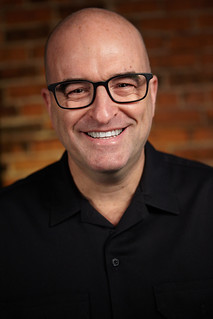
Contributors Pete Smith and Greg Bennick
Pete Smith
Numismatic researcher and author Pete Smith of Minnesota has written about early American coppers, Vermont coinage, numismatic literature, tokens and medals, the history of the U.S. Mint and much more. Author of American Numismatic Biographies, he contributes original articles to The E-Sylum often highlighting interesting figures in American numismatic history.
Greg Bennick
Greg Bennick (www.gregbennick.com) is a keynote speaker and long time coin collector with a focus on major mint error coins and US counterstamps. He is on the board of both CONECA and TAMS and enjoys having in-depth conversations with prominent numismatists from all areas of the hobby. Have ideas for other interviewees? Contact him anytime on the web or via instagram
@minterrors.


Website host John Nebel and webmaster Bruce Perdue
John Nebel
Numismatist, photographer, and ANS Board member and Fellow John Nebel of Boulder, CO helped the ANA and other clubs like NBS get online in the early days of the internet, hosting websites gratis through his Computer Systems Design Co. To this day he hosts some 50 ANA member club sites along with our
coinbooks.org site, making the club and our E-Sylum archive available to collectors and researchers worldwide.
Bruce Perdue
Encased coinage collector (encasedcoins.info) Bruce Perdue of Aurora, Illinois has been the volunteer NBS webmaster from its early days and works each week to add the latest E-Sylum issue to our archive and send out the email announcement.

|
|
The E-Sylum is an electronic publication of the Numismatic Bibliomania Society Copyright © 1998 - 2026 | |